Article: Castor Oil for Split Ends: What It Does and Doesn't Do
Castor Oil for Split Ends: What It Does and Doesn't Do
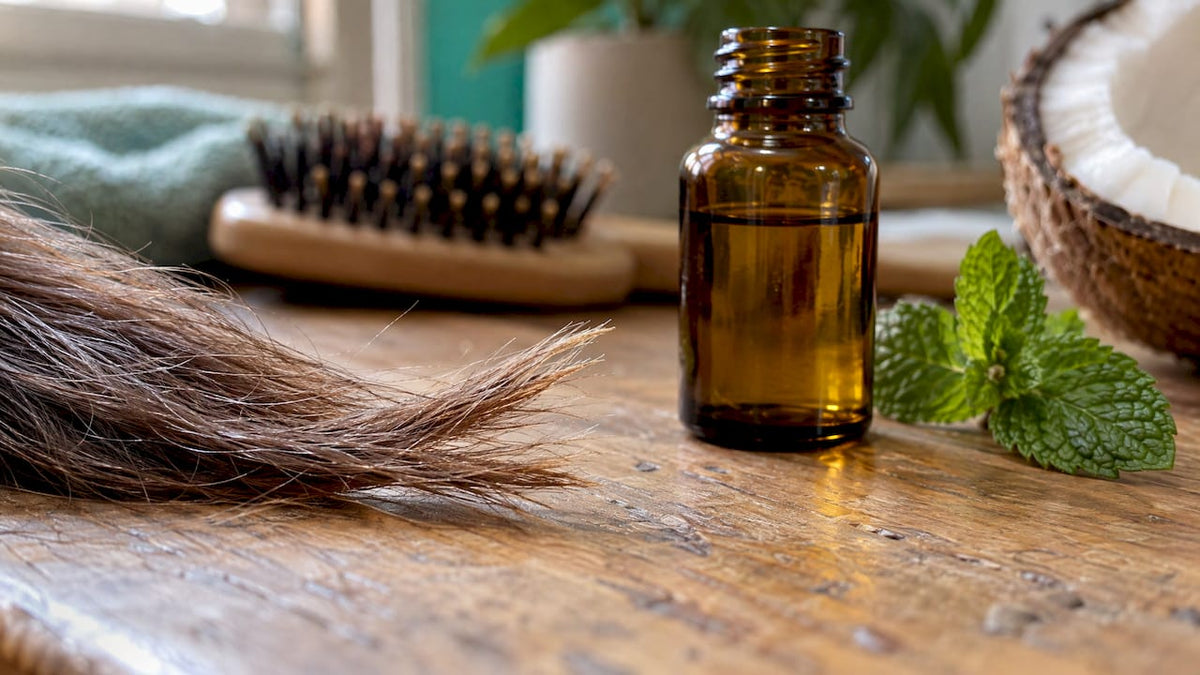
Castor oil can make split ends look and feel smoother for a few days, but it can’t fuse a split strand back together. Only a trim removes the damage. Used in small amounts on dry hair ends, castor oil works as a conditioning treatment that coats the strand, softens it and cuts down on snagging. This guide covers what the research supports, how to apply it without a greasy mess, and how to wash it out.
TL;DR
- Castor oil does not permanently repair split ends. It coats and softens them, and a haircut is what removes them.
- Use a small amount, about a pea-sized dab, on dry mid-lengths and ends, roughly once a week.
- Leave it on for 30 minutes to about two hours, not overnight, then shampoo it out.
- Patch test first, and skip it on a flaky or oily scalp.
- Preventing new splits depends on gentle detangling, less heat, regular conditioning and scheduled trims.
Table of Contents
- What castor oil can and can’t do for split ends
- Is castor oil good for dry or damaged ends?
- How to apply castor oil to split ends
- How long to leave it in, and why not overnight
- Patch test first and know the side effects
- How to wash castor oil out without buildup
- What actually prevents split ends
- Bringing the same simple approach to your mouth
- Does castor oil expire?
- FAQ
- Sources
What castor oil can and can’t do for split ends
A split end is structural damage. The protective outer layer of the hair, the cuticle, wears away, and the inner cortex is exposed and frays. McGill University’s Office for Science and Society explains that a split strand can’t be permanently joined back together, and that trimming is the effective way to get rid of it. The same article says natural remedies such as castor oil may give a temporary moisture boost, but reliable scientific evidence that they repair hair is lacking.
That matches what the wider literature shows. A 2022 systematic review in the Journal of Drugs in Dermatology looked at 22 eligible articles on coconut, castor and argan oil. It found weaker evidence for castor oil improving hair quality through added luster, and no strong evidence for hair growth. Physicians at Northwell Health make a similar point: castor oil can hydrate strands, but there is little evidence behind many of the hair claims that circulate online.
So here is a realistic picture of what you get:
- Smoother feel. A thin film of oil on the strand makes frayed ends feel less rough.
- Less visible fraying. The oil can make a split look tidier by holding the fibers together for a while.
- Softer, more manageable ends. Dry, coarse hair often feels more flexible after an oiling.
- No permanent repair. Once the oil is washed out, the split is still there.
That is a worthwhile benefit if you set your expectations correctly. Think of castor oil as a conditioner for the ends, not a cure.
Is castor oil good for dry or damaged ends?
It depends on your hair type. Cleveland Clinic notes that hair oiling may benefit dry, coarse, tightly curled hair, while fine or straight hair can be weighed down. Castor oil is especially thick, so that warning counts double. If your hair is fine and goes limp easily, use even less than you think you need, or blend it with a lighter oil.
A quick way to judge where you fall:
| Hair type | How castor oil tends to behave | What to do |
|---|---|---|
| Coarse, thick, or tightly coiled | Absorbs well, softens ends | Small amount on mid-lengths and ends |
| Wavy or medium texture | Can feel heavy if overused | Pea-sized amount, mixed with a lighter oil |
| Fine or straight | Easily weighed down | Only the last inch or two, short contact time |
| Flaky or oily scalp | May worsen scalp issues | Keep it off the scalp, or skip it |
Scalp matters too. Good Housekeeping reports that castor oil can leave the scalp greasy and advises people with flaky or oily, seborrheic-dermatitis-prone scalps to avoid it, because oil left on the scalp may make the condition worse. For split ends you only need the ends anyway, so keep the oil away from your roots.
If your hair is dry and damaged and you want a wider look at conditioning options, you can browse our dry and damaged hair collection or our hair oils.
How to apply castor oil to split ends
The goal is a light coating, not a soaked head of hair. Both Good Housekeeping’s expert guidance and Cleveland Clinic recommend a small amount applied to dry hair. Here is a simple method that follows that advice.
- Start with dry, detangled hair. Comb gently from the ends upward so you are not tearing through knots with oil in your hair.
- Measure a pea-sized amount. Cleveland Clinic illustrates a pea-sized amount for hair oiling. Castor oil is very viscous, so you can always add a few more drops.
- Warm it between your palms. This thins the oil so it spreads evenly.
- Work it through the mid-lengths to the ends. Press it into the last few inches rather than rubbing, which can rough up the cuticle.
- Leave it on for a limited time. See the timing section below.
- Shampoo it out and condition the lengths.
Because pure castor oil is so thick, Good Housekeeping suggests that mixing it with a lighter oil makes it easier to spread. The same experts recommend treating it as a periodic, small-dose conditioning treatment rather than a daily leave-in, since its thickness can cause greasiness, weight and wash-out problems.
How often should you use it?
Once a week is the frequency the Good Housekeeping guidance points to. If your ends still feel dry after a month, try adjusting the amount or the contact time before you increase how often you apply it. More oil is not more repair, and a split end doesn’t heal from extra applications.
Common mixing ideas
Some popular hair-mask recipes pair castor oil with mashed avocado to soften hair and help smooth the cuticle. These are beauty-editorial suggestions rather than clinically tested treatments, so treat them as a way to make the oil easier to spread and rinse, not as a proven fix. Avoid adding anything you haven’t patch tested, since a mix can introduce a new irritant.
How long to leave it in, and why not overnight

There is no official standard for how long castor oil should stay in your hair. Verywell Health says there are no guidelines for how long to leave it in and suggests washing it out after about two hours to avoid drying the hair and scalp. Good Housekeeping’s guidance is 30 minutes or longer, and Cleveland Clinic gives a window of about 20 minutes to one hour.
Put together, a sensible range is 30 minutes to two hours. Here is why overnight is a poor idea:
- Wash-out gets harder. The longer thick oil sits, the more it clings.
- Felting risk. Northwell’s physicians warn that pure castor oil is thick and sticky, can be hard to wash out, and in rare cases has caused hair felting or matting severe enough to require cutting. Ironically, that would mean cutting off more length.
- Skin reactions. Longer contact gives a reaction more time to develop on your skin, pillow and scalp.
If you want a long-contact routine, choose a lighter conditioner or leave-in made for that purpose, and keep castor oil for short sessions.
Patch test first and know the side effects
Castor oil is a common ingredient, but a topical reaction is still possible. WebMD lists possible effects including allergic reaction, itching, swelling, rash, clogged pores, acne, folliculitis and dermatitis, and says a small-area patch test is prudent before broader use. Rare hair felting is on that list too.
To patch test, put a small dab on the inside of your forearm or behind your ear, leave it, and watch the spot over the next couple of days. If you notice redness, itching, swelling or a rash, don’t use it on your hair. If a reaction is more than mild, or you have a known skin condition or history of allergies, check in with a dermatologist or your doctor.
Our own guide walks through who is more likely to react and how to patch test, and what to do if you react or notice hair loss.
How to wash castor oil out without buildup
Water alone will not remove it. Oil and water don’t mix, so you need shampoo. A practical method, based on guidance from a hair-health publisher:
- Apply shampoo directly to dry or slightly damp oily areas before you wet your hair fully.
- Add water gradually and lather.
- Rinse thoroughly.
- Shampoo a second time only if your hair still feels coated.
- Condition the lengths and ends.
- Save clarifying shampoo for occasional stubborn buildup, not every wash.
If you want a step-by-step walkthrough, see our guide on how to wash castor oil out of your hair.
What actually prevents split ends
If you want fewer splits over time, the science points to habits more than any one oil. McGill’s explanation supports prevention-focused care: limit heat, handle hair gently, condition regularly, detangle carefully and trim on a schedule. Those steps protect the cuticle so the cortex stays covered.
A simple routine looks like this:
- Trim regularly. It is the only way to remove an existing split. For a clear explanation of why splitting travels along the strand and why split ends need trimming rather than sealing, that page covers the same structural logic.
- Turn down the heat. Lower the setting on dryers and irons, and use them less often.
- Detangle from the ends up. Use a wide-tooth comb on damp, conditioned hair.
- Condition every wash. Focus on the ends, which are the oldest part of your hair.
- Use castor oil as an occasional extra. It is a softening treatment that sits on top of those basics.
Northwell’s physicians draw a clear line between making strands feel moisturized and stimulating new growth. Testimonials online are not evidence of growth. Keep your expectations on softness and manageability, and you won’t be disappointed.
Our perspective
We make natural care products for the mouth first, and the same thinking guides everything we put in a bottle: simple ingredients, honest expectations, and no harsh chemicals where they aren’t needed. Castor oil fits that thinking when it is used for what it is. It is a plain, traditional plant oil that conditions dry ends nicely.
What we won’t do is promise that an oil can undo structural damage. A split end needs a trim, and a good conditioning routine keeps new ones from forming. Being straight about that is part of earning your trust.
The same habit of simple, consistent care is how we think about oral health too. A routine you actually keep, built on gentle ingredients, beats a dramatic one you abandon in a week. That is why our oral care range is formulated without fluoride, alcohol or harsh chemicals, and why we encourage you to build a routine that suits your own needs.
Viktor
Bringing the same simple approach to your mouth
If you like the idea of traditional, plant-based care, our oral care range follows the same philosophy. Our oil pulling mouthwash, nano hydroxyapatite oral rinse, xylitol mouthwash and mouthwash tablets are formulated without harsh chemicals, fluoride or alcohol, for people who want a natural routine they can keep up.
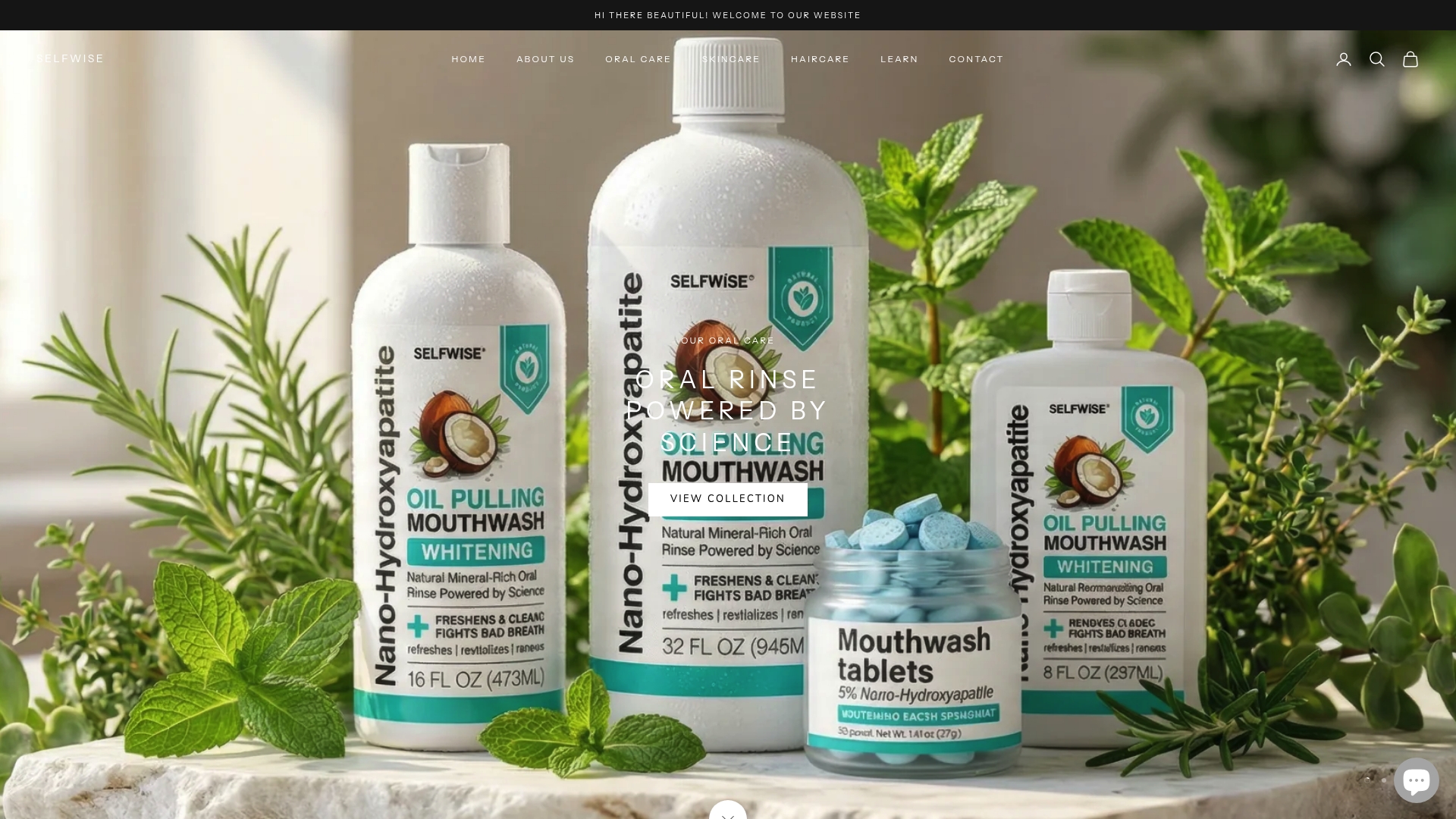
Browse the full mouthwash collection or see everything in our oral care range. If you are new to natural oral care, our natural oral care guide is a good place to start.
Does castor oil expire?
Yes, though it keeps well. Manufacturers describe castor oil as stable but not immortal. One U.S. producer says its oil expires three years after bottling and should be kept tightly closed at room temperature, away from heat and direct sunlight. Another brand says its oil carries best-before dates and can stay good for years when stored that way.
To check whether yours is still fine:
- Check the date on the bottle and the storage conditions it has lived in.
- Smell it. Fresh castor oil has a mild smell. A rancid odor means you should throw it away.
- Don’t rely on color. Normal color varies between oils, so odor and package directions are better guides than appearance alone.
Rancid oil on your hair and skin is not worth the risk, so when in doubt, replace the bottle.
FAQ
Does hair oil repair split ends?
No oil permanently repairs a split end, because the damage is structural. Oils coat the strand, which makes ends feel smoother and look less frayed until the next wash. Trimming removes the split for good.
Is castor oil good for damaged hair?
It can help dry, coarse or curly hair feel softer and more manageable as an occasional conditioning treatment. Evidence for real improvement in hair quality is limited, and fine hair can get weighed down. Use a small amount on the ends only.
Can I put castor oil on my hair every night?
We don’t recommend it. Castor oil is thick, hard to wash out and can cause greasiness, buildup or, rarely, matting. Once a week for 30 minutes to two hours, followed by shampoo, is a safer pattern.
How do I get castor oil out of my hair?
Apply shampoo to dry or slightly damp hair before adding water, then rinse thoroughly. Shampoo a second time only if your hair still feels coated, and condition the lengths afterward.
Sources
- Can You Repair Split Ends? McGill Office for Science and Society
- Coconut, Castor, and Argan Oil for Hair in Skin of Color, Journal of Drugs in Dermatology (PubMed)
- Is Castor Oil an Eyelash Growth Serum? The Well by Northwell
- Hair Oiling: 3 Benefits and How To Do It, Cleveland Clinic
- Castor Oil for Hair: Benefits, Side Effects and How to Use, Good Housekeeping
- Should You Try Castor Oil for Thicker Hair? Verywell Health
- What Is Castor Oil? Health Benefits, Uses, and Safety Tips, WebMD
- How to Wash Castor Oil Out of Your Hair Completely, Traya
- De La Cruz Pure Expeller-Pressed Castor Oil, USP
- What is the expiry and shelf life of your Castor Oil? Queen of the Thrones
- Oil Storage and Shelf Life, Food & Nutrition
- Trim Now: Beard Split Ends and Longitudinal Shear