25 Trials, Low Certainty: Oil Pulling for Gingivitis in U.S. Adults
Oil pulling can modestly lower oral bacterial counts and may help as an adjunct for mild gingivitis, but it is not a cure and should not replace brushing, flossing, or professional dental care. The American Dental Association has not endorsed it as a treatment, while the CDC notes gingivitis reverses through consistent hygiene and professional cleanings. Keep brushing and flossing daily, and consider a monitored trial of oil pulling if you want to add it.
TL;DR:
- Oil pulling may provide a small, short-term benefit for gingivitis, but evidence is weak and it should not replace proper oral hygiene practices.
- No single oil has proven consistently more effective than others, and lab results do not reliably translate to real-world benefits in the mouth.
- Proper oral care involves brushing twice daily with fluoride toothpaste and flossing once, with oil pulling added as a potential adjunct for two to six weeks.
- Risks include aspiration, gastrointestinal upset, and delayed treatment, especially if relied on instead of professional dental care.
- Monitoring symptoms and consulting a dentist remain the most effective approach for managing gingivitis, with professional cleanings and chlorhexidine rinses being more proven than oil pulling.
Table of Contents
- What clinical studies and reviews say about oil pulling and gingivitis
- How to do oil pulling safely and effectively
- Safety, common risks, and what oil pulling won’t do
- A simple, evidence-aligned action plan for people with gingivitis
- Selfwise perspective and author note
- Selfwise products that fit an evidence-aligned routine
- Sources
- FAQ
What clinical studies and reviews say about oil pulling and gingivitis
The research on oil pulling is thin but not empty. A systematic review of randomized clinical trials found that oil pulling may have some benefit for oral hygiene over short study periods, though the trials included were few, small, and used different protocols, which makes broad conclusions hard to trust.
A 2023 meta-analysis pooling 25 trials with 1,184 participants found a probable benefit for gingival health when oil pulling was compared with non-chlorhexidine mouthwashes. Chlorhexidine itself still outperformed oil pulling for reducing plaque, and the authors rated the overall certainty of evidence as very low.

Oil choice does not appear to matter as much as marketing suggests. A randomized crossover trial with 36 volunteers compared virgin coconut oil against palm oil over 28 days of daily pulling. Neither oil produced consistent reductions across total, aerobic, or anaerobic bacterial counts, though palm oil did lower Mutans streptococci counts. Coconut oil’s reputation for antibacterial power comes largely from lab studies. In vitro results do not reliably translate into the same effect inside a living mouth.
Oil pulling and gingivitis: what the trials show
- Reductions in measured bacterial counts appear in several studies, but effects on plaque and gingival index scores are inconsistent across trials.
- Some short trials show gingival score improvements comparable to non-chlorhexidine mouthwashes, though not to chlorhexidine.
- Study limitations are common: small sample sizes, durations of 7 to 45 days, and different oils, volumes, and swishing times.
- The realistic takeaway is a possible small adjunct benefit for mild gingival inflammation, contingent on daily consistency.
A 2023 meta-analysis of 25 trials found oil pulling probably helps gingival health compared with non-chlorhexidine rinses, but rated the certainty of that evidence as very low. That distinction matters when deciding how much weight to put on the practice.
How to do oil pulling safely and effectively
Most clinical protocols follow a similar pattern, though the details vary from trial to trial. If you want to try it, start conservatively and adjust once you know how your mouth and stomach handle it.
- Measure about one tablespoon (roughly 10 mL) of oil.
- Swish it gently around your mouth, moving it between your teeth without clenching your jaw.
- Aim for a duration somewhere in the range trials have tested, from about 8 to 20 minutes, starting shorter if you are new to it.
- Spit the oil into a tissue or trash can, never into a sink, since it can clog pipes over time.
- Rinse your mouth with water, then brush as usual.
Coconut, sesame, palm, and olive oil have all appeared in published trials, and no single oil has shown a consistent, reproducible edge over the others in living mouths. Lab studies sometimes show one oil outperforming another against specific bacteria, but those in vitro results do not hold up reliably in vivo.
Fitting this into a morning routine is straightforward: pull before breakfast, before you have eaten or had coffee, and before brushing. A monitored course of two to six weeks, done daily, is a reasonable window to judge whether you notice any change in gum tenderness or bleeding.
Pro Tip: Set a timer the first few times. Most people badly overestimate how long they have been swishing, and stopping early won’t tell you much about whether the practice works for you.
Safety, common risks, and what oil pulling won’t do
Oil pulling carries a few real risks worth knowing before you start. People with swallowing difficulties face a genuine aspiration risk if oil enters the airway. Swallowing the oil, even accidentally, can also cause mild gastrointestinal upset in some people.
The bigger risk is what oil pulling does to your decision-making. Treating it as a stand-in for dental care can delay treatment that actually works.
- Oil pulling has not been shown to cure periodontitis or reverse advanced gum disease.
- It does not replace the mechanical plaque removal that brushing and flossing provide.
- Aspiration and gastrointestinal upset are documented risks, particularly for people who have trouble controlling liquids in the mouth.
- Delaying a dental visit because symptoms seem to improve slightly is a common and avoidable mistake.
The American Dental Association has stated there is insufficient reliable evidence to support oil pulling as a substitute for evidence-based hygiene routines, a caution that lines up with the low certainty ratings in the clinical literature. Reviewing common oil pulling mistakes before you begin can help you avoid the errors that cause the most trouble.
A simple, evidence-aligned action plan for people with gingivitis
The CDC notes that gingivitis is preventable and reversible with consistent oral hygiene and professional cleanings, which should stay the foundation of any plan. Oil pulling, if you choose to use it, sits on top of that foundation rather than replacing it.
- Brush twice daily with fluoride toothpaste and floss once a day, without exception.
- If you want to try oil pulling, add it once daily for a test period of two to six weeks.
- Track bleeding on flossing, gum redness, and swelling week to week rather than day to day.
- See a dentist if bleeding or pain persists, or if symptoms worsen despite consistent adjunctive care.
| Signal | What it suggests | Next step |
|---|---|---|
| Bleeding decreases over weeks | Hygiene routine may be working | Continue current routine |
| No change after several weeks | Oil pulling likely not adding benefit for you | Focus on brushing, flossing, and professional cleaning |
| Bleeding or pain worsens | Possible progression beyond mild gingivitis | See a dentist promptly |
For gum disease that resists home care, professional scaling and chlorhexidine rinses have stronger supporting evidence for plaque reduction than oil pulling does. A daily oral care routine built around brushing and flossing remains the part that carries the most weight.
Selfwise perspective and author note
Oil pulling earns a place in a natural oral care routine as a supplement, not a substitute. The evidence points to a modest, inconsistent benefit for gum inflammation, strong enough to justify trying it, not strong enough to justify skipping brushing, flossing, or a dental checkup. Some natural oral care brands build their oil-pulling-friendly products around that principle: support the basics, never replace them.
— Viktor
Selfwise products that fit an evidence-aligned routine
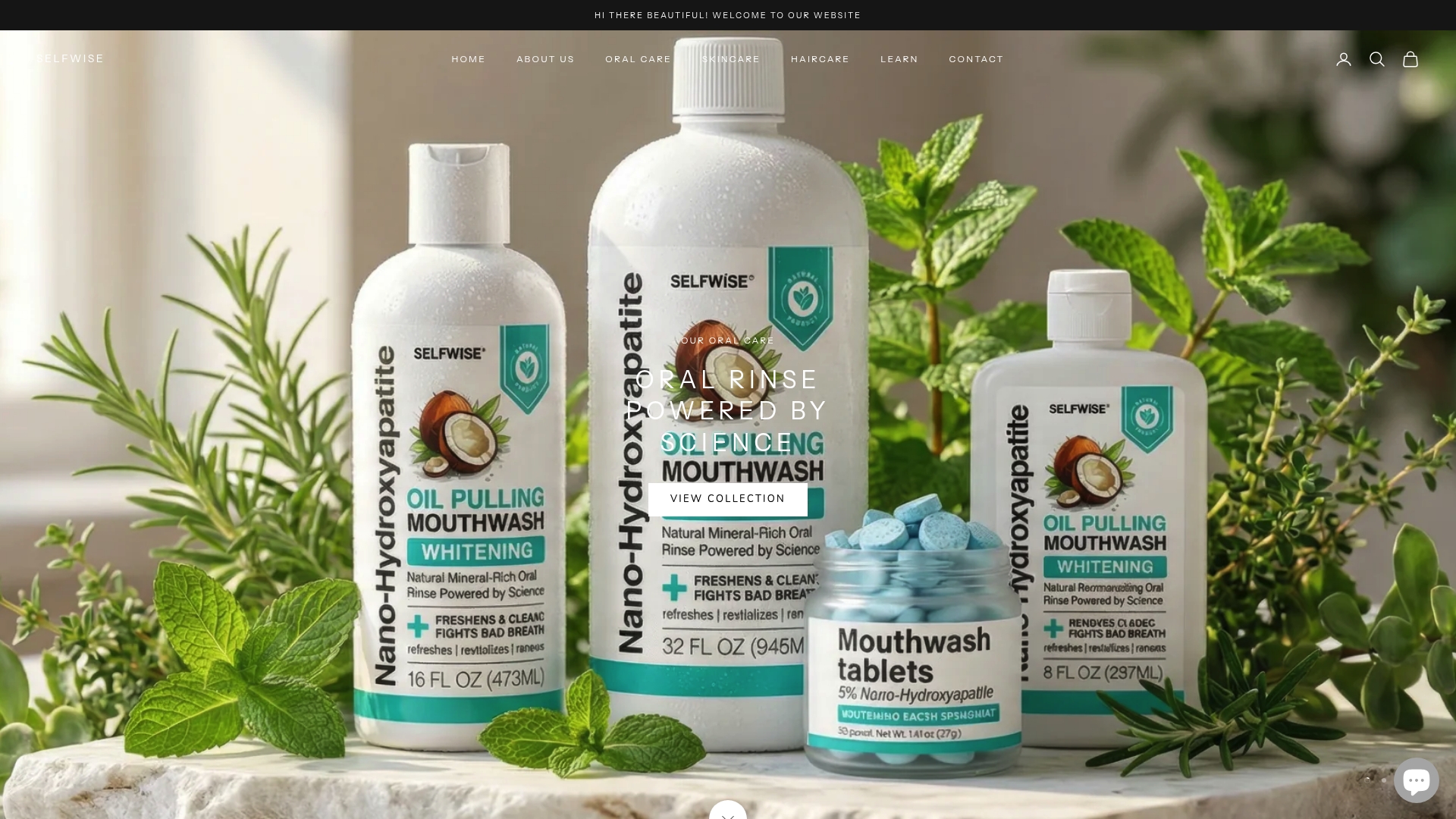
If you decide oil pulling belongs in your routine, the oil matters less than consistency, and pairing it with a remineralizing rinse gives your gums more to work with. Selfwise’s oral care line includes nano hydroxyapatite rinses and xylitol mouthwash tablets formulated without fluoride, alcohol, or harsh chemicals, built to sit alongside brushing and flossing rather than around them. Our Natural Oral Care Guide walks through how to combine these pieces into a daily habit. None of this replaces a dentist. If bleeding, swelling, or pain persists beyond a few weeks of consistent care, book a checkup before trying anything else. For a supportive next step today, browse the oral care collection and see which rinse fits your routine.
Sources
- CDC — Gum (periodontal) disease
- American Dental Association (ADA) — guidance and statements on oil pulling
- Meta-analysis: oil pulling vs chlorhexidine and other mouthwash interventions (2023) — PubMed
- Microbiological effects of virgin coconut oil pulling vs palm oil pulling — PMC
- Effect of oil pulling in promoting oro-dental hygiene: systematic review of randomized clinical trials — PubMed
FAQ
Why do dentists not recommend oil pulling as a treatment?
Dentists caution against relying on oil pulling because the supporting evidence is rated very low certainty, with small, short, inconsistent trials behind it. The American Dental Association has stated there is insufficient reliable evidence for it to replace brushing, flossing, or professional care, and worries that “natural” gets mistaken for “effective.”
How can gingivitis be reversed?
Gingivitis reverses through consistent daily brushing, daily flossing, and regular professional cleanings, according to the CDC. Oil pulling may offer a small adjunct benefit for some people, but it works alongside these habits, not instead of them.
Can oil pulling damage the gums?
Oil pulling itself has not been shown to damage gum tissue in clinical trials, but vigorous swishing or forcing the oil between tight teeth can irritate soft tissue. The bigger concern is aspiration risk for people with swallowing difficulties and delaying dental treatment while relying on it alone.
What foods make gingivitis worse?
Sugary and starchy foods feed the plaque-forming bacteria that drive gum inflammation, and frequent snacking without cleaning your teeth compounds the effect. Cutting back on sugary drinks and snacks while maintaining daily brushing and flossing supports the reversal process the CDC describes.