How Long to Oil Pull for Real Oral Health Benefits
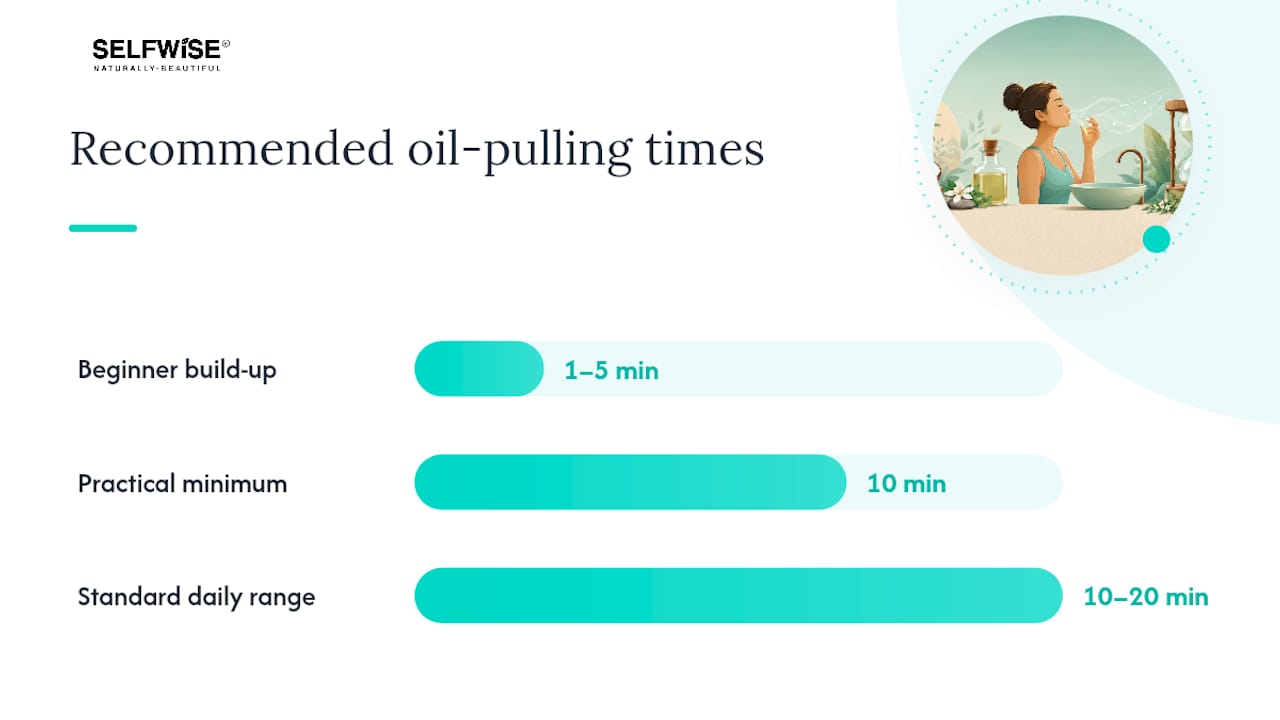
If you want one rule to follow, swish for 10 to 20 minutes once a day. Ten minutes is a reasonable starting point, and 20 minutes matches many of the study protocols researchers have actually tested. Most people building the habit do fine landing in the middle, around 15 minutes.
If you’re just starting out or short on time, a 5 to 10 minute session still counts. Oil pulling is a swishing practice, usually with coconut, sesame, or another plant oil, that some people use alongside brushing to support fresh breath and gum health. The catch: the clinical evidence behind it is mixed, and no dental association treats it as a stand-in for brushing and flossing.
- Standard target: 10 to 20 minutes, once daily
- Beginner option: 5 to 10 minutes, working upward over a week
- Non-negotiable: oil pulling supplements your routine; it doesn’t replace brushing or flossing
Key Takeaways
A 10 to 20 minute daily oil pulling session, done consistently and paired with regular brushing and flossing, reflects the strongest and most consistent finding across current clinical research.
| Point | Details |
|---|---|
| Target duration | Aim for 10 to 20 minutes once daily; 10 minutes works as a practical minimum. |
| Start slow | Beginners should build from 1 to 5 minutes up to the standard range over one to two weeks. |
| Watch for discomfort | Jaw soreness, gagging, or sensitivity means shorten the session, not push through it. |
| Never a substitute | The ADA maintains brushing and flossing as the proven standard; oil pulling only supplements them. |
| Product support | Selfwise’s nano hydroxyapatite oil pulling mouthwash is formulated for this exact daily routine. |
This article is general information, not a substitute for advice from a qualified doctor. Consult a qualified healthcare professional about your own circumstances before acting on anything here.
Table of Contents
- What the Clinical Research Says About Oil Pulling Duration
- How to Pick an Oil Pulling Duration That Fits Your Routine
- The Right Technique: Volume, Movement, and What to Do Afterward
- When Oil Pulling Becomes a Risk Instead of a Habit
- Where Selfwise Fits Into an Evidence-Based Oil Pulling Routine
- What the Research Actually Supports, and What It Doesn’t
- Build a Routine That Fits Around Oil Pulling, Not the Other Way Around
- Sources
- FAQ
What the Clinical Research Says About Oil Pulling Duration
The studies on oil pulling don’t agree on much, but they agree on timing. Trial protocols in a meta-analyzed set of studies ran for 7 to 45 days, with most sessions falling into two camps: 10 to 15 minutes or 15 to 20 minutes per swish. That consistency across independent research teams is probably the single strongest argument for sticking to a 10 to 20 minute window rather than guessing at your own number.
One well-cited systematic review of oil pulling RCTs looked at trials using coconut or sesame oil, most running just 7 to 14 days, with session times in that same 10 to 20 minute range. Results were inconsistent for plaque and bacterial counts, and the review’s authors flagged small sample sizes as a real limitation. One trial group had a relatively small number of participants split across four separate studies. That’s not nothing, but it’s nowhere near the scale you’d want before rewriting your dental routine around it.
A longer-format example makes the duration question more concrete. An 8-week sesame oil trial had participants swish 15 mL for 15 minutes daily and reported statistically significant plaque reductions compared to a water control. The catch: the study’s own authors cautioned about behavior-change bias, meaning people who know they’re being watched tend to also brush and floss more carefully, which muddies whether the oil did the work or the extra attention did.
A 2022 meta-analysis found oil pulling reduced salivary bacterial colony counts, with a mean difference of 17.55 (95% CI 2.56 to 32.55), but showed no statistically significant difference for plaque or gingival indices when compared to standard controls. That’s the headline result worth remembering: oil pulling appears to change the bacterial population in your saliva, but that change hasn’t reliably translated into the clinical markers dentists actually track, like visible plaque buildup or gum inflammation.
Why the gap? A few recurring issues show up across this body of research:
- Small samples. Many trials enroll a few dozen participants, which limits how much confidence you can place in the results.
- Inconsistent controls. Some studies compare oil pulling to water, others to chlorhexidine mouthwash, others to nothing at all, making cross-study comparison messy.
- Short intervention windows. A 7 day trial can’t tell you much about what happens after three months of daily use.
- Risk of bias. Self-reported outcomes and unblinded designs are common weaknesses.
Earlier reviews have made the same point for years. One PMC review on oil pulling and traditional oral health practices called the existing evidence low quality overall and pushed for larger, better-designed trials before anyone draws firm conclusions. Dental researchers at Tufts have echoed that caution, noting that the swishing action likely dislodges loose debris and may reduce bacteria on contact, but it doesn’t mechanically disrupt hardened plaque the way a toothbrush bristle or floss thread does.
None of that means oil pulling is worthless. It means the honest answer to “does 15 minutes of oil pulling work?” is: it may shift your oral microbiome in a favorable direction, but don’t expect it to show up on your dentist’s plaque index at your next cleaning.
How to Pick an Oil Pulling Duration That Fits Your Routine
There’s no single number that works for everyone, but there is a sensible progression. How long you oil pull should depend on your experience level, your schedule, and whether long sessions feel comfortable or like you’re fighting your own jaw.
- Week one: start at 1 to 5 minutes. If you’ve never done this before, jumping straight to 20 minutes is how people quit after one try. Give your jaw and your gag reflex time to adjust.
- Weeks two and three: build to 5 to 10 minutes. Add a couple of minutes every few days rather than doubling your time overnight.
- Ongoing: settle into 10 to 20 minutes. Ten minutes is a workable floor that still lines up with shorter clinical protocols. Fifteen to 20 minutes matches the more common study design and is fine if it’s not causing discomfort.
- Frequency: once daily, ideally in the morning on an empty stomach. This mirrors how most practitioner guidance frames the habit and avoids interference with meals or oral medications.
That progressive approach isn’t just intuition. Practical guidance from oral health experts suggests starting around 2 to 3 minutes and adding a minute or two per day specifically to sidestep the gag reflex and jaw fatigue that make people abandon the practice in week one.
Pro Tip: Set a timer instead of guessing. Fifteen minutes feels a lot longer than it sounds when you’re actively swishing oil, and checking the clock constantly just makes the session drag. A kitchen timer or phone alarm lets you focus on the swish, not the countdown.
Know when to back off. Stop a session early, or shorten your daily target, if you notice any of these:
- Jaw soreness or fatigue that lingers after you spit
- Gagging or nausea partway through
- Increased tooth sensitivity, especially with existing enamel wear
- Discomfort around brackets or wires if you wear braces
People with braces or sensitive teeth often do better at the shorter end of the range, 5 to 10 minutes, rather than pushing for the full 20. There’s no clinical upside to grinding through discomfort, and gagging repeatedly can actually work against the technique by preventing the vigorous swishing motion that seems to matter most. If 10 minutes consistently feels like a battle, that’s a signal to shorten the session, not a sign you’re doing it wrong.
Consistency matters more than any single session’s length. A guide to building oil pulling consistency walks through scheduling strategies that make the daily habit stick past the first two weeks, which is where most people actually fall off.
The Right Technique: Volume, Movement, and What to Do Afterward
Duration only matters if the technique behind it is doing something. Here’s the sequence that lines up with both clinical protocols and practitioner guidance.
- Measure about 1 tablespoon (10 to 15 mL). That’s the volume most studies use, including the sesame oil trial that ran participants at 15 mL per session. Too little oil and you can’t swish effectively; too much and you’ll fight your own gag reflex.
- Swish actively, not passively. Push the oil side to side and front to back, working it between your teeth, rather than just holding it in your cheek. Practitioner guidance consistently points to vigorous, targeted movement through interdental spaces as the part that actually matters, since passive holding likely does far less.
- Spit into the trash, not the sink. Oil can solidify in pipes over time and cause plumbing problems down the line.
- Rinse with warm water, then brush and floss as usual. Oil pulling comes first in your morning routine, not as a substitute for the rest of it.
Timing cues matter too. Do this on an empty stomach, before breakfast, and before toothpaste or any morning medications, which is the sequence most practitioner guidance and study protocols follow. If you swallow a small amount of oil accidentally, it’s not typically a serious problem, though larger amounts can trigger digestive upset.
Pro Tip: If coconut oil solidifies in your bathroom during colder months, warm the jar briefly in your palm before scooping. Cold, solid oil is harder to swish evenly and tends to sit in one cheek instead of moving through your teeth. For a full walkthrough with oil comparisons, a step-by-step beginner’s guide to oil pulling technique covers which oils tend to work best for different preferences.

When Oil Pulling Becomes a Risk Instead of a Habit
Longer isn’t better here, and swallowing oil is the main thing to actively avoid. Ingesting meaningful amounts during a session can cause stomach upset or diarrhea, and for anyone with a swallowing disorder, there’s a real aspiration risk that makes oil pulling worth skipping entirely without a doctor’s input.

Overlong sessions cause their own problems. Jaw fatigue and nausea show up more often past the 20 to 30 minute mark, and there’s no research showing extra benefit from pushing that far. If 20 minutes leaves your jaw sore for the rest of the morning, you’ve found your ceiling.
The bigger risk isn’t physical, it’s behavioral: treating oil pulling as a replacement for brushing and flossing. The American Dental Association does not recommend oil pulling as a standard hygiene practice, and its guidance is unambiguous that brushing twice daily with fluoride toothpaste and daily flossing remain the proven foundation of oral care. That’s the line worth remembering when a routine starts to feel like it’s replacing basics rather than adding to them.
A few groups should be more cautious, or check with a professional first:
- Children. Supervise closely, use shorter durations, or skip the practice altogether given swallowing risk.
- People with swallowing or neuromuscular conditions. Aspiration risk outweighs any potential benefit.
- Anyone recovering from recent oral surgery or with an active infection. Get a professional’s input before resuming or starting.
One consistent research finding across the reviewed trials: oil pulling reduced salivary bacterial counts with a mean difference of 17.55, but produced no significant change in plaque or gingival indices, the exact clinical markers that determine whether a dentist calls your gums healthy.
Where Selfwise Fits Into an Evidence-Based Oil Pulling Routine
Selfwise built its educational content around the same research this article draws from, not marketing claims layered on top of it. The brand’s guide hub covers technique, scheduling, and oil selection for readers trying to build a routine that actually sticks past the first week.
Here’s the honest framing Selfwise holds to:
- Oil pulling supplements a hygiene routine; it never replaces brushing, flossing, or dental checkups.
- A nano hydroxyapatite oil pulling mouthwash is designed for readers who want the swishing habit without measuring loose oil or dealing with the coconut-oil-in-the-sink cleanup problem.
- Product formulation follows the same evidence-informed standard the guides do: no unverified clinical claims, just ingredients with a documented rationale.
- Best-oil comparisons, like the breakdown of coconut, sesame, and olive oil differences, are written to help readers choose, not to oversell any single option.
If you’re building consistency into a morning schedule, pairing that habit with routine dental cleanings still matters. Guidance from St. Pete Family & Cosmetic Dentistry on cleaning frequency is a useful companion read for anyone treating oil pulling as one piece of a larger oral care plan rather than the whole plan.
What the Research Actually Supports, and What It Doesn’t
The conventional wisdom on oil pulling splits into two unhelpful camps: people who treat it as a near-miracle detox ritual, and skeptics who dismiss it outright because the plaque and gingival data hasn’t been convincing.
The honest read is narrower and more useful. Salivary bacterial counts drop in a way that’s statistically real, not imagined, even though that hasn’t yet shown up reliably in plaque or gum inflammation scores. That’s a legitimate, if modest, signal, not a debunked myth and not a cure. The mistake most guidance makes is either overselling that signal into a health transformation or ignoring it because it hasn’t cleared every clinical bar yet.
What should you prioritize? Duration consistency over duration length. Fifteen minutes done daily for months matters more than one 30 minute session followed by two weeks off. And the discomfort signals, jaw soreness, gagging, sensitivity, aren’t something to push through for a better result. They’re your body telling you to shorten the session, because nothing in the research rewards suffering through it.
Build a Routine That Fits Around Oil Pulling, Not the Other Way Around
Selfwise makes the ingredient side of an oil pulling routine simpler than measuring loose coconut oil every morning. The brand’s nano hydroxyapatite oil pulling mouthwash is formulated specifically for a swishing routine, without fluoride, alcohol, or the cleanup hassle that comes with solid oils that resolidify in your bathroom cabinet.
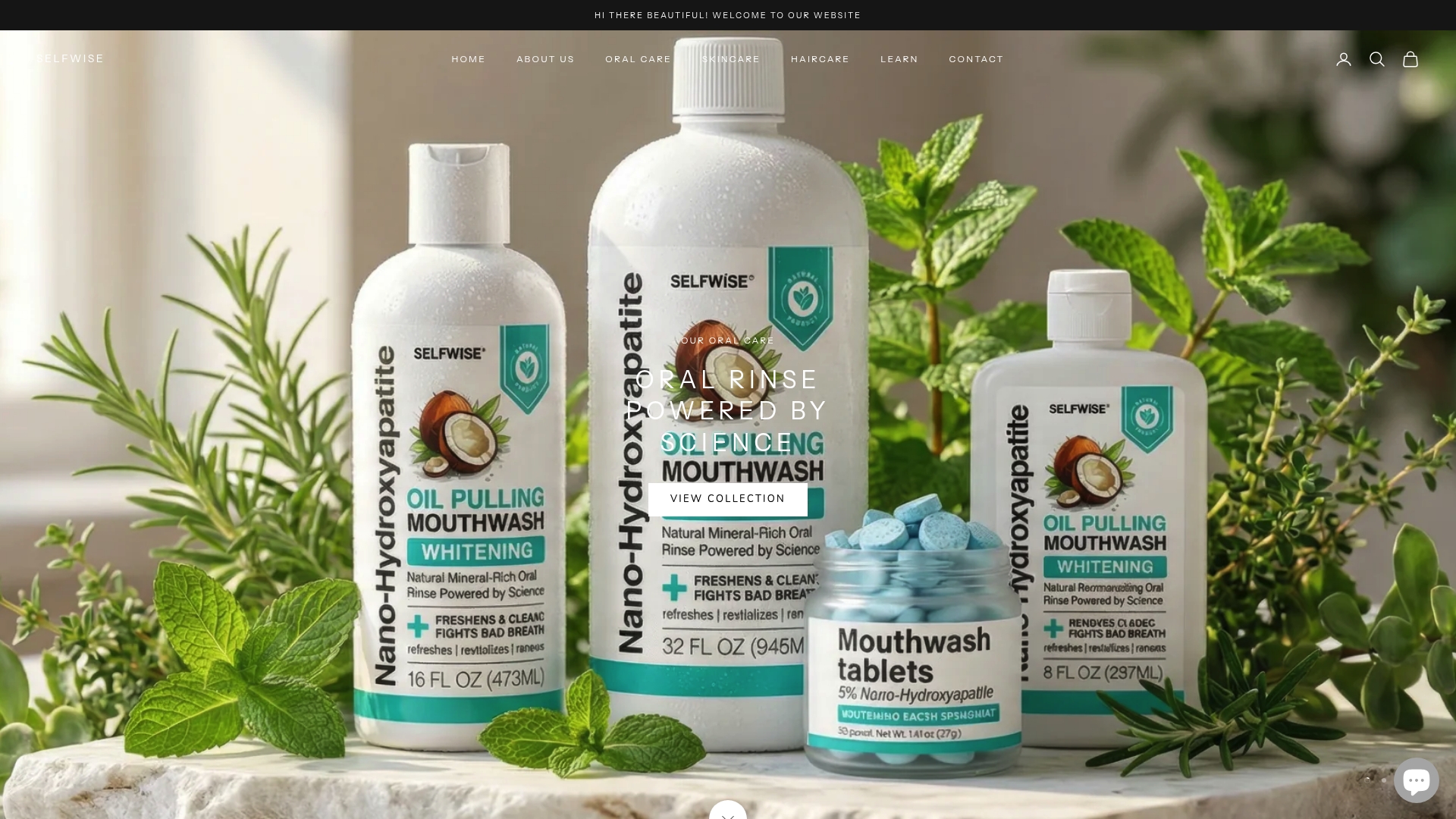
That matters for anyone who has already read this far into duration research and technique details: the routine only works if it’s easy enough to repeat every single morning. A fluoride-free, alcohol-free formula built for the practice removes one more excuse to skip a session, and it pairs naturally with the nano hydroxyapatite remineralizing approach Selfwise builds its broader oral care collection around. If you’re ready to put a duration plan into practice, start with the product built for exactly that use case and see how it fits your morning routine over the next two weeks.
Sources
- Oil pulling | MouthHealthy (American Dental Association)
- Meta-analysis on oil pulling effects (PubMed entry)
- Systematic review of oil pulling RCTs (PMC)
- Oil pulling for oral health: Tufts Now analysis and expert commentary
FAQ
How long should you oil pull each time?
Most clinical protocols use 10 to 20 minutes per session, with 15 minutes as a common middle ground. Beginners can start at 5 minutes and build up gradually.
How long is too long for oil pulling?
Sessions past 20 to 30 minutes show no added benefit in the research and increase the odds of jaw fatigue or nausea. Stop earlier if discomfort shows up.
Why don’t dentists like oil pulling?
The ADA doesn’t recommend it as a standard hygiene practice because the clinical evidence for plaque and gum health improvement is inconsistent and low quality, unlike brushing and flossing.
Does oil pulling draw out toxins?
There’s no clinical evidence supporting a detoxification effect. What research does show is a reduction in salivary bacterial counts, which is a microbiological change, not a toxin-removal process.
How often should you oil pull?
Once daily, ideally in the morning on an empty stomach before brushing, matches both study protocols and practitioner guidance most closely.