1 Year RCT: Hydroxyapatite Toothpaste Matches Fluoride; Rinse Is Adjunct
Hydroxyapatite toothpaste is the primary tool for enamel remineralization, with the strongest clinical evidence behind it. Hydroxyapatite mouthwash works as a helpful adjunct, coating hard-to-reach surfaces, though fewer long-term trials back it. Both are fluoride-free options worth considering for children or anyone avoiding fluoride, but start with the toothpaste and add a rinse if you want extra coverage or have specific sensitivity concerns.
TL;DR:
- Hydroxyapatite toothpaste has the strongest clinical evidence for enamel remineralization and effectively reduces caries across various age groups.
- Mouthwash can reach areas a toothbrush misses and support early remineralization, but it lacks the extensive long-term trial data that supports toothpaste use.
- Particle size (nano versus microcrystalline), concentration, and co-actives like xylitol significantly influence product effectiveness and safety.
- Consistent use of hydroxyapatite toothpaste, combined with proper technique such as not rinsing vigorously afterward, drives measurable long-term benefits.
- Hydroxyapatite is safe, particularly for fluoride-avoiders and children, but professional evaluation remains essential for active decay or worsening lesions.
Table of Contents
- How toothpaste and mouthwash deliver hydroxyapatite differently
- What the research says about toothpaste versus rinse formulas
- Building a daily routine that actually uses hydroxyapatite well
- Is hydroxyapatite safe, and who should be cautious
- Choosing between toothpaste, mouthwash, or both
- How Selfwise approaches hydroxyapatite in real routines
- Weighing the cost of toothpaste versus mouthwash routines
- What the evidence actually tells you to prioritize
- Try a fluoride-free hydroxyapatite rinse from Selfwise
- Sources
- FAQ
How toothpaste and mouthwash deliver hydroxyapatite differently
Hydroxyapatite works by depositing calcium and phosphate minerals directly onto the enamel surface. The particles settle into microscopic defects, occlude exposed dentin tubules, and mimic the natural mineral structure of teeth rather than just coating them. This biomimetic action is why hydroxyapatite is often described as working with enamel instead of just sitting on top of it.
Toothpaste and mouthwash apply that mechanism very differently. Toothpaste combines mechanical brushing, which physically clears plaque and biofilm, with a concentrated dose of hydroxyapatite held against the tooth surface for one to two minutes at a time. Mouthwash skips the mechanical scrubbing but reaches interdental spaces and soft tissue that a toothbrush often misses, though contact time is shorter and the active concentration is usually lower.
Reading labels closely matters more than most people realize:
- Check whether the product uses nano hydroxyapatite or microcrystalline hydroxyapatite, since particle size affects how well it binds to enamel.
- Look for the percentage of hydroxyapatite listed, since concentration varies widely between toothpaste and mouthwash formulas.
- Note any co-actives like xylitol, which supports gum health and helps limit the bacteria that feed on sugars in the mouth.
- Check for abrasives, since toothpaste formulas typically include a mild abrasive that mouthwash does not need.
The practical takeaway is straightforward: toothpaste gives you repeated mechanical and chemical exposure twice a day, which is what actually drives measurable remineralization over weeks. Mouthwash extends that coverage into places brushing does not reach, but it is not a substitute for the paste itself. For a deeper look at how these particles interact with enamel, this guide to hydroxyapatite calcium breaks down the chemistry further.
What the research says about toothpaste versus rinse formulas
The clinical case for hydroxyapatite toothpaste has grown substantially. An updated systematic review and meta-analysis published in late 2024 pooled randomized and in-situ trials and concluded that hydroxyapatite-based products can reduce dental caries and represent a promising fluoride-free option across age groups.
Two trials stand out for toothpaste specifically. A 1-year randomized controlled trial involving 207 children found microcrystalline hydroxyapatite toothpaste non-inferior to a fluoride control for enamel caries outcomes in primary teeth. A related 6-month trial in 150 orthodontic patients found no statistically significant difference between hydroxyapatite and fluoride toothpaste, according to clinical evidence on caries prevention compiled in a recent update.
Separately, a 4-week trial on a multi-ingredient toothpaste combining hydroxyapatite with zinc-citrate and potassium-citrate reported a 15.5% reduction in salivary Streptococcus mutans, compared with 6.8% for a fluoride-only paste, along with lower self-reported sensitivity.
Mouthwash evidence tells a thinner story. A 2022 scoping review found robust support for hydroxyapatite in toothpaste for early caries, but flagged a lack of long-term, standardized protocols for mouthwash products specifically. Short-term in-situ studies have shown hydroxyapatite rinses reduce bacterial adherence, but researchers still call for larger and longer trials before drawing firm conclusions.
- Toothpaste has multiple RCTs spanning children, orthodontic patients, and general adult populations.
- Mouthwash has in-situ and short-term data showing early remineralization signals, but not the same volume of long-term trials.
- In the United States, the FDA’s OTC anticaries monograph currently recognizes fluoride compounds as approved active ingredients, so hydroxyapatite products are typically marketed as cosmetic or supportive rather than as anticaries drugs.
Building a daily routine that actually uses hydroxyapatite well
Getting the timing and technique right matters almost as much as picking the product.
- Brush twice daily with a hydroxyapatite toothpaste, using a pea-sized amount for supervised children and following the label’s dosing for adults.
- Spit without rinsing vigorously with water immediately after brushing, since a hard rinse washes away the remineralizing particles before they finish binding to enamel.
- Follow with a hydroxyapatite mouthwash if you want extra coverage in interdental spaces or around orthodontic brackets, using it as the product label directs.
- If you also use a fluoride product for specific reasons, space the two out rather than combining them in the same sitting.
Pro Tip: Swish the mouthwash slowly for the full recommended time rather than a quick rinse. Contact time matters more than volume for hydroxyapatite to work.
People with orthodontic appliances often benefit most from adding a rinse, since brackets create spots a toothbrush cannot fully clean. Anyone dealing with dentin hypersensitivity may notice gradual relief as hydroxyapatite particles occlude exposed tubules over several weeks of consistent use. For a step-by-step routine built around nano hydroxyapatite specifically, this daily whitening and remineralization guide walks through the sequence in more detail.
Is hydroxyapatite safe, and who should be cautious
Hydroxyapatite has a strong safety profile. It is highly biocompatible, closely resembles the mineral structure of natural enamel, and is not associated with fluorosis, the white or brown enamel mottling that can occur from excessive fluoride exposure in young children. Trials on hydroxyapatite toothpaste have not reported serious adverse events.
A few points matter for specific groups:
- Hydroxyapatite is attractive for caregivers who want to avoid fluoride in a child’s routine, though fluoride remains one of the most extensively studied anticaries agents and a pediatric dentist should weigh in on a child’s individual risk.
- Because hydroxyapatite closely matches the body’s own mineral, it carries less concern than fluoride if accidentally swallowed in small amounts, according to a review on hydroxyapatite toothpaste.
- In the United States, anticaries claims on OTC products are tightly regulated, and the FDA has issued warning letters to brands making unapproved drug claims about hydroxyapatite.
- Active decay, persistent pain, or a rapidly worsening lesion calls for a dentist visit. Home care products support oral health but do not replace professional treatment.
Choosing between toothpaste, mouthwash, or both
Start by weighing your own risk factors: how often cavities have been an issue, whether you already avoid fluoride, whether you deal with sensitivity, and whether you have braces or other appliances.
- Low caries risk, want fluoride-free: a hydroxyapatite toothpaste used daily is usually enough on its own.
- Sensitive teeth: pair a hydroxyapatite toothpaste with an adjunct rinse to extend tubule-occluding coverage between brushings.
- Child avoiding fluoride: use a supervised hydroxyapatite toothpaste and keep regular dentist checkups to track enamel health.
- High caries risk: talk to a dentist about whether fluoride should stay part of the plan alongside or instead of hydroxyapatite.
Before buying, check the label for hydroxyapatite concentration, whether it is nano or micro particle size, and what the product actually claims versus what the research supports. The natural oral care guide covers how to build a full fluoride-free routine around these choices.
How Selfwise approaches hydroxyapatite in real routines
Some natural oral care brands formulate their products around nano hydroxyapatite and xylitol, including mouthwash tablets designed as fluoride-free options for enamel support and fresh breath. The brand’s approach leans on pairing biomimetic remineralization with ingredients that support gum health, rather than positioning any single product as a cure-all.
This perspective comes from a company involved in selling hydroxyapatite oral care products. Readers dealing with active decay, persistent sensitivity, or orthodontic concerns should still bring those questions to a dentist. Full ingredient lists and usage instructions are available on the mouthwash tablets product page.
Simple ingredients, used consistently, tend to outperform complicated routines used inconsistently.
Weighing the cost of toothpaste versus mouthwash routines
Hydroxyapatite toothpaste and mouthwash sit at different price points depending on concentration, brand, and format, and neither is published here as a fixed figure since costs vary widely by retailer and formulation. What matters more than the sticker price is value per use.
Toothpaste is used daily as a matter of course, so its cost per brushing tends to be low relative to the role it plays, since it is doing the heaviest lifting for remineralization. Mouthwash, used as a supplement rather than a replacement, often lasts through more uses per bottle since a rinse requires less product per session than a full brushing.
The better way to think about value is by looking at what each product actually replaces or adds. If a rinse simply duplicates what your toothpaste already does, it adds cost without meaningfully adding benefit. If it reaches areas your toothbrush consistently misses, such as tight interdental spaces or around orthodontic brackets, the extra cost buys real coverage. Mouthwash tablets, a solid format some brands including Selfwise offer, can also reduce packaging waste and shipping bulk compared to liquid bottles, which may factor into cost per ounce depending on the brand.
Before comparing prices across products, check hydroxyapatite concentration on the label. A cheaper toothpaste with a meaningfully lower percentage of active hydroxyapatite may cost less upfront but deliver less mineral exposure per brushing, which matters more for long-term value than the price tag alone.

What the evidence actually tells you to prioritize
The most overrated claim in hydroxyapatite marketing is that mouthwash and toothpaste are interchangeable. They are not. The RCT evidence overwhelmingly centers on toothpaste, and treating a rinse as your main defense against enamel loss is a mismatch between what the research supports and what the product can realistically do.
The more interesting gap is on the fluoride-free side of the conversation. Hydroxyapatite advocates sometimes talk as if the fluoride debate is settled, but fluoride remains one of the best-studied anticaries agents available, and hydroxyapatite’s non-inferiority findings, while genuinely promising, come from a smaller and newer body of trials. That does not make hydroxyapatite a lesser choice. It makes it a reasonable one for people who have weighed the tradeoff, not a universally superior one.
If you take one thing from the research, it should be this: consistency with a well-formulated toothpaste matters more than chasing the newest rinse on the market.
— Viktor
Try a fluoride-free hydroxyapatite rinse from Selfwise
If you have settled on hydroxyapatite toothpaste as your daily driver and want an adjunct that fits a fluoride-free routine, some mouthwash tablets are built around nano hydroxyapatite and xylitol for enamel support and fresh breath, offering a solid alternative to liquid bottles.
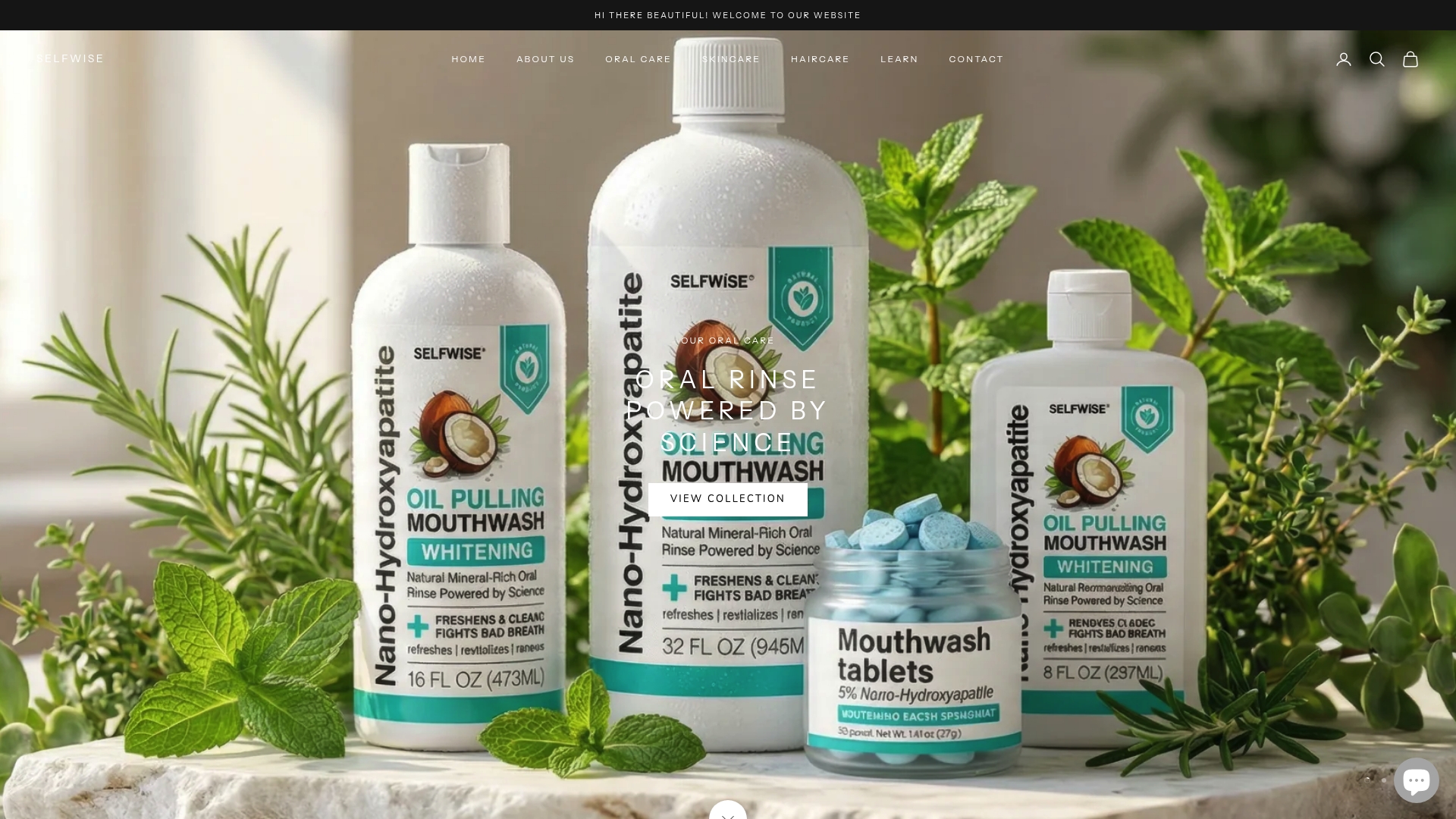
Check the ingredient list against your own sensitivity or orthodontic needs, and loop in your dentist if you fall into a higher caries risk category. Browse the full mouthwash collection to see the current lineup and find the format that fits your routine.
Sources
- Clinical evidence of caries prevention by hydroxyapatite: An update
- Clinical evidence of caries prevention by hydroxyapatite: An updated systematic review and meta-analysis
- Impact of microcrystalline hydroxyapatite toothpaste on early childhood caries (1-year RCT)
- The clinical and microbiological efficacy of a zinc-citrate/hydroxyapatite/potassium-citrate containing toothpaste
FAQ
Why don’t dentists recommend hydroxyapatite more often?
Many dentists still default to fluoride because it has decades of extensive research behind it, while hydroxyapatite’s clinical evidence base, though growing, is newer. Recent systematic reviews and RCTs show non-inferiority to fluoride in several trials, and some dentists are increasingly open to it as evidence accumulates.
How long does it take for hydroxyapatite to remineralize teeth?
Most clinical trials measuring hydroxyapatite’s effect run for weeks to months, with the 1-year pediatric trial and 6-month orthodontic trial showing measurable outcomes over those periods rather than days. Noticeable sensitivity relief for some people takes several weeks of consistent twice-daily use.
Do people in Japan use hydroxyapatite toothpaste?
Hydroxyapatite has a long history of dental use and research adoption in Japan, where it was studied for biomimetic remineralization, according to a review on hydroxyapatite toothpaste. Its close resemblance to natural enamel mineral made it an early candidate for oral care applications there.
Is there a downside to using hydroxyapatite?
The main limitation is that mouthwash formulas have far less long-term trial data than toothpaste, so its caries-prevention effect is less firmly established for rinses specifically. In the United States, regulatory bodies like the FDA have also issued warning letters over unapproved anticaries drug claims, so shoppers should read labels carefully rather than assume a product is medically endorsed.
Can I use hydroxyapatite toothpaste and mouthwash together?
Yes, using both is a common approach: toothpaste for daily mechanical and chemical remineralization, and mouthwash as a supplement for interdental reach or orthodontic appliances. Spit without rinsing heavily after brushing so the remineralizing particles stay on the enamel longer before you use a follow-up rinse.