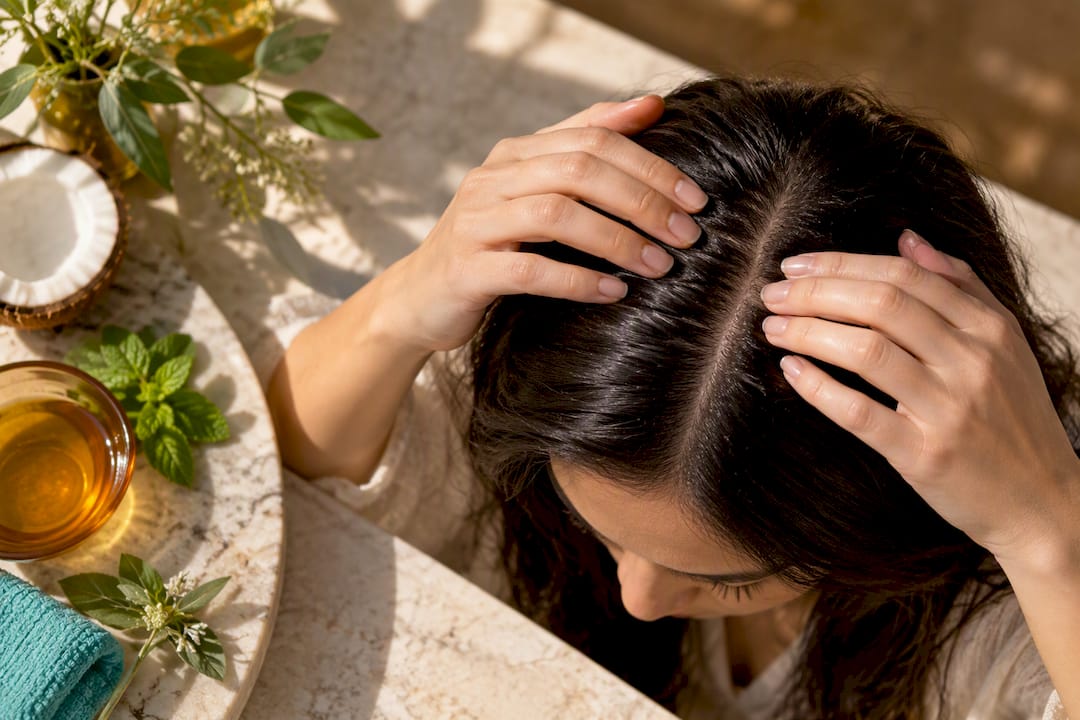
90 Day Trials Show Blends Help Thinning Hair, Not Plain Castor Oil
Short answer: pure castor oil is not a proven treatment for hair regrowth, and using it wrong can leave you with an irritated scalp or, in rare cases, hair so matted it has to be cut out. The strongest evidence for growth benefits comes from castor oil blended with other ingredients, like rosemary, not the plain oil on its own. What follows covers the actual research, the real risks, safer ways to apply it, and options with better clinical backing.
TL;DR:
- Pure castor oil has no strong scientific evidence to support its effectiveness in promoting hair regrowth or reversing thinning.
- The only proven benefits come from blended formulations where ingredients like rosemary play a major active role, not castor oil alone.
- Applying castor oil improperly, such as leaving it on the scalp too long or using excessive amounts, can cause scalp irritation, clogged pores, or hair felting.
- Safer application involves mainly coating hair lengths, diluting the oil, patch testing first, and avoiding use if scalp conditions worsen.
- For better results, rosemary oil or minoxidil have stronger, more consistent research backing for thinning hair, while castor oil is mainly for shine and breakage reduction.
Table of Contents
- Does Castor Oil Regrow Hair or Stop Thinning?
- What Are the Risks of Using Castor Oil on Hair?
- How to Apply Castor Oil More Safely
- What Works Better Than Castor Oil for Thinning Hair?
- When Should You See a Dermatologist About Thinning Hair?
- Selfwise’s Take on Castor Oil and Natural Hair Care
- Try a Natural Hair Oil Backed by Real Research
- Sources
- FAQ
Does Castor Oil Regrow Hair or Stop Thinning?
The most direct answer comes from the Cleveland Clinic, which states plainly that there is no solid scientific proof pure castor oil regrows hair or reverses thinning. It may make strands look glossier because of its thick, fatty texture, but shine is not the same as follicle activity.

A 2025 randomized, double-blind trial adds some nuance. Researchers tested a blend combining rosemary and lavender, and separately rosemary and castor oil, against plain coconut oil over 90 days. The rosemary-castor formulation significantly improved hair growth rate, density, and thickness compared to coconut oil, and reduced shedding. That’s a real finding, but it tests a formulation where rosemary is doing much of the work, not castor oil in isolation.
A broader systematic review published in the Journal of Drugs in Dermatology pulled together findings across 22 separate articles on coconut, castor, and argan oils. It concluded the evidence for castor oil improving hair quality is weak, and there’s no strong support for it driving actual growth. Coconut oil fared slightly better for reducing breakage, but even that wasn’t a growth claim.
The evidence gap: Clinical support for castor oil hair regrowth rests almost entirely on blended formulations tested over 90 days with standardized measurement tools. No trial has shown pure castor oil alone regrows hair.
Anecdotal reports online tell a different story, full of before-and-after photos and glowing testimonials. The trouble is that hair naturally cycles through growth and shedding phases, and people rarely track shedding with anything more rigorous than a mirror. Controlled trials use tools like phototrichograms precisely because the human eye and memory are bad at spotting small, gradual changes.
What Are the Risks of Using Castor Oil on Hair?
Castor oil’s thick, sticky texture is exactly what makes it risky. Left on the scalp too long or applied too heavily, it creates a warm, oily environment that can encourage problems rather than solve them.
- Scalp irritation and clogged pores. The oil’s viscosity traps dead skin and product buildup against the scalp, which can trigger redness, itching, or breakouts along the hairline.
- Scalp acne and yeast overgrowth. Lipid-rich environments can feed Malassezia yeast, a fungus already linked to dandruff and seborrheic dermatitis, potentially worsening those conditions.
- Acute hair felting. This is the rare but serious one. A documented case report describes castor oil’s high viscosity causing long strands to stick together while wet, forming an irreversible mat that required cutting the hair to remove.
If your scalp turns red, starts breaking out, or you notice hair clumping together in a way that won’t comb out, stop using the oil immediately. Wash gently with a clarifying shampoo, avoid tugging at tangled sections, and see a dermatologist if matting doesn’t loosen or if inflammation spreads.
Pro Tip: If you notice any stinging or itching within the first hour of applying castor oil, rinse it out early rather than waiting the recommended time. Some scalps react fast, and there’s no benefit to toughing it out.
How to Apply Castor Oil More Safely
If you still want to try it, there are ways to lower the risk without giving up entirely on the routine.
- Apply oil mainly to the mid-lengths and ends rather than the scalp. This is where you get the shine and reduced breakage benefits without clogging follicles.
- If you do apply it to the scalp, dilute it in a lighter carrier oil first and use a small amount, not a thick, occlusive layer left on overnight.
- Always patch test on your inner arm 24 to 48 hours before your first scalp application, watching for redness, bumps, or itching.
- Wash it out thoroughly. Shampoo twice if needed, and detangle gently with a wide-tooth comb before you ever get hair wet, since wet strands coated in a heavy oil are exactly when felting risk climbs.
- Skip castor oil entirely if you have an active flare of seborrheic dermatitis, scalp acne, or a naturally oily scalp that already struggles with buildup.
Pro Tip: Detangle dry hair before showering. Wet hair coated in castor oil is far more prone to tangling and matting than dry hair, so getting the knots out beforehand cuts your risk significantly.
What Works Better Than Castor Oil for Thinning Hair?
Rosemary oil has a stronger, more consistent research record than castor oil on its own. Some studies suggest it performs comparably to 2% minoxidil for certain measures of hair growth, and it shows up as the active driver in the 90 day blended-oil trial mentioned earlier.
Topical minoxidil remains the treatment with the most consistent backing for pattern hair loss. The American Academy of Dermatology notes it’s the most widely studied over-the-counter option, though it typically takes three to four months of daily use before you see visible change, and results reverse if you stop.
- Rosemary oil: reasonable natural option, some evidence approaching minoxidil in specific trials, low risk when diluted properly.
- Minoxidil: strongest, most consistent clinical evidence for regrowth in pattern hair loss, requires ongoing daily use.
- Castor oil: best used for shine and reduced breakage on the lengths, not as a primary regrowth strategy.
These approaches aren’t mutually exclusive. Plenty of people use minoxidil for the follicle-level stimulation and add a lighter oil on the ends to manage dryness and breakage from the treatment itself.
When Should You See a Dermatologist About Thinning Hair?
Normal shedding runs 50 to 150 hairs a day; anything well beyond that, or thinning that shows up in patches rather than gradually, deserves a professional look.
- Red flags: sudden or patchy hair loss, a scalp that’s painful or visibly inflamed, matting that won’t comb out, or shedding that noticeably exceeds normal daily loss.
- Common diagnostics: a review of your medical history, a gentle pull test, trichoscopy to examine follicles up close, blood work checking iron and thyroid levels, and occasionally a scalp biopsy if scarring is suspected.
- Realistic timeline: most treatments, whether minoxidil or targeted oils, take several months before you can judge whether they’re working. Getting evaluated early gives you more treatment options to work with.
Selfwise’s Take on Castor Oil and Natural Hair Care
Castor oil isn’t a scam, but it’s also not the miracle regrowth serum social media makes it out to be. Some natural hair care approaches prioritize ingredients with stronger clinical support, such as rosemary, over others like castor oil used alone. If you’re curious about the mechanics, our guide on what castor oil actually does for hair growth breaks down the claims versus the research in more depth, alongside our rosemary oil explainer. Patch test anything new, and treat oils as support for your routine, not a replacement for a dermatologist’s opinion if thinning is progressing.
— Viktor
Try a Natural Hair Oil Backed by Real Research
Some natural hair care brands recommend avoiding ingredients with limited evidence and focusing on those supported by clinical trials. Our Rosemary & Multi-Oil Hair Growth Oil is built around rosemary as the active ingredient, the same category of formulation that outperformed coconut oil in the 90 day clinical trial referenced above, rather than relying on castor oil’s viscosity alone to do the work.
Before adding anything new to your scalp, patch test it and think about your current scalp condition. Oily or acne-prone scalps generally do better with lighter oils, while drier lengths tolerate richer blends. Our how to use hair oil guide walks through application frequency and technique step by step. If you want to browse the full lineup of formulations, the haircare collection is the place to start, and you can see current pricing and options directly on Selfwisebrand.
This article is general information, not a substitute for advice from a qualified doctor. Consult a qualified healthcare professional about your own circumstances before acting on anything here.
Sources
- Castor oil benefits and uses (Cleveland Clinic)
- The Culprit of Acute Hair Felting (PMC)
- Rosmagain™ randomized trial (PubMed)
- Coconut, castor, and argan oil for hair: systematic review (PubMed)
- AAD — male pattern hair loss treatment
FAQ
Does Castor Oil Make Your Hair Thinner?
Castor oil doesn’t directly cause thinning, but misuse can trigger scalp irritation, clogged follicles, or worsened dandruff, which can indirectly affect hair health. In rare documented cases, its thickness caused hair felting severe enough to require cutting out the matted section.
What Are the Downsides of Using Castor Oil on Hair?
The main downsides are scalp irritation, clogged pores, potential scalp acne, and in rare cases, irreversible matting called acute hair felting. The Cleveland Clinic also notes there’s no strong proof it regrows hair, so the risk-to-benefit ratio is worth weighing carefully.
Which Oil Is Best for Thinning Hair?
Rosemary oil currently has the strongest research behind it among natural oils, with some studies showing results comparable to low-dose minoxidil. Blends combining rosemary with castor oil also outperformed coconut oil in a 90 day clinical trial, though the rosemary component appears to drive most of the benefit.
What’s Better, Minoxidil or Castor Oil?
Minoxidil has far more consistent clinical backing for regrowing hair in pattern hair loss, according to the American Academy of Dermatology. Castor oil hasn’t shown comparable regrowth evidence on its own, though it can add shine and reduce breakage on hair lengths.
Does Selfwise Sell a Castor Oil Product?
Selfwisebrand’s featured hair oil centers on rosemary as the primary active ingredient rather than pure castor oil, reflecting the stronger evidence behind rosemary formulations. Details and current pricing are available on the haircare collection page.