
Health Conscious: 3 Week Trials Show Oil Pulling Eases Bad Breath
Oil pulling can reduce oral-origin bad breath as an adjunct, though it won’t replace brushing, flossing, or a dentist visit. Randomized trials show sesame oil lowering organoleptic scores and anaerobic bacterial counts roughly in line with chlorhexidine rinses. Expect modest gains within one to three weeks if you swish long enough and stay consistent. Skip it if you’re hoping for a standalone fix.
TL;DR:
- Oil pulling with sesame or coconut oil can reduce bacterial counts and freshen breath temporarily, with significant effects observed over three weeks of consistent practice.
- Mechanical action and emulsification are the primary mechanisms, requiring 10 to 20 minutes of swishing for meaningful bacterial displacement.
- Short-term benefits mainly target oral bacteria responsible for bad breath, but evidence for plaque and gum health improvements remains inconsistent and unproven long-term.
- Risks are minimal if swished gently and swallowed carefully, but it is unsuitable for children and those with swallowing difficulties or allergies to coconut or sesame.
- Oil pulling is best used as a complement to regular brushing, flossing, and dental checkups, not as a standalone solution or replacement for professional care.
Table of Contents
- What Does the Research Say About Oil Pulling and Bad Breath?
- Why Would Swishing Oil Reduce Bad Breath in the First Place?
- How Do You Actually Do Oil Pulling for Fresh Breath?
- What Can Oil Pulling Realistically Fix (and What Can’t It)?
- Is Oil Pulling Safe? Risks and When to Stop
- Where Does Oil Pulling Fit in a Real Oral Care Routine?
- What Selfwisebrand’s Approach Says About the Evidence
- The Real Problem Isn’t Whether Oil Pulling Works
- Try Oil Pulling With a Formula Built for Enamel, Not Just Odor
- Sources
- FAQ
What Does the Research Say About Oil Pulling and Bad Breath?
The strongest evidence for oil pulling and bad breath comes from head-to-head trials against chlorhexidine, the gold-standard antiseptic mouthwash dentists have relied on for decades. A frequently cited randomized controlled trial ran participants through three weeks of daily sesame oil pulling and compared their outcomes to a chlorhexidine rinse group. The result: both groups saw significant drops in organoleptic scores and anaerobic bacterial colony counts, and the difference between sesame oil and chlorhexidine wasn’t statistically significant by the end of the trial.
That’s a notable finding. Chlorhexidine is effective enough that dentists prescribe it after oral surgery specifically to control bacterial load. An oil performing comparably, at least over a three-week window, is not a small claim.
Other comparative studies conducted between 2011 and 2014 found similar patterns: sesame oil pulling produced reductions in malodor and anaerobic bacteria that tracked closely with chlorhexidine in small trial populations. None of these were large studies, and none ran longer than a few weeks, but the direction of the effect was consistent across them.
Zooming out to the review level tells a more nuanced story. A meta-analysis pooling multiple oil pulling trials found a statistically significant reduction in salivary bacterial colony counts across studies. But when researchers looked at plaque index and gingival index scores, the pooled results were inconsistent. Some trials showed improvement; others showed none. That split matters, because it tells you oil pulling’s clearest, most reproducible effect is on raw bacterial counts and breath odor, not necessarily on visible plaque or gum inflammation.
Coconut oil has a thinner evidence base. A systematic review isolating coconut oil trials found only four small studies, totaling roughly 182 participants, running seven to fourteen days each. Those trials reported reductions in bacterial counts and plaque index, but the reviewers were blunt about the need for larger, better-controlled research before drawing firm conclusions.
A broader look at traditional oral hygiene practices, reviewed through early 2026, reached a similar verdict: moderate reductions in microbial load and some gum health benefits show up across the literature, but the studies use different oils, different swishing durations, and different measurement tools. That heterogeneity makes it hard to say exactly how big an effect any one person should expect.
Here’s the honest summary of where the science stands:
- Multiple small randomized controlled trials show sesame oil pulling matching chlorhexidine on breath odor and bacterial counts over a short period.
- Meta-analyses confirm a significant drop in salivary bacterial colony count across pooled studies.
- Effects on plaque and gingival indices are mixed, not consistently positive.
- Most trials have relatively short durations and small sample sizes, which limits generalizability of the results.
- Coconut oil evidence is real but thinner than sesame oil evidence.
The bottom line on the numbers: trials measuring organoleptic scores and volatile sulfur compounds (the molecules responsible for that sulfurous “morning breath” smell) found oil pulling performed on par with a clinical antiseptic rinse in reducing bad breath markers over a three-week period. That’s a meaningful signal for something you can do with a spoonful of pantry oil, even if it’s not proof the effect holds up over months or years.
The field needs bigger trials that standardize the oil, the duration, and how outcomes get measured. Until then, the fair read is: oil pulling shows a real, short-term effect on bad breath in the studies that exist. It’s not hype, but it’s not settled science either.
Why Would Swishing Oil Reduce Bad Breath in the First Place?
Two mechanisms come up repeatedly in the research, and neither requires you to buy into vague “detox” language.
The first is emulsification, sometimes described alongside saponification. When you swish oil around your mouth for several minutes, it mixes with saliva and forms a thin, milky emulsion. Mechanistic research on oil pulling suggests this emulsion helps trap and lift hydrophobic debris and bacteria off your tongue, gums, and the spaces between teeth, similar to how dish soap breaks up grease. The oil isn’t dissolving bacteria chemically so much as physically binding to them and dragging them along as you swish.
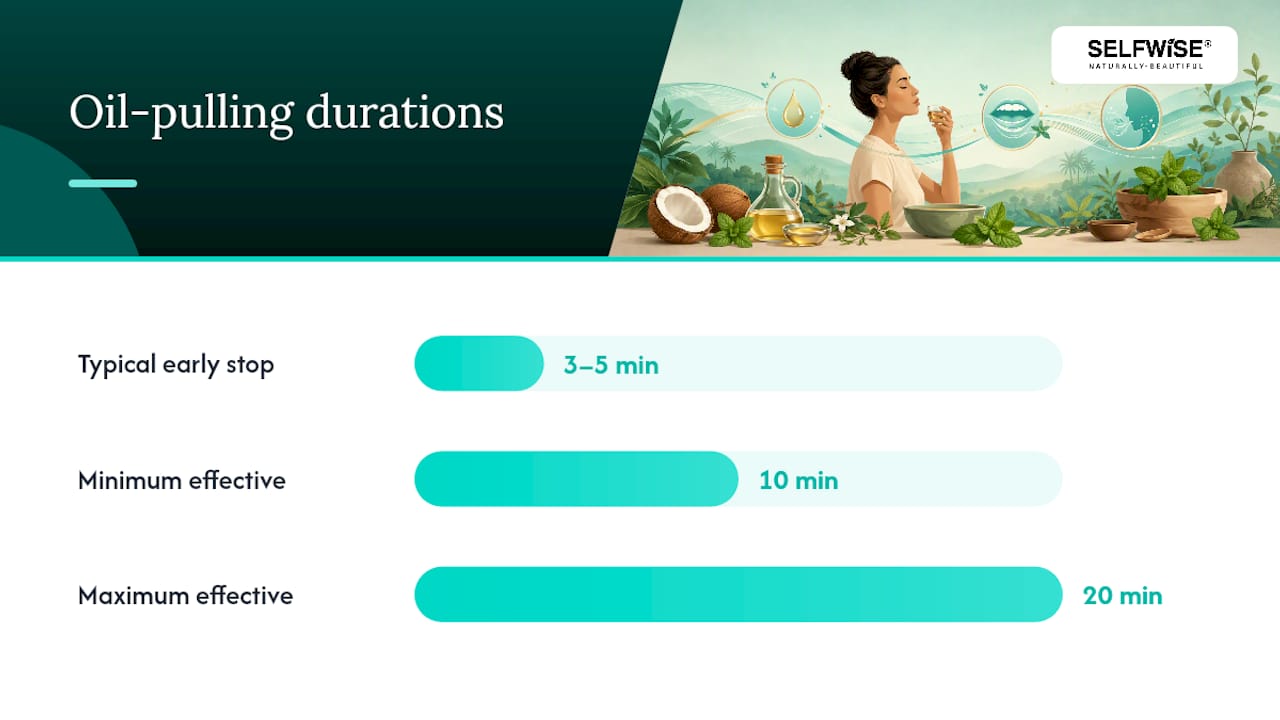
The second is straightforward mechanical action. Continuous swishing for 10 to 20 minutes does real physical work: loosening food particles, disrupting bacterial biofilm, and reaching areas a quick rinse skips over.
There’s also a smaller, secondary piece: coconut oil contains lauric acid, and sesame oil carries various phytochemicals, both of which have some antimicrobial or antioxidant activity in lab settings. But it’s worth being precise here. Trials measure an overall drop in microbial load, not the targeted elimination of one specific odor-causing bacterial species. Oil pulling appears to work more like a broad mechanical sweep than a surgical strike on particular pathogens.
That distinction explains the time recommendation you’ll see everywhere. Ten to twenty minutes isn’t an arbitrary number picked to make the routine feel more “serious.” It’s roughly how long it takes for the oil to fully emulsify and for the mechanical swishing action to reach meaningful coverage across your mouth.
- Emulsification traps and binds debris and bacteria into the oil.
- Sustained swishing physically dislodges bacteria from teeth, gums, and the tongue.
- Antimicrobial compounds in sesame and coconut oil add a modest secondary effect.
- Reductions show up in overall bacterial counts, not in elimination of specific species.
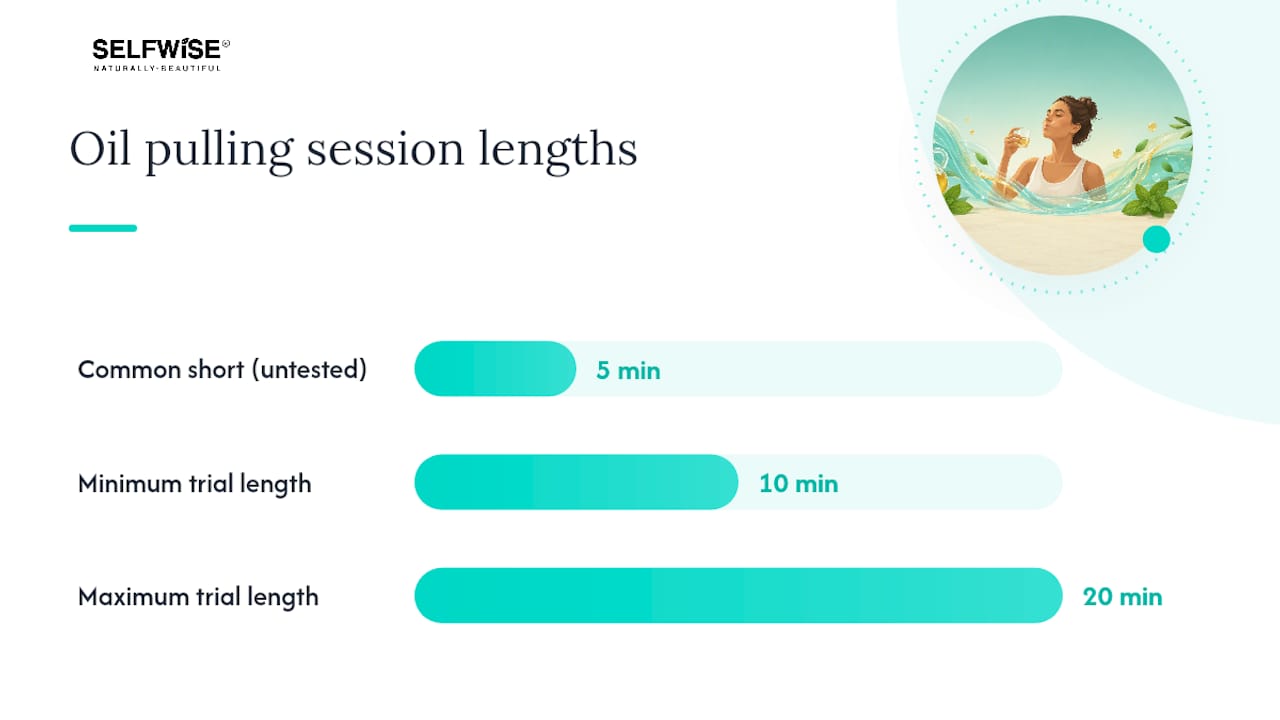
Pro Tip: Set a timer instead of guessing. Most people who quit early are stopping at 3 to 5 minutes, well short of the window where meaningful emulsification happens. Commentary on adherence in oil pulling research flags time commitment as the single biggest reason people don’t get results, not the oil itself.
How Do You Actually Do Oil Pulling for Fresh Breath?
The technique matters more than the brand of oil you buy. Here’s the protocol most trials followed, adapted into a routine you can repeat daily.
- Choose your oil. Sesame oil has the deepest trial history and performed comparably to chlorhexidine in controlled studies. Virgin, cold-pressed coconut oil is the more popular modern choice and shows modest benefits in smaller trials.
- Measure about one tablespoon (10 mL). More oil doesn’t speed things up; it just makes swishing harder and increases the chance you’ll swallow some.
- Swish gently on an empty stomach, ideally first thing in the morning before brushing or eating.
- Keep going for 10 to 20 minutes. Push the oil slowly between your teeth rather than gargling aggressively, which strains your jaw and raises aspiration risk.
- Spit into a trash can, not the sink. Coconut oil solidifies at room temperature and can clog pipes over time.
- Rinse your mouth with warm water, then brush as you normally would.
Skip this routine if you have a strong gag reflex you haven’t worked around, or if you have any swallowing difficulty. Oil pulling isn’t recommended for young children who can’t reliably avoid swallowing, since the aspiration risk outweighs any breath benefit at that age. If you have a nut or coconut allergy, that rules out coconut oil specifically. There’s no meaningful calorie concern here. You’re spitting the oil out, not drinking it.
The most common mistake is cutting the session short. Five minutes of swishing simply hasn’t been tested in the trials showing benefit, so there’s no evidence it works the same way. The second most common mistake is swishing too hard, which tires your jaw muscles and makes people quit the routine within a week. For a more detailed walkthrough, the beginner’s guide to oil pulling technique covers pacing and troubleshooting in more depth.
Pro Tip: Try oil pulling while showering or getting dressed. Tying it to another morning task you already do on autopilot makes the 10 to 20 minutes feel like nothing instead of a chore you’re watching a clock for.
What Can Oil Pulling Realistically Fix (and What Can’t It)?
Set your expectations against what the trials actually measured, not what marketing claims imply.
What the evidence supports:
- A measurable drop in total salivary bacterial colony count in most trials.
- Reduced organoleptic scores (a trained assessor’s rating of how bad your breath smells) and lower volatile sulfur compound levels in several studies.
- Fewer staining and lingering-aftertaste complaints compared to chlorhexidine, since some trials note sesame oil didn’t cause the tooth discoloration chlorhexidine is known for with extended use.
What the evidence does not support:
- Consistent improvement in plaque index or gingival index. Pooled meta-analysis results are mixed here, not positive.
- Any claim about pulling “toxins” from your body. That’s not a mechanism any trial measured or a claim any oral health researcher makes; the plausible mechanisms are emulsification and mechanical bacterial removal, both confined to your mouth.
- A fix for bad breath that originates outside your mouth. Oral-origin halitosis, caused by bacteria on the tongue, gum disease, or food debris, responds to oil pulling in the studies. Non-oral halitosis, caused by sinus infections, tonsil stones, acid reflux, or in rarer cases liver or kidney issues, will not budge no matter how long you swish.
That last distinction is the one people miss most often. If you’ve been oil pulling consistently for three weeks with zero change, the cause of your bad breath likely isn’t sitting in your mouth. That’s the point where a dentist or physician, not another oil, becomes the right next step.
One more limit worth naming plainly: nearly every trial behind these findings ran for three weeks or less. Nobody has published solid long-term data showing whether the bacterial reduction holds up at three months or six months of ongoing use. Treat oil pulling as something you do because the short-term data is genuinely encouraging, not because anyone has proven a lasting cure.
Is Oil Pulling Safe? Risks and When to Stop
Oil pulling is low-risk when done correctly, but it isn’t risk-free.
The main concern is aspiration, meaning breathing oil into your lungs, which can happen if you gargle too vigorously or swish while lying down. Swallowing small amounts occasionally isn’t dangerous, but swallowing large amounts regularly can cause mild digestive upset. People with a sensitive gag reflex sometimes struggle with the full 10 to 20 minute duration and end up gagging or spitting early, which is fine. Building up to the full duration over a week or two beats forcing it on day one.
Allergy considerations are specific to the oil. Skip coconut oil if you have a tree nut or coconut allergy, and use sesame oil cautiously if you have any known sesame sensitivity, since sesame is one of the more common food allergens.
Compared to chlorhexidine, oil pulling has a cleaner side-effect profile in the trials. Chlorhexidine users commonly report tooth staining and a lingering, unpleasant aftertaste with regular use; oil pulling participants in the same studies reported neither issue.
A one-sentence safety checklist: don’t swallow the oil intentionally, supervise any child attempting the practice, and stop immediately if you notice mouth irritation, jaw soreness, or symptoms that don’t improve after two to three weeks.
- Never gargle oil while lying down.
- Avoid the practice entirely for young children.
- Check for coconut or sesame allergies before choosing an oil.
- Stop and consult a dentist if irritation or persistent symptoms show up.
Where Does Oil Pulling Fit in a Real Oral Care Routine?
Oil pulling works as an addition to your routine, not a substitute for any part of it. Here’s a sequence that reflects what the trials actually tested and what dentists still recommend as baseline care.
- Morning: Oil pull for 10 to 20 minutes before eating or brushing, following the morning routine steps that pair it with the rest of your hygiene habits.
- After spitting out the oil: Rinse with water, then brush for two minutes with fluoride or a remineralizing alternative.
- Clean your tongue with a scraper or your toothbrush, since a large share of breath-causing bacteria live on the tongue’s surface, not just between teeth.
- Floss daily, ideally at night, to remove what brushing and oil pulling both miss between teeth.
- See a dentist every six months for a cleaning and checkup, regardless of how good your breath feels day to day.
Based on trial durations, expect any noticeable change in breath within one to three weeks of daily practice, assuming you’re hitting the full swishing time consistently. Track it simply: note your own or a partner’s assessment of your breath weekly, rather than expecting a dramatic overnight shift.
Watch for red flags that mean it’s time to stop experimenting and book an appointment: bad breath that persists past three to four weeks of consistent practice, bleeding or swollen gums, loose teeth, or systemic symptoms like unexplained fatigue alongside the breath issue. Those point to something oil pulling was never designed to fix.
What Selfwisebrand’s Approach Says About the Evidence
We built our oral care line around a simple filter: does the science support this, or is it just tradition dressed up as science? Oil pulling passes that filter with real caveats attached, which is exactly how we present it.
Our nano hydroxyapatite oil pulling mouthwash exists because plain oil pulling has one obvious gap: it does nothing to remineralize enamel. Hydroxyapatite is the mineral your teeth are actually made of, and pairing it with oil pulling’s mechanical cleaning action targets two different problems at once instead of asking one ingredient to do a job it was never suited for.
The trial evidence for oil pulling is real but narrow: modest breath and bacterial improvements over a few weeks, mixed results on plaque and gum indices. Any honest oral care brand should present it exactly that way, not oversell it as a cure.
We don’t claim our formulas outperform chlorhexidine in a controlled trial, because we haven’t run one, and no honest brand should imply otherwise without the data. What we can say is that our fluoride-free, alcohol-free formulations are built to complement the same routine the research supports: oil pulling plus brushing, flossing, and tongue cleaning, not oil pulling as a replacement for any of them.
The Real Problem Isn’t Whether Oil Pulling Works
Here’s what gets lost in most articles on this topic: the science genuinely supports oil pulling as a short-term adjunct for oral-origin bad breath. That part isn’t controversial anymore. The bigger issue is adherence. Most people who try it for three days, quit, and declare it useless never gave it the 10 to 20 minutes per session the trials actually used.
Conventional wisdom treats oil pulling as either a miracle cure or pseudoscience. Both framings miss the point. It’s a modest, mechanically explainable habit with real short-term data behind it, sitting closer to “worth doing” than “worth dismissing,” provided you don’t expect it to replace your toothbrush.
If you take one thing from the research, prioritize consistency over the oil you pick. Sesame and coconut both show benefit. Neither shows benefit if you swish for ninety seconds twice a week and call it done.
— Viktor
Try Oil Pulling With a Formula Built for Enamel, Not Just Odor
Plain oil pulling helps clear bacteria and freshen breath, but it does nothing for the enamel underneath. Our nano hydroxyapatite oil pulling mouthwash pairs the mechanical action researchers measured in these trials with a mineral your teeth can actually absorb, without fluoride, alcohol, or harsh chemicals in the bottle.
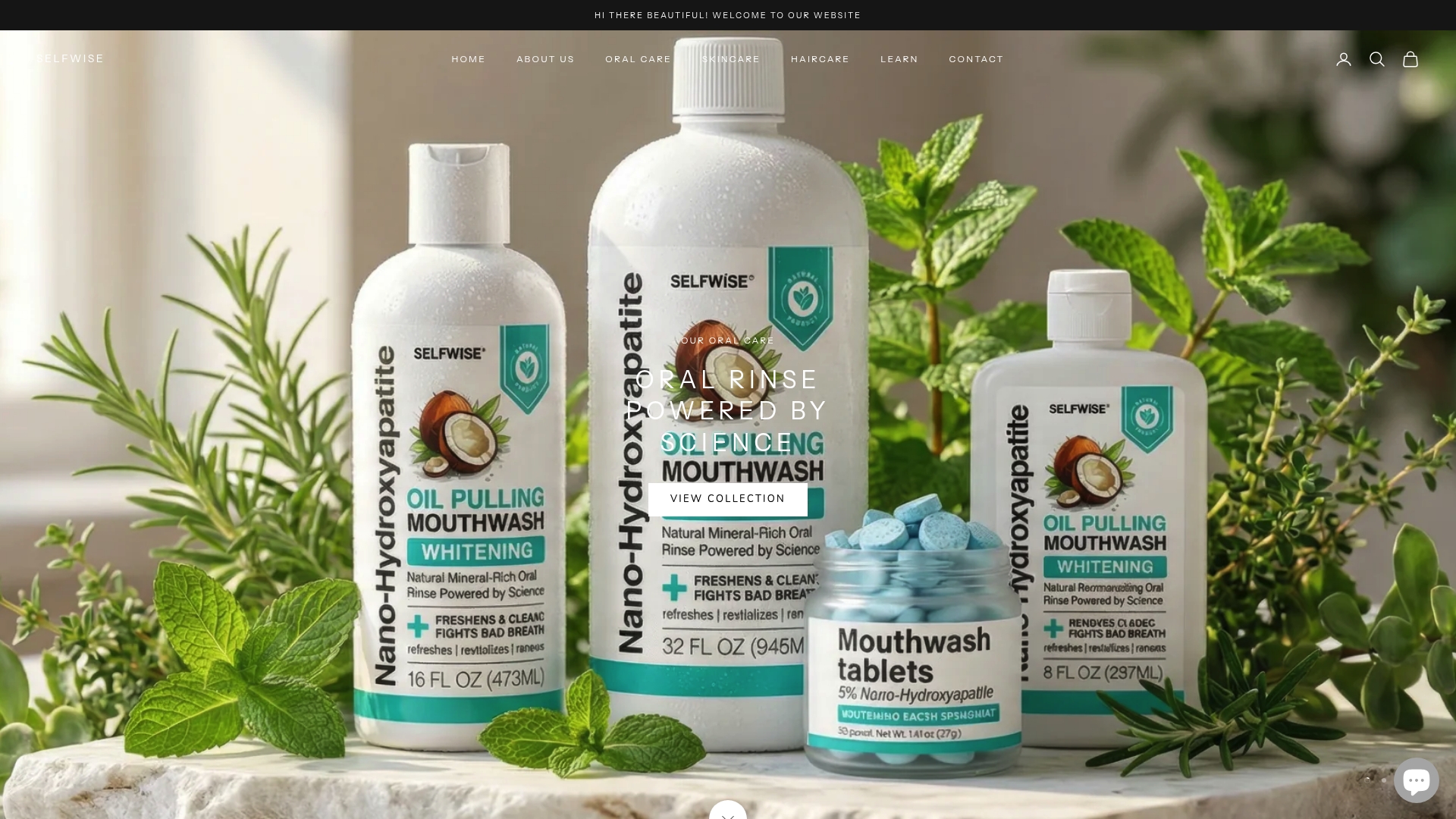
If you want a grab-and-go option for days when a full swishing session isn’t realistic, our nano hydroxyapatite mouthwash tablets deliver the same fluoride-free remineralizing approach in a format you can toss in a bag. Neither product replaces brushing or flossing, and neither claims to outperform a dental visit. They’re built to fit the same evidence-based routine this article just walked through. Browse the full oral care collection to find the combination that matches how you already brush, floss, and pull oil, and start with whichever product addresses the gap in your current routine.
FAQ
Why Do Dentists Not Like Oil Pulling?
Most dentists aren’t against oil pulling itself; they’re against it being used as a replacement for brushing, flossing, and dental checkups. Their concern is patients skipping proven care because a trend promises a natural cure-all.
How Do You Remove Bad Breath From Your Mouth Permanently?
There’s no single permanent fix, since bad breath returns whenever bacteria rebuild on the tongue and between teeth. Daily brushing, flossing, tongue cleaning, and consistent oil pulling keep bacterial load down, but the routine has to continue indefinitely, not just for a few weeks.
Does Oil Pulling Draw Out Toxins?
No credible trial supports a “toxin removal” mechanism. The measured effects come from emulsification and mechanical bacterial removal confined to your mouth, not from pulling toxins out of your bloodstream or organs.
What Vitamin Deficiency Causes Bad Breath?
Bad breath is more commonly linked to bacterial buildup than to a specific vitamin shortfall, but low vitamin D and zinc have been associated with dry mouth and altered oral bacteria in some research. If bad breath persists despite good hygiene, a dentist or physician can check for underlying nutritional or medical causes rather than guessing at supplements.
How Long Does Oil Pulling Take to Improve Bad Breath?
Trial data suggests noticeable improvement within one to three weeks of daily practice, provided each session runs the full 10 to 20 minutes. If nothing changes after three to four weeks, the cause of your breath issue is likely non-oral, and a dental or medical evaluation is the next step.