Article: Mouthwash and Oral Microbiome: 7 Days of CHX Cut Nitrite Output by 90%

Mouthwash and Oral Microbiome: 7 Days of CHX Cut Nitrite Output by 90%
Routine use of strong antiseptic mouthwash, especially prescription-strength chlorhexidine, can significantly disrupt the beneficial bacteria living in your mouth and interfere with pathways linked to blood pressure regulation. Gentler, alcohol-free rinses built around ingredients like xylitol and cetylpyridinium chloride tend to be the safer daily choice. Treat mouthwash as a helper to brushing and flossing, not a substitute, and save chlorhexidine for short courses your dentist actually prescribes.
TL;DR:
- A week of chlorhexidine use cut oral nitrite production by roughly 90% and plasma nitrite by 25%, alongside a 2 to 3.5 mmHg systolic rise.
- A trial lasting three weeks found CPC slowed gingival inflammation and inhibited 17 bacteria linked to gingivitis while preserving overall plaque biodiversity, supporting its use for maintenance.
- Reserve chlorhexidine for short courses directed by a dentist after surgery or diagnosed gum disease; do not use it as a permanent daily rinse.
- For daily maintenance, choose a rinse without alcohol that contains xylitol or CPC, and keep brushing and flossing as the foundation rather than replacing them.
Table of Contents
- How mouthwash affects oral microbes
- Key clinical findings on chlorhexidine and oral microbiome outcomes
- CPC, essential oils, and gentler alternatives
- Alcohol, xylitol, oil pulling, and other ingredients worth knowing
- What the evidence means for blood pressure and cavity risk
- A practical checklist for choosing and using mouthwash
- Helping your oral microbiome recover and stay resilient
- Separating what sounds reassuring from what the evidence actually supports
- Choosing a microbiome-friendly mouthwash for daily use
- FAQ
- Sources
- Key primary studies and reviews that back this article
How mouthwash affects oral microbes
Mouthwash ingredients can work in different ways: bactericidal agents kill microbes outright, while bacteriostatic agents slow their multiplication. Some formulas also have substantivity, meaning they keep working on oral surfaces for hours after you spit. Chlorhexidine is prized clinically for exactly this lingering action, which is also why it has such a strong footprint on the microbial community.
The problem with nonselective killing is that it does not discriminate between bacteria that cause decay and bacteria that keep your mouth balanced. Wipe out both indiscriminately and the surviving population often skews toward acid-tolerant, acid-producing species, which is the opposite of what you want for healthy enamel.
That shift shows up in saliva chemistry too. After antiseptic use, researchers have measured drops in salivary pH and buffering capacity alongside increases in lactate, a sign that the mouth is becoming more acidic and less able to neutralize that acid.
- Bactericidal rinses kill bacteria directly; bacteriostatic rinses only slow their growth.
- Substantivity determines how long a rinse keeps affecting bacteria after you stop swishing.
- Lower buffering capacity and higher lactate point toward a more cavity-prone environment.
- Oral bacteria are required for the enterosalivary nitrate pathway, which converts dietary nitrate into nitrite and eventually nitric oxide.
One underappreciated detail: certain oral bacteria reduce dietary nitrate from leafy greens and beets into nitrite, which your body then converts into nitric oxide, a molecule involved in blood vessel dilation. Kill the wrong bacteria and that pathway slows down.
Key clinical findings on chlorhexidine and oral microbiome outcomes
Chlorhexidine (CHX) is effective at what it is designed to do, which is suppressed bacteria broadly, but that strength is also its drawback for long-term use. A crossover trial found that just seven days of CHX use reduced oral nitrite production by roughly 90% and plasma nitrite by about 25%, a change that correlated with a systolic blood pressure increase of around 2 to 3.5 mmHg.
That 90% drop in nitrite production is not a minor lab curiosity. It reflects how thoroughly a single ingredient can disable a bacterial function your body depends on for vascular health, in under two weeks.
A separate study of 36 healthy adults using CHX twice daily for a week found parallel effects: significant decreases in microbial diversity, increased salivary lactate, lower salivary pH and buffering capacity, reduced nitrate-reducing capacity, and lower saliva and plasma nitrite, with a trend toward higher systolic blood pressure.
At the taxonomic level, metagenomic research shows CHX use tends to:
- Decrease overall alpha diversity, meaning fewer distinct bacterial species survive.
- Increase the relative abundance of streptococci while reducing Bacteroidetes.
- Show tendencies toward enrichment of certain antibiotic-resistance genes, a finding that warrants caution with repeated use.
Beyond the microbiome shifts, CHX is well known clinically for causing tooth and tongue staining with sustained use. Taken together, the trial data and the resistome signal are reasons dental guidance generally reserves CHX for defined, short-term situations rather than everyday maintenance.
CPC, essential oils, and gentler alternatives
Not every antiseptic rinse hits the microbiome the same way CHX does. A 21-day randomized trial testing cetylpyridinium chloride (CPC) found it slowed the progression of gingival inflammation and inhibited 17 bacterial genera associated with gingivitis, while the overall plaque biodiversity stayed intact. That is a meaningfully different outcome than broad community collapse: targeted suppression of troublemakers rather than wholesale depopulation.
Essential-oil rinses show a comparable pattern in some contexts, reducing bacterial load similarly to CHX in certain operative settings, but with shorter substantivity and likely a gentler footprint on the resident microbial community. Our guide on essential oils oral rinse use digs further into how these formulations fit daily routines.
Smaller trials point in a similar direction for natural alternatives:
- CPC rinses preserve existing plaque biodiversity better than broad-spectrum antiseptics in 21-day trials.
- Propolis mouthwash impaired nitrite-producing bacterial activity less than chlorhexidine did in a direct comparison trial.
- Small polyherbal rinse studies generally report smaller disruptions to microbial communities than CHX, though the evidence base remains limited.
Alcohol, xylitol, oil pulling, and other ingredients worth knowing
Reading a mouthwash label gets easier once you know what each ingredient actually does to the bacterial community living in your mouth.
Alcohol functions as a broad, nonselective antiseptic, much like CHX in spirit if not in strength, so alcohol-free formulas remove one obvious stressor on the microbiome without sacrificing freshness. Our alcohol-free rinse guide covers why this swap matters for daily use.
Xylitol works differently: it disrupts the metabolism of cariogenic bacteria like Streptococcus mutans rather than killing bacteria broadly, which makes it more compatible with a biodiversity-friendly routine.

Oil pulling, typically with coconut or sesame oil, works mainly through mechanical and solubilizing action, loosening debris and some bacteria rather than chemically destroying them. Evidence here remains limited and mixed, so think of it as a traditional complement rather than a replacement for brushing.
Prebiotic rinses take yet another approach, aiming to feed beneficial bacterial populations rather than suppress anything. The concept is sound and early research is encouraging, though the evidence base is still developing. Our prebiotic mouthwash primer explains how that mechanism works in practice.
- Alcohol-free formulas remove a broad nonselective stressor from your daily routine.
- Xylitol targets cavity-causing bacteria metabolically rather than killing indiscriminately.
- Oil pulling offers mechanical cleaning benefits with limited high-quality evidence.
- Prebiotic rinses aim to nourish beneficial bacteria rather than suppress the whole community.
Pro Tip: Check the ingredient list before the marketing claims: “antibacterial” on the front of a bottle often means broad-spectrum killing, not targeted support.
What the evidence means for blood pressure and cavity risk
The nitrate pathway findings are not just a biochemistry footnote. A systematic review concluded that antibacterial mouth rinses commonly reduce salivary and plasma nitrite and are associated with increased blood pressure across several human studies. A separate randomized crossover trial in treated hypertensive adults found that three days of antibacterial mouthwash use raised systolic blood pressure by about 2.3 mmHg compared to water, a small but measurable change for people already managing blood pressure.
On the cavity side, the lower buffering capacity and higher lactate levels tied to CHX use can raise caries risk if the rinse becomes a long-term daily habit rather than a short therapeutic course.
That does not make antiseptic rinses useless. They have clear, appropriate roles:
- Post-surgical care, where a clinician wants aggressive short-term bacterial control.
- Treating diagnosed gingivitis or periodontal disease for a defined, limited period.
- Any situation where a dentist specifically prescribes a course and a stop date.
Outside those situations, routine daily use of a strong antiseptic is where the evidence gets uncomfortable.
A practical checklist for choosing and using mouthwash
Matching the rinse to the job makes this much simpler than it sounds.
- Define your actual need first. Cosmetic fresh breath, diagnosed gingivitis, and pre-surgical prep call for different products entirely.
- Default to alcohol-free, non-chlorhexidine formulas for everyday use. This can reduce exposure to nonselective stressors on your oral microbiome.
- Choose CPC or xylitol-containing rinses for regular maintenance when you want measurable antibacterial action without wholesale community disruption.
- Reserve chlorhexidine for clinician-prescribed short courses only, typically days to a couple of weeks, never as a permanent daily habit.
- Rinse after brushing, not instead of it, so the mechanical plaque removal happens first and the rinse supports rather than substitutes.
Pro Tip: If you are currently on a chlorhexidine course, finish it as directed rather than stopping early, then transition to a gentler daily rinse rather than continuing CHX indefinitely.
If you have been using CHX long-term and notice tooth staining, unusual taste changes, or blood pressure shifts on home readings, bring it up with your dentist or physician rather than adjusting the routine on your own. A short taper conversation with your dentist is usually all it takes to move to a daily-appropriate option.
Helping your oral microbiome recover and stay resilient
Mechanical cleaning is still the foundation. Brushing twice daily, flossing, and cleaning your tongue physically disrupt biofilm in a way no rinse alone can replace, antiseptic or otherwise.
Diet plays a supporting role worth taking seriously. Nitrate-rich vegetables like spinach, arugula, and beets feed the very bacteria responsible for the nitrate-to-nitrite conversion discussed earlier, while reducing frequent sugar exposure limits the acid-producing bacteria that thrive on it. Staying hydrated keeps saliva flowing, which naturally buffers pH and clears debris.
On the product side, the practical pattern that respects the evidence looks like this:
- Use a short, clinician-directed antiseptic course only when there is a specific therapeutic reason.
- Follow any antiseptic course with a microbiome-friendly maintenance rinse rather than continuing it indefinitely.
- Consider xylitol-containing or prebiotic rinses as your everyday baseline once any therapeutic course ends.
Pro Tip: Rinsing right after a meal rich in nitrate vegetables, rather than right before, gives oral bacteria more time to work on that nitrate before you wash it away.
Separating what sounds reassuring from what the evidence actually supports
The conventional wisdom around mouthwash still treats the mouth like a surface to sterilize rather than an ecosystem to manage, and that framing is where most people go wrong. A 90% drop in nitrite-producing capacity after a week of chlorhexidine is not a hypothetical side effect buried in a product insert. It is a measurable disruption to a pathway connected to blood pressure regulation, and it happens faster than most people assume from a product sold over the counter in some markets and by prescription in others.
The more useful question is not “does this mouthwash kill bacteria” (nearly all of them do, to some degree) but “which bacteria, and for how long.” Products that target specific problem genera while leaving the broader community intact, like CPC and xylitol-based formulas, align much better with what the clinical trial data actually shows than products that market themselves on raw killing power. If a routine oral-health decision makes you uneasy about your mouth’s bacteria in general, that discomfort is worth examining with a dentist rather than resolving with the strongest rinse on the shelf.
— Viktor
Choosing a microbiome-friendly mouthwash for daily use
We formulate our oral care line specifically around the gap this research points to: effective daily rinses that skip alcohol. Our mouthwash and oral rinse products lean on ingredients like xylitol and nano hydroxyapatite, chosen to support a balanced oral microbiome rather than flatten it.
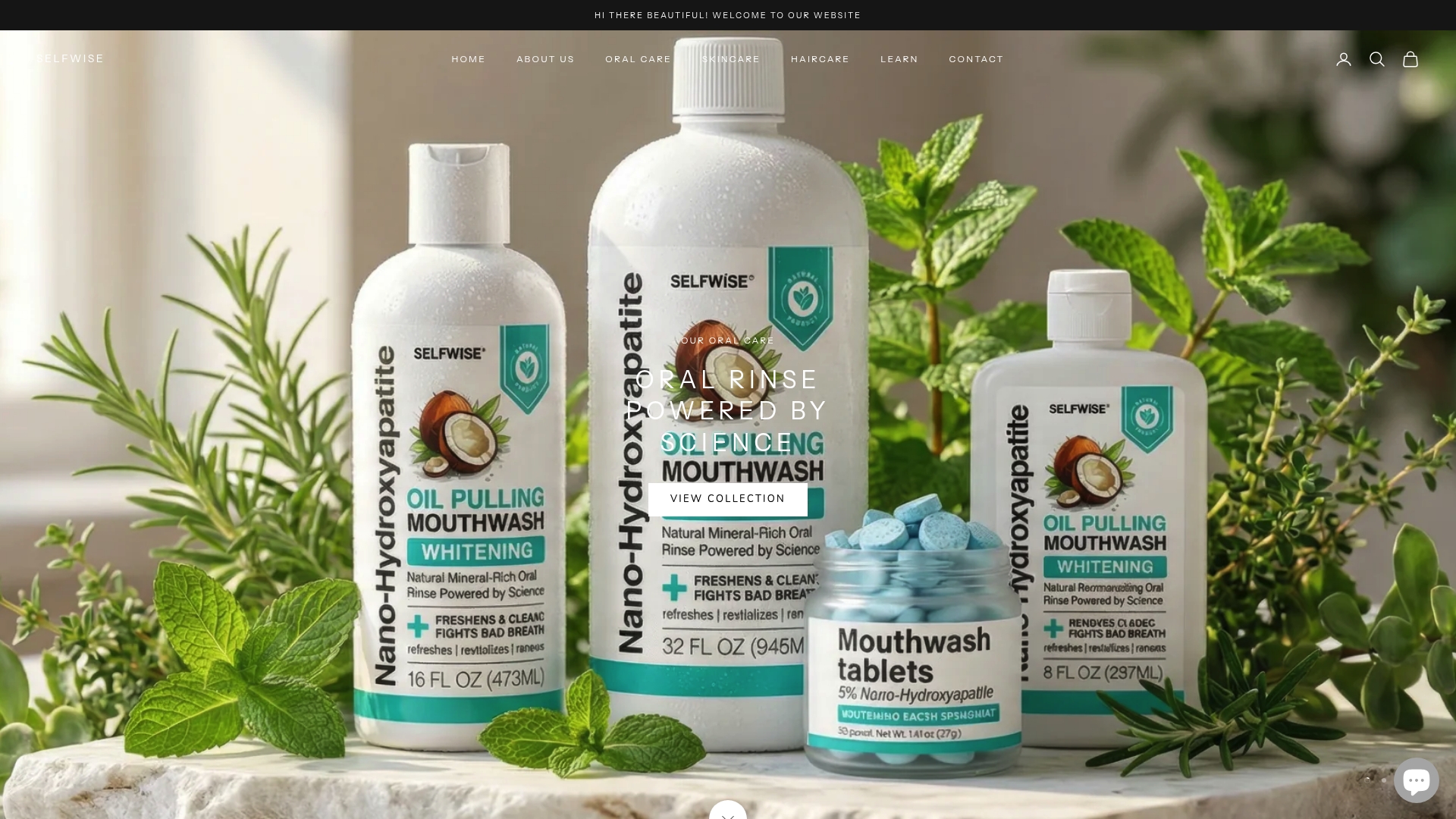
If daily freshness and gentle plaque support are your goal, our everyday rinses are built for exactly that routine. For readers who want targeted support alongside remineralization, pairing a nano hydroxyapatite rinse with a xylitol-based formula covers both angles without reaching for a chlorhexidine bottle.
- Daily maintenance: alcohol-free rinses with xylitol for ongoing microbiome-friendly freshness.
- Targeted enamel support: nano hydroxyapatite formulas alongside your regular brushing routine.
- Full routine guidance: our natural oral care guide walks through building a complete chemical-free routine.
Browse our mouthwash collection to find the formula that matches your routine, or explore the full oral care collection for a complete natural setup.
FAQ
What is an antimicrobial mouthwash?
An antimicrobial mouthwash contains ingredients designed to reduce bacteria in the mouth, ranging from broad-spectrum agents like chlorhexidine to more targeted ones like cetylpyridinium chloride. The strength and selectivity vary widely, which is why different formulas affect the oral microbiome so differently.
Why does my breath smell bad after using mouthwash?
Persistent bad breath after rinsing often means the mouthwash only masked odor temporarily without addressing the bacteria producing it, or that alcohol in the formula dried out your mouth and reduced saliva flow. Saliva is needed to clear debris and buffer odor-causing compounds, so a drier mouth can actually smell worse.
How to restore the microbiome in the mouth?
Restoring balance mainly comes down to consistent brushing and flossing, a diet that includes nitrate-rich vegetables, good hydration, and switching to alcohol-free or microbiome-friendly rinses after any antiseptic course ends. There is no single product that instantly repopulates beneficial bacteria, but removing ongoing nonselective stressors gives the community room to rebalance over time.
What is the difference between antibacterial and antiseptic mouthwash?
The terms are often used interchangeably, but antiseptic typically refers to agents that reduce microbes on living tissue broadly, like chlorhexidine, while antibacterial can describe a wider range of products including more targeted agents like CPC. In practice, check the active ingredient rather than the label claim to know how broad or selective the effect will be.
Sources
- Pmc
- Effects of Chlorhexidine mouthwash on the oral microbiome
- Cetylpyridinium chloride mouth rinses alleviate experimental gingivitis by inhibiting dental plaque maturation - PubMed
- Influence of mouth rinse use on the enterosalivary pathway and blood pressure regulation: A systematic review - PubMed
- Chlorhexidine digluconate mouthwash alters the oral microbial composition and affects the prevalence of antimicrobial resistance genes - PMC
Key primary studies and reviews that back this article
- Chlorhexidine reduces oral and plasma nitrite levels
- Effects of chlorhexidine mouthwash on the oral microbiome
- Cetylpyridinium chloride mouth rinses and gingivitis
- Mouth rinse use and blood pressure regulation: a systematic review
- Chlorhexidine and antimicrobial resistance genes
- The enterosalivary nitrate pathway
- Antibacterial mouthwash and blood pressure in hypertensive adults
- Propolis versus chlorhexidine on nitrite-producing bacteria
- Mechanisms of antimicrobial mouthwashes