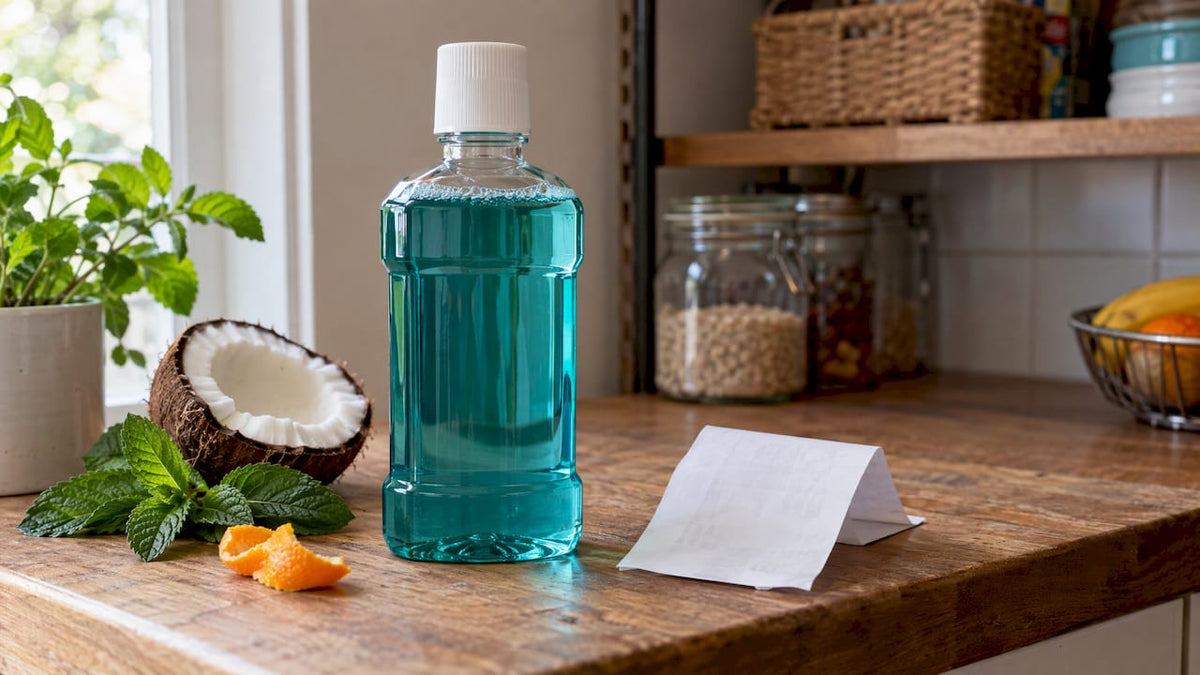
Is Mouthwash HSA Eligible? What Qualifies in 2026
Generally, no. Over-the-counter mouthwash used for fresh breath or everyday oral hygiene is not an eligible expense under most HSA and FSA plans. A rinse can qualify in narrow cases: a prescription rinse for a diagnosed condition, or a therapeutic rinse that treats a specific problem and is backed by proper documentation. This guide explains the rule, the exceptions, the records to keep, and what happens if you pay for the wrong thing with tax-advantaged money.
TL;DR
- Ordinary store-bought mouthwash is generally not HSA or FSA eligible, because it counts as a personal hygiene item.
- A prescription rinse for a diagnosed dental condition can qualify. Some non-drug therapeutic rinses may qualify with a Letter of Medical Necessity.
- Keep itemized receipts and any dentist or physician documentation, and confirm with your plan administrator before you claim.
- Using HSA funds on an ineligible item makes the amount taxable, plus a 20% penalty if you are under 65.
Table of Contents
- The short answer for HSA accounts
- Why the IRS treats mouthwash as a personal expense
- What about FSA eligibility?
- When a rinse can qualify
- What to keep if you try to claim a rinse
- What happens if you pay for ineligible mouthwash
- Choosing a mouthwash when it is out of pocket
- Our perspective
- Build a gentle routine with Selfwise
- FAQ
- Sources
The short answer for HSA accounts
Start with what plan administrators actually publish. Cigna’s eligible-expense guide lists mouthwash among the over-the-counter toiletries and personal-hygiene items that are not reimbursable. Further’s eligible-expense list also marks mouthwash as ineligible for both HSA and FSA reimbursement.
That covers the aisle products most people buy: the blue, green or amber rinse that promises fresh breath, a cleaner mouth or whiter teeth. It also covers alcohol-free, natural and herbal rinses sold as daily hygiene products. The label on the bottle does not decide eligibility. What decides it is what the product is for and whether a medical condition is behind the purchase.
The same logic explains why toothpaste, floss and toothbrushes are usually excluded too. If you have seen searches about whether toothpaste counts, the reasoning is identical: these are things nearly everyone buys for general upkeep.
Why the IRS treats mouthwash as a personal expense
The rule comes from how the IRS defines a medical expense. Under IRS guidance on medical expenses, medical costs are those for the diagnosis, cure, mitigation, treatment or prevention of disease. The expense must be primarily to alleviate or prevent a physical or mental illness or disability. Costs that are merely beneficial to general health are left out.
For mouthwash, this means the question is never “is it good for my mouth?” It is “would I have bought this but for a specific disease or condition?” An IRS information letter describes the factors used to evaluate an item:
- your intent in buying it
- whether a physician has made a diagnosis
- how the item relates to the medical condition
- whether you would have incurred the expense but for that condition
A typically personal expense is generally medical only if the answer to that last question is yes. Someone who rinses every morning as part of a routine would have bought the rinse anyway. That is why the everyday bottle fails the test.
What about FSA eligibility?
FSA rules follow the same pattern. The federal employee program FSAFEDS says over-the-counter items such as mouthwash are not eligible when they are used for general health or when no medical condition is being treated.
It also separates over-the-counter oral care from prescribed items. In its list of eligible limited-expense FSA items, over-the-counter oral care is not eligible, while some dental items, such as prescribed medicated toothpaste, are eligible with detailed receipts. The prescription is what changes the category.

Note that your employer’s plan may be stricter than the federal rules, so the administrator’s list is the final word for your account.
When a rinse can qualify
There are a few situations where mouthwash moves from hygiene into treatment. None is automatic, and each depends on documentation.
| Situation | Likelihood of qualifying | What usually matters |
|---|---|---|
| Everyday cosmetic or fresh-breath rinse | Generally no | Personal hygiene item |
| Natural, alcohol-free or herbal daily rinse | Generally no | Same rule: general upkeep |
| Prescription rinse for a diagnosed condition | Can qualify | The prescription and diagnosis |
| Fluoride rinse classed by the FDA as an OTC anticaries drug, with a Drug Facts panel | Can qualify, according to one analysis | Product classification and your plan’s view |
| Non-drug therapeutic rinse recommended by a clinician | May qualify | Letter of Medical Necessity linking it to the condition |
The last three rows come from a 2026 analysis of mouthwash and HSA rules, which says a prescription rinse used for a diagnosed condition can qualify, and some non-drug therapeutic rinses may qualify with a Letter of Medical Necessity. It also says a fluoride rinse classified by the FDA as an over-the-counter anticaries drug and carrying a Drug Facts panel can qualify. Treat that as a starting point and not a guarantee, because plan administrators apply their own review.
A dentist’s recommendation is not always enough
This is where people get tripped up. Optum Financial’s guide says mouthwash is not eligible even if a dentist recommends it to treat a condition like gingivitis. A recommendation for an over-the-counter product is not the same as a prescription or a documented medical necessity that your administrator accepts.
If you have gum disease, a dry mouth condition, or another diagnosed problem, start with a proper evaluation. A primary care program or your dentist can establish the diagnosis that the IRS factors rely on. Then ask whether a prescription rinse is appropriate for your case. Do not buy first and look for paperwork later.
Cosmetic versus therapeutic
The cosmetic or therapeutic split matters beyond taxes. Cosmetic rinses freshen breath and reduce odor temporarily. Therapeutic products claim to do something about a condition. Our guide to cosmetic vs therapeutic mouthwash explains the difference, which is also the difference your plan administrator cares about.
What to keep if you try to claim a rinse
If your plan accepts a prescribed or medically necessary rinse, paperwork decides whether the claim holds up. According to Optum’s guide, documentation must include:
- the patient’s name
- a description of the product
- the date of purchase
- the provider or merchant name
- the total amount
A card receipt that shows only a total will not do. Ask for an itemized receipt, or save the order confirmation from an online store.
The handling differs by account type. The same guide says HSA users should keep the documentation with their tax records, while FSA users should submit it with a manual claim or keep it if the expense was streamlined. For a plain-language walk-through of what counts, see this overview of HSA qualified medical expenses.
A practical checklist before you buy:
- Get the diagnosis in writing from your dentist or physician.
- Ask for a prescription or a Letter of Medical Necessity that names the product and the condition.
- Call or message your plan administrator and ask whether that specific product is reimbursable.
- Pay with the HSA card or submit for reimbursement only after you have the answer.
- Store the receipt and the letter together, with your tax records for the year.
What happens if you pay for ineligible mouthwash
A single bottle of mouthwash is a small amount, but the rules are the same for small and large mistakes. According to Optum Bank’s qualified expenses summary, a non-qualified HSA distribution is taxable income. If you are 64 or younger, an additional 20% tax penalty applies. At 65 or older the penalty does not apply, though the income tax still does.
There is a fix for honest mistakes. Ascensus explains that a mistaken distribution may be returned by April 15 following the first year you knew or should have known of the mistake. The same article notes that financial organizations are not required to accept returns, so ask your HSA custodian how they handle it. For a tax-specific question, talk with a tax professional.
For most people the simplest approach is to pay for everyday oral care out of pocket and save HSA dollars for expenses that clearly qualify, such as the dental treatments your plan lists.

Choosing a mouthwash when it is out of pocket
Because ordinary rinses are a personal expense, the best use of your money is a product you will actually use well. A few criteria help:
- Purpose. Decide whether you want fresh breath, support for enamel, or a gentler rinse for sensitive gums.
- Ingredients. Look for a short ingredient list, and check whether you want alcohol-free or fluoride-free formulas.
- Routine fit. Frequency and timing matter. Our guide on how often to use mouthwash covers matching a rinse to its purpose, and the one on using mouthwash before or after brushing settles the order question.
- Dental work and sensitivity. If you have crowns, implants or braces, a gentle formula without harsh chemicals is a sensible place to start. Ask your dentist about your particular case.
If you are weighing fluoride-free options, see our comparison of hydroxyapatite mouthwash vs fluoride, and the hydroxyapatite mouthwash roundup if you want to see the options side by side. Xylitol is another ingredient worth understanding, and we compare it in xylitol after meals: chewing gum vs mouthwash. If you want the simplest rinse of all, our piece on salt water vs mouthwash walks through it.
Our perspective
We make natural oral care products, so we get this question often: can I pay for it with my HSA card? Our honest answer is the same one the plan administrators give. Everyday mouthwash is a hygiene product, and your plan will generally treat it that way.
What we care about is making that daily purchase worth it. Our formulas are built around simple ingredients such as nano hydroxyapatite and xylitol, and they are made without alcohol, fluoride or harsh chemicals. They are designed for people who want a gentle routine that fits around dental work and sensitive mouths.
If you have a diagnosed condition, follow your dentist’s plan first and let your administrator tell you what is reimbursable. For everything else, a consistent daily rinse you enjoy using beats an expensive one you skip.
Viktor
Build a gentle routine with Selfwise
If you are ready to shop for a natural rinse as part of your daily care, our mouthwash collection includes oil pulling mouthwash, nano hydroxyapatite oral rinse, xylitol mouthwash and mouthwash tablets. They are formulated without alcohol, fluoride or harsh chemicals.
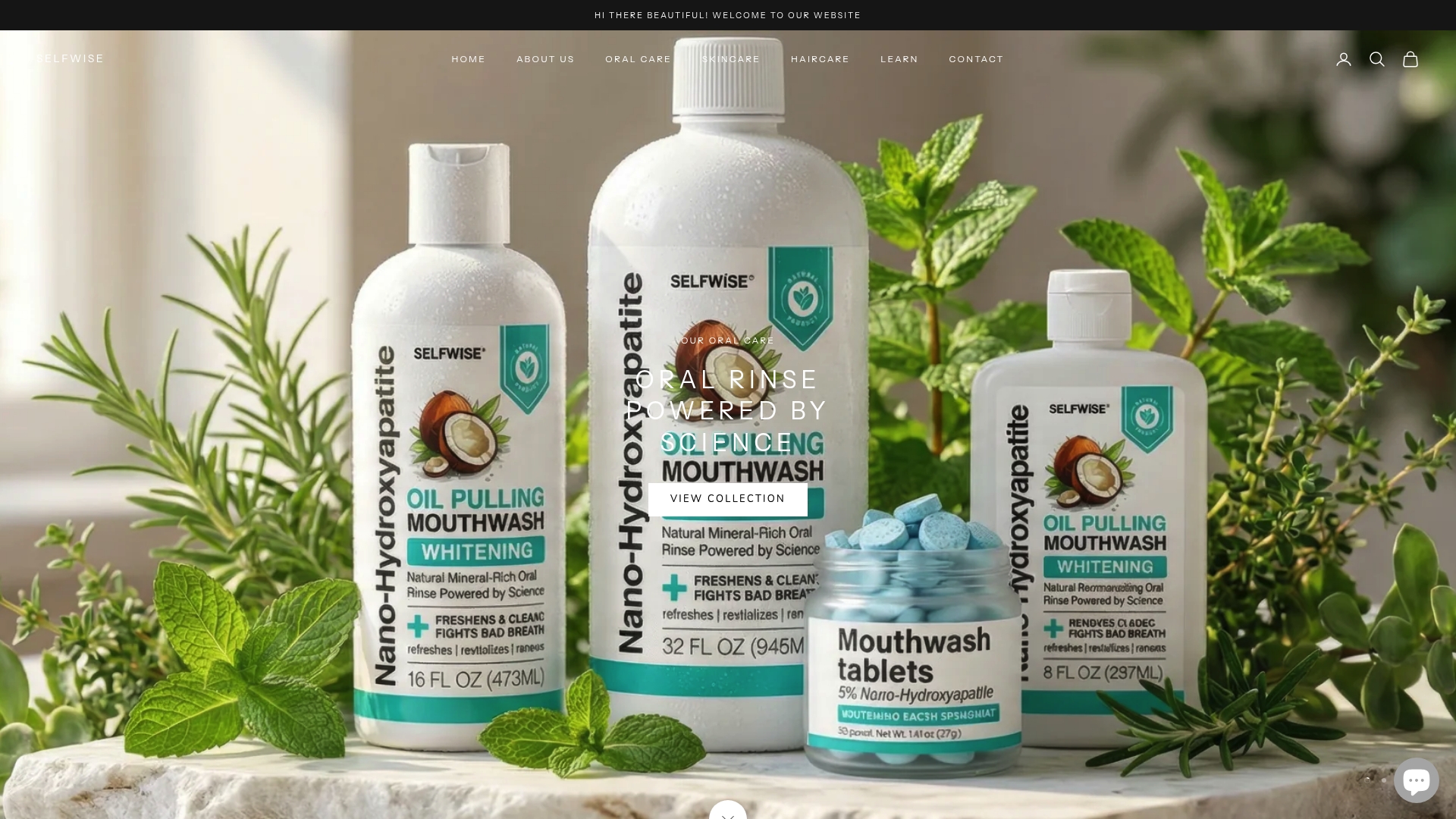
Not sure where to begin? Our natural oral care guide walks you through building a routine, and the fluoride-free collection gathers the products for it in one place. For tablets, read how to use mouthwash tablets safely.
FAQ
Is mouthwash HSA eligible?
Usually not. Plan administrators such as Cigna and Further list mouthwash as an ineligible hygiene item. A prescription rinse for a diagnosed condition is the main exception, so ask your administrator before you claim.
Is mouthwash FSA eligible?
Generally no. FSAFEDS says over-the-counter items such as mouthwash are not eligible when used for general health or when no medical condition is being treated. Prescribed items can be eligible with detailed receipts.
Can my dentist make mouthwash eligible by recommending it?
Not by recommendation alone. Optum Financial says mouthwash is not eligible even when a dentist suggests it for a condition like gingivitis. A prescription or accepted Letter of Medical Necessity is a different matter, and your administrator decides.
What if I already bought mouthwash with my HSA card?
The amount is taxable, and under age 65 a 20% penalty applies. You may be able to return a mistaken distribution by April 15 after the year you learned of the error. Ask your HSA custodian whether they accept returns.
What records should I keep?
Keep an itemized receipt showing your name, the product, the purchase date, the merchant and the total. Add the prescription or medical necessity letter. HSA owners keep these with their tax records.
Sources
- Cigna Healthcare: HSA, HRA and FSA eligible items and expenses
- Further: Eligible expenses
- FSAFEDS: FAQs
- FSAFEDS: Eligible limited expense health care FSA expenses
- IRS: Medical expenses related to nutrition, wellness and general health
- IRS information letter 2019-0005
- Optum Financial: Eligible expenses guide
- Optum Bank: HSA qualified medical expenses
- Ascensus: Medical expenses that can and can’t be covered by an HSA
- Can you buy mouthwash with HSA? What qualifies
- Pounds Health: HSA qualified medical expenses
- Garden State Medical Group: Programs