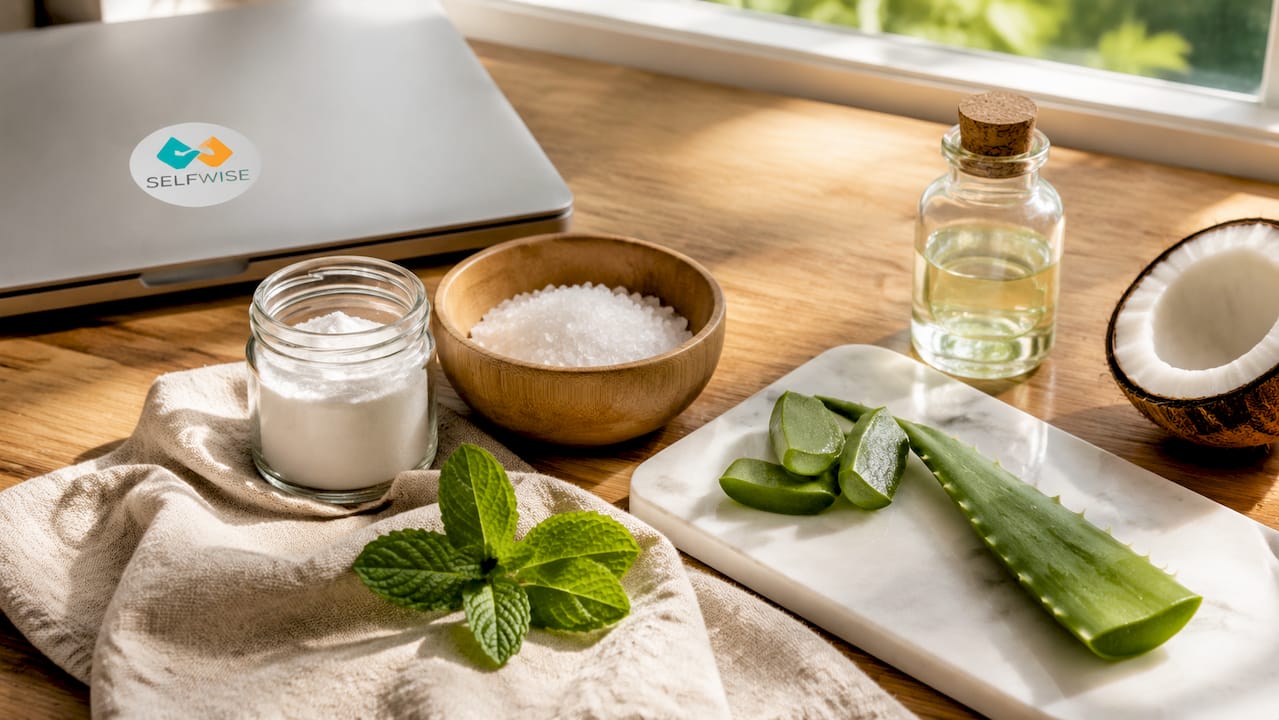
Homemade Mouthwash Ingredient Examples That Work
Homemade mouthwash is a water-based oral rinse made from natural ingredients like baking soda, salt, aloe vera, diluted hydrogen peroxide, and essential oils, combined to support fresh breath, pH balance, and gum comfort. These DIY mouthwash ingredients are among the most researched natural options available, and when used correctly, they deliver real oral hygiene benefits without harsh synthetic additives. The key word is “correctly.” Dilution, frequency, and ingredient quality all determine whether your homemade rinse helps or harms. This guide covers the best homemade mouthwash ingredient examples, how to prepare each one safely, and what to avoid.
1. What are the best homemade mouthwash ingredient examples?
The most effective DIY mouthwash ingredients fall into three categories: pH balancers, antimicrobials, and gum soothers. Standard safe recipes use 1 cup of water with 0.5 teaspoons of baking soda, salt, or botanical additives. That simple ratio is the foundation of nearly every natural mouthwash recipe worth making.
Homemade rinses cannot replicate the fluoride levels found in ADA-accepted commercial mouthwashes. That means they work best as supplements to brushing and flossing, not as replacements for cavity prevention. Think of them as a daily comfort and freshness tool, not a clinical treatment.
The core ingredients covered in this guide are baking soda, salt, aloe vera, diluted hydrogen peroxide, peppermint oil, clove oil, tea tree oil, xylitol, green tea, coconut oil, and turmeric. Each one has a specific function, a safe concentration range, and a recommended use frequency.
2. Baking soda: the pH balancer
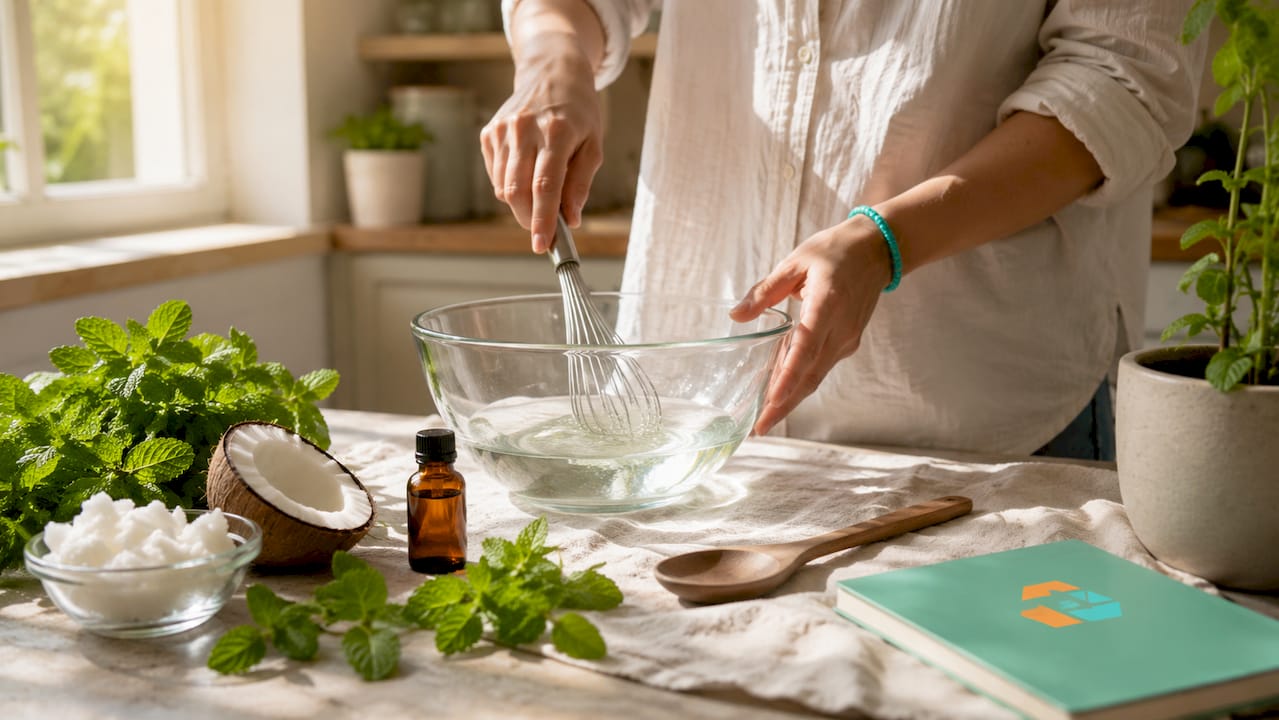
Baking soda neutralizes the acids that oral bacteria produce, which directly reduces the risk of enamel erosion and bad breath. The recommended dilution is ½ teaspoon of baking soda per 1 cup of water, used sparingly to avoid enamel wear over time. More is not better here. Overuse can disrupt the natural oral pH balance and irritate soft tissue.
Baking soda rinses work well after meals high in sugar or acid. They are not a daily long-term rinse for everyone. People with sensitive enamel or existing gum issues should limit use to a few times per week and check with their dentist.
Pro Tip: Use distilled water instead of tap water when mixing baking soda rinses. Distilled water avoids chlorine and mineral contaminants that can interfere with ingredient chemistry and reduce shelf life.
3. Salt: the gum soother
Saltwater rinses are one of the oldest and safest natural mouthwash options in oral care history. A typical saltwater recipe uses ½ teaspoon of fine sea salt dissolved in 1 cup of warm water for short-term daily use. Salt creates a temporary alkaline environment that discourages bacterial growth and soothes mild gum tenderness.
Saltwater is the go-to rinse after dental procedures, minor mouth sores, or gum irritation. It is gentle enough for daily use in the short term. For long-term daily rinsing, rotate it with other options to avoid drying out the oral tissues.
- Use warm water to help the salt dissolve fully
- Swish for 30 seconds and spit; do not swallow
- Avoid using it as a permanent daily rinse beyond two weeks without a break
4. Aloe vera: the sensitive gum option
Aloe vera juice supports dry mouth relief and gum healing through its anti-inflammatory properties. Food-grade aloe vera juice diluted at ¼ to ½ cup per cup of water creates a gentle rinse suited for people with sensitive gums or post-procedure discomfort. Always choose products with no added sugars or artificial flavors. Sugar in a mouthwash defeats the purpose entirely.
Aloe vera rinses are mild enough for daily use and pair well with other herbal ingredients for gum care. They do not whiten teeth or kill bacteria at the same rate as other ingredients, but they reduce inflammation and support tissue recovery. That makes them a strong choice for anyone dealing with gum sensitivity.
5. Diluted hydrogen peroxide: the occasional whitener
Hydrogen peroxide is a legitimate antimicrobial agent, but it requires strict dilution. Dilute 3% hydrogen peroxide 1:1 with water and use it no more than once per week to avoid tissue irritation and enamel damage. That weekly limit is non-negotiable. Daily use of even diluted hydrogen peroxide disrupts the oral microbiome and can cause soft tissue sensitivity.
Undiluted hydrogen peroxide, high-acid substances like undiluted lemon juice or apple cider vinegar, and high-concentration essential oils cause enamel erosion and tissue irritation. These are not ingredients to experiment with casually.
Hydrogen peroxide rinses are best used occasionally for breath freshening or mild whitening support. They are not a substitute for professional whitening treatments and should never be swallowed.
Pro Tip: Mix hydrogen peroxide rinse fresh each time. Pre-mixed solutions lose potency quickly and can become unstable if stored improperly.
6. Essential oils: peppermint, clove, and tea tree
Essential oils are among the most effective natural antimicrobial rinse ingredients available for homemade mouthwash. Peppermint freshens breath, clove provides analgesic and antibacterial action, and tea tree oil targets a broad range of oral bacteria. Each one works. Each one also carries real risk if used incorrectly.
Essential oils are hydrophobic. They do not mix with water on their own. Without emulsification, oils float on the water surface and can cause concentrated mucosal burns when they contact oral tissue directly. Emulsify them with a small amount of fractionated coconut oil or fine salt before adding to water.
- Use 1–3 drops of essential oil per cup of water, never more
- Always emulsify with a carrier before mixing into water
- Shake the bottle vigorously before every use to redistribute the oil
- Limit tea tree oil rinses to a few times per week; it is potent
For a deeper look at how essential oils work in oral rinses, the mechanism behind their antibacterial action is worth understanding before you start mixing.
7. Xylitol: the cavity fighter
Xylitol is a natural sugar alcohol that starves cavity-causing bacteria by blocking their ability to metabolize sugar. Adding xylitol to a homemade rinse gives it a mild sweetness and genuine anti-cavity function. Adjunct ingredients like xylitol offer antimicrobial and anti-inflammatory effects that complement the base ingredients in any natural mouthwash recipe.
A small amount, around ½ teaspoon per cup of water, is enough to deliver benefit without causing digestive issues. Xylitol is safe for adults and children in appropriate amounts. It is one of the few DIY mouthwash ingredients that directly addresses cavity risk, making it a strong addition to any natural mouthwash ingredients checklist.
8. Green tea: the antioxidant rinse
Brewed green tea used as a mouth rinse delivers antioxidants and antibacterial compounds called catechins directly to the gum tissue. Steep one bag in 1 cup of hot water, let it cool completely, and use it as a rinse. Green tea supports gum health and reduces bacterial load without disrupting the oral microbiome the way stronger antimicrobials can.
Green tea rinses are gentle enough for daily use and work well as a morning rinse before brushing. They do not replace fluoride or professional care. They do add a layer of antioxidant protection that most standard mouthwashes skip entirely.
9. Coconut oil: the oil pulling adjunct
Coconut oil does not work as a traditional rinse. It works through oil pulling, a practice where you swish 1 tablespoon of oil in your mouth for 10–15 minutes to pull bacteria and debris from between teeth and along the gum line. Coconut oil aids plaque control and reduces bacterial load when used consistently as part of a morning routine.
Oil pulling is not a replacement for brushing. It is an adjunct that works alongside your standard oral care routine. Selfwisebrand formulates its oil pulling products with nano hydroxyapatite to add enamel support to the traditional practice, which plain coconut oil alone cannot provide.
10. Turmeric: the anti-inflammatory option
Turmeric contains curcumin, a compound with documented anti-inflammatory and antibacterial properties. To use it in a rinse, dissolve a small pinch (around ⅛ teaspoon) in 1 cup of warm water with a drop of fractionated coconut oil to help it disperse. Turmeric rinses are best used occasionally, not daily, because curcumin can stain tooth surfaces and grout if used too frequently.
Turmeric works well for people dealing with gum inflammation or post-procedure soreness. It is not a whitening agent. Anyone who has ever spilled turmeric on a white shirt already knows the staining risk.
11. Ingredients to avoid in homemade mouthwash
Some popular “natural” ingredients cause more harm than good in oral rinses. Undiluted lemon juice and apple cider vinegar are highly acidic and erode enamel on contact. High-concentration essential oils without emulsification burn oral tissue. These are not edge cases. They are consistent risks documented across dental literature.
Check the oral care ingredients to avoid before adding anything new to your DIY formula. The line between a helpful natural ingredient and a damaging one is often just concentration and pH.
- Undiluted lemon juice: pH around 2, strips enamel
- Undiluted apple cider vinegar: similarly acidic, not safe as a rinse
- High-concentration essential oils without a carrier: mucosal burn risk
- Alcohol (rubbing or high-proof): dries oral tissue and disrupts microbiome
12. Ingredient comparison: what each one does
| Ingredient | Primary benefit | Safety level | Best use frequency |
|---|---|---|---|
| Baking soda | pH balance, breath freshening | High when diluted | 2–3 times per week |
| Salt | Gum soothing, mild antibacterial | High when diluted | Daily, short-term |
| Aloe vera | Gum healing, dry mouth relief | High with food-grade juice | Daily |
| Hydrogen peroxide | Antimicrobial, mild whitening | Moderate, strict dilution | Once per week max |
| Peppermint oil | Breath freshening, antibacterial | Moderate, emulsify first | 2–3 times per week |
| Clove oil | Analgesic, antibacterial | Moderate, 1–2 drops only | Occasional |
| Tea tree oil | Broad antimicrobial | Moderate, never swallow | 2–3 times per week |
| Xylitol | Anti-cavity, mild sweetness | High in small amounts | Daily |
| Green tea | Antioxidant, gum support | High | Daily |
| Turmeric | Anti-inflammatory | Moderate, staining risk | Occasional |
Key takeaways
The most effective homemade mouthwash uses diluted, food-grade natural ingredients at safe concentrations and works as a supplement to brushing and flossing, not a replacement for fluoride-based cavity prevention.
| Point | Details |
|---|---|
| Dilution is non-negotiable | Every active ingredient needs proper dilution to avoid enamel erosion or tissue burns. |
| Emulsify essential oils | Mix oils with a carrier before adding to water to prevent concentrated mucosal contact. |
| Use distilled water | Tap water contaminants reduce ingredient efficacy and shorten shelf life. |
| Homemade rinses supplement, not replace | DIY mouthwash cannot deliver the fluoride levels of ADA-accepted commercial rinses. |
| Rotate ingredients | No single ingredient should be used daily long-term; rotation prevents overexposure and irritation. |
What I’ve learned from years of watching people DIY their oral care
The most common mistake people make with homemade mouthwash is treating it like a more-is-better situation. They double the baking soda, add five drops of tea tree oil instead of two, and use it twice a day because it feels like a healthy habit. Within weeks, they report increased sensitivity, dry mouth, or gum irritation and blame the natural ingredients. The ingredients were not the problem. The concentration and frequency were.
The second thing I’ve noticed is that people skip distilled water because it feels unnecessary. Tap water works fine for drinking, so why not for mouthwash? The answer is chemistry. Chlorine and minerals in tap water react with baking soda and essential oils in ways that reduce effectiveness and accelerate spoilage. A bottle of distilled water costs almost nothing. Use it.
Storage matters more than most guides admit. Amber glass bottles protect light-sensitive ingredients like essential oils and aloe vera. Plastic containers can leach compounds into the rinse over time, especially with oil-based formulas. Make small batches, store them properly, and use them within one to two weeks.
My honest recommendation: start with a single-ingredient rinse, either saltwater or a baking soda rinse, and use it correctly for two weeks before adding anything else. That way you know what is working and what is not. Layering five ingredients at once makes it impossible to identify what is helping or causing a reaction.
Consult your dentist before making any DIY rinse a permanent part of your routine. A natural oral care guide can help you build a routine that complements professional care rather than replacing it.
— Viktor
Natural mouthwash from Selfwisebrand
If you want the benefits of natural oral care without the mixing, measuring, and shelf-life math, Selfwisebrand has done the formulation work for you.
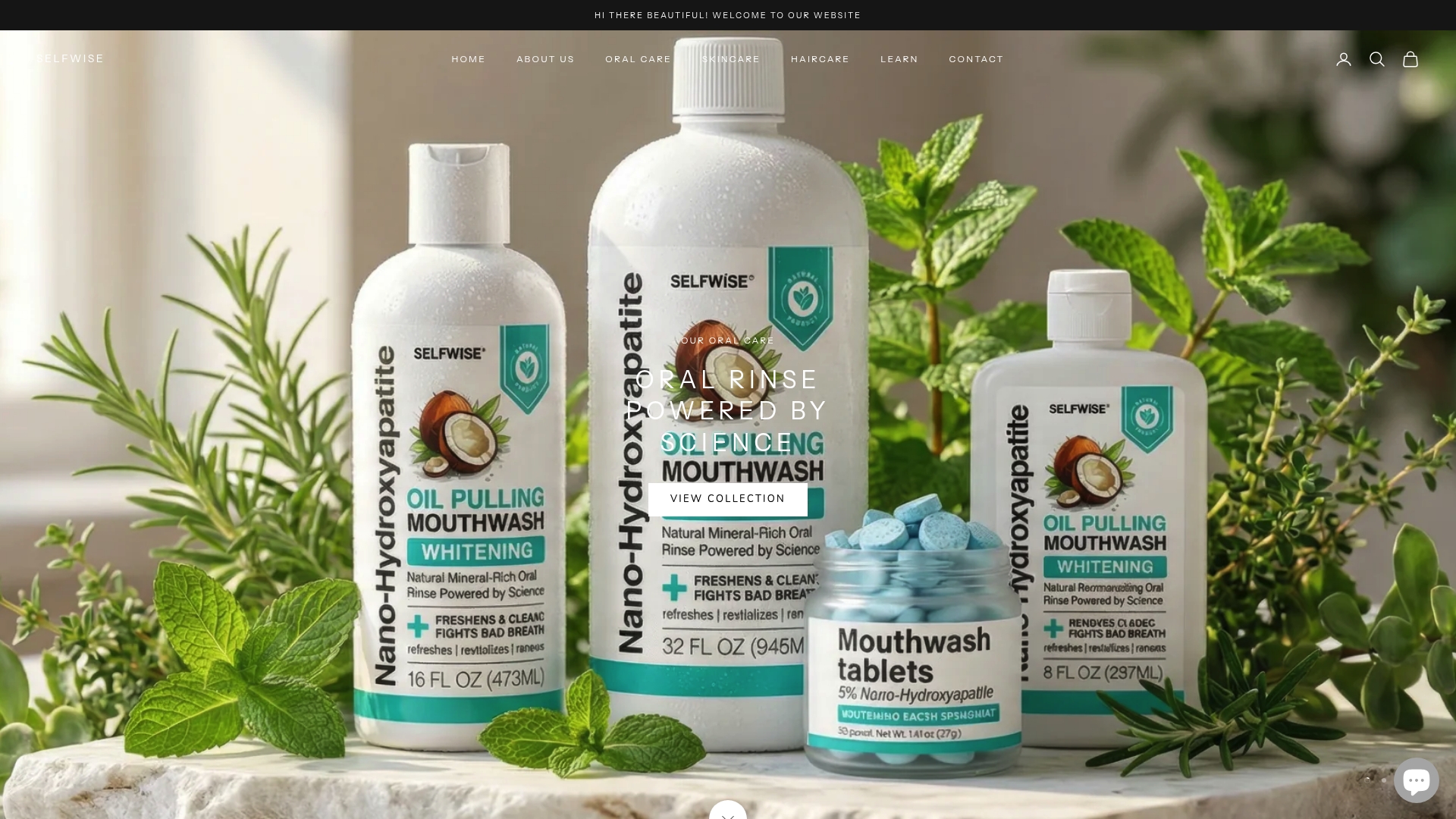
Selfwisebrand’s nano hydroxyapatite mouthwash tablets deliver enamel support and fresh breath in a fluoride-free, solid format with no mixing required. For those who prefer a liquid format, the natural mouthwash collection uses science-backed ingredients with full transparency on what is inside. Every product is built around the same principle as the best DIY recipes: simple ingredients, correct concentrations, real results. Browse the fluoride-free oral care range to find the right fit for your routine.
FAQ
What is the safest homemade mouthwash ingredient for daily use?
Saltwater and aloe vera juice rinses are the safest options for daily short-term use. Both are gentle on gum tissue and carry minimal risk when properly diluted.
How do I make a simple natural mouthwash at home?
Dissolve ½ teaspoon of fine sea salt or baking soda in 1 cup of distilled warm water, swish for 30 seconds, and spit. That is a complete, research-backed DIY mouthwash recipe.
Can homemade mouthwash replace commercial fluoride rinse?
No. Homemade rinses cannot replicate the fluoride levels in ADA-accepted commercial mouthwashes. Use DIY rinses as supplements for comfort and breath freshening, not as cavity prevention tools.
How often should I use a hydrogen peroxide mouthwash?
Use diluted hydrogen peroxide (3% mixed 1:1 with water) no more than once weekly. More frequent use causes tissue irritation and enamel damage over time.
Do essential oils need to be mixed differently for mouthwash?
Yes. Essential oils must be emulsified with a carrier like fractionated coconut oil or salt before adding to water. Without emulsification, they float on the surface and can burn oral tissue on contact.