Nano Hydroxyapatite Whitening Routine: Daily Guide
A nano hydroxyapatite whitening routine is an enamel-restorative oral care method that gently brightens teeth by rebuilding and smoothing enamel with scientifically verified nanoparticles. Unlike peroxide bleaching, this approach works by filling microscopic enamel defects and smoothing the tooth surface so it reflects light more evenly. The result is a naturally brighter smile without chemical sensitivity or enamel damage. Selfwisebrand formulates its fluoride-free oral care products around this exact mechanism, combining nano hydroxyapatite with supportive ingredients like xylitol and coconut oil. If you want whiter teeth without harsh bleaching agents, this routine is worth understanding fully.
What is nano hydroxyapatite and how does it whiten teeth?
Nano hydroxyapatite (nano-HA) is a synthetic form of the mineral that makes up roughly 97% of tooth enamel. Scientists engineer it into particles small enough to slip into the microscopic pores and cracks that develop in enamel over time. That physical repair is what produces the whitening effect.
The whitening mechanism is not chemical. Nano-HA does not bleach pigment the way hydrogen peroxide does. Instead, it restores enamel surface integrity so the tooth reflects light more uniformly, which reads as brighter to the eye. People who switch from peroxide products often notice a subtler but more natural-looking result.
Particle geometry matters more than most people realize. Rod-shaped particles measuring 20–80 nm penetrate enamel microporosities far more effectively than irregular or micro-sized particles. This is why two products with identical concentration percentages can deliver very different results.
Here is what sets nano-HA whitening apart from traditional methods:
- No bleaching agents. Nano-HA restores rather than strips, so it does not cause the sensitivity spikes common with peroxide treatments.
- Enamel integration. The particles bond directly to existing enamel, filling surface defects at a structural level.
- Light reflection improvement. A smoother enamel surface scatters less light and appears whiter without any color change to the underlying tooth.
- Dentinal tubule occlusion. Rod-shaped nano-HA particles also block the open tubules that cause sensitivity, making the routine beneficial beyond cosmetics.
- Biocompatibility. Nano-HA is chemically identical to natural tooth mineral, so the body does not treat it as a foreign substance.
Understanding this mechanism sets realistic expectations. You will not see overnight results. You will see gradual, natural brightening as enamel integrity improves over weeks of consistent use.
How to select effective nano hydroxyapatite oral care products
Product quality varies widely in this category. The label may say “hydroxyapatite” without specifying particle size, shape, or concentration. Those details determine whether the product actually works.
Concentration of at least 10% nano-HA is the baseline threshold for clinical effectiveness. Products below that level may not deliver enough active material to meaningfully repair enamel. Brands that publish third-party stability data and specify their nano-to-micro particle ratio are the most trustworthy options.
Particle shape and size are stronger predictors of efficacy than concentration alone. Well-engineered rod-shaped particles in the 20–80 nm range penetrate enamel microporosities better than larger or irregularly shaped alternatives. A product with 10% well-engineered nano-HA will outperform one with 20% poorly stabilized particles.
Formulation stability is a hidden variable. Nano-HA particles tend to clump together in water-based formulas, which reduces their ability to penetrate enamel. Look for products that use stabilizing agents or anhydrous formats to keep particles properly dispersed.
Supporting ingredients also matter. Xylitol inhibits the bacteria that cause acid erosion, which protects the enamel nano-HA is trying to rebuild. Coconut oil, used in oil pulling formats, helps reduce bacterial load before brushing. These ingredients work alongside nano-HA rather than competing with it.
Pro Tip: Check whether a brand lists particle size in nanometers on its label or website. If it only says “hydroxyapatite” without specifying nano-scale particle dimensions, the product may contain micro-sized particles that cannot penetrate enamel effectively.
Watch for these red flags when reading labels:
- “Hydroxyapatite” listed without nano-scale specification
- No concentration percentage disclosed
- No third-party testing or stability data referenced
- Abrasive agents like silica listed high in the ingredient order
- Peroxide added alongside nano-HA, which can counteract enamel restoration
You can learn more about hydroxyapatite in natural oral care to understand why ingredient quality and sourcing matter for long-term enamel health.
Step-by-step nano hydroxyapatite whitening routine to follow daily
A consistent daily sequence is what separates people who see results from those who do not. The order of steps matters because each one prepares the enamel for the next.
The daily sequence
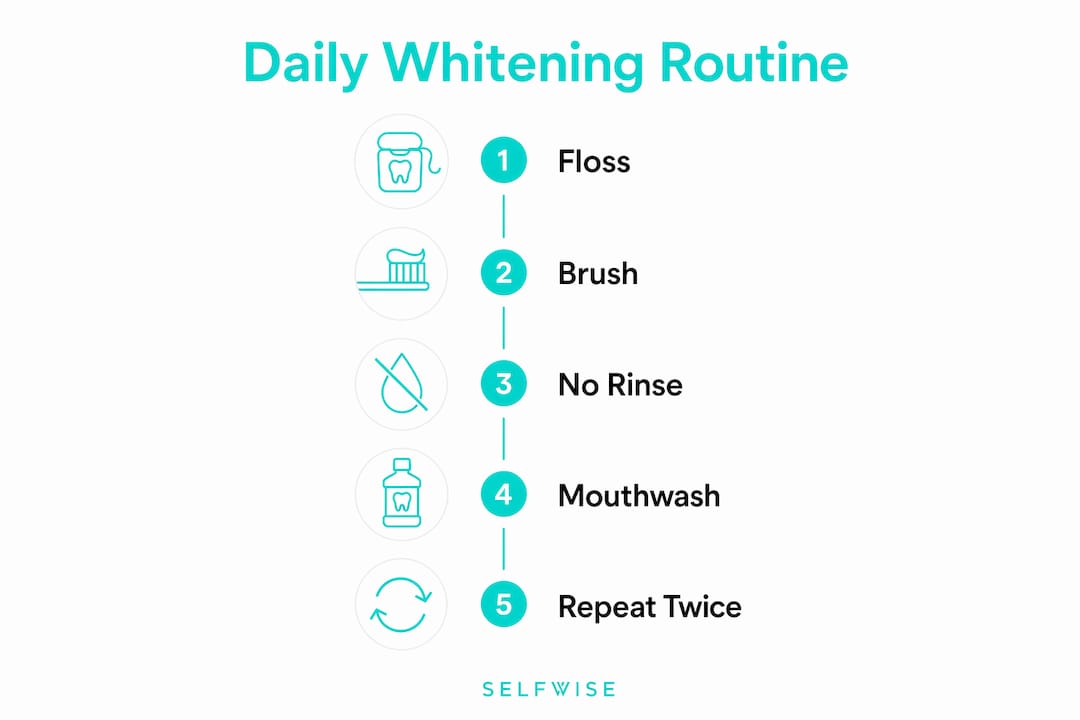
- Floss first. Remove interdental debris before brushing. Nano-HA toothpaste cannot reach between teeth effectively if food and plaque are blocking the surface.
- Rinse with water. A quick water rinse clears loosened debris from flossing. Do not use mouthwash at this stage.
- Brush with nano-HA toothpaste for 2 minutes. Use a soft-bristle brush and gentle circular motions. Aggressive scrubbing does not improve results and can abrade enamel.
- Do not rinse after brushing. This is the most important step most people skip. Rinsing immediately after brushing washes away the nano-HA before it can adhere to enamel. Spit out excess toothpaste and leave the residue on your teeth.
- Use nano-HA mouthwash. After a 30-minute gap, rinse with a nano-HA mouthwash to extend mineral contact time. Selfwisebrand’s nano hydroxyapatite mouthwash tablets dissolve in water and deliver a fresh dose of active particles without alcohol or harsh additives.
- Optional: oil pulling in the morning. Before breakfast, swish with a nano-HA oil pulling mouthwash for 5–10 minutes. This reduces bacterial load and primes enamel for the day’s mineral exposure.
Pro Tip: Do the no-rinse step at night. Saliva flow drops during sleep, so nano-HA particles left on enamel after your evening brush have hours of undisturbed contact time to integrate into the surface.
Routine frequency and timing
| Step | Frequency | Timing |
|---|---|---|
| Floss | Twice daily | Before brushing |
| Brush with nano-HA toothpaste | Twice daily | Morning and evening |
| Nano-HA mouthwash | Once or twice daily | 30 minutes after brushing |
| Oil pulling with nano-HA | Once daily | Morning, before breakfast |
| Avoid eating or drinking | After each brush | Wait at least 30 minutes |
Consistency over 4–8 weeks is what produces visible enamel improvement. Skipping days resets the mineral deposition process. Think of it like applying sunscreen: one application does not protect you for a week.
Avoid using abrasive whitening toothpastes or peroxide strips simultaneously. Abrasives undo the surface smoothing nano-HA creates. Peroxide can interfere with the mineral bonding process. If you want to use nano hydroxyapatite for stronger teeth, keeping the routine clean and chemical-free is the most direct path.
Common mistakes that undermine your results
Most people who try nano-HA and see no improvement are making one of a small number of predictable errors. Identifying them early saves weeks of wasted effort.
- Rinsing after brushing. This is the single most common mistake. Experts advise against rinsing after brushing because it removes active nano-HA before it can bond to enamel. Spit, do not rinse.
- Choosing products without verified nano-HA concentration. A product that lists “hydroxyapatite” without specifying nano-scale particle size may contain micro-particles that cannot penetrate enamel at all.
- Expecting peroxide-level whitening speed. Nano-HA restores enamel gradually. Expecting dramatic results in one week leads to abandoning a routine that would have worked by week six.
- Using abrasive toothpaste on alternate days. Abrasive formulas scratch the enamel surface nano-HA is trying to smooth. Mixing the two approaches cancels out your progress.
- Skipping flossing. Nano-HA toothpaste cannot reach interdental surfaces. Skipping flossing leaves a significant portion of tooth surface untreated.
“Nano hydroxyapatite does not bleach teeth like peroxide but restores enamel surface integrity for a naturally brighter appearance, avoiding the risks of over-whitening.” — Dr. Frangella, DDS
When results plateau after 8–10 weeks of consistent practice, consult a dental professional. Deeper staining from tetracycline, trauma, or internal discoloration does not respond to surface remineralization and requires clinical intervention.
How does nano hydroxyapatite whitening compare to fluoride and peroxide methods?
Each whitening approach works through a different mechanism. Understanding those differences helps you choose the right method for your situation.
| Method | Mechanism | Whitening type | Best for |
|---|---|---|---|
| Nano hydroxyapatite | Fills enamel defects, smooths surface | Natural brightening | Sensitivity, natural whitening, fluoride-free routines |
| Fluoride | Hardens enamel, prevents demineralization | No whitening effect | High cavity risk, long-term prevention |
| Peroxide bleaching | Oxidizes pigment molecules | Chemical bleaching | Fast, dramatic color change |
| Combination nano-HA + fluoride | Repairs and hardens enamel | Natural brightening | Balanced cavity and sensitivity needs |
Fluoride remains the gold standard for cavity prevention. Nano-HA currently lacks the long-term cavity prevention data that fluoride has accumulated over decades. For people with high cavity risk, fluoride is the safer primary choice.
Peroxide whitening produces faster visible results but carries real trade-offs. Sensitivity, gum irritation, and enamel thinning with repeated use are documented side effects. Nano-HA avoids all of these because it adds mineral rather than removing it.
The nano-HA advantage is clearest in specific populations:
- People with sensitivity to fluoride or those choosing fluoride-free routines
- Pregnant women and children, for whom nano-HA’s non-toxic, biocompatible profile makes it a safer option
- People with existing sensitivity who cannot tolerate peroxide
- Anyone who wants gradual, natural-looking whitening without chemical risk
Combination formulas that include both fluoride and nano-HA exist and may suit people who want cavity protection alongside enamel restoration. These are a reasonable middle ground for those not committed to a fully fluoride-free approach. You can also review fluoride-free toothpaste alternatives to see how nano-HA fits within the broader natural oral care category.
Key takeaways
A nano hydroxyapatite whitening routine works by physically restoring enamel, not by bleaching, which means consistency, correct technique, and verified product quality determine your results.
| Point | Details |
|---|---|
| Do not rinse after brushing | Leaving nano-HA on enamel after brushing maximizes mineral contact and bonding time. |
| Choose verified 10%+ concentration | Products specifying nano-scale particle size and third-party data deliver measurably better results. |
| Particle shape drives efficacy | Rod-shaped particles in the 20–80 nm range penetrate enamel better than concentration percentage alone predicts. |
| Nano-HA is safe for sensitive groups | It is biocompatible and non-toxic, making it suitable for children, pregnant women, and sensitive teeth. |
| Expect gradual, natural brightening | Results build over 4–8 weeks of consistent use, not overnight like peroxide treatments. |
Why I think most people misread what nano-HA actually does
People come to nano hydroxyapatite expecting a natural version of peroxide whitening. That framing sets them up for disappointment. Nano-HA is not a whitening agent in the traditional sense. It is a repair agent that produces whitening as a side effect of doing its real job.
I have seen this play out repeatedly. Someone uses a nano-HA product for two weeks, compares their teeth to a before photo taken in different lighting, and concludes it does not work. The product was working. The expectation was wrong.
The results I find most convincing are the ones that show up in texture and sensitivity before they show up in color. When someone tells me their teeth feel smoother and their morning coffee sensitivity has dropped, I know the enamel is actually rebuilding. The brighter appearance follows that. It does not lead it.
My honest recommendation: commit to the full routine for eight weeks before evaluating. Use the same lighting and camera angle for comparison photos. And pick a product that actually specifies nano-scale particle dimensions. The label detail is not marketing. It tells you whether the product can physically do what nano-HA is supposed to do.
The research on nano-HA is still maturing, and long-term cavity prevention data is not yet where fluoride’s data is. That is a real limitation worth acknowledging. But for natural whitening, sensitivity relief, and fluoride-free enamel support, the mechanism is sound and the results are real when the routine is followed correctly.
— Viktor
Selfwisebrand’s fluoride-free nano-HA products for your routine
Selfwisebrand builds its oral care line around the same principles covered in this article: verified ingredients, no harsh chemicals, and formulas that support enamel rather than strip it.
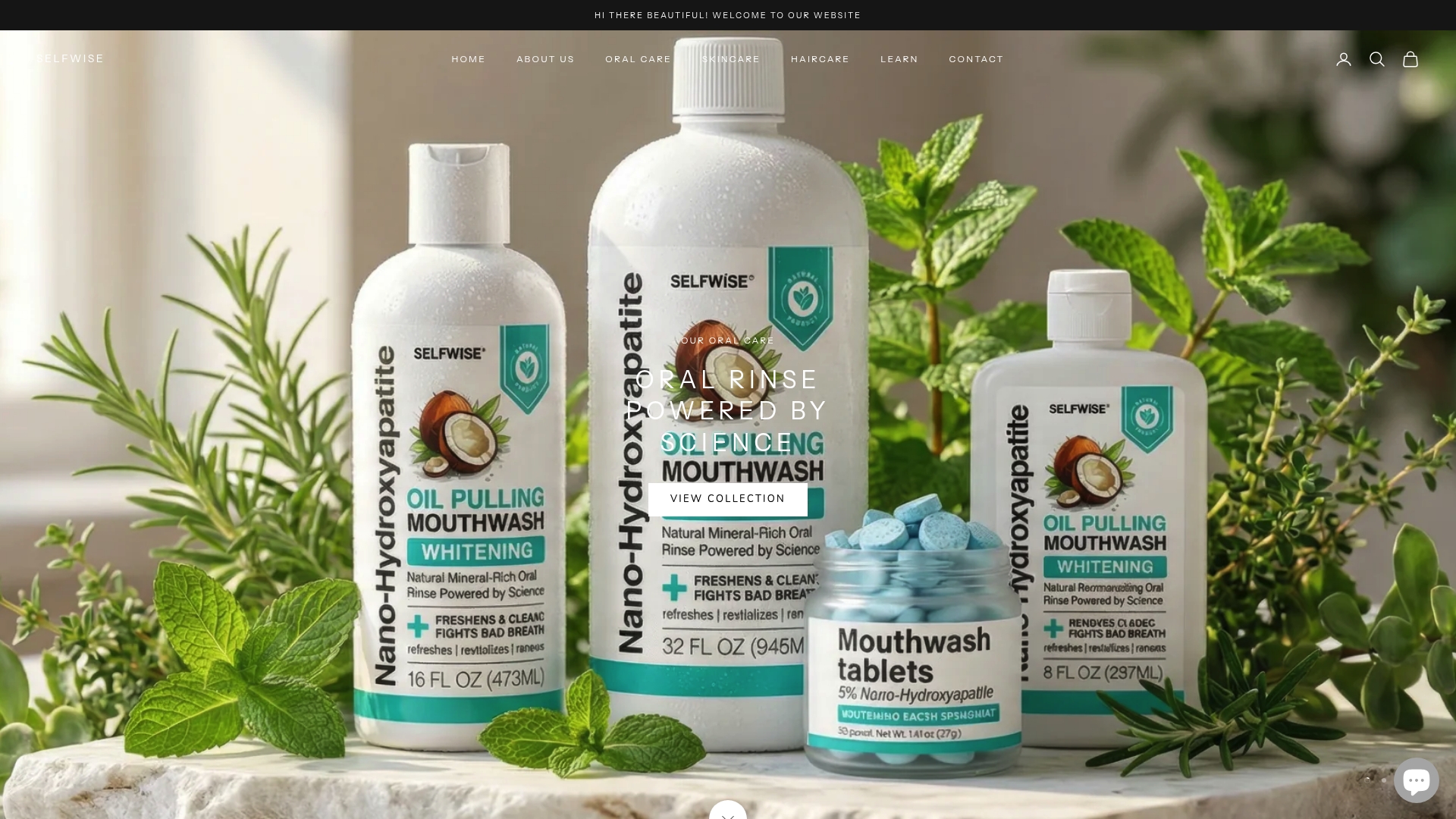
The fluoride-free collection includes nano hydroxyapatite mouthwash tablets and an oil pulling mouthwash, both formulated with nano-HA and xylitol. The mouthwash tablets dissolve in water for a fresh, portable rinse that fits the post-brush step in the daily routine. The nano hydroxyapatite oil pulling mouthwash combines the bacterial-reduction benefits of oil pulling with direct enamel mineral support. Both products are designed for people who want a clean, effective routine without fluoride, alcohol, or artificial additives.
FAQ
What does nano hydroxyapatite actually do to whiten teeth?
Nano hydroxyapatite fills microscopic enamel defects and smooths the tooth surface, which improves light reflection and creates a naturally brighter appearance. It does not bleach pigment the way peroxide does.
How long does a nano-HA whitening routine take to show results?
Most people notice visible improvement after 4–8 weeks of consistent twice-daily use. Results are gradual because the mechanism is enamel restoration, not chemical bleaching.
Is nano hydroxyapatite safe for children and pregnant women?
Nano-HA is biocompatible and non-toxic, making it suitable for children and pregnant women who want a fluoride-free option without bleaching agents.
Why should I not rinse after brushing with nano-HA toothpaste?
Rinsing immediately after brushing washes away nano-HA before it can bond to enamel. Spitting without rinsing keeps active particles in contact with the tooth surface longer.
Can I use nano hydroxyapatite alongside fluoride toothpaste?
Combination formulas that include both nano-HA and fluoride exist and may offer balanced cavity prevention alongside enamel restoration. Using separate products alternately is also an option, though a dental professional can advise on the best approach for your cavity risk level.