Is oil pulling good for your gums? What the research actually says
Gum health rarely gets as much attention as tooth whitening or fresh breath — but it's arguably more important. Gum disease is the leading cause of tooth loss in adults, and its early stages are almost entirely preventable with consistent home care. Oil pulling is frequently recommended as a natural support for gum health, and for once, there's real evidence behind the claim. Here's what the research shows and how to use it correctly.
Quick summary
- What it does: Oil pulling reduces plaque and bacteria around the gumline through mechanical emulsification, lowering the bacterial load that triggers gum inflammation.
- Best for: Anyone looking to support gum health as part of a daily natural oral care routine — particularly those with early gum sensitivity or mild inflammation.
- Not for: Active gum disease (periodontitis) — this requires professional treatment. Oil pulling is a preventive and maintenance tool, not a treatment.
- Key fact: Multiple randomised controlled trials have found oil pulling reduces plaque index and gingival index scores — standard clinical measures of plaque accumulation and gum inflammation — comparably to chlorhexidine mouthwash in some comparisons.
- Where to find it: Selfwise Nano Hydroxyapatite Oil Pulling Mouthwash
Best for: Adults supporting gum health through daily natural oral care, particularly those who prefer to avoid alcohol-based mouthwash.
Not for: Replacing professional periodontal treatment for diagnosed gum disease.
What causes gum problems?
Gum disease begins as gingivitis — inflammation of the gum tissue caused by bacterial plaque accumulating at the gumline. The bacteria in plaque release toxins that trigger an immune response in the gum tissue, causing redness, swelling, and bleeding on brushing. At this stage, the condition is entirely reversible with improved plaque removal.
Left untreated, gingivitis progresses to periodontitis — a deeper infection that damages the bone and connective tissue supporting the teeth. Periodontitis is not reversible; it can only be managed. This is why addressing early gum inflammation matters.
The primary driver of both conditions is bacterial plaque at the gumline — specifically the bacteria Porphyromonas gingivalis, Treponema denticola, and others associated with periodontal disease. Any intervention that consistently reduces bacterial load at the gumline reduces the risk of progression.
What the research shows on oil pulling and gum health
Several randomised controlled trials have examined oil pulling's effect on gum health, using standard clinical measures: the Plaque Index (PI), which measures plaque accumulation, and the Gingival Index (GI), which measures gum inflammation severity.
A study published in the Journal of the Indian Society of Pedodontics and Preventive Dentistry (Asokan et al.) found that oil pulling with sesame oil produced significant reductions in both Plaque Index and Gingival Index scores after 10 days, comparable to chlorhexidine mouthwash. A follow-up study found similar results with coconut oil, which contains lauric acid — a fatty acid with documented antimicrobial properties in laboratory settings.
A study in the Nigerian Medical Journal compared oil pulling to chlorhexidine in patients with plaque-induced gingivitis and found oil pulling produced statistically significant reductions in plaque and gingival scores after 4 weeks, with no adverse effects reported.
It is worth being clear about what the evidence does and does not show: these studies demonstrate oil pulling reduces plaque and early gum inflammation. They do not show it treats periodontitis or replaces professional care for established gum disease.
Why coconut oil specifically?
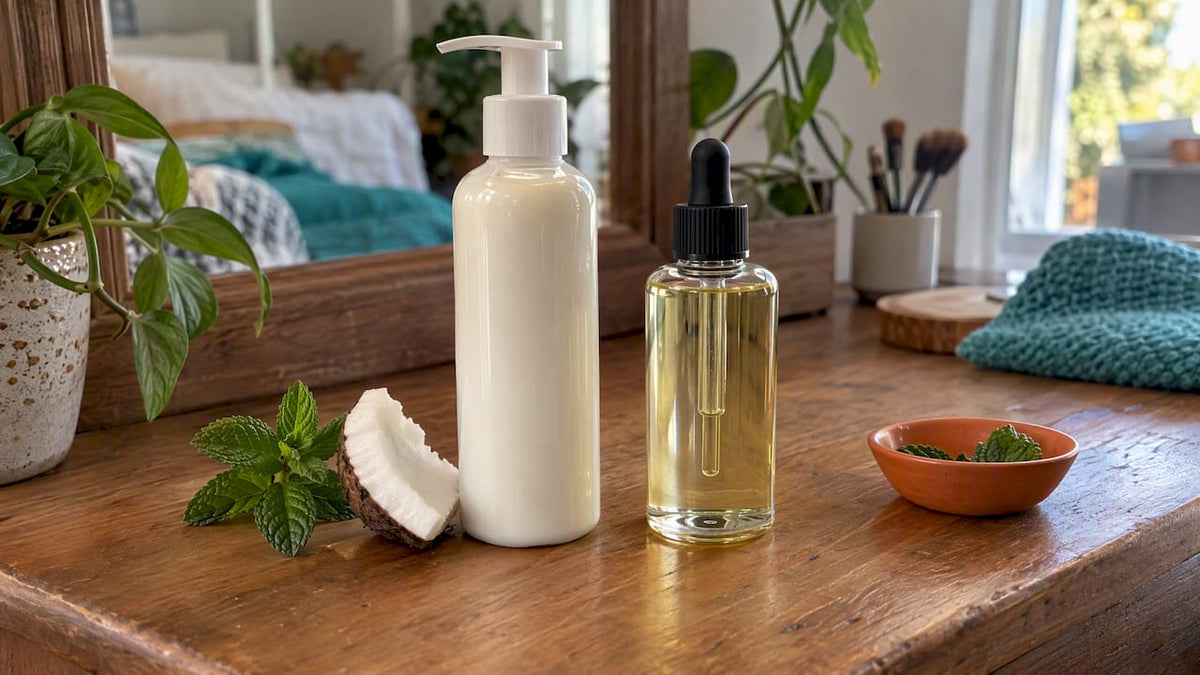
Most oil pulling research uses sesame or coconut oil. Coconut oil has become the dominant choice in modern use for practical reasons — it is widely available, has a neutral flavour when refined, and contains approximately 50% lauric acid by weight.
Lauric acid, when saponified (converted to a soap-like compound during swishing), has demonstrated antimicrobial activity against Streptococcus mutans and Candida albicans in laboratory studies. Whether the concentrations achieved during oil pulling are sufficient to produce clinical antimicrobial effects is debated, but the mechanical emulsification effect — independently of any antimicrobial chemistry — is likely the primary driver of the clinical results observed in trials.
How the Selfwise formula supports gum health
The Selfwise Nano Hydroxyapatite Oil Pulling Mouthwash builds on the coconut oil base with several additions relevant to gum health:
- Tea tree oil — an essential oil with antimicrobial properties, included at a concentration intended to complement the mechanical cleaning action of the oil base.
- Peppermint and spearmint oil — natural antimicrobials that freshen breath by addressing the sulphur-producing bacteria that cause odour, many of which live at the gumline.
- Nano hydroxyapatite — primarily a remineralising ingredient for enamel, but its deposition on tooth surfaces also creates a smoother surface that bacterial biofilm adheres to less readily over time.
The formula is alcohol-free. This matters for gum health: alcohol dries the oral mucosa and gum tissue with repeated exposure, which can increase sensitivity and reduce the protective barrier function of gum tissue over time.
How to use oil pulling for gum health
For maximum gum benefit, use oil pulling in the morning before eating. Overnight, bacteria multiply undisturbed in the mouth — morning is when bacterial load and the inflammatory compounds they produce are highest.
- Shake the bottle well before use
- Measure 1 to 2 teaspoons and take into the mouth
- Swish gently for 1 to 5 minutes — focus on moving the liquid around the gumline, not just between the teeth
- Spit into the bin (not the sink)
- Rinse with water, then brush
Consistency matters more than duration. Daily use for 4 weeks produces measurable gum health improvements in clinical studies. A 30-second rinse done every day will outperform a 20-minute session done once a week.
Frequently asked questions
Can oil pulling reverse gum disease?
Oil pulling can reverse early gingivitis — the reversible stage of gum disease characterised by inflammation and bleeding — when combined with thorough brushing and flossing. It cannot reverse periodontitis, where bone and tissue loss has already occurred. If you have been diagnosed with gum disease, follow your dentist or periodontist's treatment plan first.
How quickly does oil pulling improve gum health?
Clinical studies show measurable improvements in plaque and gingival index scores within 1 to 4 weeks of consistent daily use. Bleeding on brushing — a common early sign of gingivitis — often reduces within 2 to 3 weeks in people with mild inflammation who add oil pulling to a thorough brushing and flossing routine.
Should I oil pull before or after brushing?
Before brushing is generally recommended. Oil pulling first removes loose bacteria and debris; brushing then mechanically removes the remaining plaque. This sequence is also more comfortable — brushing first can leave a residual toothpaste taste that competes with the oil.
Is oil pulling safe for sensitive gums?
Yes. Oil pulling is gentle — there is no abrasion and no chemical irritants. The Selfwise formula is alcohol-free, which makes it particularly suitable for those with gum sensitivity who find conventional mouthwash uncomfortable.
Can I use oil pulling if I have gum recession?
Gum recession exposes the root surface of the tooth, which is more sensitive than enamel. Oil pulling is safe to use with gum recession — there is no abrasion involved. If your recession is associated with active periodontitis, prioritise your dentist's treatment plan alongside any home care routine.
Related reading
- Selfwise natural oral care guide
- Nano Hydroxyapatite Oil Pulling Mouthwash
- Nano Hydroxyapatite Mouthwash Tablets
Written by: Selfwise Editorial Team | Published: April 2026 | Disclosure: This article is published by Selfwise, a brand that sells oil pulling mouthwash products. This content is informational and does not constitute dental or medical advice. Consult your dentist for any diagnosed gum condition.
Sources: Asokan S et al. Effect of oil pulling on plaque and gingivitis. Journal of the Indian Society of Pedodontics and Preventive Dentistry. Peedikayil FC et al. Effect of coconut oil in plaque related gingivitis. Nigerian Medical Journal (2015).