Chlorhexidine Mouthwash: Avoid Staining, Tartar, and Metallic Taste
Chlorhexidine mouthwash works well for short-term control of plaque and gum inflammation, but it comes with predictable trade-offs. Most users notice tooth staining, a bump in tartar buildup, and a metallic taste within days to weeks. Serious allergic reactions are rare but documented, including anaphylaxis. Talk to your dentist before starting chlorhexidine and again if any symptom feels severe or won’t quit.
TL;DR:
- Using chlorhexidine for more than two weeks increases the risk of teeth, tongue, and restoration staining that usually requires professional cleaning to remove.
- Tartar buildup can accelerate during treatment, especially if there is already a significant amount of plaque before starting the rinse.
- Taste alterations, typically metallic, often resolve within days after stopping, but staining and tartar may need dental intervention to fully address.
- Serious allergic reactions are rare but include anaphylaxis, with signs such as swelling, difficulty breathing, or widespread hives requiring immediate medical attention.
- People with prominent front restorations or allergies should limit use or discuss alternative options with their dentist before starting chlorhexidine rinse.
Table of Contents
- Chlorhexidine Mouthwash Side Effects: The Common Ones
- Rare But Serious Allergic Reactions
- What Increases Your Risk of Side Effects
- How to Reduce Chlorhexidine Mouthwash Risks
- Who Should Avoid Chlorhexidine or Check With a Dentist First
- How Long Do Side Effects Last?
- When Natural Alternatives Make Sense
- Does Chlorhexidine Get Absorbed Into Your Body?
- Chlorhexidine’s Effect on Your Oral Microbiome
- Balancing Benefit and Cosmetic Risk
- A Gentler Everyday Option From Selfwise
- Sources
- FAQ
Chlorhexidine Mouthwash Side Effects: The Common Ones
The three complaints dentists hear most about chlorhexidine are staining, tartar buildup, and taste changes. None of them are dangerous, but they’re common enough that you should expect at least one.
Staining shows up on teeth, the tongue, and any dental restorations in the mouth. It’s extrinsic, meaning it sits on the surface rather than inside the tooth structure, which is why a professional cleaning usually clears it. According to Mayo Clinic’s drug information page, discoloration of teeth, tongue, and restorations is one of the most frequently reported effects of chlorhexidine oral rinse, along with altered taste and increased tartar.
Tartar, also called supragingival calculus, tends to build up faster during chlorhexidine use. That’s why product labeling recommends dental cleanings at intervals no longer than six months, according to the Peridex prescribing information on DailyMed.
Taste alteration is usually the first thing people notice. Food can taste metallic or muted for a few hours after rinsing, and some users report a lingering change that fades once they stop the rinse.
Mild mucosal irritation and a dry, tacky feeling in the mouth round out the common list. These tend to be dose related.
A closer look at what shows up most often:
- Staining of teeth, tongue, and fillings or crowns
- Increased tartar (supragingival calculus) buildup
- Temporary taste changes, often described as metallic
- Mild oral irritation or a dry mouth sensation
Pro Tip: Ask your hygienist for a stain check at your next cleaning if you’ve been using chlorhexidine for more than two weeks. Catching surface stain early makes it a five-minute polish instead of a longer procedure.
Research on the drug’s clinical role in dentistry notes that chlorhexidine remains one of the most effective short-term antiseptics available, but staining is consistently the top complaint that limits how long people stick with it, per a pharmacology and adverse effects review.
Rare But Serious Allergic Reactions
Most people never see anything beyond staining and taste changes. A small number react far more severely, and it’s worth knowing what that looks like before you start.
Allergic reactions to chlorhexidine fall into two categories. Immediate hypersensitivity, driven by IgE antibodies, can appear within minutes of exposure and includes hives, swelling, and in the most severe cases, anaphylaxis. Delayed hypersensitivity, a T-cell mediated response, shows up hours to days later as contact dermatitis or mucosal irritation at the site of exposure.
Case reports have documented mucosal injuries and allergic reactions tied specifically to chlorhexidine mouthwash, reinforcing that these aren’t purely theoretical risks, according to a case-based review of unusual chlorhexidine side effects. The Peridex label itself lists reports of serious allergic reactions, including anaphylaxis, among its warnings.
Signs that warrant immediate action:
- Swelling of the lips, tongue, or throat
- Difficulty breathing or swallowing
- Widespread hives or a rapidly spreading rash
- Dizziness, faintness, or a racing heartbeat after rinsing
If any of these happen, stop using the product, seek emergency care, and follow up with an allergist or your dentist for testing. A mild reaction limited to localized irritation still deserves a call to your dentist, since delayed hypersensitivity can worsen with repeated exposure.
What Increases Your Risk of Side Effects
Concentration and duration matter more than most people realize. Chlorhexidine mouthwash is commonly formulated at 0.12% to 0.2%, and research on dental pharmacology confirms that higher concentrations and longer use both raise the odds of noticeable side effects, per the PMC review on chlorhexidine in dentistry.
Plaque you’re already carrying when you start rinsing makes staining and tartar worse, not better. A clinical trial on staining and calculus formation found that patients with more baseline plaque developed more intense discoloration and calculus buildup during chlorhexidine use, per the study on staining and calculus formation. That’s the direct argument for getting a cleaning before you begin, not after you notice stains.
Restorations add another layer of risk.
Factors that stack the odds against you:
- Using a higher concentration than your dentist recommends
- Rinsing longer than the prescribed course, often two to four weeks
- Starting with visible plaque or tartar already present
- Having rough-surfaced fillings, crowns, or veneers in the front of your mouth
- Combining chlorhexidine with other staining sources, like coffee, tea, or tobacco
Pro Tip: If you know you have anterior restorations, ask your dentist about a lower concentration or a shorter course before committing to a full regimen. It’s easier to prevent restoration staining than to fix it.
How to Reduce Chlorhexidine Mouthwash Risks
You can’t eliminate every side effect, but a few habits cut the odds significantly.
- Brush and floss before rinsing, not after. Chlorhexidine works on a cleaner mouth, and removing plaque first reduces both staining and tartar formation.
- Rinse after meals, not before. This limits food interference and reduces the lingering bitter aftertaste.
- Wait 30 minutes before eating or drinking to let the product stay active.
- Schedule dental cleanings at least every six months, or sooner if you notice visible staining, per the interval recommended on the Peridex label.
If mouthwash staining does show up, most of it lifts with a single professional polish. Deeper discoloration on restorations sometimes needs more than a cleaning, so flag it early rather than waiting.
Pro Tip: Keep a small log of when you started chlorhexidine and any symptoms you notice. It makes the conversation with your dentist faster and helps them tell whether what you’re seeing is expected or worth investigating further.
Stop use and call your dentist if you develop persistent mouth soreness, sores that don’t heal, significant swelling, or anything resembling an allergic reaction.
Who Should Avoid Chlorhexidine or Check With a Dentist First
Chlorhexidine isn’t right for everyone, and the label is specific about who needs a conversation before starting.
Anyone with a known hypersensitivity to chlorhexidine or any inactive ingredient in the formula should not use it. That sounds obvious, but many people don’t know they’re sensitive until a first exposure, which is why a first course should be watched for any unusual reaction.
Pregnant or breastfeeding patients should use chlorhexidine only if a clinician recommends it, since labeling doesn’t establish it as routine for that population.
If you have prominent front-tooth restorations, cosmetic staining risk is a real consideration. Discuss whether a shorter course, lower concentration, or a different approach makes more sense for your situation.
Precautions worth raising with your dentist:
- Known allergy to chlorhexidine or mouthwash additives
- Pregnancy or breastfeeding
- Visible restorations on front teeth
- Current use of other oral rinses or medicated toothpaste, since timing and spacing between products affects both efficacy and side effects
How Long Do Side Effects Last?
Taste changes typically fade within hours to a couple of days after your last rinse. Staining builds gradually over weeks and usually needs a professional cleaning to fully resolve rather than reversing on its own. Most side effects clear up once you stop using the product; tartar and stubborn stains are the exceptions that may need dental intervention.
Seek urgent care right away for breathing difficulty, facial or throat swelling, or any signs of a whole-body allergic reaction. Those aren’t wait-and-see symptoms.
When Natural Alternatives Make Sense
If cosmetic side effects are your main worry, gentler formulas built around nano-hydroxyapatite, xylitol, or traditional oil pulling can be reasonable for daily maintenance. Nano-hydroxyapatite supports remineralization, xylitol interferes with the bacteria that cause cavities, and oil pulling has long traditional use for general oral hygiene, though none carry chlorhexidine’s antiseptic strength.

These options generally won’t stain teeth or restorations the way chlorhexidine can. But if you’re dealing with active gum disease, post-surgical healing, or a dentist-diagnosed infection, chlorhexidine’s stronger antimicrobial action is often the better short-term choice despite the cosmetic trade-off. Talk to your dentist about which situation you’re in before switching.
Does Chlorhexidine Get Absorbed Into Your Body?
Chlorhexidine mouthwash is formulated to act locally in the mouth, and systemic absorption through intact oral mucosa is minimal under normal use. That’s part of why it’s considered safe for short courses under dental supervision.
Reported adverse effects are overwhelmingly local rather than systemic: staining, taste changes, tartar, and mucosal irritation account for the bulk of complaints. Postmarketing surveillance has recorded rarer mucosal events like stomatitis, glossitis, mouth ulcers, and parotid gland swelling, along with very uncommon cases of prolonged taste disturbance, according to Mayo Clinic’s side effect data.
Swallowing small amounts during normal rinsing isn’t typically associated with systemic toxicity, but chlorhexidine mouthwash is meant to be expectorated, not swallowed intentionally. If you have broken skin, open wounds in the mouth, or mucosal breakdown, absorption patterns can differ, which is another reason to flag any oral sores to your dentist before continuing use.
Anaphylaxis, while rare, is the exception that shows the drug can trigger a whole-body immune response even though it isn’t meaningfully absorbed into the bloodstream under typical conditions. That reaction is immune-mediated, not a function of systemic drug levels building up.
Chlorhexidine’s Effect on Your Oral Microbiome
Chlorhexidine is a broad-spectrum antiseptic, which means it doesn’t discriminate much between harmful bacteria and the beneficial species that keep your mouth balanced. Short courses are generally well tolerated, but the drug’s non-selective action is exactly why it’s positioned as a short-term tool rather than a permanent addition to your routine.
Long-term or repeated use raises theoretical concerns about shifting the balance of oral bacteria and, separately, about bacterial adaptation reducing sensitivity to the antiseptic over time. Dental pharmacology reviews note that chlorhexidine’s strength as a short-term intervention is also its limitation for indefinite use, since it isn’t designed to selectively spare the bacteria your mouth needs for normal balance, per the dentistry pharmacology review.
This is one more reason dentists prescribe chlorhexidine for defined windows, typically two to four weeks, rather than as a daily rinse indefinitely. Once the therapeutic course ends, switching to a gentler daily rinse lets your natural oral flora reestablish rather than staying under sustained antiseptic pressure.
Balancing Benefit and Cosmetic Risk
Chlorhexidine earns its place in short-term dental care, but it was never meant to replace brushing and flossing. The real skill is knowing when to use it, for how long, and when to hand maintenance back to your daily routine and your dentist’s follow-up schedule.
— Viktor
A Gentler Everyday Option From Selfwise
If chlorhexidine’s cosmetic side effects are the part that worries you most, Selfwise’s approach skips the staining and tartar trade-off entirely by using nano-hydroxyapatite and xylitol instead of harsh antiseptics or alcohol.
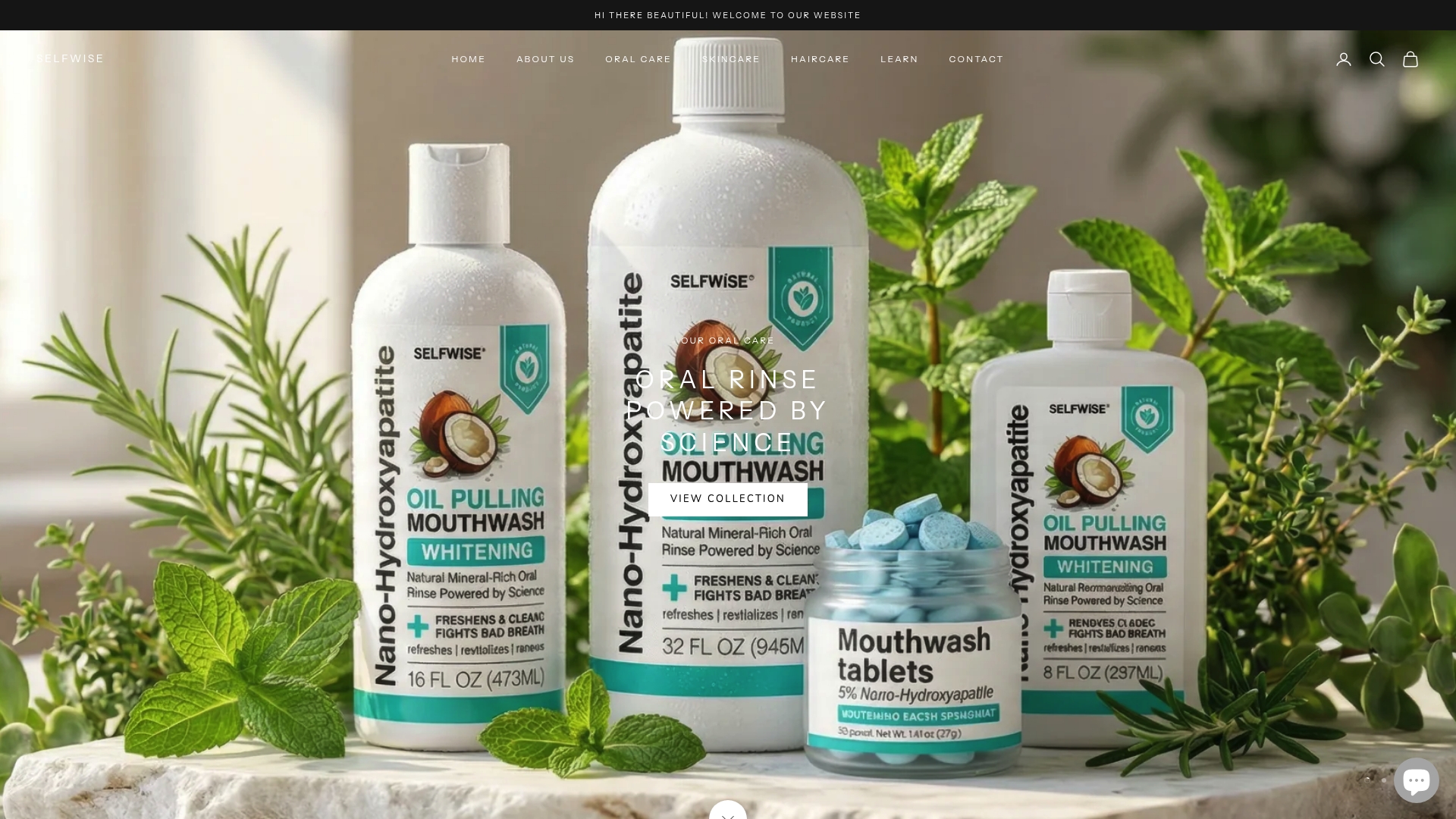
Some alcohol-free formulas are built for everyday maintenance, not short-term antimicrobial therapy, so they fit naturally into a routine alongside brushing and flossing rather than replacing a dentist-directed treatment. If you’re managing active gum disease or recovering from a dental procedure, that’s still a conversation for your dentist first. But for daily freshness, remineralization support, and a rinse that won’t leave you scrubbing off stains at your next cleaning, our natural mouthwash collection is worth a look. Browse the lineup and find the formula that matches your routine.
This article is general information, not a substitute for advice from a qualified doctor. Consult a qualified healthcare professional about your own circumstances before acting on anything here.
Sources
- Peridex™ (CHLORHEXIDINE GLUCONATE 0.12%) ORAL RINSE - DailyMed
- Chlorhexidine in Dentistry: Pharmacology, Uses, and Adverse Effects - PMC
FAQ
Is Chlorhexidine Mouthwash Safe for Daily Use?
Chlorhexidine is safe for short-term use, typically two to four weeks, under dental guidance, but it isn’t intended as a daily long-term rinse. Extended use raises the odds of staining, tartar buildup, and taste changes, and product labeling recommends professional cleanings at intervals no longer than six months while using it, per the Peridex label.
When Should You Not Use Chlorhexidine Mouthwash?
Avoid it if you have a known allergy to chlorhexidine or any ingredient in the formula, and check with a clinician first if you’re pregnant or breastfeeding. Anyone with prominent front-tooth restorations should also discuss the cosmetic staining risk with their dentist before starting.
What Happens if You Use Chlorhexidine Mouthwash Too Long?
Extended use increases the likelihood of visible staining on teeth, tongue, and restorations, along with more tartar buildup, according to Mayo Clinic. It also raises theoretical concerns about disrupting the natural balance of oral bacteria, which is why dentists typically limit courses to a few weeks rather than ongoing daily use.
Why Do Some Health Professionals Warn Against Certain Mouthwashes?
Concerns about antiseptic mouthwashes generally center on their broad-spectrum action, which can affect bacteria beyond the ones causing gum disease, and on side effects like staining and taste disruption with prolonged use. If you want a rinse for daily maintenance without those cosmetic trade-offs, alcohol-free options built around ingredients like nano-hydroxyapatite and xylitol are worth discussing with your dentist as a longer-term alternative.