
Sorbitol as a Humectant: Your Oral Care Guide
Sorbitol is a sugar alcohol (polyol) used as a humectant to attract and retain water in formulations. In oral-care products specifically, that function translates into four immediate, practical effects:
- Prevents drying and caking in toothpaste tubes, keeping the paste spreadable from first use to last squeeze
- Improves texture and spreadability by maintaining moisture in the product matrix
- Provides mild, clean sweetness without contributing to tooth decay
- May cause GI discomfort when ingested in larger amounts, which matters for products like lozenges, chewable tablets, and children’s toothpaste that get swallowed
The FDA recognizes sorbitol as a permitted ingredient in food and oral-care products, and PubMed clinical literature documents both its benefits and its dose-dependent side effects. Both are worth understanding before you buy or formulate.
Key Takeaways
Sorbitol functions as a humectant by forming hydrogen bonds with water, keeping oral-care products stable, spreadable, and shelf-stable, while its GI effects make dose awareness critical for ingestible formats.
| Point | Details |
|---|---|
| Chemical role | Sorbitol (C6H14O6) attracts and retains water via hydroxyl group hydrogen bonding. |
| Oral-care function | Prevents toothpaste drying and caking; improves mouthwash stability and mouthfeel. |
| Safety threshold | Clinical reviews place adult GI tolerance at a moderate range; higher doses may risk diarrhea. |
| Regulatory status | FDA-permitted; labeled as “sorbitol” or “sorbitol solution” in the U.S.; E420 on international labels. |
| Selfwisebrand approach | Selfwisebrand centers formulas on xylitol and nano hydroxyapatite for active oral-health benefits beyond humectancy. |
Table of Contents
- What is sorbitol as a humectant, and how does it work?
- Where is sorbitol used across food, cosmetics, and oral care?
- What are the safety concerns and side effects of sorbitol?
- How is sorbitol regulated and labeled in the U.S.?
- Formulation use levels and compatibility in oral-care products
- How does sorbitol compare to other humectants in oral care?
- How should you read labels and choose products as a consumer?
- What does sorbitol mean for toothpaste and mouthwash performance?
- Is sorbitol a sustainable ingredient?
- An ingredient-first perspective on sorbitol in oral care
- Sorbitol-free oral care worth trying
- Sources
- FAQ
What is sorbitol as a humectant, and how does it work?
Sorbitol’s humectant behavior starts with its molecular structure. PubChem identifies it as a hexitol with the formula C6H14O6, essentially a six-carbon chain studded with hydroxyl (OH) groups. Those hydroxyl groups are the key: they form hydrogen bonds with water molecules, pulling moisture from the surrounding environment and holding it within the product matrix.
This hydrogen-bonding mechanism also lowers water activity in a formulation. Lower water activity means less free water available for microbial growth or chemical degradation, which extends shelf life. In a toothpaste, sorbitol simultaneously keeps the paste from drying out and reduces the risk of microbial contamination. Research on polyol-water interactions confirms that sorbitol’s hygroscopic behavior is concentration-dependent: higher concentrations pull more moisture and create a more viscous, stable matrix.
The practical result in a tube of toothpaste is a product that stays smooth and pliable, resists separation, and doesn’t harden at the neck of the tube after a few uses.
Pro Tip: When working with sorbitol 70% solution in a toothpaste formula, account for its water content in your total water phase calculation. Treating it as a dry ingredient will throw off your viscosity targets.
Where is sorbitol used across food, cosmetics, and oral care?
Sorbitol’s humectant role shifts slightly depending on the product category. The underlying chemistry is the same, but what formulators are solving for differs.
Food and confectionery: Sorbitol keeps baked goods soft and extends shelf life by slowing moisture loss. In sugar-free candies and chewing gum, it provides bulk sweetness without fermentable sugars. Food-grade sorbitol is typically the standard here.

Oral care (the primary focus): Industry data confirms that sorbitol is one of the most widely used humectants in dentifrices. Toothpaste-grade sorbitol (commonly supplied as a 70% solution) prevents drying and caking, aids texture, and contributes mild sweetness. In mouthwash, it stabilizes the formula and improves mouthfeel. In lozenges and chewable tablets, it acts as both humectant and bulking agent. The grade matters: oral-care manufacturers typically specify USP or toothpaste-grade sorbitol to meet compendial purity standards.
Skincare and cosmetics: Sorbitol appears in creams, serums, and lotions as a secondary humectant, often alongside glycerin or hyaluronic acid. Its role here is primarily moisture retention and texture improvement rather than sweetness. For a broader look at how natural skincare ingredients compare as topical humectants, the category has several alternatives worth knowing.
Pharmaceutical syrups and chewables: Sorbitol serves as both a sweetener and a humectant in liquid medications and chewable dosage forms. At higher doses in these products, GI tolerance becomes a clinical consideration.
- Toothpaste: texture, moisture retention, anti-caking (USP/toothpaste grade)
- Mouthwash: formula stability, mouthfeel, mild sweetness
- Lozenges and chewable tablets: bulking, humectancy, sweetness (USP grade)
- Baked goods: moisture retention, shelf-life extension (food grade)
- Skincare: secondary humectant, texture modifier (cosmetic grade)
- Pharmaceutical syrups: sweetener, humectant, vehicle (USP grade)
Pro Tip: Toothpaste-grade sorbitol is almost always supplied as a 70% aqueous solution rather than a dry powder. This makes it easier to disperse uniformly in the water phase and avoids the clumping issues that can occur with dry sorbitol in high-humidity manufacturing environments.
What are the safety concerns and side effects of sorbitol?
The safety profile of sorbitol depends heavily on how much is ingested and by whom. Topical or rinse-and-spit exposure carries minimal risk. Ingested sorbitol is where the clinical picture gets more nuanced.
Sorbitol is poorly absorbed in the small intestine. What isn’t absorbed draws water into the gut by osmosis, which at sufficient doses produces bloating, flatulence, and diarrhea. Clinical evidence places the typical tolerance threshold at roughly 5–20 g/day for most adults, with doses above 20 g/day linked to osmotic diarrhea in a meaningful portion of people. Individual tolerance varies considerably.
Dose context: Clinical reviews report that 5–20 g/day is the general adult tolerance range, and amounts above 20 g/day are associated with diarrhea in susceptible individuals.
Populations who should pay particular attention:
- People with IBS or functional gut disorders: sorbitol is a FODMAP and can trigger symptoms at doses well below the general threshold
- Those following a low-FODMAP diet: sorbitol is specifically excluded from this protocol
- Young children: smaller body weight means a lower absolute dose threshold; children’s toothpaste is designed to be swallowed in small amounts, but habitual swallowing of adult-formula toothpaste is a concern
- People with hereditary fructose intolerance: sorbitol is metabolized via fructose pathways and should be avoided
For oral-care products that are rinsed and spat, the ingested dose is typically negligible for adults. Lozenges, chewable tablets, and children’s products are the categories where dose tracking matters most.
Warning signs to watch for on labels of ingestible products:
- “Excess consumption may have a laxative effect” (this is a required label statement for certain sorbitol-containing foods)
- High sorbitol content listed early in the ingredient panel (indicating a larger proportion)
- Multiple polyols listed together (sorbitol + mannitol + xylitol), which compounds the cumulative FODMAP load
How is sorbitol regulated and labeled in the U.S.?
In the United States, sorbitol’s regulatory status spans several frameworks depending on the product category.
For food products, the FDA’s CFR labeling rules require that products containing sorbitol and making certain sugar-free or reduced-calorie claims carry a disclosure about its laxative effect when the product provides 50 g or more of sorbitol per day. Sorbitol is generally recognized as safe (GRAS) for use in food at levels consistent with good manufacturing practice.
For oral-care products (OTC drugs and cosmetics), sorbitol appears on ingredient labels as “sorbitol” or “sorbitol solution.” When you encounter international labels, the equivalent designation is E420. The EPA CompTox dashboard and the NIH GSRS substance record both list sorbitol’s identifiers, useful for formulators cross-referencing ingredient databases.
Compendial references: the United States Pharmacopeia (USP) maintains a monograph for sorbitol and sorbitol solution, specifying purity requirements for pharmaceutical and oral-care grade material. Formulators sourcing for OTC drug products (fluoride toothpaste, for example) should verify that their supplier meets USP specifications.
Practical labeling checklist for oral-care products sold in the U.S.:
- Look for “sorbitol” or “sorbitol solution” in the inactive ingredients list of OTC drug products
- Check for the laxative-effect disclosure on ingestible products containing significant sorbitol
- On international products, E420 = sorbitol
- For USP-grade confirmation, request a Certificate of Analysis from the supplier
- Cross-reference the ECHA substance record for hazard classification data when preparing safety data sheets
Regulatory note: The FDA’s laxative-effect disclosure requirement applies to food products providing 50 g or more of sorbitol per day, not to rinse-and-spit oral-care products.
Formulation use levels and compatibility in oral-care products
Typical sorbitol concentrations vary by product type, and getting the level right affects both performance and consumer tolerance.
| Product type | Typical sorbitol use level | Primary function |
|---|---|---|
| Toothpaste | Moderate to high concentration (often provided as a 70% solution) | Humectancy, texture, anti-caking |
| Mouthwash | Low to moderate concentration | Sweetness, stability, mouthfeel |
| Lozenges/chewable tablets | Moderate concentration | Bulking, humectancy, sweetness |
| Pharmaceutical syrups | Moderate concentration | Humectancy, sweetness, vehicle |
These ranges are approximate and should be confirmed through bench testing and stability studies for any specific formula.
Sorbitol is broadly compatible with most oral-care ingredients. It works well alongside glycerin (the two are often blended to balance sweetness and humectancy while keeping the total polyol load manageable). It’s stable with common abrasives like hydrated silica and calcium carbonate. With surfactants such as sodium lauryl sulfate, sorbitol helps maintain viscosity and prevents phase separation.
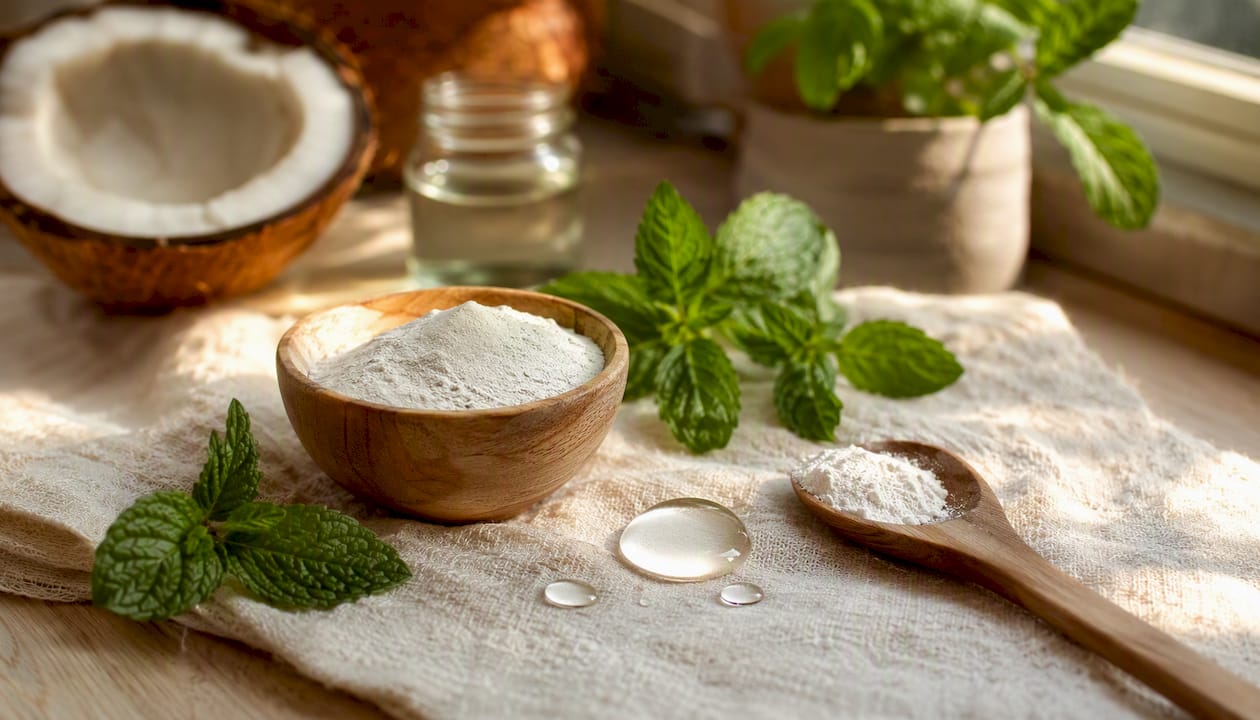
The more interesting compatibility question involves actives. Sorbitol is generally compatible with nano hydroxyapatite, which is relevant for remineralizing formulas. It’s also stable with fluoride salts at typical toothpaste pH ranges. Flavor oils and sweeteners like xylitol blend well with sorbitol without significant interaction.
One stability consideration worth flagging: sorbitol can absorb atmospheric moisture during manufacturing and storage if the product is not properly sealed. In high-humidity environments, this can alter the final water activity of the product and affect microbial risk.
Pro Tip: Sorbitol’s freeze-thaw stability is better than glycerin’s at equivalent concentrations, making it a useful choice in products that may be stored or shipped in cold climates. If your formula uses a high glycerin load and you’re seeing viscosity shifts after cold storage, partial substitution with sorbitol can help.
How does sorbitol compare to other humectants in oral care?
Choosing a humectant for an oral-care formula involves trade-offs across sweetness, humectancy strength, oral-health profile, GI tolerance, and cost.
| Humectant | Humectancy strength | Sweetness | Oral health profile | GI tolerance | Typical cost |
|---|---|---|---|---|---|
| Sorbitol | Moderate | Mild (60% of sucrose) | Low cariogenic; not anti-caries | Moderate; FODMAP concern | Low |
| Glycerin | High | Very mild | Neutral | Good | Low–moderate |
| Xylitol | Moderate | Similar to sucrose | Anti-caries; reduces S. mutans | Low at high doses | Higher |
| Propylene glycol | High | Minimal | Neutral; solvent properties | Generally good | Moderate |
Comparative studies show that sorbitol is low-cariogenic but does not actively reduce Streptococcus mutans the way xylitol does. For a formula where oral-health positioning is central, xylitol earns its higher cost. For a formula where texture and cost efficiency are the priority, sorbitol or a sorbitol-glycerin blend often makes more sense.
Glycerin’s role in oral products is worth understanding in detail if you’re weighing these two against each other. Glycerin delivers stronger humectancy and a smoother mouthfeel, but it lacks sorbitol’s mild sweetness contribution. For topical skincare applications, hyaluronic acid sits at the high end of humectancy and is increasingly common in premium formulas.
Decision rules for choosing between humectants:
- Choose sorbitol when cost efficiency, anti-caking, and mild sweetness are priorities and the product is rinsed and spat
- Choose xylitol when anti-caries claims or active oral-health benefits are the goal, and budget allows
- Choose glycerin when maximum humectancy and smooth mouthfeel matter more than sweetness
- Consider propylene glycol when solubility of flavor or active ingredients is a challenge, but check its oral-care safety profile first
- Avoid polyols generally for consumers with IBS, hereditary fructose intolerance, or strict low-FODMAP protocols
How should you read labels and choose products as a consumer?
Reading an ingredient panel for sorbitol is straightforward once you know what to look for. It appears as “sorbitol” or “sorbitol solution” in both cosmetic and OTC drug ingredient lists. On imported products, E420 is the equivalent.
Where you’ll commonly find it:
- Near the top of a toothpaste’s inactive ingredients (indicating a high concentration)
- In mouthwash ingredient lists, often after water and before flavoring agents
- In sugar-free lozenges and chewable dental tablets, sometimes as the second or third ingredient
For most adults who rinse and spit, sorbitol in toothpaste or mouthwash poses no meaningful GI risk. The concern is specific to products you swallow or use in large amounts. If you have IBS, follow a low-FODMAP diet, or notice bloating and loose stools after using certain oral-care products, checking for sorbitol (and other polyols like mannitol or xylitol) on the label is a sensible first step.
Practical tips for GI-sensitive consumers:
- Start with a small amount of a new product and observe your response over a few days
- Check serving sizes on lozenges and chewable tablets; the dose adds up faster than it seems
- If you’re managing IBS symptoms, a sorbitol-free or xylitol-only formula may be a better fit
- Consult a healthcare provider if GI symptoms persist after switching products
Pro Tip: For children under six, the American Dental Association recommends using only a rice-grain-sized amount of toothpaste precisely because young children swallow a significant portion of what they use. Even a low-sorbitol formula can accumulate to a meaningful dose with habitual swallowing.
What does sorbitol mean for toothpaste and mouthwash performance?
From a product-development perspective, sorbitol does three things in a toothpaste that matter to the end user: it keeps the paste from drying out, it contributes to a smooth, even spread across the brush, and it adds a clean sweetness that makes the brushing experience more pleasant without any fermentable sugar risk.
In mouthwash, its role is subtler. Sorbitol helps stabilize the formula, prevents ingredient separation over time, and softens the sharpness of certain flavor compounds. A mouthwash without any humectant tends to feel thin and harsh; sorbitol rounds that out.
Dentifrice research consistently shows sorbitol as a standard ingredient in sugar-free formulations, and its safety record for rinse-and-spit use is well established. The question for health-conscious consumers isn’t whether sorbitol is dangerous in a toothpaste. It’s whether it’s the right ingredient for their specific goals.
Selfwisebrand’s formulation approach centers on nano hydroxyapatite and xylitol as the active workhorses. Xylitol brings documented anti-caries benefits that sorbitol doesn’t match. Nano hydroxyapatite supports enamel remineralization directly. For consumers who want those specific oral-health outcomes, a formula built around those two actives makes more sense than one relying on sorbitol as the primary sweetener and humectant.
When sorbitol-free options make sense:
- You follow a low-FODMAP diet or have diagnosed IBS
- You want an oral-care product with active remineralization support (nano hydroxyapatite)
- You prefer xylitol’s anti-caries profile over sorbitol’s neutral one
- You’re buying for a young child who tends to swallow toothpaste
When sorbitol is acceptable:
- The product is rinsed and spat by a healthy adult
- Cost and texture stability are the primary formulation goals
- The formula blends sorbitol with xylitol to reduce the total polyol load per serving
Pro Tip: Check the oral care ingredients to avoid guide if you’re building a cleaner routine from scratch. Sorbitol is rarely the ingredient to worry about in a rinse-and-spit product, but it’s worth knowing what else is in the formula.
Is sorbitol a sustainable ingredient?
Sorbitol is commercially produced by hydrogenating glucose, which is typically derived from corn starch (in the U.S.) or wheat starch (in Europe). The feedstock is renewable and widely available, which gives sorbitol a reasonable sustainability baseline compared to petroleum-derived humectants like propylene glycol.
The ECHA substance record classifies sorbitol as having low acute toxicity and no significant environmental hazard under standard use conditions. It is readily biodegradable, which means it breaks down quickly in wastewater systems without accumulating in aquatic environments.
The sustainability caveats are upstream. Corn and wheat cultivation carries the usual agricultural footprint: water use, fertilizer inputs, and land use. Large-scale glucose hydrogenation is an energy-intensive process. For brands making sustainability claims, the sourcing story matters: non-GMO corn, certified wheat, or alternative feedstocks like sorbitol derived from fruit processing waste are emerging options, though they remain niche.
For a natural oral-care brand, the practical sustainability question is whether sorbitol is the right humectant relative to alternatives. Glycerin derived from sustainable palm or coconut oil, and xylitol from birch or corn cob sources, each have their own sourcing stories. None is clearly superior across every environmental dimension. The honest answer is that sorbitol’s biodegradability and renewable feedstock make it a reasonable choice, and the bigger environmental lever is usually packaging and manufacturing energy, not the humectant itself.
An ingredient-first perspective on sorbitol in oral care
Sorbitol is not a villain ingredient. In a rinse-and-spit mouthwash or a standard toothpaste, it does its job quietly and well. The reason Selfwisebrand leans toward xylitol and nano hydroxyapatite instead isn’t that sorbitol is harmful. It’s that those two ingredients do more.
Xylitol actively disrupts Streptococcus mutans colonization. Nano hydroxyapatite deposits calcium and phosphate directly onto enamel. Sorbitol keeps your toothpaste from drying out. Those are different categories of contribution, and for a brand built around the idea that every ingredient should earn its place, the choice is clear.
The trade-offs Selfwisebrand weighs in formulation decisions:
- Efficacy: Does the ingredient support remineralization, reduce cariogenic bacteria, or just maintain texture?
- Tolerance: Does it create GI risk for sensitive users, especially children?
- Natural positioning: Does it align with a clean, simple ingredient philosophy?
- Oral-health benefit: Does it contribute something beyond humectancy?
Sorbitol scores well on texture and cost. It scores neutrally on oral health. For a product line where the active ingredients are doing the heavy lifting, that’s often enough. For a product making specific oral-health claims, xylitol or nano hydroxyapatite is the better investment.
Sorbitol-free oral care worth trying
If you’ve read this far and you’re reconsidering what’s in your current toothpaste or mouthwash, Selfwisebrand’s product line is built for exactly that kind of thinking.
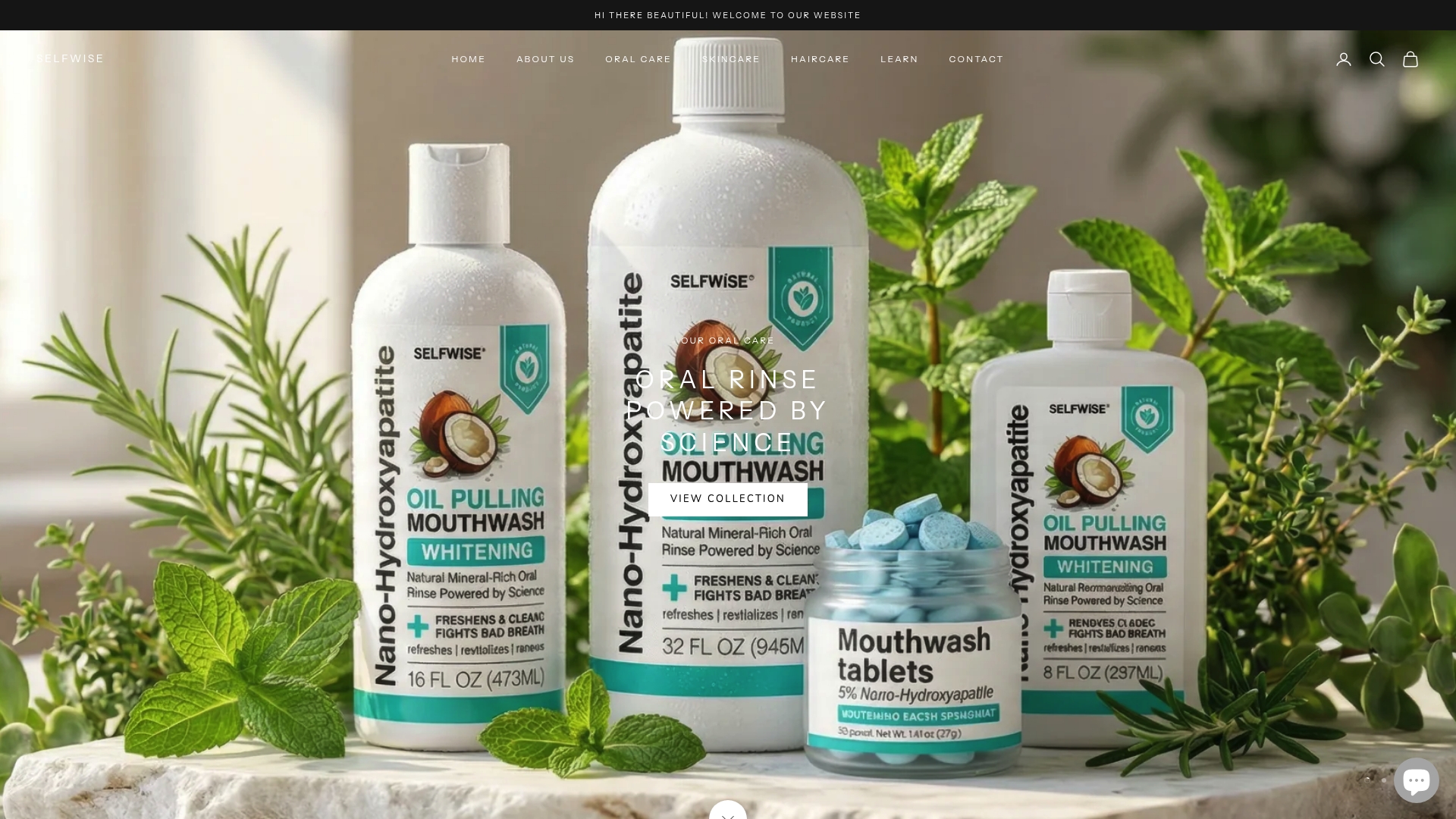
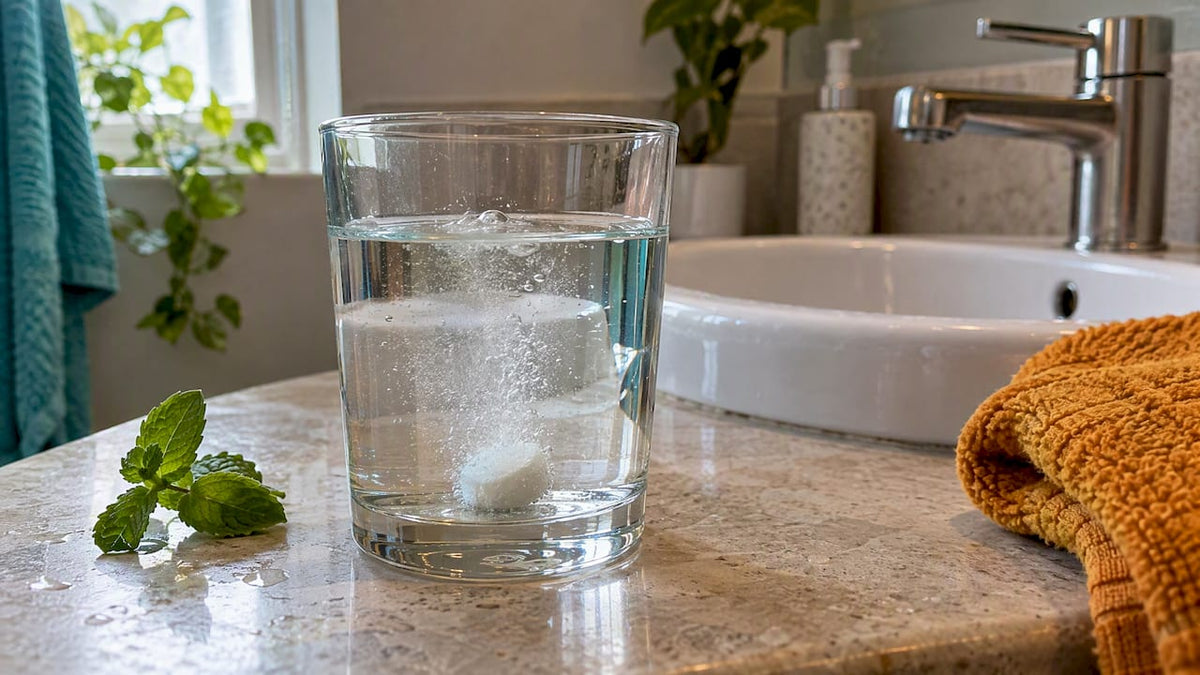
The nano hydroxyapatite mouthwash tablets skip sorbitol entirely and deliver remineralizing support through nano hydroxyapatite and a clean, simple ingredient list. No alcohol, no fluoride, no unnecessary polyols. The xylitol mouthwash with nano hydroxyapatite gives you xylitol’s anti-caries profile alongside enamel support, without the FODMAP concern that comes with sorbitol-heavy formulas. Both are available through the full Selfwisebrand mouthwash collection. Browse the range, check the ingredient panels, and pick the formula that fits your routine.
This article is general information, not a substitute for advice from a qualified doctor. Consult a qualified healthcare professional about your own circumstances before acting on anything here.
Sources
These primary-source databases are the best places to verify any claim in this article or dig deeper into sorbitol’s chemistry, safety, and regulatory status:
FAQ
What are the side effects of sorbitol in oral-care products?
For rinse-and-spit products like mouthwash, side effects are minimal because the ingested dose is negligible. In ingestible formats like lozenges or chewable tablets, clinical evidence links doses above 20 g/day to osmotic diarrhea, bloating, and flatulence in susceptible individuals.
Who should avoid sorbitol?
People with IBS, those following a low-FODMAP diet, and individuals with hereditary fructose intolerance should limit or avoid ingestible sorbitol. Young children who habitually swallow toothpaste are also a population where lower-sorbitol or sorbitol-free formulas are worth considering.
Is sorbitol good or bad for oral health?
Sorbitol is low-cariogenic, meaning it doesn’t feed the bacteria that cause cavities the way sugar does. It doesn’t actively reduce Streptococcus mutans, though. Comparative research shows xylitol is the stronger choice if reducing cariogenic bacteria is the goal.
What is another name for sorbitol?
Sorbitol is also known as glucitol and carries the E-number designation E420 on international ingredient labels. In pharmaceutical and oral-care products sold in the U.S., it appears as “sorbitol” or “sorbitol solution” on ingredient panels.
What is the difference between sorbitol and xylitol in toothpaste?
Both are polyols used as humectants and sweeteners, but xylitol has documented anti-caries properties that sorbitol lacks. Sorbitol is less expensive and contributes more to texture and anti-caking; xylitol costs more but actively supports oral health by inhibiting harmful bacteria.



%20used%20as%20a%20humectant%20to%20attract%20and%20retain%20water%20in%20formulations.%20In%20oral-care%20products%20specifically,%20that%20function%20translates%20into%20fou...)