The Role of Glycerin in Oral Products Explained
Glycerin is defined as a humectant and texture-enhancing agent that keeps oral care products moist, stable, and pleasant to use. The role of glycerin in oral products covers far more than simple moisture retention. It acts as a lubricant, a mild sweetener, and a stabilizer, all without promoting tooth decay. The FDA classifies glycerin as generally recognized as safe (GRAS) for oral use, making it one of the most trusted ingredients in toothpaste and mouthwash formulations. Selfwisebrand builds on this foundation by pairing glycerin with ingredients like nano hydroxyapatite and xylitol for a clean, effective routine.
What is the role of glycerin in oral products?
Glycerin acts as a humectant, lubricant, sweetness enhancer, and stabilizer in toothpaste and mouthwash. That combination of functions is rare in a single ingredient. Most humectants do one job well. Glycerin does four.
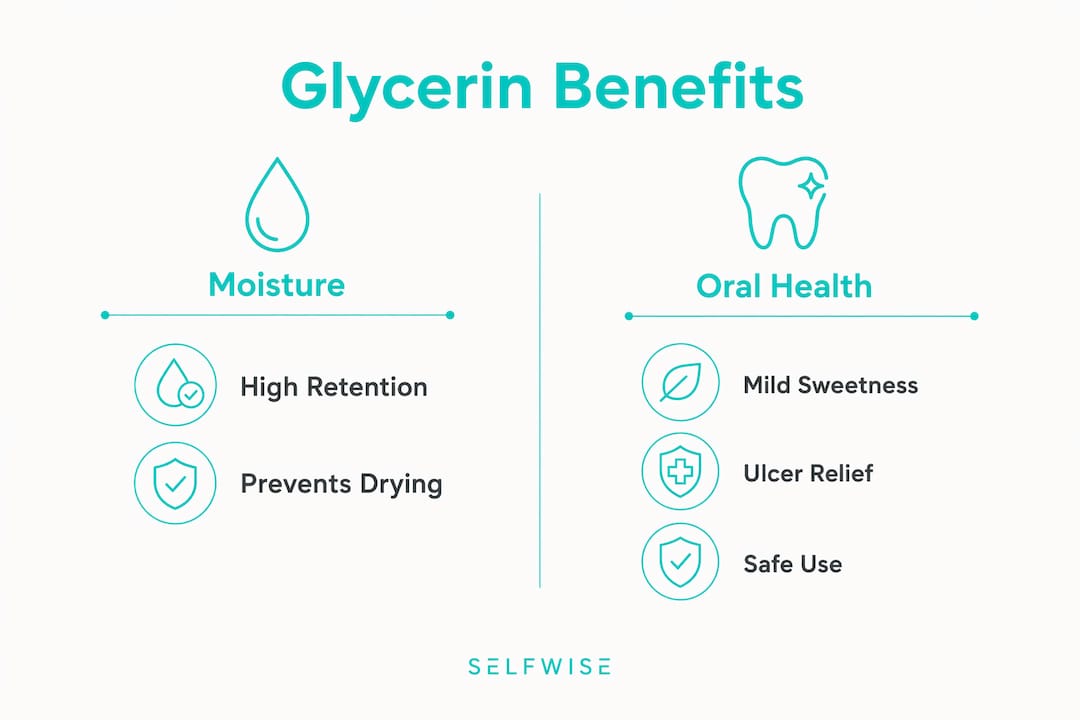
As a humectant, glycerin pulls water molecules from the surrounding environment and holds them within the product. This prevents toothpaste from drying out in the tube and stops mouthwash from separating over time. The result is a product that feels fresh and consistent from the first use to the last.
Glycerin also contributes a mild, clean sweetness that does not feed oral bacteria. Unlike sugar, it does not lower the pH of saliva or contribute to acid erosion. That makes it a smart choice for anyone building a natural oral care routine focused on ingredient safety.
How glycerin improves texture and stability in oral care
Glycerin’s lubricating effect is what gives toothpaste its smooth, spreadable consistency. Without it, most pastes would feel gritty and dry against the gums. The mouthfeel improvement is not cosmetic. A product that feels good gets used consistently, and consistency is what drives real oral health results.
Glycerin enhances product shelf life by preventing ingredient separation in both toothpaste and mouthwash. That means the active ingredients, whether nano hydroxyapatite or xylitol, stay evenly distributed throughout the product’s lifespan. You get the same dose of active ingredient on day one as you do on day ninety.
Glycerin-based toothpaste retains moisture and prevents hardening more effectively than some alternative humectants. This matters most in dry climates or for people who leave their toothpaste uncapped. The table below shows how glycerin compares to common alternatives on key formulation properties.
| Property | Glycerin | Sorbitol | Propylene glycol |
|---|---|---|---|
| Moisture retention | High | Moderate | Moderate |
| Texture smoothness | Excellent | Good | Good |
| Shelf-life stability | High | Moderate | High |
| Natural origin | Yes (plant-based) | Yes (plant-based) | No (synthetic) |
| Sweetness contribution | Mild | Moderate | None |
| Safety classification | FDA GRAS | FDA GRAS | FDA GRAS |
Pro Tip: If your toothpaste hardens at the nozzle between uses, check whether glycerin appears in the top five ingredients. Products with glycerin listed early in the formula tend to stay soft and workable much longer.
Is glycerin safe for oral use? What are the potential side effects?
Glycerin is safe for topical oral use. The FDA GRAS classification covers its use in food and oral care products, and decades of formulation history back that up. The key distinction is topical use versus ingestion.
Ingesting large quantities of glycerin can cause mild digestive discomfort. Oral care products are designed to be spat out, not swallowed. The trace amounts that enter the body during normal brushing or rinsing are not a concern for healthy adults.
One persistent myth claims glycerin coats the teeth and blocks remineralization. The evidence does not support this. Glycerin washes away easily, allowing enamel to absorb minerals from saliva without interference. This is especially relevant for people using remineralizing products that rely on nano hydroxyapatite or calcium phosphate.
Key safety points to keep in mind:
- FDA GRAS status confirms glycerin is safe for oral use in standard concentrations.
- Topical application is the intended use. Spit, do not swallow.
- Enamel remineralization is not blocked. Glycerin rinses off with saliva.
- Digestive discomfort is possible only if large amounts are swallowed accidentally.
- Oral microbiome is not disrupted. Glycerin does not feed harmful bacteria.
- Sensitive tissues tolerate glycerin well. It does not cause irritation in most people.
Reading the ingredient list on any oral care product tells you where glycerin sits in the formula. A higher position in the list means a higher concentration. For daily use products like toothpaste and mouthwash, this is useful context, not a cause for concern.
What benefits does glycerin provide for oral health beyond texture?
Glycerin’s most underappreciated benefit is dry mouth relief. Glycerin contributes moisturizing effects to artificial saliva and dry mouth relief products, improving comfort for people with xerostomia. Xerostomia, the clinical term for chronic dry mouth, affects saliva production and leaves oral tissues vulnerable to irritation and decay. Glycerin-based gels and rinses provide a temporary but meaningful layer of moisture that restores comfort between meals.
Glycerin also supports healing of minor mouth ulcers. Applying pure food-grade glycerin 2–3 times daily on minor ulcers creates a moist, protective barrier that reduces friction and discomfort. Ulcers treated this way typically resolve within 7–14 days. Glycerin does not address the underlying cause of the ulcer, but the barrier it creates prevents the constant irritation that slows healing.
The table below compares glycerin with medicated oral ulcer gels on key therapeutic properties.
| Property | Pure glycerin | Medicated ulcer gel |
|---|---|---|
| Soothing effect | Yes | Yes |
| Moist barrier formation | Yes | Yes |
| Addresses ulcer cause | No | Varies by formula |
| Natural origin | Yes | Often synthetic |
| Suitable for daily use | Yes | Check label |
| Requires prescription | No | Sometimes |
Pro Tip: For minor ulcers, apply a small amount of food-grade glycerin with a clean cotton swab directly to the sore. Avoid eating or drinking for at least 20 minutes after application to let the barrier set.
The role of moisture in oral health extends beyond comfort. Dry oral tissues are more prone to bacterial colonization, gum irritation, and enamel erosion. Glycerin addresses all three risks by keeping the oral environment consistently hydrated.
How does glycerin compare to other ingredients in natural oral care?
Glycerin stands out among humectants because of its plant-based origin. Glycerin is preferred in natural oral care formulations due to its derivation from vegetable oils and its multifunctionality compared to synthetic alternatives like propylene glycol. That matters to health-conscious consumers who read labels and want to know where each ingredient comes from.
Propylene glycol performs a similar humectant function but is synthesized from petroleum byproducts. It carries a higher rate of sensitivity reactions in some people, particularly those with reactive skin or mucous membranes. Glycerin causes far fewer sensitivity issues and integrates naturally into clean beauty and natural oral care formulations.
Key reasons health-conscious consumers choose glycerin over synthetic alternatives:
- Plant-based sourcing from vegetable oils, including palm and soy, fits clean ingredient standards.
- Multifunctionality means one ingredient replaces several, keeping formulas simple.
- Mild sweetness reduces the need for artificial sweeteners in toothpaste and mouthwash.
- Low sensitivity profile makes it suitable for people with reactive oral tissues.
- Compatibility with active ingredients like xylitol and nano hydroxyapatite is well established.
For a deeper look at how glycerin compares to other moisturizing agents in oral care, medium chain triglycerides offer a complementary approach that works well alongside glycerin in oil-based formulas.
How to choose oral care products with glycerin for your needs
Choosing the right glycerin-containing product starts with identifying your primary oral health concern. Health experts recommend considering personal oral care needs, such as dry mouth relief or enamel repair, when selecting glycerin products. A mouthwash designed for dry mouth will have a different glycerin concentration than a remineralizing toothpaste.
Follow these steps to make a confident choice:
- Identify your main concern. Dry mouth, ulcer care, and daily hygiene each call for different product types and glycerin concentrations.
- Check the ingredient list. Glycerin listed in the top five ingredients signals a higher concentration and stronger moisturizing effect.
- Match the product format to your routine. Toothpaste delivers glycerin during brushing. Mouthwash extends contact time. Oral gels provide targeted, localized relief.
- Look for complementary active ingredients. Glycerin paired with xylitol supports a balanced oral microbiome. Glycerin paired with nano hydroxyapatite supports enamel remineralization.
- Avoid unnecessary additives. Products with short, recognizable ingredient lists are easier to evaluate and less likely to cause sensitivity reactions.
- Consider your lifestyle. If you travel frequently or live in a dry climate, a glycerin-rich mouthwash or gel provides extra protection against moisture loss in oral tissues.
Key Takeaways
Glycerin is the most versatile single ingredient in oral care, combining moisture retention, texture improvement, ulcer relief, and dry mouth support in one plant-based compound.
| Point | Details |
|---|---|
| Humectant function | Glycerin retains moisture in toothpaste and mouthwash, preventing drying and hardening. |
| FDA GRAS safety | Glycerin is classified as safe for oral use; spit products out rather than swallowing them. |
| Enamel remineralization | Glycerin does not block enamel mineral absorption. It washes off easily with saliva. |
| Dry mouth and ulcer relief | Glycerin moisturizes dry oral tissues and creates a protective barrier over minor ulcers. |
| Natural ingredient choice | Glycerin’s plant-based origin makes it the preferred humectant in natural oral care formulas. |
Why I think glycerin deserves more credit in natural oral care
Most ingredient conversations in natural oral care focus on what to remove. Fluoride, sodium lauryl sulfate, artificial sweeteners. That conversation is worth having. But it often overshadows the question of what to keep and why.
Glycerin is one of those ingredients that earns its place on every count. It is plant-derived, multifunctional, and backed by a safety record that spans decades. When I look at the formulas that actually work for people with dry mouth, sensitive gums, or healing ulcers, glycerin shows up consistently. Not as a filler, but as a functional contributor.
The transparency piece matters too. Consumers who read labels deserve to understand what each ingredient does. Glycerin is one of the easiest to explain and one of the hardest to replace. Synthetic alternatives like propylene glycol can do parts of the job, but none of them bring the same combination of safety, natural origin, and mouthfeel improvement.
My practical advice: do not dismiss glycerin because it sounds chemical. It is derived from the same vegetable oils used in cooking. If a product lists it near the top of the ingredient deck and pairs it with actives like xylitol or nano hydroxyapatite, that is a formula worth trusting.
— Viktor
Selfwisebrand’s glycerin-based oral care products
Selfwisebrand formulates its natural mouthwash collection with glycerin as a core moisturizing agent, paired with nano hydroxyapatite for enamel support and xylitol for microbiome balance. Every product in the range is fluoride-free and built around simple, recognizable ingredients.
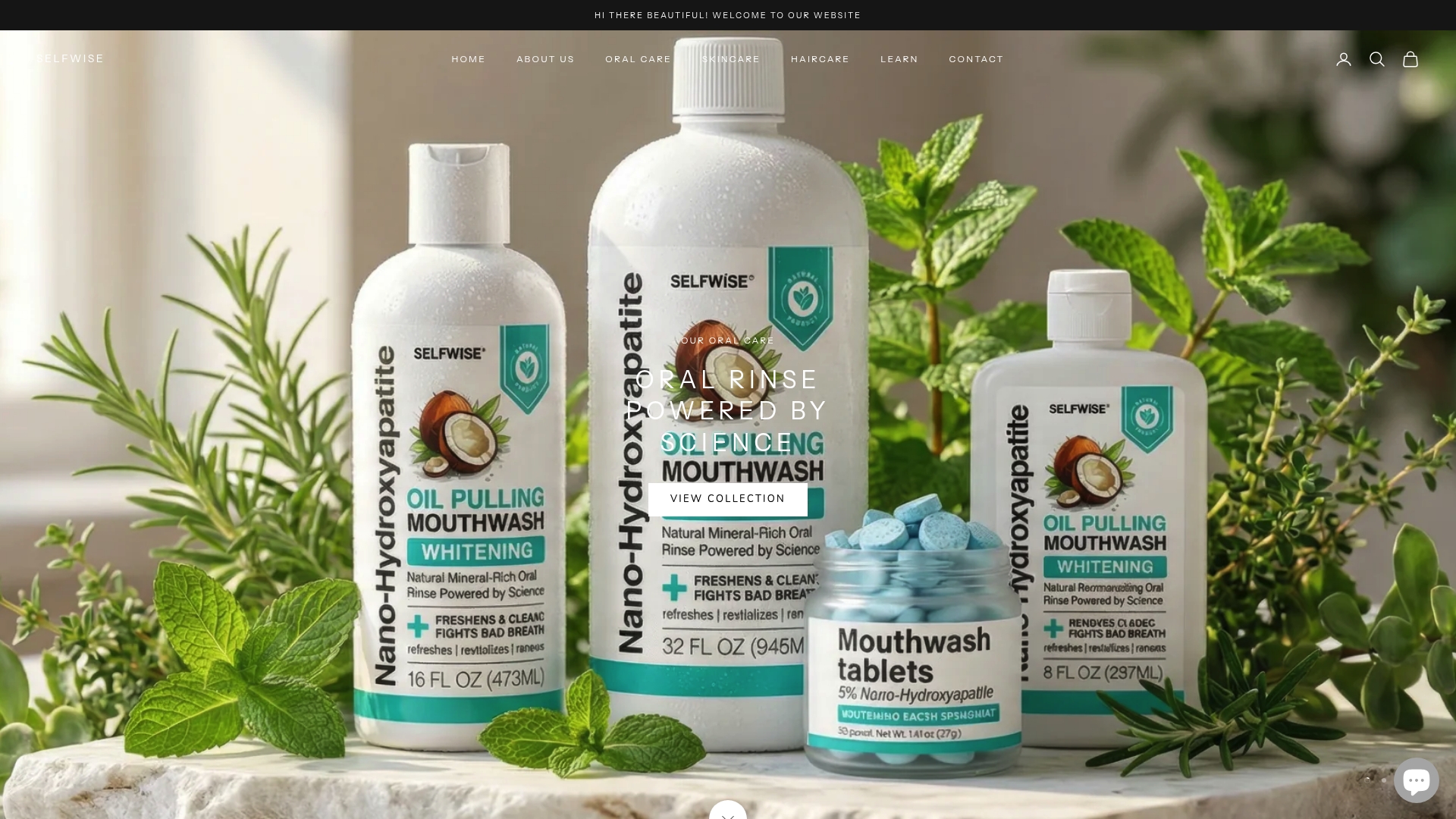
If dry mouth, enamel repair, or a cleaner daily routine is your goal, the fluoride-free range covers toothpaste alternatives and mouthwash options that put glycerin’s moisturizing benefits to work alongside proven actives. No harsh chemicals. No ingredient guesswork. Just a routine that makes sense.
FAQ
What does glycerin do in toothpaste?
Glycerin acts as a humectant, lubricant, and stabilizer in toothpaste, preventing the formula from drying out and giving it a smooth, spreadable texture. It also contributes mild sweetness without feeding oral bacteria.
Is glycerin safe to use in oral care products?
Yes. The FDA classifies glycerin as GRAS for oral use. Trace amounts from normal brushing or rinsing are not a health concern, though large quantities should not be swallowed.
Does glycerin block enamel remineralization?
No. Glycerin washes off easily with saliva and does not form a lasting barrier on enamel. Minerals from saliva and remineralizing ingredients like nano hydroxyapatite can still reach the tooth surface.
Can glycerin help with dry mouth?
Yes. Glycerin is a key ingredient in artificial saliva products and dry mouth relief gels. It coats oral tissues with a moisture-retaining layer that improves comfort for people with xerostomia.
How does glycerin compare to propylene glycol in oral care?
Glycerin is plant-derived and has a lower sensitivity profile than propylene glycol, which is synthesized from petroleum. For natural oral care formulations, glycerin is the preferred humectant because of its clean origin and multifunctionality.