Why Charcoal Mouthwash Is Used: Claims vs. Evidence
People use charcoal mouthwash because manufacturers say activated charcoal adsorbs stains and odors from tooth surfaces. The honest answer from peer-reviewed research: those claims are largely unproven in clinical settings. A systematic review in the British Dental Journal concluded there is insufficient clinical evidence to back therapeutic or cosmetic claims for charcoal-based mouthwashes, and safer, better-studied alternatives exist.
What most buyers are hoping for:
- Whiter teeth through extrinsic stain removal
- Fresher breath and reduced halitosis
- A perceived oral “detox” effect
- Some antimicrobial benefit
The safety verdict in one sentence: charcoal mouthwash is not proven harmful for most healthy adults used occasionally, but it carries real risks for enamel, restorations, and anyone replacing fluoride with it. Evidence-backed options, including nano hydroxyapatite and xylitol products like those from Selfwisebrand, offer a more defensible path to the same goals.
Key Takeaways
Charcoal mouthwash is used for its claimed adsorptive whitening and breath-freshening effects, but no well-controlled clinical trials confirm those benefits, and abrasion and fluoride displacement are documented risks.
| Point | Details |
|---|---|
| No clinical proof for disease endpoints | No in vivo studies show charcoal mouthwash reduces plaque, gingivitis, or caries. |
| Only 8–13.9% contain antiseptics | Most charcoal mouthwashes lack a recognized active like CPC or chlorhexidine. |
| Enamel roughness is a real risk | Lab studies show decreased microhardness and increased surface roughness from charcoal products. |
| Fluoride displacement matters | Most charcoal formulations are fluoride-free, removing a proven caries-prevention layer. |
| Selfwisebrand offers evidence-focused alternatives | Nano hydroxyapatite and xylitol products support remineralization and fresh breath without abrasive charcoal. |
Table of Contents
- Why is charcoal mouthwash used, and how is it supposed to work?
- What do charcoal mouthwash makers actually claim?
- What does the clinical evidence actually show?
- What are the real risks of charcoal mouthwash?
- If you try charcoal mouthwash, here is how to limit the risk
- What are the evidence-backed alternatives to charcoal mouthwash?
- How this article reviewed the evidence
- The gap between what charcoal promises and what oral care actually needs
- Selfwisebrand’s fluoride-free alternative to charcoal mouthwash
- Sources
- FAQ
Why is charcoal mouthwash used, and how is it supposed to work?
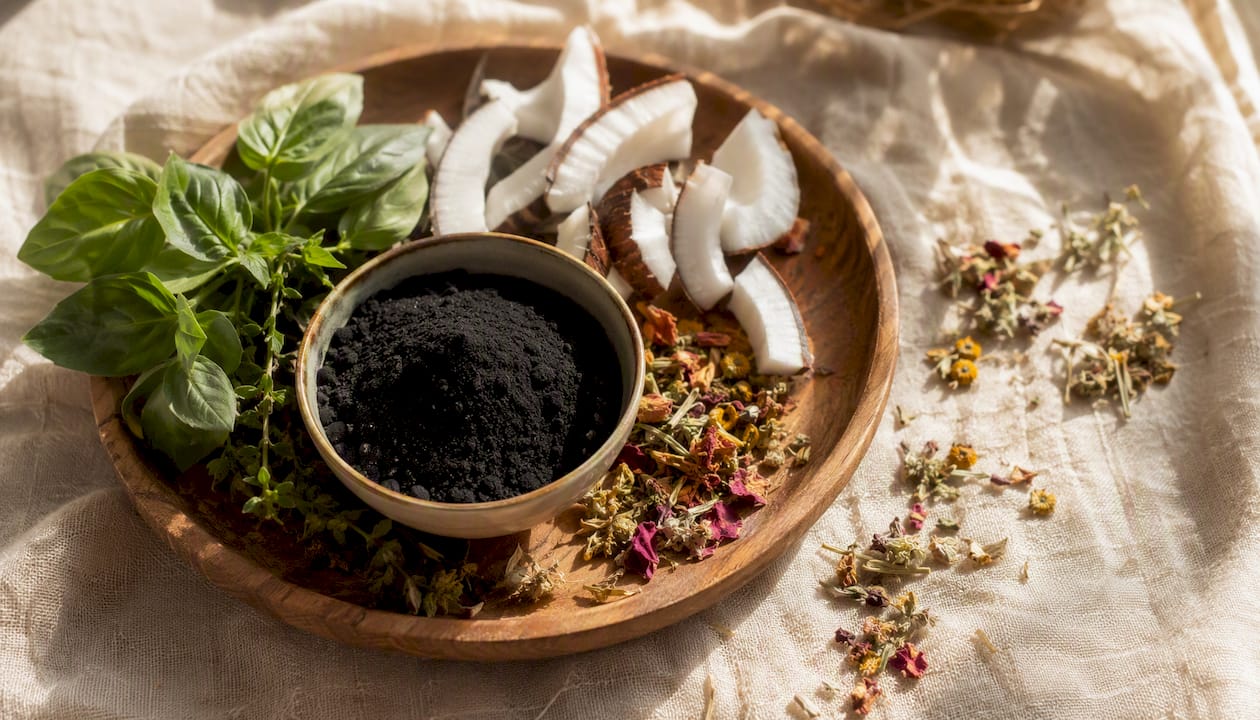
Activated charcoal is a processed form of carbon with an enormous internal surface area created by heat treatment. The core claim is adsorption: charcoal’s porous structure physically traps molecules on its surface rather than absorbing them into a solution. In laboratory settings, activated charcoal does bind certain pigments and volatile sulfur compounds.
Three mechanisms get conflated in marketing copy, and they are not the same thing:
- Adsorption — molecules stick to the charcoal surface (the claimed mechanism)
- Absorption — molecules are drawn into a substance (not what charcoal does)
- Abrasion — particles physically scrub stains off enamel (a real but potentially harmful effect)
A short rinse simply does not give charcoal particles enough contact time or concentration to replicate lab results. Particle size and shape, which largely determine both adsorptive capacity and abrasive risk, are almost never disclosed on product labels.
What do charcoal mouthwash makers actually claim?
The typical marketing list looks like this:
- Removes extrinsic stains and whitens teeth
- Freshens breath and reduces halitosis
- “Detoxifies” the oral environment
- Provides antimicrobial or antibacterial benefits
One detail that gets buried: many commercial charcoal mouthwashes also contain cetylpyridinium chloride (CPC), chlorhexidine, or hydrogen peroxide. When a product shows any measurable antimicrobial or whitening effect, those co-ingredients may be doing the work, not the charcoal itself.
The British Dental Journal review found that only about 8–13.9% of charcoal oral products contained a recognized antiseptic active. Most products also omit Relative Dentin Abrasivity (RDA) values and particle-size data from their labels entirely, making independent safety assessment nearly impossible. Learning to identify natural ingredients on a product label is a practical first step before buying any “natural” oral care product.
What does the clinical evidence actually show?
Short answer: very little, and what exists is mostly from labs, not mouths.
A narrative review published in PMC stated that, to its knowledge, no in vivo studies have demonstrated charcoal mouthwash effects on plaque, gingivitis, or oral bacteria associated with disease. The PubMed literature review reached the same conclusion, finding insufficient clinical and laboratory data to substantiate either safety or efficacy claims, with some studies reporting negative outcomes including enamel abrasion.
A small pilot study testing charcoal mouthwash as a subgingival irrigant in periodontitis patients found it was not as effective as chlorhexidine at reducing colony-forming units, though the sample size was only six participants.
Key statistic: Only 8–13.9% of commercial charcoal mouthwash products contained a recognized antiseptic active ingredient like CPC or chlorhexidine. The rest rely on charcoal alone, an ingredient with no confirmed in vivo clinical benefit for disease endpoints.
What in-vitro studies do show: charcoal can bind some pigment molecules in controlled conditions. What they cannot show: that this translates to measurable, lasting whitening or disease prevention in a real mouth.
What are the real risks of charcoal mouthwash?
A laboratory study on activated charcoal products found that brushing with charcoal decreased enamel microhardness and increased surface roughness. Rougher enamel retains more biofilm, which is the opposite of what most users want.
The full risk picture:
- Enamel and dentin abrasion from charcoal particles, especially with repeated use
- Increased surface roughness that promotes bacterial biofilm retention
- Staining of composite restorations — charcoal particles can accumulate in restoration margins and cause shadowing or marginal discoloration
- No fluoride in most formulations, removing a key caries-prevention layer
- Potential allergens from botanical additives common in “natural” charcoal products
- Uncertain long-term mucosal effects from repeated charcoal exposure
Clinicians also note that patients with high caries risk or exposed root surfaces face a compounded problem: charcoal products may increase abrasion while delivering zero remineralizing benefit. The abrasivity research confirms that most charcoal oral products are fluoride-free, which raises caries-prevention concerns independent of abrasivity scores.
Pro Tip: If you have composite restorations, veneers, exposed dentin, or a history of cavities, talk to your dentist before trying any charcoal oral product. The cosmetic appeal is real; the risk to your restorations and enamel is also real.
If you try charcoal mouthwash, here is how to limit the risk
Use it cautiously and infrequently. The basic precautions: keep rinse times short, avoid swallowing, do not use it as a daily fluoride substitute, and stop immediately if you notice sensitivity or any discoloration around restorations.
A practical checklist:
- Limit rinse time to 30 seconds or less per session.
- Use infrequently — occasional use, not a daily routine replacement.
- Never replace fluoride toothpaste with a charcoal product if you have caries risk.
- Supervise children closely. FDA-registered product labeling instructs supervision of children under six and limits amounts to pea-sized to minimize ingestion.
- Check your restorations before and after use for any color change at margins.
- Stop if sensitivity develops or if you notice staining around fillings or crowns.
Charcoal oral products carry no standardized abrasivity labeling requirement in the U.S. You cannot read an RDA number off most charcoal mouthwash bottles because manufacturers are not required to publish one. That gap alone is a reason for caution.
For timing guidance on any mouthwash, the science-backed guide on mouthwash timing covers when to rinse relative to brushing for maximum benefit.
What are the evidence-backed alternatives to charcoal mouthwash?
Match the ingredient to the goal you actually have. Here is what the clinical literature supports:
- Fluoride — the gold standard for caries prevention; reduces demineralization and supports enamel remineralization
- Cetylpyridinium chloride (CPC) — recognized antiseptic for plaque and gingivitis reduction
- Chlorhexidine — effective short-term for gingivitis; not recommended for long-term daily use due to staining and taste effects
- Hydrogen peroxide — clinically supported for extrinsic whitening when used in appropriate concentrations and protocols
- Nano hydroxyapatite (nHAp) — biomimetic mineral that integrates into enamel structure, supporting remineralization without abrasion; a growing body of research supports it as a fluoride-free alternative for enamel support
- Xylitol — reduces Streptococcus mutans activity and supports an anti-caries oral environment; well-studied and widely recommended
For readers building a fluoride-free natural routine, Selfwisebrand’s nano hydroxyapatite mouthwash options and xylitol mouthwash guide offer a direct comparison of products formulated around these ingredients. The Selfwise mouthwash collection covers three specific formats:
- Selfwise Xylitol Mouthwash with Nano Hydroxyapatite — combines anti-caries xylitol with enamel-supporting nHAp in a daily rinse format
- Selfwise Nano Hydroxyapatite Mouthwash Tablets — solid format, fluoride-free, practical for travel and reducing plastic waste
- Selfwise Nano Hydroxyapatite Oil Pulling Mouthwash — oil-pulling base with nHAp for readers who prefer a traditional oil-pulling routine with added remineralizing support
None of these rely on abrasive particles or unproven adsorption claims. The science behind evaluating oral product claims is worth reading if you want a framework for assessing any new oral care ingredient.
How this article reviewed the evidence
This article prioritized peer-reviewed systematic reviews and clinical studies, distinguished in-vitro findings from in-vivo clinical outcomes, and flagged product-label gaps where relevant. Sources used:
- Peer-reviewed systematic and narrative reviews indexed on PubMed and the British Dental Journal
- Laboratory studies on enamel microhardness and surface roughness
- A pilot clinical study on charcoal mouthwash as a subgingival irrigant
- FDA/DailyMed product labeling for a commercially available charcoal dentifrice
- Clinician commentary from dental publications
No single source was treated as definitive. Where studies conflicted or sample sizes were small, that limitation is stated. For personalized guidance, especially if you have restorations, high caries risk, or gum disease, consult a licensed dental professional.
The gap between what charcoal promises and what oral care actually needs
The charcoal mouthwash category is a useful case study in how cosmetic appeal outpaces clinical evidence. Activated charcoal has real adsorptive chemistry — that part is not invented. The problem is the leap from “binds molecules in a test tube” to “improves your oral health.” That leap has not been made in peer-reviewed clinical trials, and the risks, particularly enamel roughness and fluoride displacement, are concrete enough to take seriously.
What concerns me more than the charcoal itself is the substitution effect. Someone who swaps a fluoride rinse for a charcoal mouthwash because it looks better on their bathroom shelf is trading a proven preventive tool for an unproven cosmetic one. That trade-off rarely gets stated plainly on the label.
Natural oral care does not have to mean unproven oral care. Nano hydroxyapatite and xylitol are both naturally derived, both have clinical research behind them, and neither carries the abrasion or fluoride-gap risks that charcoal products do. The goal should be a routine that actually protects your teeth, not just one that photographs well.
Selfwisebrand’s fluoride-free alternative to charcoal mouthwash
Charcoal mouthwash promises whiter teeth and fresher breath. Selfwisebrand’s nano hydroxyapatite and xylitol products deliver remineralization and anti-caries support without abrasive particles or unproven adsorption claims.
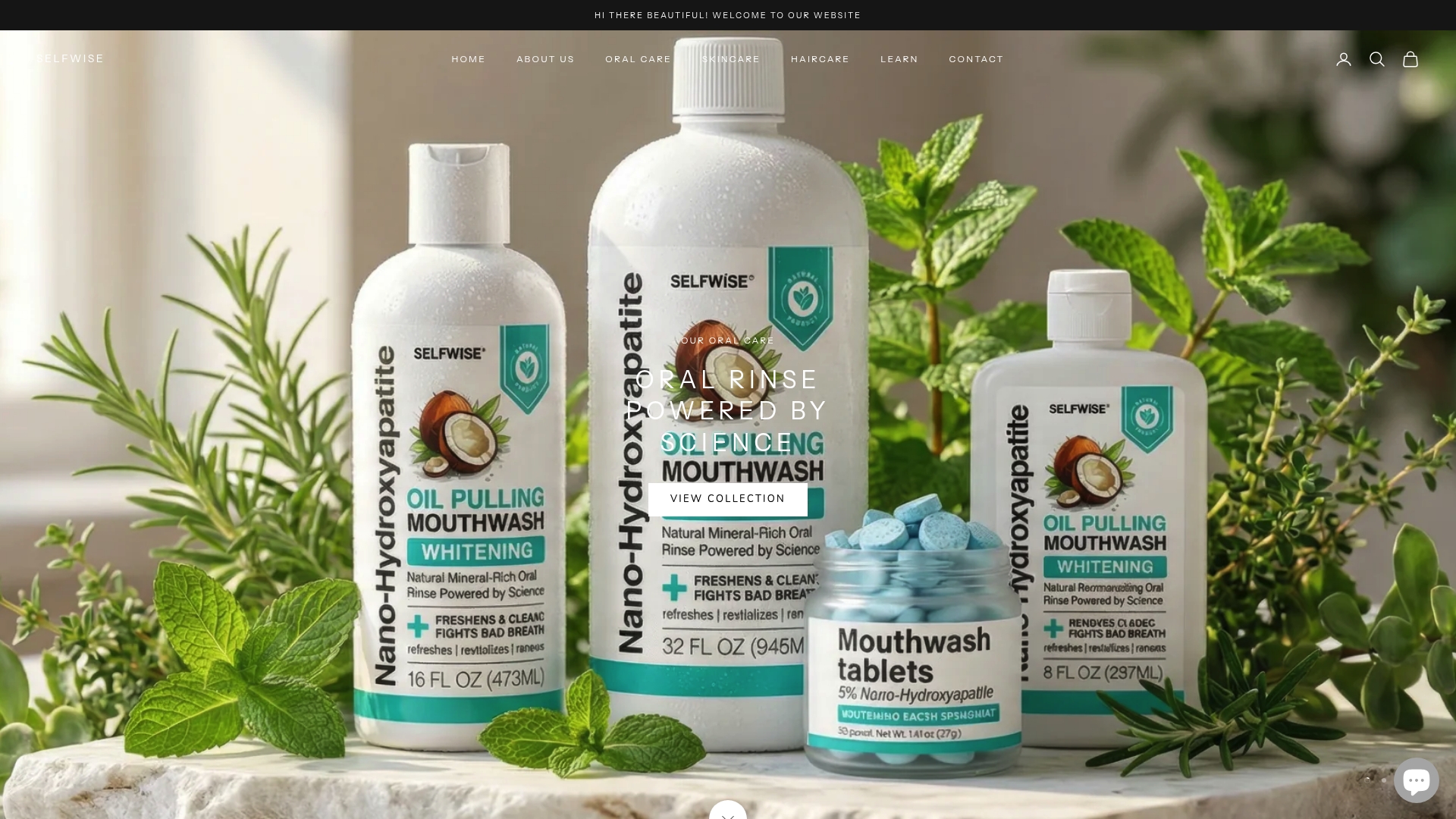
Three formats, one clear purpose:
- Xylitol Mouthwash with Nano Hydroxyapatite — daily rinse combining xylitol’s anti-caries activity with nHAp enamel support; no fluoride, no alcohol, no harsh abrasives
- Nano Hydroxyapatite Mouthwash Tablets — solid, travel-ready, and plastic-light; dissolve one tablet, rinse, done
- Nano Hydroxyapatite Oil Pulling Mouthwash — oil-pulling base with added nHAp for readers who want a traditional ritual with modern remineralizing support
All three are available directly at Selfwisebrand’s mouthwash collection. Every ingredient is listed transparently. If you have been using charcoal mouthwash for whitening or freshness and want a formula with actual enamel science behind it, this is where to start.
Sources
- Charcoal-based mouthwashes: a literature review
- Mouthwashes: Alternatives and Future Directions - PMC
- Charcoal-based mouthwashes: a literature review
- Hello® Activated Charcoal
This article is general information, not a substitute for advice from a qualified doctor. Consult a qualified healthcare professional about your own circumstances before acting on anything here.
FAQ
Is charcoal mouthwash actually good for your teeth?
Current peer-reviewed evidence does not support charcoal mouthwash as being beneficial for oral health.
Why do hospitals use activated charcoal in the mouth?
Hospital use of activated charcoal is for acute poisoning or drug overdose management, administered orally to adsorb ingested toxins in the gut. This is a medical emergency intervention and has no connection to the cosmetic charcoal used in oral care products.
What toxins does charcoal remove in a mouthwash?
No clinical evidence confirms that charcoal mouthwash removes specific toxins from the oral cavity in a meaningful way. In vitro, activated charcoal binds some pigment molecules and volatile compounds, but controlled rinse conditions in a real mouth do not replicate lab adsorption results.
Is charcoal mouthwash safe for your gums?
Occasional use is unlikely to cause acute gum harm in healthy adults, but charcoal particles can accumulate in gingival margins and restoration edges. Anyone with gum disease, exposed roots, or composite restorations should consult a dentist before use.