
Why Formaldehyde Releasers in Products: 2026 Guide
Formaldehyde releasers are chemical preservatives that slowly emit formaldehyde to kill bacteria and fungi in water-based personal care products. They appear in shampoos, lotions, mouthwash, and dozens of other everyday products under names like DMDM hydantoin, quaternium-15, and imidazolidinyl urea. Most consumers never see the word “formaldehyde” on a label, yet they apply these compounds daily. Understanding why formaldehyde releasers in products remain so common, and what the health risks actually are, is the first step to making smarter choices for your skin and oral health.
Why are formaldehyde releasers used in consumer and oral care products?
Formaldehyde releasers are used because they work. Water-based products like shampoos, conditioners, and liquid mouthwash are breeding grounds for bacteria and mold. Without a preservative, a bottle of mouthwash can become contaminated within days of opening. Formaldehyde releasers solve this problem by slowly releasing formaldehyde molecules over time, providing continuous antimicrobial protection throughout the product’s shelf life.
The chemistry behind them is straightforward. Compounds like DMDM hydantoin undergo hydrolysis in water, breaking down gradually and releasing small amounts of formaldehyde. That formaldehyde disrupts the cell walls of bacteria and fungi, preventing growth. The release is slow and controlled, which is exactly what formulators want.
From a manufacturing standpoint, formaldehyde releasers offer three clear advantages over many alternatives:
- Cost: They are inexpensive to source and require very small concentrations to be effective.
- Stability: They remain effective across a wide range of pH levels and temperatures, making them reliable in diverse formulations.
- Broad-spectrum activity: They fight bacteria, mold, and yeast simultaneously, reducing the need for multiple preservative systems.
Reformulating without them is genuinely difficult. Many natural preservative alternatives work only within a narrow pH range or require higher concentrations that affect texture and scent. Manufacturers face real technical and financial pressure when switching, which explains why these compounds persist even as regulatory scrutiny increases.
Pro Tip: When you see a product marketed as “preservative-free,” check whether it is truly anhydrous (contains no water). Any water-based product needs some form of preservation. If it claims none, look more carefully at the full ingredient list.
Which products commonly contain formaldehyde releasers?
Formaldehyde releasers show up across a wide range of personal care and household products. Knowing where to look is half the battle.
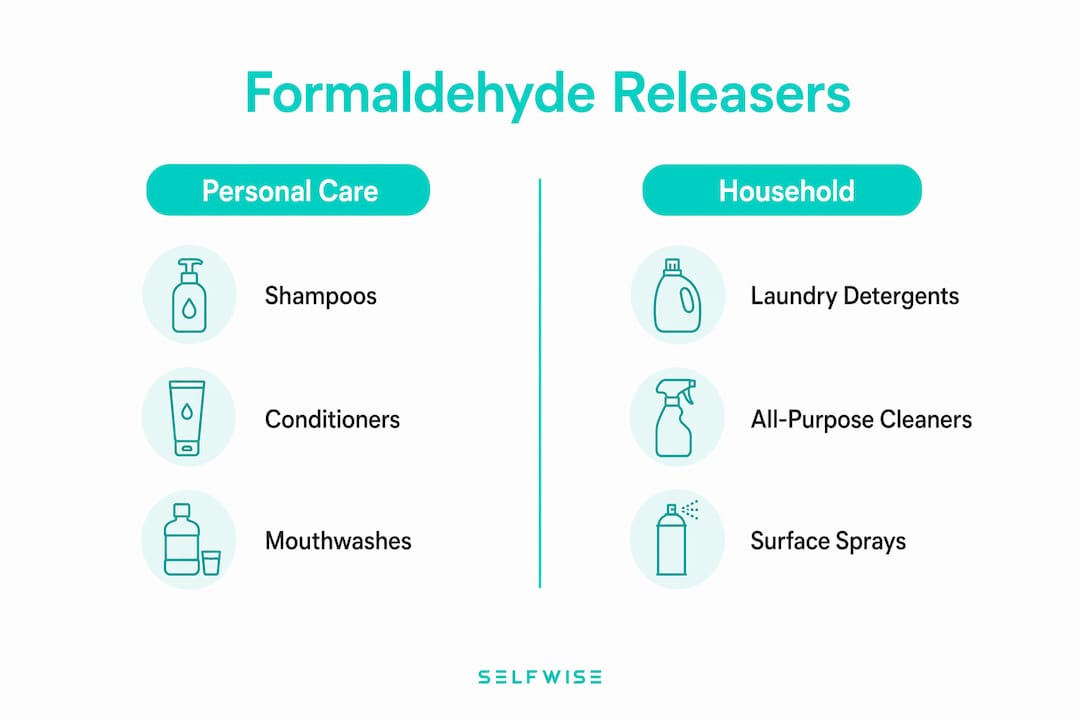
Common product categories include shampoos and conditioners, body lotions, liquid soaps, nail hardeners, baby wipes, cleaning products, and oral care products like liquid mouthwash. Hair straightening treatments are a particularly high-risk category. Testing of 577 hair products found formaldehyde releasers in nearly 1 in 8 hair products, and some keratin treatments contained up to 11.5% formaldehyde even when labeled “formaldehyde-free.”
The labeling problem is real. Ingredient lists show the name of the releaser compound, not the word “formaldehyde.” Consumers fail to recognize these compounds because they do not know what to look for. The most common formaldehyde-releasing compounds to watch for are:
- DMDM hydantoin
- Quaternium-15
- Imidazolidinyl urea
- Diazolidinyl urea
- Bronopol (2-bromo-2-nitropropane-1,3-diol)
- BHMT (bis-hydroxymethyl) compounds
A product labeled “formaldehyde-free” may still contain one or more of these compounds. The label refers only to free formaldehyde added directly, not to compounds that release it after purchase. Some products labeled “formaldehyde-free” have tested above safety thresholds when heated, meaning the formaldehyde was released during normal use.
Pro Tip: Reading natural skincare ingredients lists takes practice. Search for any of the six compound names above before buying a new personal care product.
What are the health risks associated with formaldehyde releasers?
The health risks from formaldehyde releasers are well-documented and clinically significant. The most common reaction is allergic contact dermatitis, a delayed immune response that causes redness, itching, and blistering at the site of skin contact. A systematic review of 158 studies involving over 1.3 million dermatitis patients found a pooled prevalence of formaldehyde contact allergy of 2.88%, with approximately 42% clinical relevance. In North America specifically, the sensitization rate reaches 6.8%. That means roughly 1 in 15 North Americans with dermatitis is reacting to formaldehyde or formaldehyde-releasing compounds.
Once sensitized, the immune system reacts permanently. Even trace exposures can trigger a full reaction in someone who has already developed sensitivity. This is not a temporary irritation. It is a lasting change in how the immune system responds to a specific chemical.
“Dermal exposure to formaldehyde releasers in skin and oral care products presents a significant and often underestimated risk for allergic reactions beyond inhalation exposures known in occupational settings.” — Formaldehyde in Consumer Products
Most people associate formaldehyde exposure with industrial settings or funeral homes. The reality is that dermal absorption through daily product use is a separate and meaningful exposure route. Mouthwash, in particular, contacts the mucous membranes of the mouth, which absorb compounds more readily than intact skin. This makes oral care product formulations especially worth scrutinizing.
Storage conditions add another layer of risk. Elevated temperatures increase formaldehyde release rates from these compounds, meaning a bottle stored in a warm bathroom cabinet releases more formaldehyde than the same product stored in a cool environment. The concentration of free formaldehyde in a product is not fixed. It changes throughout the product’s life based on heat, pH, and time.
Beyond skin reactions, formaldehyde is classified as a known human carcinogen by the International Agency for Research on Cancer (IARC). The carcinogenicity concern primarily applies to inhalation at high concentrations, but the cumulative daily exposure from multiple personal care products is a growing area of scientific attention.
How are formaldehyde releasers regulated in 2026?
The regulatory picture in 2026 is shifting fast, and consumers need to understand what the rules actually protect against.
In the United States, the FDA has historically allowed formaldehyde releasers in cosmetics without requiring specific warnings below certain thresholds. That is changing at the state level. Washington state implemented a ban on all formaldehyde releasers in cosmetics effective january 1, 2027, making it one of the strictest jurisdictions in North America. Several other states are advancing similar legislation.
In the European Union, regulators lowered the mandatory labeling threshold for free formaldehyde to 10 parts per million (ppm), with implementation in 2024 and a sell-through deadline in 2026. Products above that threshold must carry a “contains formaldehyde” warning. This is a meaningful tightening of the previous standard, but 10 ppm is still above the level that can trigger reactions in highly sensitized individuals.
| Jurisdiction | Current status | Key threshold |
|---|---|---|
| United States (federal) | Permitted with some restrictions | No federal warning requirement below 0.05% |
| Washington state | Ban effective jan 1, 2027 | Full ban on releasers in cosmetics |
| European Union | Mandatory labeling above 10 ppm | 10 ppm free formaldehyde |
The gap between regulation and consumer protection is real. Labeling thresholds have historically been too high to protect sensitive individuals. A product can comply fully with current rules and still trigger a reaction in someone with established formaldehyde sensitivity. Regulatory compliance does not equal personal safety for every consumer.
Pro Tip: Do not rely on warning labels alone. Search the full ingredient list for the six releaser compound names listed earlier. Absence of those names is a stronger safety signal than any marketing claim on the front of the package.
What safer alternatives can consumers adopt in natural oral care?
Safer alternatives exist, and the natural oral care category has moved furthest in adopting them. The key is knowing what to look for and what questions to ask.
Modern preservative alternatives used in cleaner formulations include:
- Ethylhexylglycerin: A glycerin-derived compound with antimicrobial properties, widely used in natural personal care.
- Phenoxyethanol: Accepted in many natural formulations at low concentrations, though it has its own sensitivity profile.
- Sodium benzoate and potassium sorbate: Effective in acidic formulations, commonly used in food-grade products.
- Rosemary extract and vitamin E (tocopherol): Antioxidant-based preservation, effective in oil-based products.
For oral care specifically, the shift toward solid and anhydrous formats removes the preservation problem entirely. Solid mouthwash tablets, for example, contain no water and therefore need no antimicrobial preservative system. Ingredients like nano hydroxyapatite and xylitol support remineralization and oral microbiome balance without requiring formaldehyde-releasing compounds. Oil pulling products based on coconut or sesame oil are naturally anhydrous, making them inherently resistant to bacterial contamination.
When choosing personal care products, apply these practical steps. First, photograph the ingredient list before buying, not after. Second, cross-reference any unfamiliar preservative name against the six formaldehyde releaser compounds listed earlier. Third, prioritize preservative-free oral care products in solid or oil-based formats when possible. Fourth, consider gentle formulations for sensitive skin if you have a history of contact dermatitis or skin sensitivity.
Efficacy does not require harsh preservatives. The natural oral care category has demonstrated that products using xylitol, nano hydroxyapatite, and plant-based antimicrobials can deliver real clinical results without formaldehyde-releasing compounds.
Key takeaways
Formaldehyde releasers remain widespread in personal care and oral care products because they are cheap, stable, and effective, but the health risks, particularly permanent skin sensitization and elevated exposure in warm storage conditions, make ingredient literacy a practical necessity for every consumer.
| Point | Details |
|---|---|
| What they are | Formaldehyde releasers are preservatives that slowly emit formaldehyde to prevent microbial growth in water-based products. |
| Health risk scope | Contact allergy affects 2.88% of dermatitis patients globally, with a 6.8% sensitization rate in North America. |
| Labeling gap | “Formaldehyde-free” labels do not exclude releaser compounds; always check for DMDM hydantoin, quaternium-15, and related names. |
| Regulatory shift | Washington state bans all releasers in cosmetics from january 2027; the EU now requires labeling above 10 ppm free formaldehyde. |
| Safer oral care | Solid and oil-based oral care formats eliminate the need for preservatives entirely, removing formaldehyde exposure at the source. |
The ingredient list is the only label that matters
I have spent years reading personal care labels, and the single most consistent mistake I see is consumers trusting the front of the package over the back. “Natural,” “gentle,” and “formaldehyde-free” are marketing terms. The ingredient list is a legal document.
What genuinely changed my thinking was learning that formaldehyde release is not static. A product sitting in a warm bathroom cabinet releases more formaldehyde over time than the same product tested fresh off a manufacturing line. You are not just buying the product as formulated. You are buying it as it will behave in your home, in your conditions, over months of use.
The oral care angle matters more than most people realize. Mucous membranes in the mouth absorb compounds faster than skin. A mouthwash with DMDM hydantoin is not the same risk profile as a body lotion with the same compound. The exposure route changes everything.
My honest recommendation: move toward solid and oil-based oral care formats wherever you can. Not because liquid products are all dangerous, but because anhydrous formats remove the preservation problem entirely. No water means no microbial risk means no need for formaldehyde-releasing chemistry. That is a clean solution, not a compromise.
— Viktor
Natural oral care from Selfwisebrand, without the preservative trade-offs
Selfwisebrand builds oral care products around ingredients that do not require formaldehyde-releasing preservatives to stay effective. The nano hydroxyapatite oil pulling mouthwash is oil-based and anhydrous, meaning no water, no microbial risk, and no need for synthetic preservatives. The solid mouthwash tablet format takes the same approach: a dry, concentrated product that activates with water only at the moment of use.
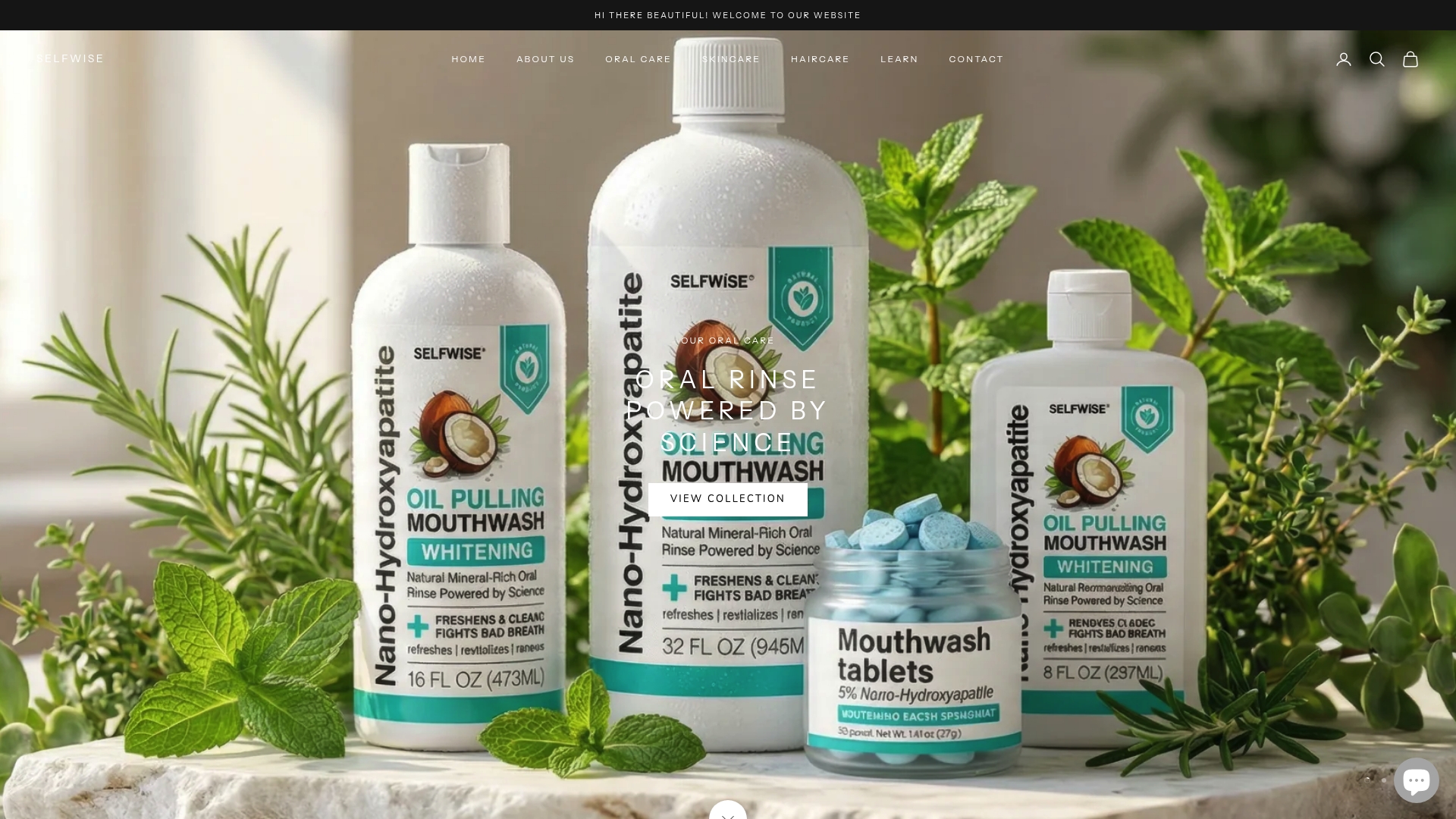
Selfwisebrand’s fluoride-free oral care collection uses xylitol and nano hydroxyapatite to support enamel remineralization and gum health without harsh chemistry. For consumers who also want clean skin care, the natural body oils range is formulated with the same ingredient-first philosophy. Simple ingredients. Real results.
FAQ
What are formaldehyde releasers in personal care products?
Formaldehyde releasers are preservative compounds that slowly break down in water-based products, releasing small amounts of formaldehyde to prevent bacterial and fungal growth. Common examples include DMDM hydantoin, quaternium-15, and imidazolidinyl urea.
Are formaldehyde releasers safe for daily use?
For most people, low-level exposure causes no immediate reaction, but a systematic review found a 6.8% formaldehyde sensitization rate among North American dermatitis patients. Once sensitized, even trace exposures can trigger permanent allergic reactions.
How do I know if my mouthwash contains formaldehyde releasers?
Check the ingredient list for DMDM hydantoin, quaternium-15, imidazolidinyl urea, diazolidinyl urea, or bronopol. The word “formaldehyde” will not appear even if these compounds are present.
Does “formaldehyde-free” on a label mean the product is safe?
Not necessarily. Testing has found that some products labeled “formaldehyde-free” release formaldehyde above safety thresholds when heated, because they contain releaser compounds that were not counted in the label claim.
What oral care products avoid formaldehyde releasers entirely?
Solid and oil-based oral care formats, such as mouthwash tablets and oil pulling products, contain no water and therefore require no antimicrobial preservatives. These formats eliminate formaldehyde releaser exposure at the source.