Make Oil Pulling Before Bed Stick: Safe 10–20 Minute Night Routine
Oil pulling before bed is safe and effective for most adults when done correctly, and it works just as well as a morning session for reducing oral bacteria. It should sit alongside brushing and flossing, not replace them. What matters more than the clock is whether you do it consistently and use the right technique. If you have swallowing difficulties, a respiratory condition, or young children in the house, talk to a dentist first.
TL;DR:
- Consistent oil pulling for at least 10 minutes nightly can reduce bacterial load, but traditional 15 to 20 minute sessions are not necessary for benefits.
- Both coconut and sesame oils are effective options, with coconut oil containing antimicrobial lauric acid and sesame oil having direct clinical backing in recent studies.
- The most important factor is regular practice over several weeks, as oral health improvements like reduced plaque may take up to eight weeks to show.
- Oil pulling should be part of a routine that includes brushing and rinsing with remineralizing products, not a replacement for standard dental care.
- Proper technique, including gentle swishing and disposing of oil into trash, minimizes risks like jaw fatigue, choking, or pipe clogging.
Table of Contents
- Building an Oil Pulling Routine for Bedtime
- What Does the Research Actually Say About Timing?
- How to Oil Pull at Night, Step by Step
- Which Oil Should You Use Before Bed?
- Is Oil Pulling at Night Safe for Everyone?
- Making Oil Pulling Part of Your Actual Life
- Handling Used Oil Without Wrecking Your Pipes
- Why Trust This Guide on Nighttime Oil Pulling
- What Actually Matters With Nighttime Oil Pulling
- Pair Your Oil Pulling Routine With the Right Rinse
- Sources
- FAQ
Building an Oil Pulling Routine for Bedtime
Nighttime works because it slots into a routine you’re already doing. You can pull oil before you brush, using the swishing action to loosen debris first, or after brushing, using it as a final rinse before you climb into bed. Both are legitimate. Traditional guidance leans toward pulling before brushing to avoid swishing toothpaste residue, but some people prefer pulling after brushing as it leaves the mouth feeling cleaner before sleep.
Use about one tablespoon (10 mL) of oil. Less than that and you won’t have enough volume to work it between your teeth; much more and you’ll be fighting the urge to swallow the whole session.
Duration is where people psych themselves out. The traditional target is 15 to 20 minutes, but that’s not a hard requirement for benefit. Several trials studying oil pulling used sessions as short as 10 minutes and still measured a drop in bacterial counts. If you’re new to this, start smaller.
Here’s a simple nighttime sequence to follow:
- Brush and floss as you normally would, or skip this step and brush after pulling instead.
- Measure roughly one tablespoon of oil.
- Swish gently, pulling the oil through your teeth for 5 to 20 minutes depending on your experience level.
- Spit the oil into a trash can or tissue, never into the sink or toilet.
- Rinse your mouth with water.
- Brush your teeth if you haven’t already, then go to bed.
Five minutes on night one beats zero minutes because you gave up on a 20 minute target. Build up gradually.
What Does the Research Actually Say About Timing?
The honest answer: not much, specifically about morning versus night. Most of the oral health research on oil pulling doesn’t test timing as a variable at all. It tests whether the practice reduces bacteria and plaque, period, and the sessions in those trials happen whenever the study protocol scheduled them.
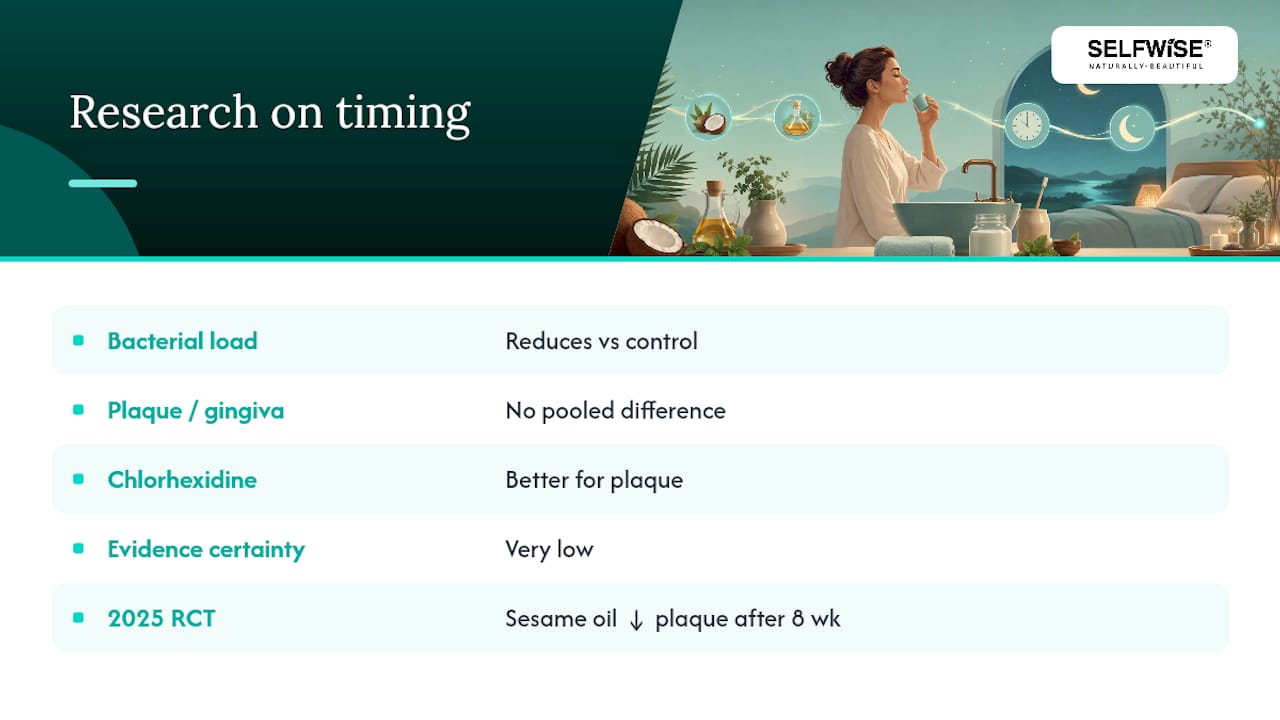
What the evidence does show is more nuanced than the “swish first thing in the morning” advice you’ll find everywhere. A meta-analysis published in Dentistry Journal found that oil pulling significantly reduced salivary bacterial colony counts compared with control groups, but showed no statistically significant difference in plaque index or gingival index scores when the data was pooled. A separate systematic review and meta-analysis reached a similar conclusion: oil pulling probably helps gingival health and bacterial counts, but chlorhexidine mouthwash still outperforms it for plaque control, and the overall certainty of evidence is rated very low.
Oil pulling does something measurable to bacterial load in the mouth. What it does not do, based on current evidence, is outperform established interventions like chlorhexidine, or prove that one time of day beats another.
There’s a more recent and more specific data point worth flagging. A 2025 randomized controlled trial found that eight weeks of consistent sesame oil pulling produced a statistically significant reduction in plaque indices compared to a control group. That’s one of the stronger pieces of clinical evidence for a specific oil, and it says nothing about time of day. What it says is that sticking with it for eight weeks mattered.
Clinical authors reviewing this research have pointed out that future studies need to test morning versus night explicitly, because the current preference for mornings is traditional practice, not proven clinical superiority. The mechanical action of forcing oil between your teeth appears to be the primary driver of bacterial reduction, regardless of the hour. If you swish properly and do it often, timing becomes a secondary detail.
How to Oil Pull at Night, Step by Step
Technique separates people who stick with this from people who quit after three days with a sore jaw. Get the motion right and the rest follows.
Start with a relaxed jaw. Pour your tablespoon of oil into your mouth and let it warm for a few seconds if it’s solid (coconut oil, for instance, melts around body temperature). Push and pull the oil gently through the spaces between your teeth. Think of it as a slow, deliberate swish, not an aggressive gargle. You never want the oil traveling to the back of your throat where gargling would normally send it. If it drifts back there, that’s a sign to slow down and keep the motion more forward, near your front and side teeth.
Do not swallow. As you swish, the oil picks up bacteria, food debris, and saliva, and it thins out and turns a milky white color. Swallowing it defeats the purpose and can cause mild stomach upset in some people.
For beginners, here’s a realistic progression:
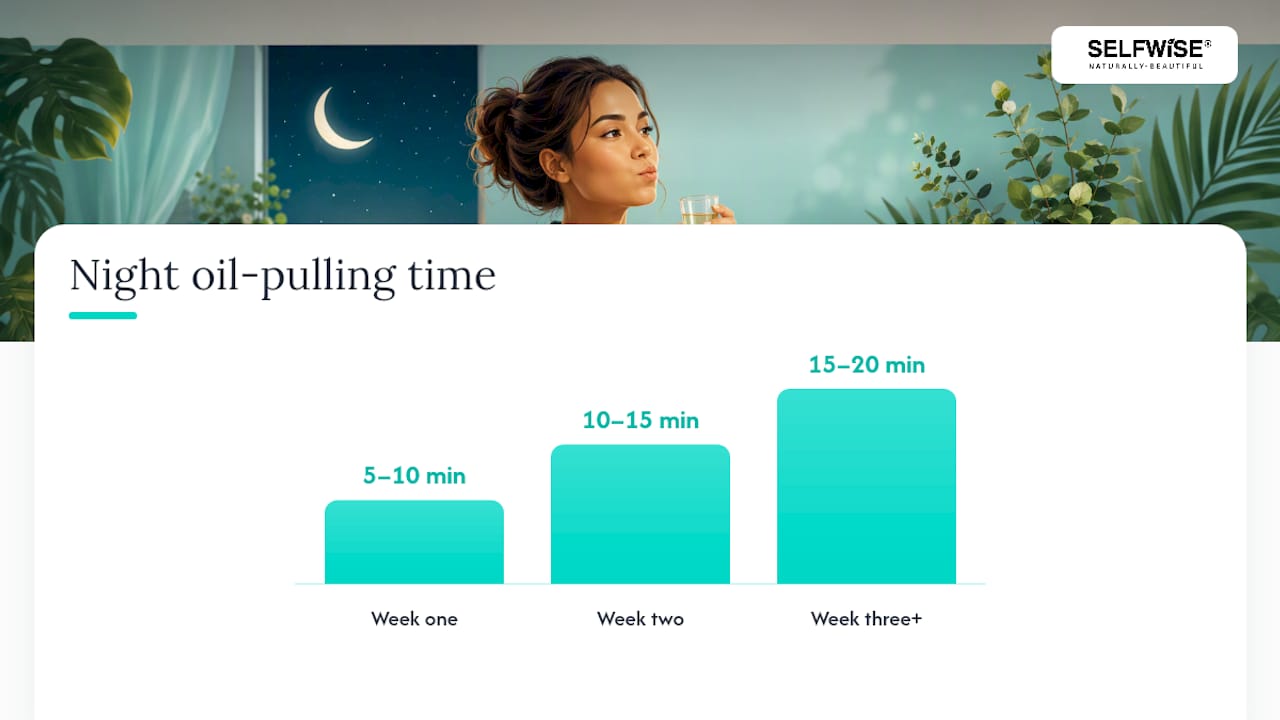
- Week one: aim for 5 to 10 minutes, working up gradually.
- Week two: extend to 10 to 15 minutes if your jaw feels fine.
- Week three onward: push toward the full 15 to 20 minute window if you want to match traditional guidance.
Jaw fatigue is common and it’s not a sign you’re doing something wrong. If your jaw starts to ache, you can split the session, swishing for 10 minutes, resting for a minute, then finishing the remaining time. Breathing through your nose the entire time keeps things comfortable since your mouth stays occupied.
When you’re done, spit the oil into a trash can lined with a tissue, not the sink. Rinse your mouth thoroughly with warm water to clear any remaining residue, then brush your teeth if you haven’t already done so in your routine.
Pro Tip: Keep a small dedicated cup by your sink for oil pulling nights. Swishing straight from the measuring spoon feels awkward, and having a designated cup removes one more excuse to skip the routine.
For a full walkthrough of the mechanics with more visual cues, Selfwisebrand’s guide on how to do oil pulling covers beginner-specific troubleshooting in more depth.
Which Oil Should You Use Before Bed?
Coconut and sesame oil are the two most studied options, and both have a reasonable case behind them. Coconut oil contains lauric acid, a compound with documented antimicrobial properties, which is part of why it’s become the default recommendation in a lot of oral health content. Sesame oil has a longer history in traditional Ayurvedic practice and now has more direct clinical backing, including the 2025 RCT showing reduced plaque indices after eight weeks of consistent use.
Here’s how they compare on the practical details that actually affect whether you’ll stick with this at night:
- Coconut oil: mild, slightly sweet flavor that most people tolerate easily; solid at room temperature below about 76°F, so it needs a few seconds to liquefy in your mouth.
- Sesame oil: stronger, nuttier taste that some find harder to get used to; liquid at room temperature, so it’s ready to use immediately.
- Storage: both oils should be kept in a cool, dark cabinet away from direct sunlight, which slows oxidation and rancidity.
- Allergy considerations: sesame allergy is one of the more common food allergies and reactions can be serious, so anyone with a known sesame allergy should stick with coconut oil or avoid pulling altogether.
- Age and risk factors: oil pulling is not recommended for children under 5, and anyone with a documented aspiration risk should skip it regardless of which oil they’d otherwise choose.
If you’re undecided, Selfwisebrand’s breakdown of oil pulling with sesame oil walks through technique specifics, and a broader comparison of oils used for pulling lays out the evidence side by side.
Is Oil Pulling at Night Safe for Everyone?
For most healthy adults, yes. But there are real risks worth naming honestly rather than glossing over.
The most serious, though rare, concern is aspiration, oil accidentally entering the lungs, which can lead to lipoid pneumonia. This risk is elevated in people with neurological disorders affecting swallowing, or anyone with a diagnosed swallowing difficulty. If that describes you, skip oil pulling or clear it with a doctor first.
More common but far less dangerous side effects include mild nausea, stomach upset if any oil is swallowed, and jaw fatigue during longer sessions. If any of these become persistent, shorten your sessions or stop.
- Never spit oil into a sink or toilet; the fats can solidify inside pipes over time and contribute to clogs.
- Always dispose of used oil into a trash can, ideally wrapped in a tissue or paper towel.
- Rinse your mouth and the sink area with warm water after you finish, even if you spit into the trash.
- Stop immediately if you experience persistent gagging, throat irritation, or signs of an allergic reaction.
Pro Tip: If jaw soreness is what’s stopping you, that’s a technique issue, not a sign you should quit. Loosen your jaw, slow the swish, and cut the session shorter until your muscles adjust.
Making Oil Pulling Part of Your Actual Life
The people who stick with this long term treat it as flexible, not rigid. A 20 minute commitment feels heavy on a night when you’re exhausted, so give yourself permission to do 5 minutes instead of skipping entirely. Consistency across weeks matters more than hitting a perfect duration every single night.
Signs it’s working tend to show up gradually: fresher breath in the morning, a smoother feel to your teeth, or a dentist noting less plaque buildup at your next cleaning. Give it several weeks of regular practice before judging results, since the plaque reduction seen in the 2025 sesame oil trial took eight weeks of consistent use to show up.
- If you notice no change after a month of nightly sessions, that’s not a failure. It just means oil pulling isn’t doing much for your specific mouth, and your energy is better spent on brushing, flossing, and regular cleanings.
- Persistent bad breath, bleeding gums, or tooth pain are signs to see a dentist, not signs to pull harder or longer.
Handling Used Oil Without Wrecking Your Pipes
Spit used oil into a tissue or trash can every time, never down the sink or toilet. The oil can cool and solidify inside pipes, contributing to clogs over months of repeated use, a detail the research on oral hygiene practices specifically flags. Wipe down the sink afterward if any oil splashed there.
- Store your oil in a cool, dark cabinet; cloudiness or a sour smell means it’s gone rancid and should be tossed.
- For travel, single-use oil packets or a small leakproof jar in your toiletry bag keep hotel bathroom sessions simple.
Why Trust This Guide on Nighttime Oil Pulling
Selfwisebrand builds its oral care line around ingredients with a real track record, pairing traditional practices like oil pulling with modern formulations that use nano hydroxyapatite and xylitol. That combination, old technique and researched ingredients, is the same lens applied here: nothing in this guide claims oil pulling replaces brushing, flossing, or dental visits, because the evidence doesn’t support that claim.
The clinical picture is consistent across sources. Reviews and meta-analyses show oil pulling can reduce bacterial counts and may support gum health, but authoritative dental organizations do not endorse it as a substitute for standard care. That’s not a knock against the practice. It’s a reason to treat it as one tool in a broader routine that includes a fluoride or remineralizing product, regular brushing, and professional cleanings.
Every claim about technique, duration, and safety in this article traces back to peer-reviewed research or established practitioner guidance, not marketing copy repeated across blogs.
What Actually Matters With Nighttime Oil Pulling
Most advice on this topic obsesses over timing, morning versus night, before or after brushing, when the research simply doesn’t back a strong preference either way. What the evidence does support is that mechanical swishing and repetition over weeks drive whatever benefit shows up. That’s a less exciting headline than “the best time to oil pull,” but it’s the honest one.
Where conventional advice falls short is treating a 20 minute session as the only valid version. Rigid rules make people quit. A 5 minute session done nightly for two months will do more than a perfect 20 minute session attempted twice and abandoned.
Prioritize showing up over hitting a number. Pick a slot at night that you’ll actually protect, coconut or sesame oil based on taste and allergy status, and give it real weeks before judging results. Pair it with a remineralizing rinse rather than expecting oil alone to do the work of your full routine.
— Viktor
Pair Your Oil Pulling Routine With the Right Rinse
Oil pulling handles the mechanical side, loosening bacteria and debris between your teeth, but it doesn’t remineralize enamel or leave your mouth with the same clean finish as a proper rinse. That’s the gap Selfwisebrand’s oral care collection is built to fill, with formulas free of harsh chemicals, fluoride, and alcohol.
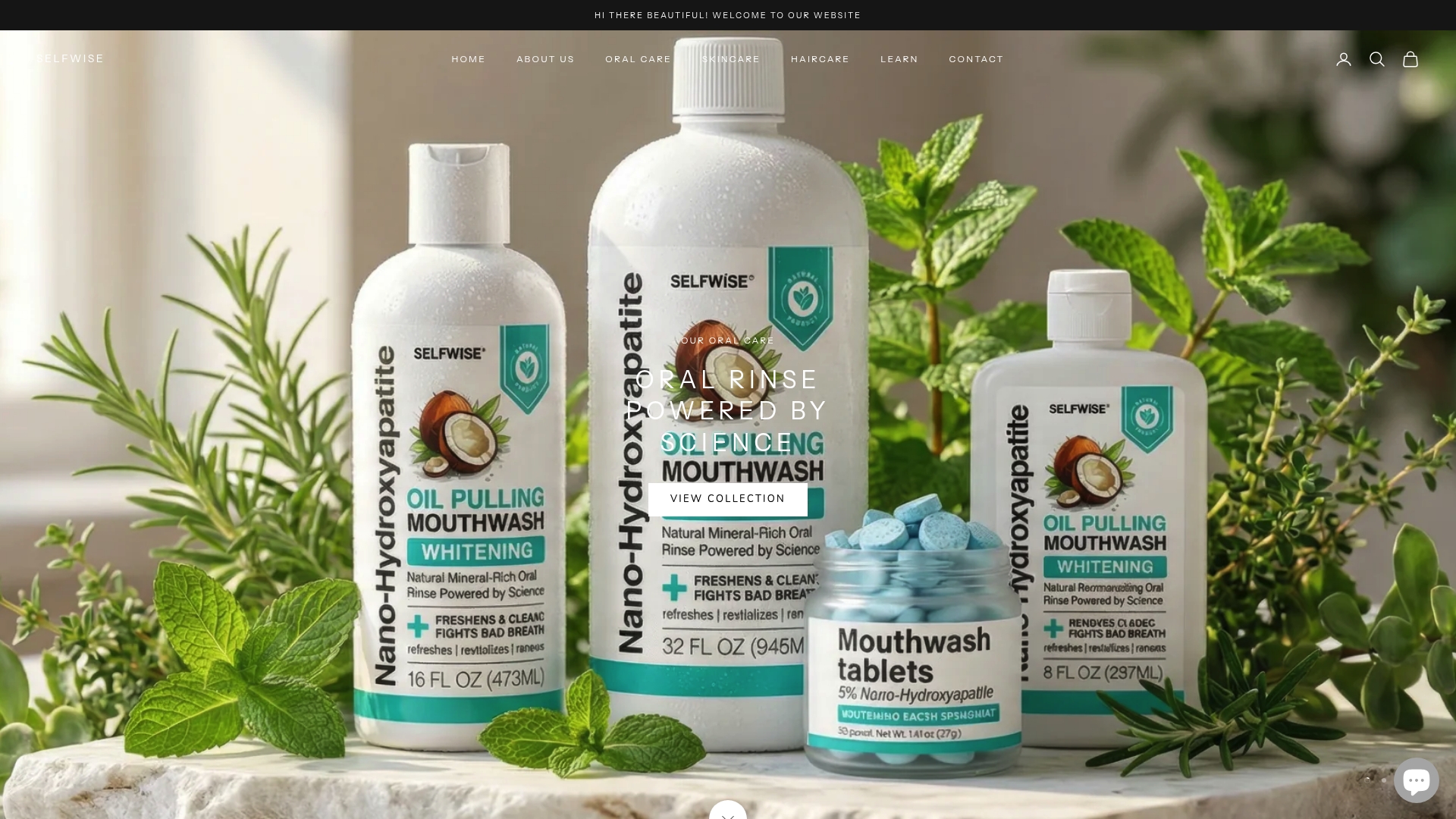
A common nightly sequence looks like this: oil pull first to loosen buildup, brush, then finish with a nano hydroxyapatite mouthwash to support remineralization before bed. If you want the full picture of how these pieces fit together, the natural oral care guide breaks down how each product supports a chemical-free routine. Browse the oral care collection tonight and build a nighttime lineup that does more than oil alone can.
Sources
- Oil pulling for maintaining oral hygiene – A review
- Effectiveness of Oil Pulling for Improving Oral Health: A Meta-Analysis
- The effect of oil pulling in comparison with chlorhexidine and other mouthwash interventions in promoting oral health: A systematic review and meta-analysis
- Randomized controlled trial: sesame oil pulling (2025)
FAQ
When Is the Best Time to Do Oil Pulling?
Both morning and night work, since no high-quality clinical trial has directly compared the two and found one superior. What matters more is picking a time you can protect consistently, whether that’s right after waking or as part of your bedtime routine.
Why Are Some Dentists Against Oil Pulling?
Dentists generally aren’t against the practice itself, but they push back when it’s used as a replacement for brushing, flossing, or professional cleanings rather than an addition to them. The evidence supporting oil pulling is rated as low certainty in systematic reviews, and chlorhexidine mouthwash still outperforms it for plaque control.
How Can You Tell If Oil Pulling Is Working?
Fresher morning breath, a smoother feel across your teeth, and reduced plaque noted at a dental cleaning are the practical signs to watch for. Give it several weeks of consistent nightly sessions, since the plaque reduction seen in the 2025 sesame oil trial took eight weeks to appear.
Is 10 Minutes of Oil Pulling Enough?
Ten minutes can still provide a meaningful mechanical benefit, since several studies included in major reviews used sessions in that 10 minute range. Traditional guidance recommends 15 to 20 minutes, but starting at 10 and building up is a reasonable approach for beginners.
Should You Oil Pull Before or After Brushing at Night?
Either order is acceptable, and no clinical evidence shows one sequence outperforms the other. Pulling before brushing clears debris first, while pulling after brushing works as a final rinse. Choose whichever fits your routine and stick with it.