Cut Morning Breath 60% in 30 Seconds With One Simple Rinse
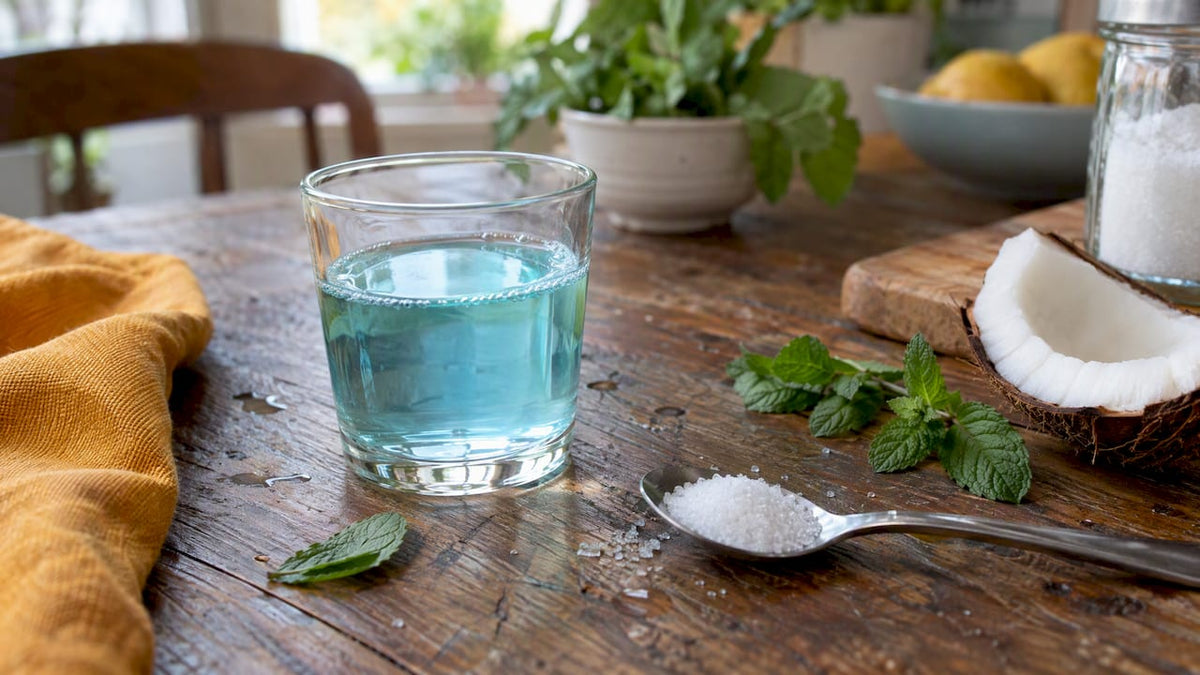
The fastest way to cut morning breath is a glass of water followed by tongue scraping before anything else touches your mouth. Then brush and floss as usual. For an interim fix while you’re getting to a sink, xylitol gum or an alcohol-free mouthwash buys you time without masking the problem. Daily tongue cleaning and fixing low overnight saliva flow are what stop it from coming back, and natural oral care products can support that combination.
TL;DR:
- Maintaining consistent nighttime oral hygiene, including brushing, flossing, and tongue scraping, is essential to prevent bacteria buildup and reduce morning breath.
- Using a water rinse and tongue scraper immediately upon waking can significantly reduce odor-causing bacteria before brushing.
- Natural products like nano hydroxyapatite mouthwash and xylitol gum support saliva flow and bacterial control but should complement, not replace, standard hygiene practices.
- Addressing mouth breathing through nasal rinses or humidifiers can help reduce dry mouth and odor associated with congestion.
- Persistent or day-long bad breath may indicate underlying health issues requiring a dental or medical evaluation beyond daily oral care routines.
Table of Contents
- Why Does Morning Breath Happen?
- Fast Morning Fixes You Can Do Right After Waking
- Building a Daily Routine That Prevents Morning Breath
- Oil Pulling, Nano Hydroxyapatite, and Xylitol: What the Evidence Actually Shows
- When Morning Breath Means You Should See a Dentist
- What I Do Every Morning, and Why It Sticks
- Building Your Routine With Selfwisebrand
- Sources
- FAQ
Why Does Morning Breath Happen?
Your mouth turns into a low-flow, low-oxygen environment overnight, and that’s the whole story behind why breath smells worse after eight hours of sleep than after eight hours awake. Saliva flow drops sharply during sleep, and that unstimulated flow is what normally washes away bacteria and the volatile sulfur compounds (VSCs) they produce. Less saliva means those compounds concentrate instead of clearing out.
The tongue makes it worse. Its rough surface traps dead cells, food debris, and bacteria in a coating that acts like a reservoir for odor production, and mouth breathing dries things out further by replacing moist air with a steady stream of dehydrating airflow.
Research on this is more specific than most people expect. A cross-sectional study found that lower unstimulated salivary flow and heavier tongue coating independently predict higher VSC levels and self-reported morning halitosis. One data point stands out: a 0.1 mL per minute increase in salivary flow can substantially reduce the odds of noticeable morning malodor.
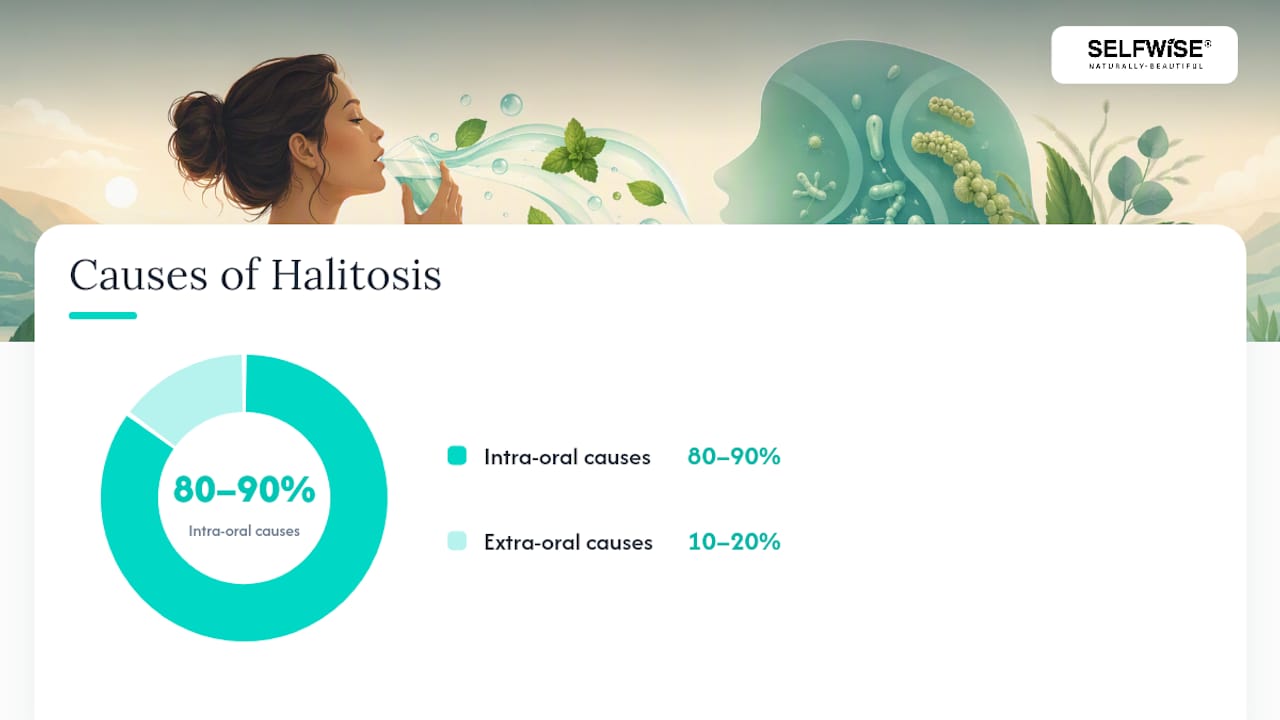
Statistic to know: intra-oral causes, mainly tongue coating and oral hygiene status, account for 80 to 90 percent of halitosis cases, with the remaining 10 to 20 percent tied to conditions outside the mouth. That ratio is why the tongue, not the teeth alone, deserves first attention.
Fast Morning Fixes You Can Do Right After Waking
Order matters here. Doing these steps in sequence gets rid of odor faster than jumping straight to brushing.
- Rinse with water first. Swish and rinse with a glass of water before you do anything else. The same MDPI research above found this single step can reduce methyl-mercaptan levels by roughly 60 percent within about 30 seconds, because it physically flushes out the concentrated bacteria and debris that built up overnight.
- Scrape your tongue. Use a metal or plastic tongue scraper starting from as far back as you can comfortably reach, then pull forward in one motion. Rinse the scraper and repeat three or four times. The back third of the tongue holds the densest bacterial coating, so skipping it undermines the whole step.
- Brush and floss as normal. This clears plaque and food particles the water rinse and scraper leave behind.
- If you can’t get to a sink right away, chew xylitol gum, use an alcohol-free rinse, or reach for a mouthwash you can swish quickly. These aren’t substitutes for brushing, but they hold the line until you can do the full routine.
One caution: strong mint sprays and gum can mask odor for a few minutes without doing anything to the bacteria causing it. If your only strategy is masking, the smell returns faster and stronger once the mint fades.
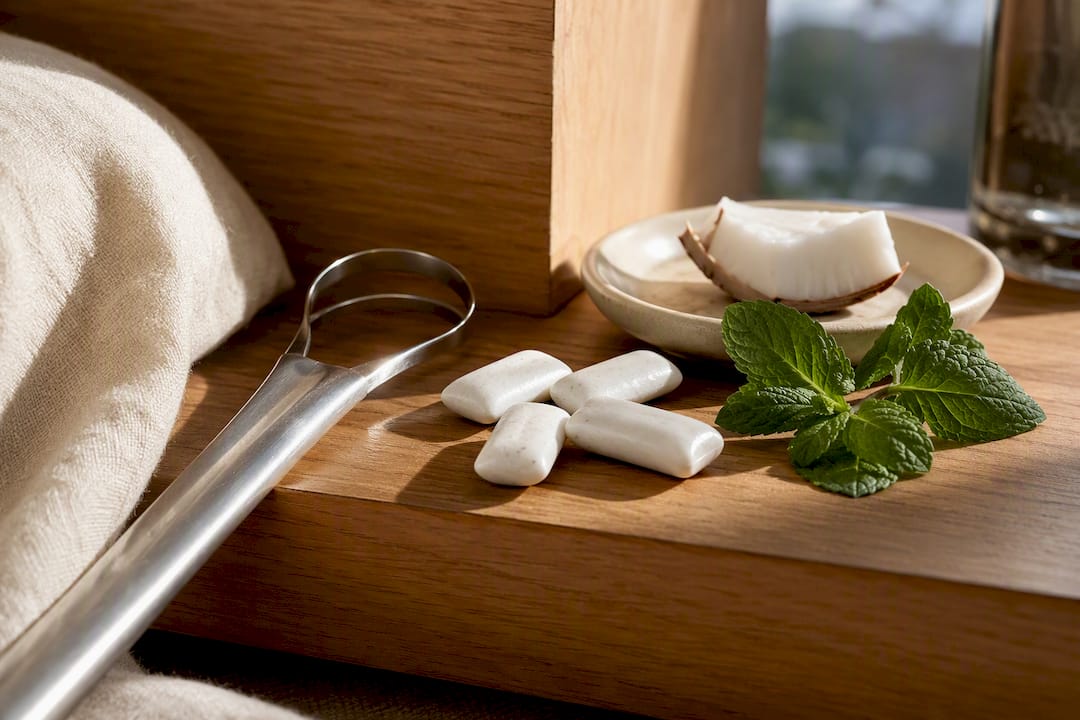
Pro Tip: Keep a tongue scraper and a pack of xylitol gum on your nightstand. The remedies that work are the ones you don’t have to think about at 6:00 AM, and having them within arm’s reach removes the only real barrier to consistency.
Building a Daily Routine That Prevents Morning Breath
Fixing morning breath at the source means changing what happens before you fall asleep, not just what you do after you wake up.
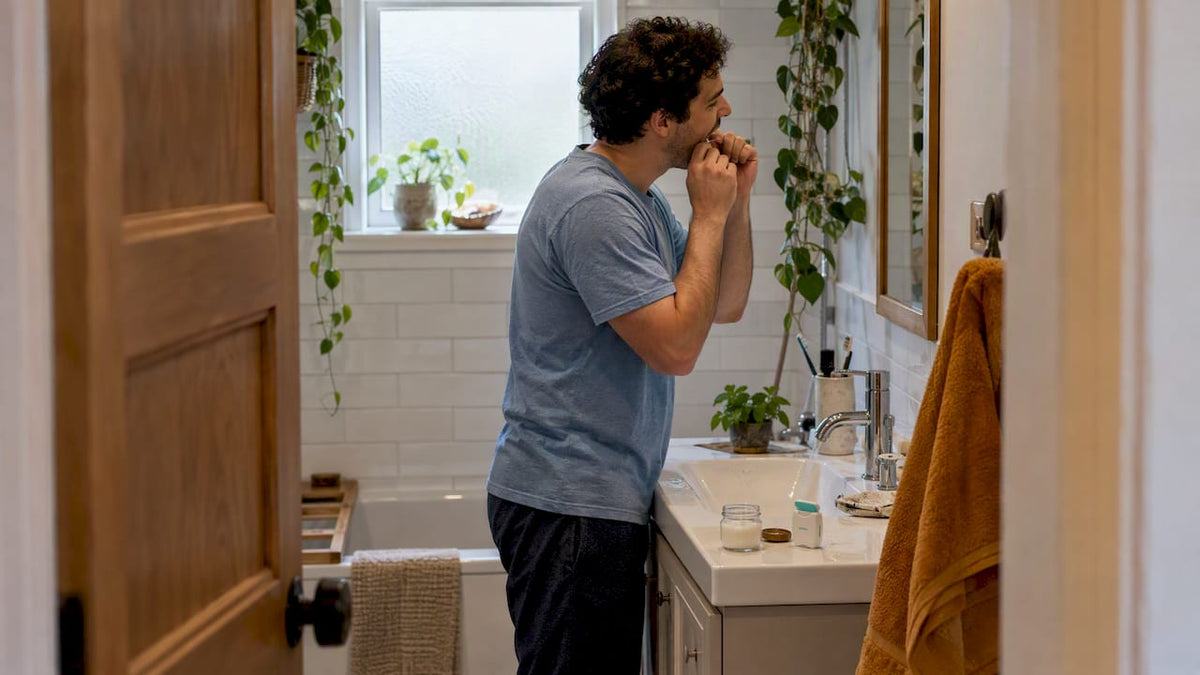
- Brush, floss, and scrape your tongue at night, not just in the morning. Bacteria left behind at bedtime have eight uninterrupted hours to multiply, so nighttime cleaning matters at least as much as the morning version.
- Hydrate throughout the day, not only in the morning. Sip water regularly, have a full glass before bed, and keep water at your bedside for anyone who wakes up mid-sleep with a dry mouth.
- Address mouth breathing if it’s a factor. A saline nasal rinse, a bedroom humidifier, or nasal strips can help if congestion is pushing you to breathe through your mouth at night. The Sleep Foundation notes that nasal obstruction is a common, often overlooked driver of dry mouth and morning odor, and if these steps don’t help, an ENT evaluation can rule out a structural cause.
- Watch late-night food and drink. Heavy garlic, onion, or alcohol close to bedtime gives odor-producing compounds a head start, and tobacco use compounds the drying effect on your mouth overnight.
- Use xylitol regularly throughout the day, not just once. Gum, mints, or a xylitol-based rinse used at this frequency supports saliva flow and helps limit the bacteria linked to both cavities and odor, according to clinical guidance summarized by the Merck Manuals.
None of this requires an overhaul. It’s the same toothbrush and floss you already own, used with slightly more attention to timing and the tongue.
Oil Pulling, Nano Hydroxyapatite, and Xylitol: What the Evidence Actually Shows
These three ingredients get talked about the most in natural oral care circles; each has a different evidence picture worth understanding before you build a routine around it.
- Oil pulling. A systematic review of randomized controlled trials found that swishing oil, typically for 10 to 20 minutes daily over 7 to 14 days, reduced salivary bacterial counts and plaque index in short trials. The trials were small and inconsistent in design, so the evidence supports oil pulling as a helpful add-on, not a replacement for brushing. If 15 minutes feel unrealistic, 5 to 10 minutes once a day is a more sustainable version that still fits the general pattern the trials tested. Selfwisebrand’s nano hydroxyapatite oil pulling mouthwash combines this traditional method with a remineralizing ingredient rather than plain oil alone.
- Nano hydroxyapatite (nHA). This mineral compound works by helping rebuild the outer layer of enamel, which supports a smoother tooth surface that’s harder for bacteria to colonize. It’s increasingly used as a fluoride-free alternative for remineralization and plaque-related support.
- Xylitol. Beyond breath, xylitol has a longer track record for reducing the bacteria responsible for cavities, and that same antibacterial effect on odor-producing species is why it shows up in gum, mints, and rinses aimed at fresh breath.
Worth remembering: none of these ingredients work as a stand-in for brushing and flossing. They work best layered onto standard hygiene, not swapped in for it, and expecting overnight results from any of them sets you up for disappointment. Give a new addition two to four weeks before judging whether it’s making a difference.
When Morning Breath Means You Should See a Dentist
Most morning breath resolves with better hygiene and hydration. It’s worth a professional visit when any of the following show up alongside your morning odor:
- Bad breath that persists through the day despite a solid routine, not just in the morning.
- Bleeding or swollen gums, or teeth that feel loose.
- Chronic dry mouth unrelated to congestion or mouth breathing.
- Digestive symptoms like frequent heartburn, or ongoing sinus congestion and postnasal drip.
A dentist will check for periodontal pockets, inspect the tongue coating directly, and may test salivary flow. If those come back clear, the next step is often a referral to evaluate sinus disease or GERD, since halitosis is genuinely multifactorial once oral causes are ruled out. A look at what your tongue reveals about overall health is a useful primer if you want to understand what a clinician is actually looking for during that exam.
What I Do Every Morning, and Why It Sticks
My own routine is boring on purpose: water rinse, tongue scrape, brush, then an nHA or oil-pulling rinse, with xylitol gum in reserve for busy mornings. Boring is the point. The habits that survive a Tuesday morning rush are the ones with the fewest steps and the least decision-making involved.
What I’ve noticed reviewing the research on this is that people treat natural adjuncts as either miracle cures or gimmicks, when the honest answer sits in the middle. Oil pulling and nHA rinses earn their place next to brushing, not instead of it. That’s a less exciting claim than what most product marketing promises, but it’s the one the evidence actually supports.
— Viktor
Building Your Routine With Selfwisebrand
If the routine above sounds right but you’re not sure which products fit where, some natural oral care lines focus on this sequence rather than around one flashy ingredient. The nano hydroxyapatite oil pulling mouthwash works well as your morning or evening swish, giving you the traditional oil-pulling adjunct alongside remineralizing support instead of plain oil. The nano hydroxyapatite mouthwash tablets are a fluoride-free, no-alcohol option for daily rinsing when you want something simple after brushing.
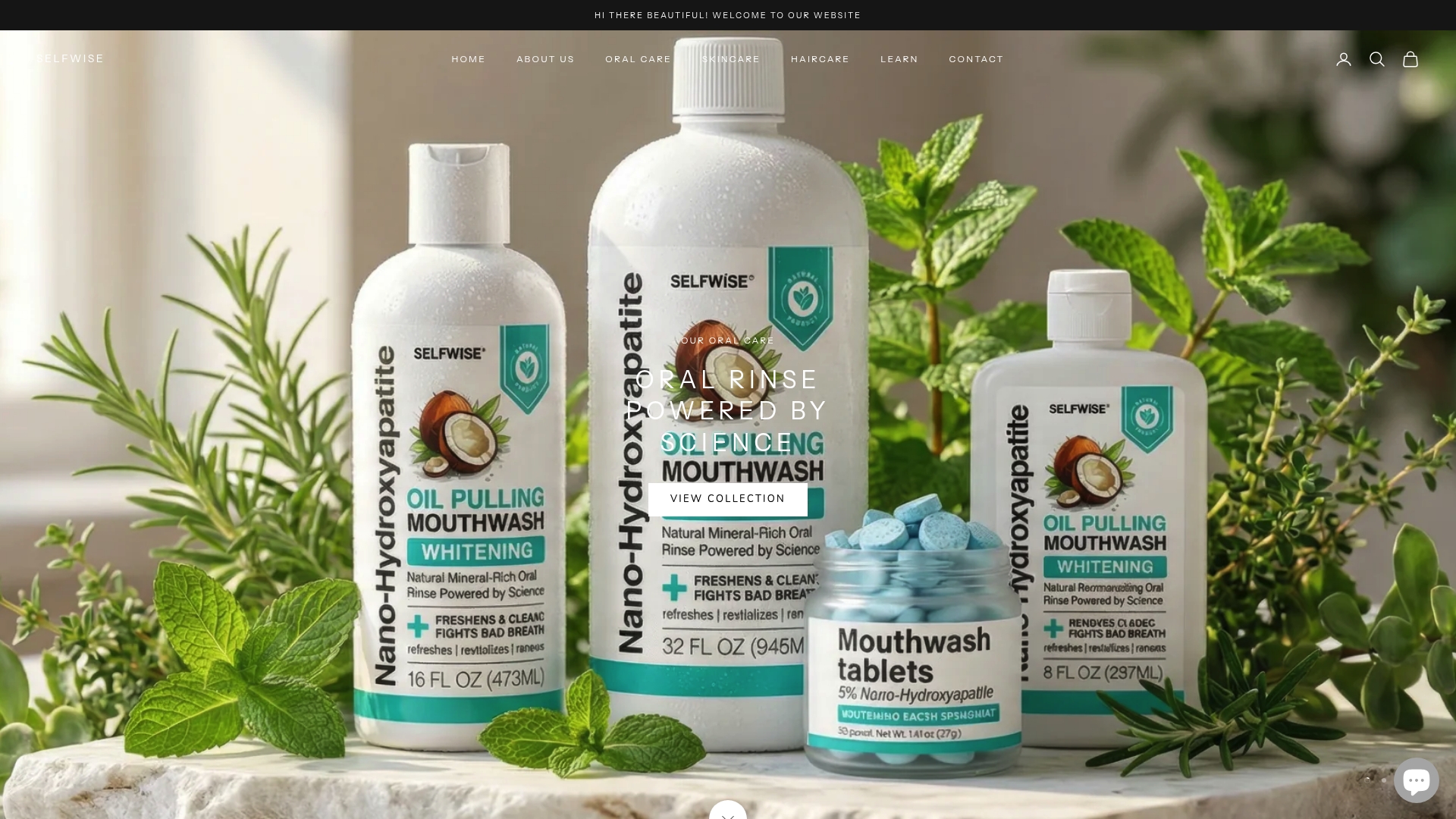
For daytime touch-ups between meals, pair either product with a xylitol rinse two to three times a day to keep saliva flow and odor control working in the background. Browse the full oral care collection to see how the pieces fit together, or start with the natural oral care guide if you’d rather build the whole routine at once.
This article is general information, not a substitute for advice from a qualified doctor. Consult a qualified healthcare professional about your own circumstances before acting on anything here.
Sources
- Aetiology and associations of halitosis: A systematic review
- Salivary Flow, Tongue-Coating Burden, and Morning Breath Odor: A Cross-Sectional Study
- Effect of oil pulling in promoting oro dental hygiene: A systematic review of randomized clinical trials
- Halitosis — Merck Manuals (Professional)
FAQ
How do I stop my breath from smelling in the morning?
Rinse with water, scrape your tongue, then brush and floss. Doing this consistently every morning and night addresses the two biggest drivers: low saliva flow and tongue coating.
How do you stop getting morning breath long-term?
Prevent it rather than just treating it: clean your tongue nightly, stay hydrated throughout the day, and manage mouth breathing with a humidifier or nasal rinse if congestion is an issue.
Why is my breath so stinky in the morning?
Saliva flow drops overnight, letting odor-producing bacteria build up on your tongue instead of getting rinsed away, and 80 to 90 percent of cases trace back to this kind of intra-oral cause rather than anything systemic.
What drink kills bad breath fast?
Plain water is the fastest fix. A single rinse can cut methyl-mercaptan levels by about 60 percent within half a minute by flushing out concentrated bacteria and debris.
Does mouthwash actually cure morning breath?
An alcohol-free mouthwash with antibacterial ingredients can reduce odor as part of your routine, but it works best alongside tongue scraping and brushing, not as a stand-alone fix.