Article: Nano vs. Micro Hydroxyapatite: 20–100 nm Particles Reach Deeper
Nano vs. Micro Hydroxyapatite: 20–100 nm Particles Reach Deeper
For deep enamel remineralization and stronger dentin tubule occlusion, nano hydroxyapatite is generally the better choice, while micro hydroxyapatite still plays a useful role in surface coating. The size difference explains most of the performance gap: smaller particles bind more tightly to enamel and work their way into microscopic defects that larger particles simply sit on top of. Formulation and consistent use still matter, and so do the safety questions we address below.
TL;DR:
- Look for toothpaste with 10% nano hydroxyapatite, the concentration most often studied; some trials found 15% formulas somewhat more effective for short term sensitivity relief.
- A yearlong trial in children found microcrystalline hydroxyapatite toothpaste was no worse than fluoride for cavity prevention, but it did not assess sensitivity relief.
- Clinical trials report no systemic adverse effects with nano hydroxyapatite toothpaste at normal concentrations, but long term safety data and standardized studies remain limited.
- Brush twice daily, and keep rinses or gels in contact with teeth for two to three minutes; benefits build over weeks or months.
Table of Contents
- What Is Hydroxyapatite and How Does It Show Up in Oral Care?
- Particle Size and Morphology: Nano vs Micro Explained
- Mechanisms: How Nano-HA and Micro-HA Interact With Enamel and Dentin
- Clinical Evidence on Remineralization and Sensitivity Relief
- Safety and the Nanoparticle Controversy in Oral Care
- Choosing and Using Hydroxyapatite Toothpaste or Rinses
- What We Recommend Based on the Evidence
- Manufacturing Processes and Purity Differences
- Stability and Shelf Life in Nano vs Micro Formulations
- Taste and Texture: What You Will Notice Day to Day
- Environmental Impact and Biodegradability
- A Research Gap Worth Watching
- How Our Products Put This Evidence Into Practice
- FAQ
- Sources
What Is Hydroxyapatite and How Does It Show Up in Oral Care?
Because natural enamel cannot regenerate on its own once it is lost, oral care formulators use a synthetic, biomimetic mineral to help rebuild weakened surfaces and resupply the calcium and phosphate ions that saliva alone may not replace fast enough.
You will typically find it in:
- Toothpaste (dentifrice), often at concentrations of 5% to 15%
- Mouthwash or oral rinse formulas
- Remineralizing gels used after whitening or for sensitive teeth
- Topical pastes applied directly to problem areas
Unlike fluoride, hydroxyapatite is not a drug ingredient, and small amounts swallowed during normal brushing are generally considered posing a lower systemic concern, which is part of why it has become a popular alternative for people who want to avoid fluoride.
Particle Size and Morphology: Nano vs Micro Explained
The core distinction between the two forms is scale. Nano hydroxyapatite (nHA) particles typically measure between 20 and 100 nanometers, while micro hydroxyapatite (mHA) particles run closer to 5 to 10 micrometers, a difference of roughly two to three orders of magnitude.
- nHA often forms rod-like nanocrystals that mimic the shape of natural enamel prisms.
- mHA tends to form larger microclusters that behave more like a surface filler.
- Smaller particles carry far more surface area relative to their volume, which drives stronger reactivity and binding with tooth structure.
Natural enamel crystallites measure roughly 20 to 50 nanometers across, which means nano hydroxyapatite sits in the same size range as the mineral it is meant to repair, according to a review of hydroxyapatite in oral care products. That overlap is the physical reason nHA can integrate into enamel’s microstructure rather than just resting on its surface.
Mechanisms: How Nano-HA and Micro-HA Interact With Enamel and Dentin
Particle size is not just a number on a spec sheet. It determines whether a mineral particle can physically enter the places where damage happens.
- Nano-sized particles are small enough to penetrate micro-pores in demineralized enamel and open dentinal tubules, where they act as a scaffold for new mineral growth.
- Once inside these spaces, nHA particles template additional calcium and phosphate deposition, gradually forming a biomimetic apatite layer that closely resembles original enamel.
- Micro-sized particles are generally too large to enter tubules or deep enamel pores, so they tend to coat the surface and fill shallow irregularities instead, which still helps with superficial repair and surface smoothness.
- Tubule occlusion by nHA is a major reason it reduces sensitivity: blocked tubules limit the fluid movement that triggers nerve pain when teeth contact hot, cold, or sweet stimuli.
- The smoother, denser surface layer nHA can build also contributes a mild optical brightening effect, separate from any bleaching action, and some formulations pair it with other ingredients for added antibacterial support.
This mechanistic difference is why dental professionals interested in biomimetic approaches to tooth repair often emphasize particle size as a defining factor in material selection, not just mineral composition.
Pro Tip: If sensitivity is your main concern, look for a product that lists nano hydroxyapatite specifically, since tubule occlusion depends on particles small enough to enter the tubule openings.
Clinical Evidence on Remineralization and Sensitivity Relief
The research base for hydroxyapatite in oral care has grown substantially, with both nano and micro forms tested in controlled trials.
- A 1-year randomized clinical trial in children found that a toothpaste with microcrystalline hydroxyapatite was non-inferior to a fluoride toothpaste for preventing enamel caries, with a similar proportion of participants in both the hydroxyapatite group and the fluoride group showing an increase in caries by ICDAS criteria, a gap well within the non-inferiority margin.
- An 8-week randomized controlled trial found that nano-HAP toothpastes relieved dentin hypersensitivity, with both 10% and 15% concentrations showing consistent reductions and some trials finding the 15% formula somewhat more effective.
- A 2022 scoping review covering in vitro and human studies concluded that nano hydroxyapatite increases enamel remineralization and reduces dentin hypersensitivity across many trials, with 10% nHA standing out as the most frequently used concentration.
nHA concentrations around ten percent are the most often studied in human trials, which is why it has become something of a benchmark for formulators. The evidence base still has gaps: study durations are often short, methods vary between research groups, and standardized long-term trials remain limited.
Safety and the Nanoparticle Controversy in Oral Care
Hydroxyapatite’s safety profile is one reason it has gained ground as a fluoride alternative, though the nano form has drawn some scrutiny simply because it is a nanomaterial.
- Clinical trials using nHA toothpaste at approved concentrations report no adverse systemic effects in participants.
- Some laboratory and animal studies raise theoretical concerns about nanoparticle migration or cytotoxicity at high exposure levels, according to a review of nanoparticles in oral care, though these exposures do not reflect normal toothpaste use.
- Long-term toxicity data at everyday consumer concentrations is still limited, which is a fair reason for caution rather than alarm.
- Following label directions, choosing formulations designed for daily home use rather than concentrated clinical-only pastes, and checking with a dentist before using higher-strength products are sensible precautions.
The practical takeaway is that the concentrations used in daily toothpaste and rinses are different from the high-exposure conditions studied in some lab settings, and the clinical trial record at normal use levels has been reassuring so far.
Choosing and Using Hydroxyapatite Toothpaste or Rinses
Matching the form to your goal makes the difference between a product that works for you and one that just sits in the bathroom cabinet.
- Reach for nHA formulas when sensitivity relief or deeper enamel remineralization is the priority, since the particle size allows tubule occlusion and sub-surface repair.
- Micro-HA formulations can be acceptable for general surface protection and appear in some children’s products, where a gentler, coating-only action may be preferred.
- Check the label for a stated concentration. Ten percent nHA is the figure most consistently backed by trial data, and clear directions on frequency and contact time are a good sign of a well-formulated product.
- Build consistency into your routine: twice-daily brushing, two to three minutes of contact time for rinses or gels, and patience, since remineralization benefits build over weeks to months rather than overnight.
Pro Tip: Pairing a nano-HA rinse with xylitol or an oil pulling routine can round out a natural oral care regimen, since each addresses a different part of enamel and gum health rather than duplicating the same mechanism.
For a deeper look at concentration choices, our guide to 10% nano hydroxyapatite walks through what the evidence supports for enamel repair.
What We Recommend Based on the Evidence
We build our oral care products around scientific evidence supporting nano hydroxyapatite paired with xylitol, formulated without fluoride or harsh chemicals.
- We formulate with nano hydroxyapatite based on research indicating its particle size supports deeper remineralization and tubule occlusion.
- A simple, effective routine can include using a nano-HA mouthwash alongside twice-daily brushing with a nano-HA toothpaste or tablet.
- For more on the chemistry behind this mineral, our guide to hydroxyapatite calcium breaks down how it compares to what your enamel is already made of.
- If sensitivity is your main concern, our guide to nano hydroxyapatite for sensitive teeth covers what to expect over the first few weeks of use.
As the author of this piece, I focus on translating the clinical literature into routines that are actually practical to follow at home.
Manufacturing Processes and Purity Differences
The two forms also diverge in how they are made, which affects purity and consistency in the final product. Nano hydroxyapatite is typically produced through wet chemical precipitation, sol-gel synthesis, or hydrothermal methods that allow tight control over particle size, crystallinity, and shape. These processes are more technically demanding and require careful control of reaction temperature, pH, and aging time to keep particles in the 20 to 100 nanometer range without uncontrolled clumping.
Micro hydroxyapatite is often produced through simpler precipitation or sintering processes at higher temperatures, which naturally yield larger crystal clusters. The process is generally less sensitive to minor variations in reaction conditions, which can make micro-HA somewhat more straightforward and consistent to manufacture at scale.
Purity matters for both forms because residual reagents, calcium-to-phosphate ratio, and crystal structure all affect how the mineral performs in the mouth. Reputable suppliers test for phase purity to confirm the product is true hydroxyapatite rather than a mix of other calcium phosphate compounds, since impure batches behave less predictably on enamel. For nHA specifically, controlling particle size distribution during manufacturing is a meaningful quality marker, since a batch with inconsistent particle sizes will not perform as reliably as one tightly clustered around the target nanometer range.

Stability and Shelf Life in Nano vs Micro Formulations
Particle size also affects how a formula behaves over time on the shelf. Nano particles have a higher surface energy than micro particles, which gives them a natural tendency to aggregate, or clump together, especially in liquid formulations like mouthwash and gels. Formulators typically manage this with stabilizing agents and careful pH control to keep nHA particles evenly dispersed throughout the product’s shelf life.
Micro hydroxyapatite particles are less prone to aggregation simply because their larger size and lower surface energy make them more physically stable in suspension. This can translate into a slightly longer practical shelf life for some micro-HA liquid formulas, though both forms are generally stable in well-formulated, properly stored products.
For either form, storage conditions matter: extreme heat, repeated freeze-thaw cycles, and prolonged exposure to light can degrade stability faster than the particle size itself. Checking expiration dates and storing products at room temperature away from direct sunlight helps preserve the intended particle behavior, whether you are using a nano or micro formula.

Taste and Texture: What You Will Notice Day to Day
Particle size does not just affect clinical performance, it also shapes the sensory experience of brushing or rinsing. Nano hydroxyapatite’s smaller particles tend to disperse more smoothly in toothpaste and rinse formulas, which often creates a silkier, less gritty texture on the teeth and tongue.
Micro hydroxyapatite’s larger particles can impart a mildly grittier or chalkier texture, which some people associate with a stronger “deep clean” sensation, even though grit itself is not a reliable sign of cleaning power. Neither form has an inherent taste of its own, so flavor in finished products comes down to the other ingredients in the formula, such as xylitol, essential oils, or natural flavoring agents.
For rinses in particular, texture affects how willing people are to keep a product in their mouth for the recommended contact time. A smoother, nano-based rinse is often easier to swish for a full two to three minutes without the gritty sensation that can make people cut the rinse short, which matters because contact time is part of what gives the mineral a chance to interact with tooth surfaces.
Environmental Impact and Biodegradability
Hydroxyapatite itself, in either nano or micro form, is a naturally occurring mineral compound and is not persistent in the environment the way synthetic polymers or microplastics can be. Both forms are biodegradable in the sense that they break down into calcium and phosphate ions that occur naturally in soil and water systems.
The manufacturing process for nano hydroxyapatite tends to be more energy and resource intensive than for micro hydroxyapatite, since achieving precise nanoscale particle control generally requires more controlled reaction conditions and, in some cases, more processing steps. This does not make nHA environmentally harmful, but it is a reasonable consideration for anyone comparing the full lifecycle of the two forms.
Because hydroxyapatite does not carry the same ecological concerns associated with synthetic nanoplastics or certain preservatives, it remains one of the more environmentally straightforward ingredient choices for oral care, regardless of which particle size a given product uses.
A Research Gap Worth Watching
Nano hydroxyapatite shows real promise, but the field still needs longer, standardized randomized trials before anyone can call the evidence settled. Until then, prioritize products with trial-backed concentrations and use them consistently rather than chasing the newest formulation claim.
— Viktor
How Our Products Put This Evidence Into Practice
We built our nano hydroxyapatite mouthwash and mouthwash tablets around the concentration range that clinical trials have actually studied, paired with xylitol and no fluoride, alcohol, or harsh chemicals.
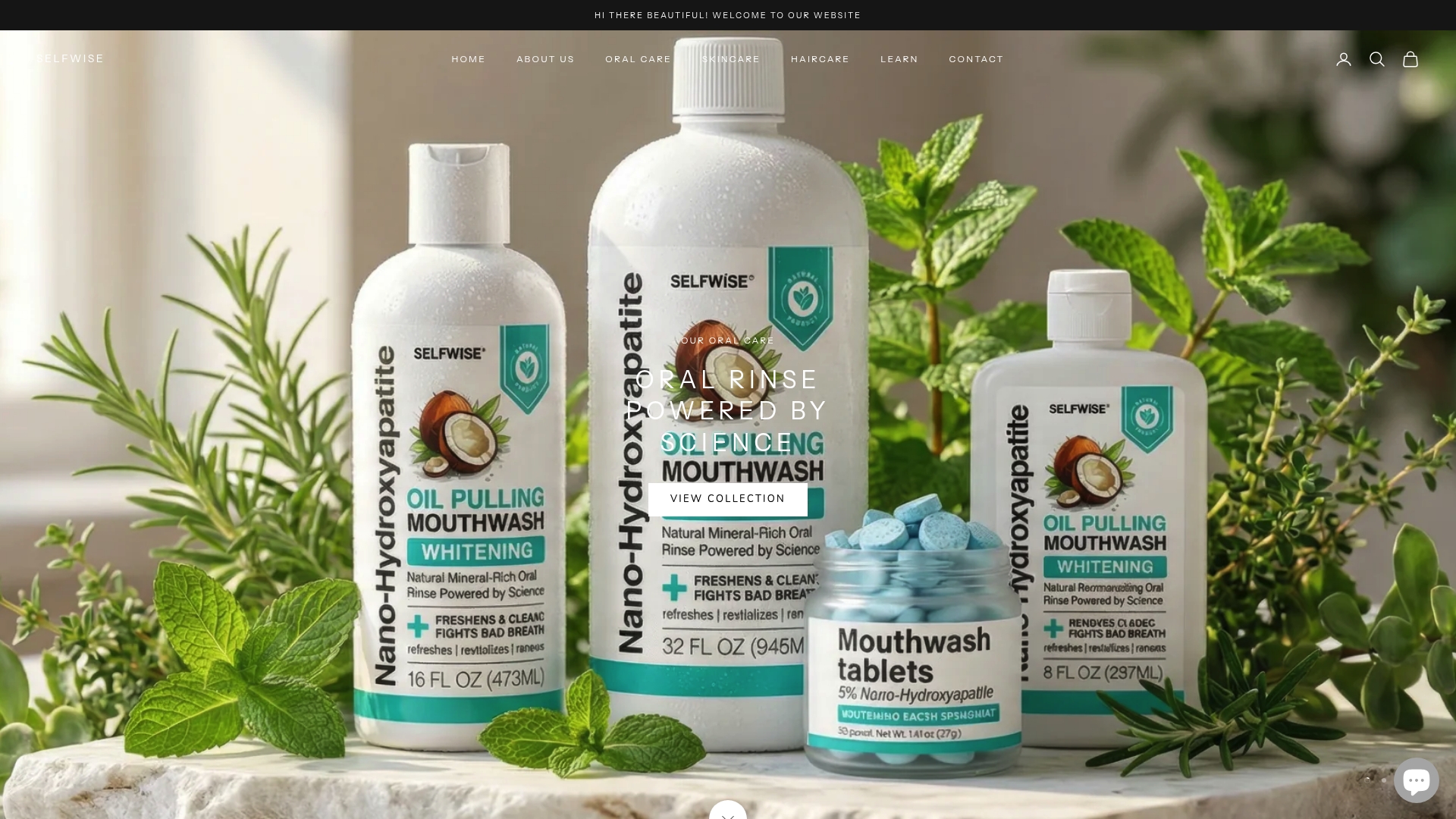
- Our oral care collection brings together nano-HA and xylitol formulas designed for daily remineralization and fresh breath.
- Our nano hydroxyapatite mouthwash tablets offer a fluoride-free, solid format that fits easily into a twice-daily routine.
- Our natural oral care guide walks through how to combine oil pulling, xylitol, and nano-HA for a complete routine.
If you are ready to put the evidence above into practice, start with our oral care collection and build a routine around ingredients the research actually supports.
This article is general information, not a substitute for advice from a qualified doctor. Consult a qualified healthcare professional about your own circumstances before acting on anything here.
FAQ
Is micro hydroxyapatite as effective as nano hydroxyapatite?
Micro hydroxyapatite can support surface-level repair and has shown non-inferiority to fluoride for caries prevention in a 1-year clinical trial in children. It generally cannot penetrate dentinal tubules or deep enamel pores the way nano hydroxyapatite does, so it tends to underperform nHA for deep remineralization and sensitivity relief.
Which form of hydroxyapatite is best?
For most people seeking stronger remineralization and sensitivity relief, nano hydroxyapatite is the better-supported choice, since its particle size closely matches natural enamel crystallites and allows deeper tubule occlusion, according to a review of hydroxyapatite in oral care. Micro hydroxyapatite remains a reasonable option for general surface protection, particularly in some children’s formulas.
Do people in Japan use nano hydroxyapatite toothpaste?
Yes, nano hydroxyapatite has been used in toothpaste in Japan since the 1980s and was approved there as an anti-caries agent, according to a review of nano hydroxyapatite applications in dentistry. Adoption in other markets, including Europe and the United States, has expanded more recently.
What is the controversy with nano hydroxyapatite?
The controversy centers on nanoparticle safety in general, since some laboratory and animal studies raise theoretical concerns about nanoparticle migration or cytotoxicity at high exposure levels, as noted in a review of nanoparticles in oral care. Clinical trials using nHA toothpaste at normal consumer concentrations have not reported adverse systemic effects, though researchers agree that long-term standardized data is still limited.
What concentration of nano hydroxyapatite should I look for?
Ten percent nHA is the concentration most frequently used and studied in clinical trials for remineralization and sensitivity relief, according to a 2022 scoping review. Some trials have tested 15% nHA with slightly stronger short-term sensitivity benefits, though 10% remains the most consistently supported starting point.
Sources
- Hydroxyapatite in oral care products—A review
- Impact of a toothpaste with microcrystalline hydroxyapatite on the occurrence of early childhood caries: a 1-year randomized clinical trial
- Clinical efficacy of nanohydroxyapatite-containing toothpaste at relieving dentin hypersensitivity: an 8 weeks randomized control trial