3 Evidence Backed Mouthwash Choices for Thrush Without Harsh Chemicals
Three natural approaches show real, evidence-backed support for oral balance: oil pulling, xylitol rinses, and nano-hydroxyapatite mouthwash. None of these is a substitute for prescription antifungal treatment. They work as daily adjuncts alongside brushing and flossing, with modest changes typically showing up over days to a few weeks. If soreness, white patches, or discomfort worsen or persist, see a clinician rather than relying on rinses alone.
TL;DR:
- Oil pulling improves gum health mainly through mechanical removal of bacteria over several weeks, but it is less effective than chemical antiseptics like chlorhexidine for plaque reduction.
- Xylitol rinses and tablets help shift oral bacteria by creating less acidic, less hospitable environments, with some clinical evidence of plaque reduction over three months.
- Nano-hydroxyapatite rinses support tooth remineralization and bacterial resistance, showing antimicrobial activity in laboratory studies, but lack extensive clinical trial data.
- All three options should be used daily and not as substitutes for prescription antifungal treatments if symptoms persist or worsen.
- When oral sores, white patches, or pain last beyond two weeks or worsen, consultation with a dentist is essential rather than relying solely on natural rinses.
Table of Contents
- What Do Natural Mouthwash Options for Thrush Actually Do?
- What Does the Research Actually Show?
- How Do You Use These Natural Rinses Safely?
- How Do You Choose a Chemical-Free Mouthwash That Actually Fits?
- Why Biomimetic, Low-Chemical Formulas Make Sense Long-Term
- Try Selfwise’s Natural Mouthwash Collection
- Sources
- FAQ
What Do Natural Mouthwash Options for Thrush Actually Do?
Each of these three approaches works differently, and knowing the mechanism helps you pick the right one instead of guessing.
Oil pulling involves swishing a tablespoon of oil, usually coconut, sesame, or olive, for several minutes. The action is mechanical, not chemical: the oil’s viscosity and emulsifying properties physically lift bacteria and debris off oral surfaces rather than killing microbes through antisepsis. That is a meaningful distinction from something like chlorhexidine, which works as a chemical antiseptic.
Xylitol rinses rely on xylitol, a nonfermentable sugar alcohol that oral bacteria cannot metabolize the way they metabolize sucrose. Because bacteria can’t ferment it into acid, regular exposure to xylitol tends to shift the oral environment toward less acidic, less bacteria-friendly conditions. Xylitol shows up in liquid rinses, mouthwash tablets, and combination formulas with other actives.
Nano-hydroxyapatite (nano-HAP) rinses use particles that mimic the mineral structure of natural tooth enamel. Instead of attacking microbes directly, nano-HAP supports remineralization and creates a biocompatible surface that resists bacterial adhesion. Many formulations pair it with co-ingredients like zinc lactate or D-panthenol for added antimicrobial and soothing effects.
A smaller category worth mentioning: saline or sea-salt rinses, sometimes combined with xylitol and lysozyme. These combination formulas have shown measurable results in small clinical studies, which we cover in the next section.
Common threads across all three approaches:
- No alcohol, no chlorhexidine, no harsh antiseptic base
- Designed for daily, long-term use rather than short-course treatment
- Support the mouth’s own biology instead of overriding it chemically
What Does the Research Actually Show?
The evidence for these approaches ranges from moderate-quality clinical trials to promising lab work, and the honest picture matters more than the marketing version.
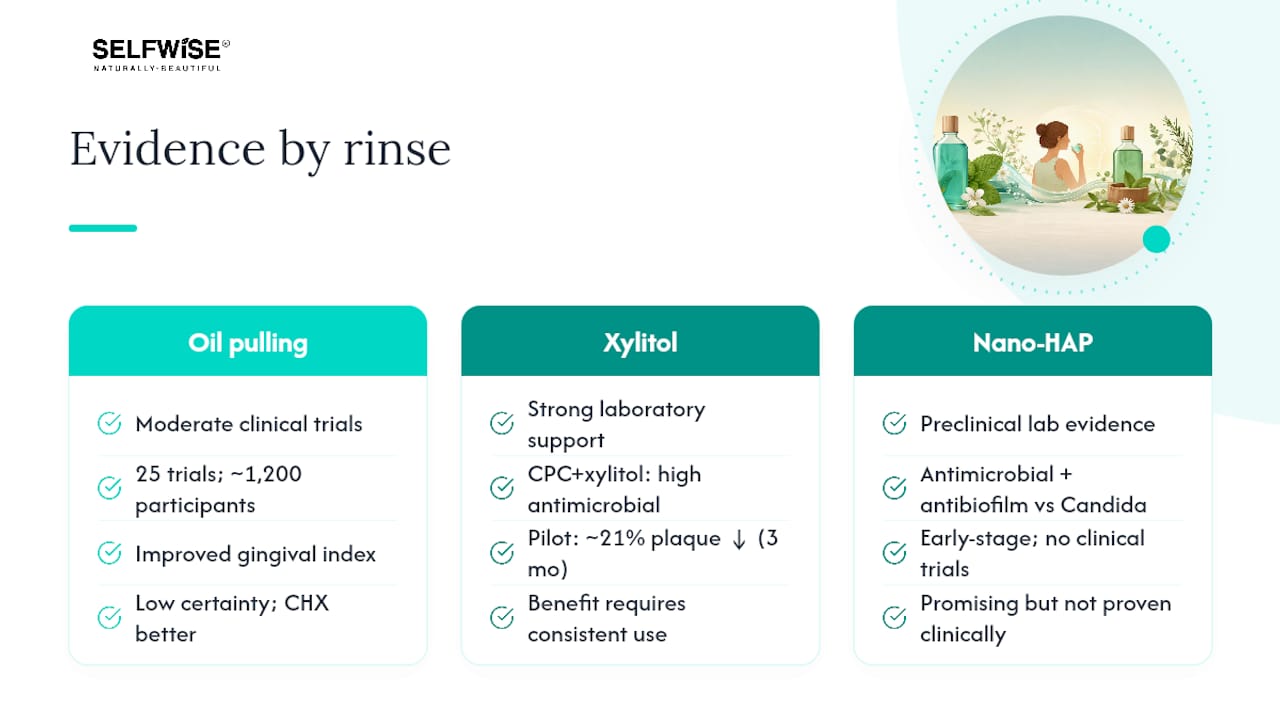
Oil pulling has the most clinical trial data of the three. A systematic review and meta-analysis covering 25 trials and 1,184 participants found probable benefit for gingival health, measured by the modified gingival index, over trial periods ranging from 7 to 45 days. Chlorhexidine still outperformed oil pulling on plaque reduction specifically. The review’s authors rated overall evidence quality as low, meaning the direction of benefit looks real but the certainty is limited by small, short trials.
The evidence in numbers: Across 25 trials and nearly 1,200 participants, oil pulling improved gingival health scores compared to non-chlorhexidine rinses, though chlorhexidine remained the stronger performer for plaque specifically, and evidence certainty was rated low.
A broader systematic review of traditional oral hygiene practices reinforces this pattern: oil pulling produced moderate reductions in microbial load across the studies reviewed, but results varied enough between trials that long-term conclusions remain out of reach.
Xylitol has stronger laboratory support. In vitro testing of CPC-based mouthwash containing xylitol showed high antimicrobial activity against both bacteria and fungi, plus good biocompatibility in oral epithelial cell models. A pilot clinical study combining sea salt, xylitol, and lysozyme found roughly a 21% reduction in plaque index over three months in adolescents, compared to placebo. Consistency of use, not any single rinse, is what drives the benefit.
Nano-hydroxyapatite evidence is the newest and most lab-based. A recent study on nano-HAP mouthwash found antimicrobial and antibiofilm activity against bacterial and fungal pathogens, including Candida species, along with antioxidant and anti-inflammatory effects in laboratory assays. That is promising, early-stage data, not a clinical guarantee.
None of this evidence supports treating these rinses as antifungal prescriptions. They’re adjuncts that work alongside, not instead of, standard oral hygiene and any medical treatment your dentist recommends.
How Do You Use These Natural Rinses Safely?
Getting the routine right matters as much as picking the right ingredient. Here’s how each one fits into a normal day.
- Oil pulling: Start with one tablespoon of coconut, sesame, or olive oil. Swish for 5 to 20 minutes, since trial protocols varied within that range. Spit into a trash can, not the sink, since oil can clog pipes over time. Rinse your mouth with water afterward, then brush as usual.
- Xylitol rinse: Use once or twice daily as a mouthwash tablet or liquid, ideally after meals. Because xylitol works through repeated exposure, a full guide to xylitol dosing is worth reading if you want to fine-tune frequency.
- Nano-HAP rinse: Swish after brushing, not before, so the particles can settle on cleaned enamel and mucosal surfaces. Most people use it once daily; some formulations are gentle enough for twice-daily use.
Pro Tip: The biggest reason people quit oil pulling isn’t the taste. It’s the time commitment. Do it during your shower instead of standing at the sink watching the clock, and adherence gets a lot easier.
A few safety basics apply across all three: never swallow the rinse, discontinue immediately if you notice burning or irritation, and avoid layering these with strong antiseptics like chlorhexidine in the same session without asking your dentist first, since timing and interactions can blunt the intended effect. If oral sores or white patches persist beyond two weeks or get worse, stop self-treating and see a clinician.
How Do You Choose a Chemical-Free Mouthwash That Actually Fits?
Not every “natural” label on a bottle means much. Here’s what to actually check before you buy:
- Ingredient transparency: Look for a full list including nano-HAP concentration, xylitol percentage, or the specific oil used, not just a vague “natural formula” claim.
- No alcohol or long-term chlorhexidine: Both dry out oral tissue and disrupt the microbiome with extended daily use, which defeats the point of a gentle routine.
- Format fit: Liquid rinses work at home; mouthwash tablets travel better and avoid spills; oil-pulling blends suit a slower morning routine.
- Skip vague antifungal claims: A consumer mouthwash claiming to “cure” thrush is overselling what the ingredient data supports. Legitimate products describe supportive, adjunctive benefits.
- Third-party or published testing: Formulas referencing actual lab or clinical data, rather than just marketing copy, tend to hold up better under scrutiny.
Selfwise’s nano hydroxyapatite formulas are built around exactly this checklist: no alcohol, transparent ingredient lists, and formats suited to daily adjunctive use rather than one-time fixes.
Why Biomimetic, Low-Chemical Formulas Make Sense Long-Term
Most oral care built around harsh antiseptics treats the mouth like a problem to sterilize. That framing misses something the lab data increasingly supports: nano-hydroxyapatite and xylitol work with the mouth’s own chemistry rather than against it, which matters if you’re using a rinse every day for years, not just during a flare-up.
Selfwise formulates around nano-HAP, xylitol, and oil-pulling bases specifically because tolerability determines whether people actually keep using a product. A rinse that irritates tissue after two weeks does nothing for long-term oral balance, no matter how strong its lab data looks on day one. The evidence gap that still exists, especially for nano-HAP, is honestly acknowledged here: this is early-stage, promising, and adjunctive. It complements brushing, flossing, and professional care. It doesn’t replace any of it.
— Viktor
Try Selfwise’s Natural Mouthwash Collection
Selfwise’s mouthwash collection covers all three approaches from this article in one place, formulated without alcohol, fluoride, or harsh chemicals.
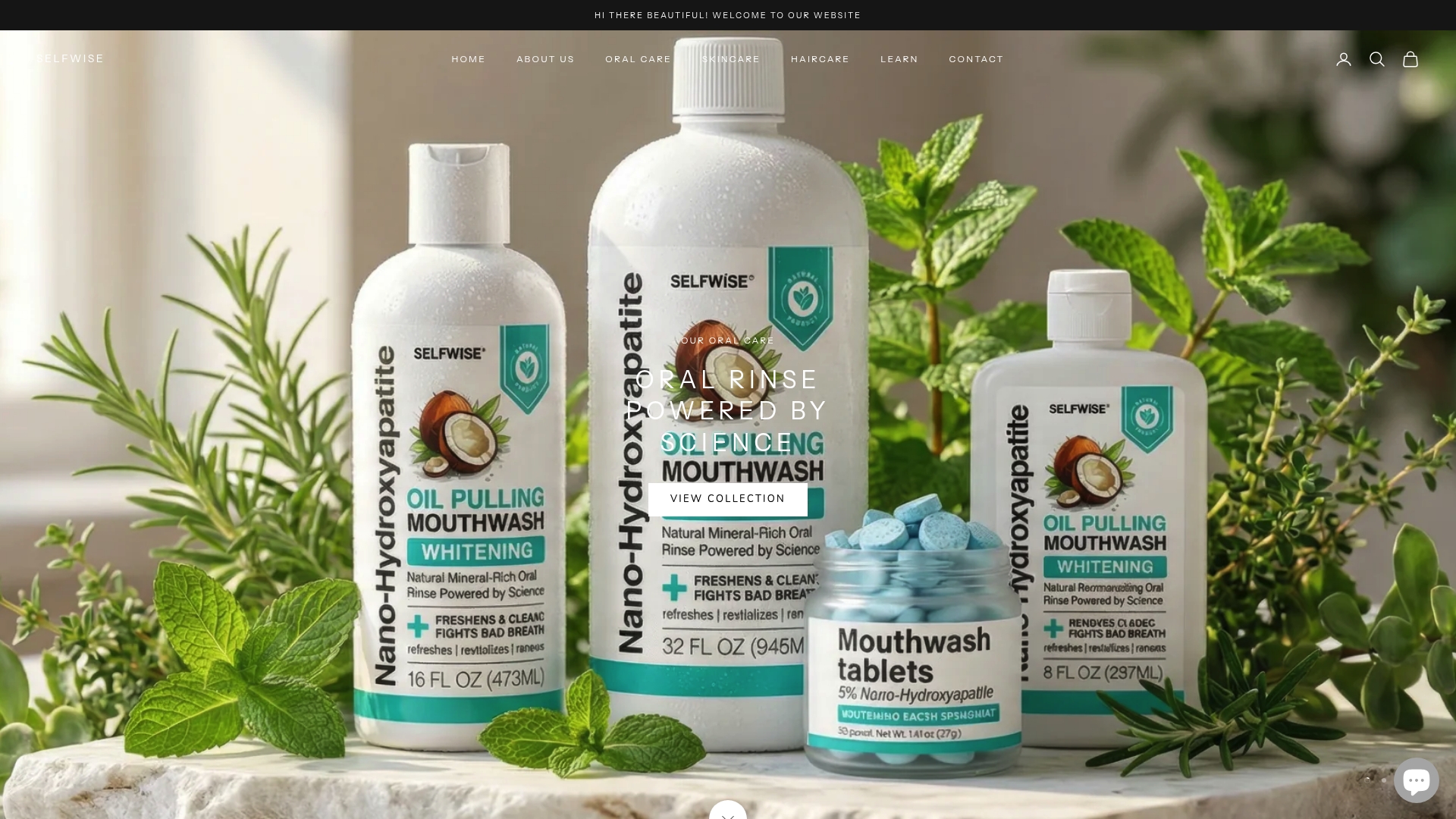
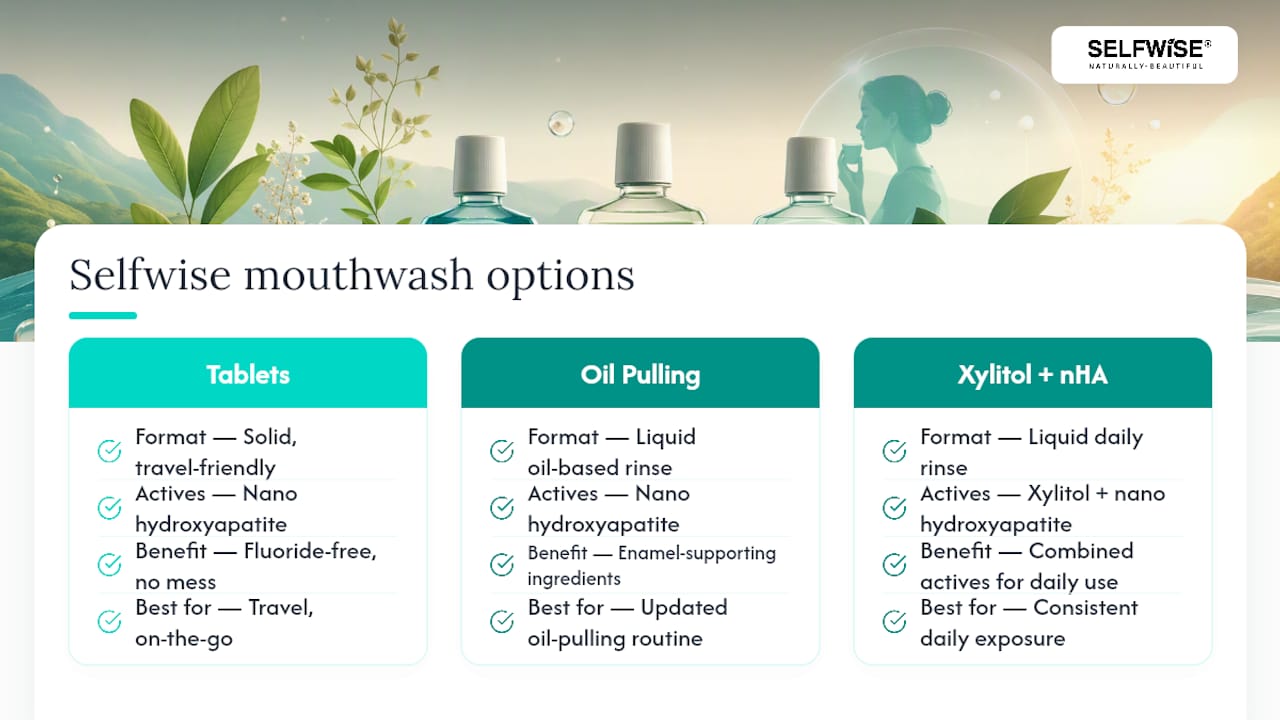
The Nano Hydroxyapatite Mouthwash Tablets give you a fluoride-free, solid format that travels well and skips the mess of liquid rinses. The Nano Hydroxyapatite Oil Pulling Mouthwash updates the traditional oil-pulling routine with enamel-support ingredients built in, so you get the mechanical benefit without guessing on oil quality. The Xylitol Mouthwash with Nano Hydroxyapatite combines both actives for readers who want consistent daily exposure to xylitol alongside remineralizing support.
Pick the format that fits your routine, whether that’s a tablet for travel or a liquid rinse for your bathroom counter, and keep using it consistently since that’s what the evidence points to as the deciding factor. If symptoms don’t improve or get worse, talk to your dentist before relying on any rinse alone.
This article is general information, not a substitute for advice from a qualified doctor. Consult a qualified healthcare professional about your own circumstances before acting on anything here.
Sources
- The effect of oil pulling in comparison with chlorhexidine and other mouthwash interventions in promoting oral health: A systematic review and meta‐analysis
- Traditional oral hygiene practices and their effectiveness: a systematic review of the evidence
- Antimicrobial activity, biocompatibility and anti-inflammatory properties of CPC-based mouthwash containing sodium fluoride and xylitol: An in vitro study
- Nano-hydroxyapatite-based mouthwash for comprehensive oral care: activity against bacterial and fungal pathogens with antioxidant and anti-inflammatory action
FAQ
Can Mouthwash Cure Oral Thrush?
No. Natural rinses like oil pulling, xylitol, and nano-hydroxyapatite support oral balance as daily adjuncts, but oral thrush that persists or worsens needs evaluation and, often, prescription antifungal treatment from a clinician.
How Long Does Oil Pulling Take to Show Results?
Clinical trials measuring gingival health improvements ran anywhere from 7 to 45 days, so expect gradual change over weeks rather than an overnight fix.
Is Nano-Hydroxyapatite Mouthwash Safe to Use Daily?
Yes, nano-HAP rinses are generally formulated for daily use and are biocompatible with oral tissue, though the strongest evidence for its antimicrobial and antibiofilm activity still comes from laboratory studies rather than large clinical trials.
Does Xylitol Mouthwash Work Better Than Oil Pulling?
They work through different mechanisms rather than competing directly. Xylitol has stronger in vitro antimicrobial data, while oil pulling has more clinical trial evidence for gingival health, so many people use both.
When Should I See a Dentist Instead of Using Natural Rinses?
See a clinician if white patches, soreness, or discomfort last beyond two weeks, worsen, or come with pain when swallowing, since these can signal a condition that needs prescription treatment rather than adjunctive rinses.