Protect Your Dentures: Mouthwash for Dentures Won't Weaken Acrylic
Mouthwash is safe for denture wearers as a mucosal rinse, but it never replaces a dedicated denture cleanser, and it should never touch the appliance itself. The one rule that overrides every other tip in this guide: take your dentures out before you rinse. Swish an alcohol-free formula against your gums and tongue, spit, then clean the dentures separately with a proper soak, never an overnight bath in leftover mouthwash.
TL;DR:
- Use an alcohol-free, therapeutic mouthwash designed for sensitive gums or dry mouth to avoid drying and damaging denture materials.
- Always remove dentures before rinsing with mouthwash and clean the appliance separately with a proper denture cleanser to prevent chemical damage.
- Short, dentist-prescribed courses of chlorhexidine may manage specific issues like stomatitis but should not be used daily due to staining and surface roughness risks.
- Household bleach, hydrogen peroxide, or straight alcohol-based rinses are unsafe for dentures and can cause warping, cracking, or bacterial buildup.
- Incorporate natural rinses like nano hydroxyapatite or xylitol products for daily mucosal comfort, but only as adjuncts, not replacements for proper denture cleaning routines.
Table of Contents
- Is Mouthwash Safe for Dentures? Understanding the Risks
- Which Mouthwash Ingredients Work Best for Denture Wearers
- How to Use Mouthwash Safely When You Wear Dentures
- Denture Cleanser vs. Mouthwash: Which Does What
- Special Cases: Stomatitis, New Dentures, and Material Differences
- Where Natural Rinses Like Nano Hydroxyapatite Fit In
- A Practical Takeaway on Daily Denture Care
- Gentle, Denture-Friendly Mouthwash Options From Selfwise
- Sources
- FAQ
Is Mouthwash Safe for Dentures? Understanding the Risks
The mouth tissue under a denture and the acrylic base plate react to chemicals very differently, and that gap is where most damage happens. Alcohol and hydrogen peroxide, common in drugstore rinses, dry out and weaken PMMA acrylic and can degrade the soft liners some partial dentures use for comfort. Run that exposure daily for months and the plastic gets more porous, which gives bacteria and Candida more surface area to colonize.
Chlorhexidine deserves a specific callout here. It’s genuinely effective against oral biofilm, but research tracking its long-term use on denture material found it causes brown staining and measurable changes in surface roughness with repeated exposure. Rougher acrylic traps more plaque, which defeats the purpose.
A few materials and habits to flag as genuinely risky:
- Alcohol-based mouthwash used as a soaking liquid instead of a rinse
- Hydrogen peroxide rinses applied directly to acrylic surfaces
- Household bleach or isopropyl alcohol used “to disinfect” a prosthesis
- Microwaving dentures to sterilize them, which can warp or crack the base
Pro Tip: If your mouthwash bottle lists “alcohol” in the first five ingredients, treat it strictly as an oral rinse, never as anything your dentures come near.
Which Mouthwash Ingredients Work Best for Denture Wearers
For daily use, alcohol-free formulas built for dry mouth or sensitive gums are the safest default. Mild essential-oil rinses and those containing cetylpyridinium chloride (CPC) offer antibacterial action without the harsh drying effect of alcohol-heavy brands. The American Dental Association draws a clear line between cosmetic rinses, which just mask odor temporarily, and therapeutic rinses, which contain active ingredients meant to address gingivitis, bad breath at the source, or bacterial load. Denture wearers usually want the therapeutic category, minus the alcohol.
Chlorhexidine still has a place, just not as a forever product. It can help manage denture stomatitis or a stubborn fungal issue, but only under a dentist’s direction for a defined stretch of time, given the staining risk covered above.
What to avoid outright:
- Hydrogen peroxide rinses, especially undiluted, near denture-bearing tissue
- Straight isopropyl alcohol as a cleaning or soaking agent
- Household bleach on any part of the prosthesis
- Whitening mouthwashes with high alcohol content, which offer no real benefit to acrylic anyway
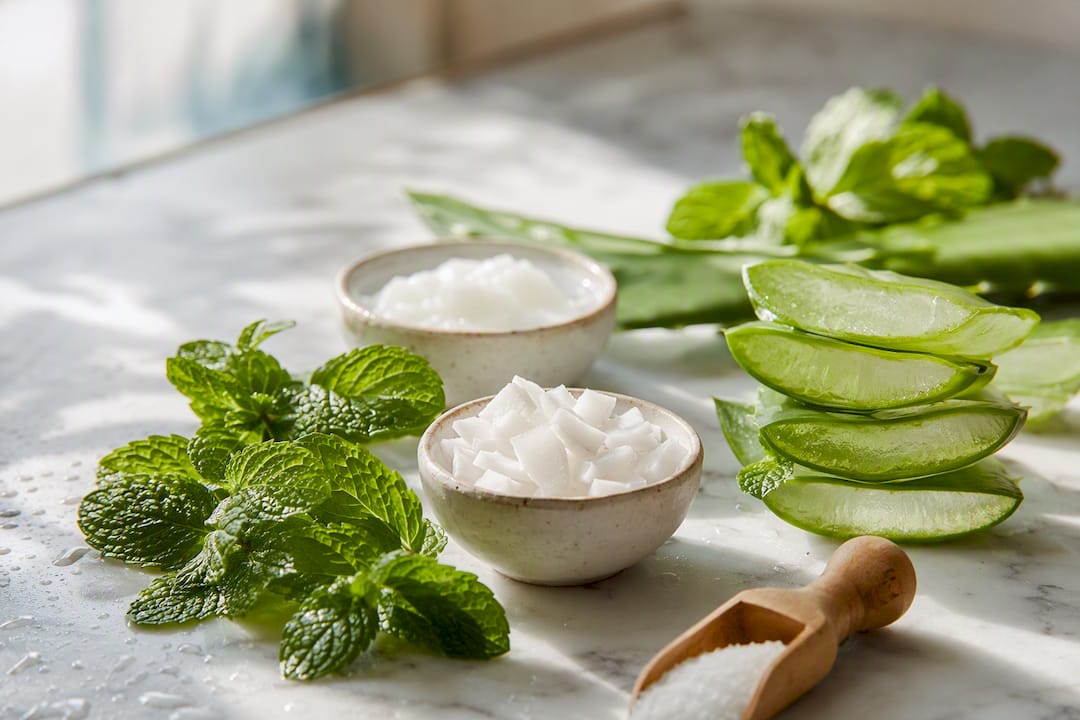
If your gums feel raw or you’re managing dry mouth from medication, look specifically for rinses labeled alcohol-free and formulated for sensitive mucosa. A nano hydroxyapatite mouthwash fits that criteria without the sting.
Pro Tip: Read the front label twice: “alcohol-free” and “for sensitive gums” together usually signal a formula gentle enough for daily use with a denture-bearing mouth.
How to Use Mouthwash Safely When You Wear Dentures
The order of operations matters more than the product you pick. Follow this sequence every morning and night:
- Remove your dentures first. Never rinse with the appliance in your mouth.
- Swish the mouthwash for about 30 seconds, targeting your gums, palate, and tongue.
- Spit and let your tissue settle for a minute before doing anything else.
- Brush your dentures separately over a folded towel or a sink with water in it, using a denture brush and nonabrasive cleanser, never regular toothpaste.
- Soak per the product’s instructions, then rinse the appliance thoroughly under running water before it goes back in your mouth.
Daily oral rinsing is reasonable for most people. Therapeutic antiseptic rinses like chlorhexidine are the exception: use them only in short, dentist-directed courses, not as a permanent addition to your routine. Cleveland Clinic’s denture care guidance reinforces the same order: clean the mouth and the appliance as two separate jobs, not one combined step.
Pro Tip: Keep your mouthwash and your denture-soaking solution in visibly different containers. Mixing them up, even once, is a common and avoidable mistake.

Denture Cleanser vs. Mouthwash: Which Does What
Mouthwash cleans your mouth. A denture cleanser cleans the appliance. Treating them as interchangeable is where most hygiene routines quietly fail. Nonabrasive brushing paired with a dedicated denture-cleanser soak is the primary method for keeping a prosthesis free of plaque and odor, and that soak happens entirely outside the mouth.
A few rules worth following on soak time and chemistry:
- Stick to the soak duration printed on the cleanser packaging, usually a set number of minutes rather than an open-ended overnight bath in stronger solutions
- Avoid extended exposure to hypochlorite-based (bleach-type) cleaners, which can corrode metal clasps over time
- Never use boiling water or a microwave to speed up cleaning or disinfection
- Rinse the denture thoroughly under running water after every soak, before it goes back in your mouth
That last step isn’t optional. Chemical residue left on the appliance can irritate the gum tissue it touches for hours, and prosthodontic care guidelines are explicit that cleansers are formulated for use outside the mouth only.
Special Cases: Stomatitis, New Dentures, and Material Differences
Denture stomatitis, the red, irritated tissue under a poorly maintained or ill-fitting denture, is one of the few situations where a dentist might prescribe chlorhexidine or another antiseptic rinse for a short, defined course. Outside that context, daily use isn’t worth the staining tradeoff.
New dentures and any prosthesis with a soft liner need extra caution. Harsh chemicals and long soaks can degrade a liner faster than it degrades solid acrylic, so check soak times with your provider before assuming standard advice applies.
Material matters more than most people realize. Comparative testing on denture materials found flexible polyamide dentures show more surface roughness change from certain antiseptics than rigid PMMA does. If you’re not sure what your denture is made from, ask your provider before adding any antiseptic rinse to your routine.
- Chlorhexidine: short, prescribed courses only, watch for staining
- New or soft-lined dentures: no harsh chemicals, shorter soaks, confirm with your lab
- Polyamide/flexible materials: more sensitive to chemical exposure than acrylic
Where Natural Rinses Like Nano Hydroxyapatite Fit In
Nano hydroxyapatite and xylitol rinses give denture wearers a genuinely alcohol-free option for daily mucosal comfort and breath freshness, without the drying effect that makes conventional rinses risky around soft tissue and prosthetic materials. They work on your gums and remaining natural teeth, not on the appliance, so they slot in as a morning and evening step rather than a cleaning method.
Oil-pulling rinses fall into the same adjunct category: useful for an occasional comfort boost or breath refresh, not a substitute for the brush-and-soak routine your denture actually needs. Selfwisebrand builds its natural anti-microbial rinse ingredients around this exact use case, gentle enough for daily mucosal care, alcohol-free by design.
- Use as a mouth rinse only, never as a denture soak
- Pair with, not instead of, your regular denture-cleanser routine
- Good fit for dry mouth, sensitive gums, or anyone avoiding alcohol-based products
A Practical Takeaway on Daily Denture Care
Gentle, consistent daily care beats aggressive, occasional chemical cleaning almost every time. The dentures that last longest belong to people who rinse mildly every day and soak properly every night, not to people who reach for something harsh once a week. If you notice new staining, a change in fit, or ongoing irritation, that’s a conversation for your dentist, not a guessing game with a different mouthwash.
— Viktor
Gentle, Denture-Friendly Mouthwash Options From Selfwise
If you’ve been reaching for whatever alcohol-heavy rinse is on sale, switching to a formula actually built for denture-bearing mouths solves the drying and staining problem at the source. Selfwisebrand makes three products worth knowing about here.
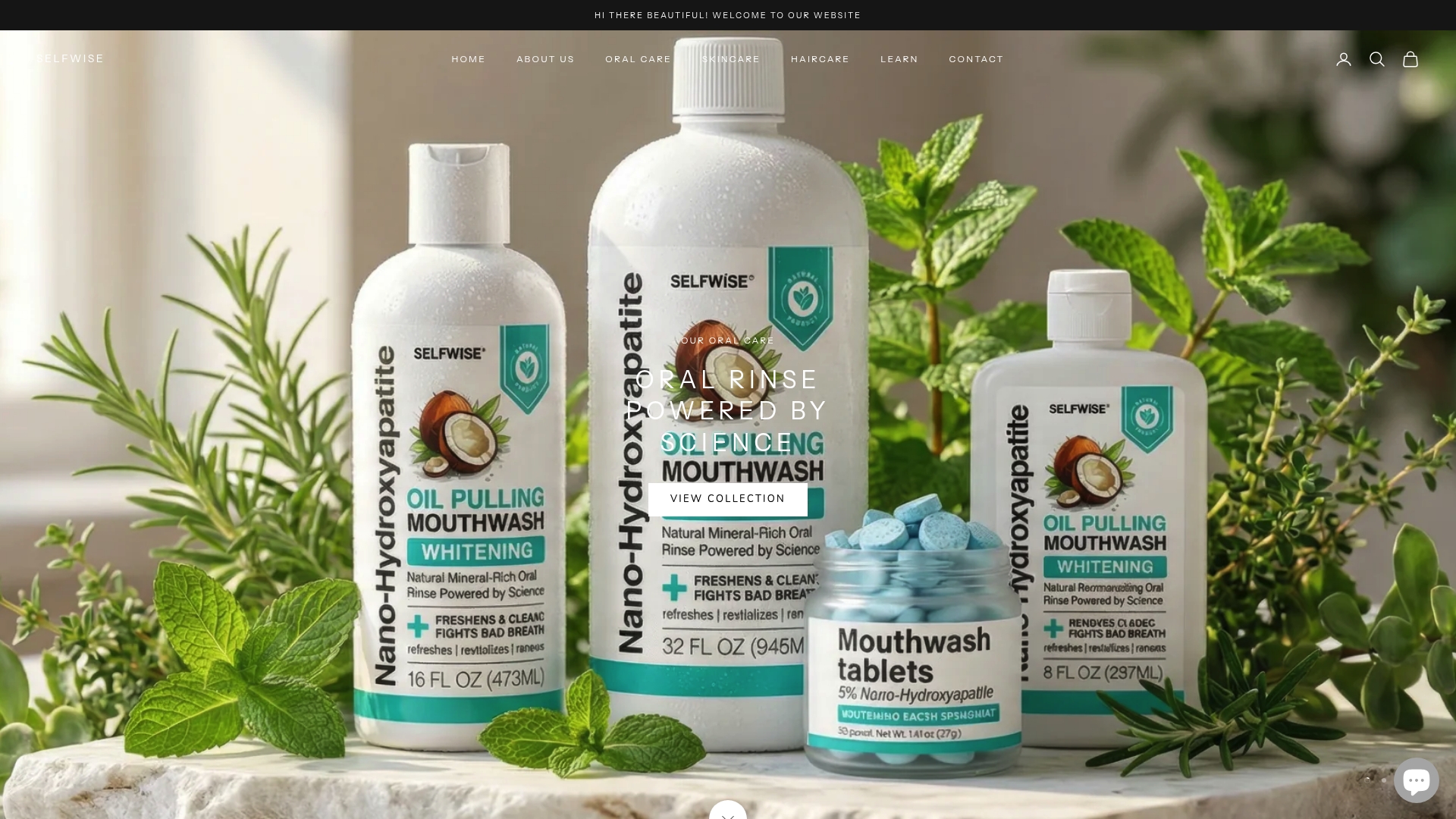
The nano hydroxyapatite mouthwash tablets dissolve into an alcohol-free rinse you can travel with easily, no spill risk, no glass bottle. The nano hydroxyapatite oil pulling mouthwash suits anyone who wants an oil-pulling routine without giving up a modern rinse format. And the xylitol mouthwash with nano hydroxyapatite adds a mild sweetness that makes twice-daily rinsing easier to stick with, especially for people managing dry mouth.
All three work into the routine covered above: remove your dentures, rinse with one of these, then move on to brushing and soaking the appliance itself. Browse the full mouthwash collection and pick the format that fits your morning.
Sources
- Mouthrinse (Mouthwash) | American Dental Association
- Denture care - Cleveland Clinic
- Denture cleanliness and hygiene: an overview - PMC
- Material compatibility and antimicrobial data for denture cleaning methods (journal article)
FAQ
What is the best mouthwash to use with dentures?
An alcohol-free, therapeutic rinse designed for sensitive gums or dry mouth is generally the best daily choice, since it cleans oral tissue without drying out remaining acrylic contact points or your gums.
Can I use mouthwash on dentures?
Mouthwash is meant for your mouth, not the denture itself; remove the appliance first, rinse your gums and tongue, then clean the denture separately with a dedicated cleanser.
What do dentists recommend to clean dentures?
Daily brushing with a nonabrasive denture cleanser plus a proper soak, following the product’s instructions and rinsing thoroughly before reinserting, is the standard recommendation from prosthodontic care guidance.
Can I put my dentures in Listerine?
Soaking dentures in a standard alcohol-based mouthwash like Listerine isn’t recommended, since the alcohol content can dry and weaken acrylic over repeated exposure; use a purpose-made denture cleanser for soaking instead.
Is chlorhexidine safe for long-term denture cleaning?
No, chlorhexidine is better suited to short, dentist-directed courses for issues like denture stomatitis, since prolonged use is linked to staining and surface roughness changes on acrylic.