
Yes, Mouthwash Can Cause Dry Mouth: Here's Why
Mouthwash can absolutely cause or worsen dry mouth, and alcohol is the main reason. Ethanol pulls moisture out of oral tissue, and antiseptics like chlorhexidine (CHX) can shift saliva chemistry in ways that leave your mouth feeling parched instead of clean. The Mayo Clinic recommends alcohol-free rinses with moisturizing agents for exactly this reason, and Selfwisebrand builds its rinses around that same principle.
Try this today:
- Stop any mouthwash with “alcohol” or “ethanol” listed in the first few ingredients.
- Switch to an alcohol-free, moisturizing rinse (look for xylitol or carboxymethylcellulose).
- Skip mouthwash entirely for 1 to 2 weeks and track whether your mouth feels less dry.
Key Takeaways
Alcohol and certain antiseptics in mouthwash dehydrate oral tissue, disrupt saliva chemistry, and worsen dry mouth in people already prone to it.
| Point | Details |
|---|---|
| Alcohol is the main driver | Ethanol pulls moisture from mucosal tissue and constricts blood flow to salivary glands. |
| Antiseptics shift saliva chemistry | Chlorhexidine use lowered salivary pH and buffering capacity in a 7-day trial. |
| High-risk groups feel it most | Older adults, medication users, and people with Sjögren’s notice mouthwash-related dryness fastest. |
| Test before you assume | Stop the suspect rinse for 1 to 2 weeks and track symptom changes each morning. |
| Selfwisebrand offers an alcohol-free path | Its xylitol and nano hydroxyapatite rinses are formulated without ethanol for gentler daily use. |
This article is general information, not a substitute for advice from a qualified doctor. Consult a qualified healthcare professional about your own circumstances before acting on anything here.
Table of Contents
- How Mouthwash Ingredients Trigger Dry Mouth
- Which Mouthwash Ingredients Are Most Likely to Dry Out Your Mouth?
- Who Is Most Likely to Notice Mouthwash-Related Dryness?
- Is Your Mouthwash Actually the Problem? A Quick Way to Check
- What to Do Right Now for Mouthwash-Related Dry Mouth
- What Does the Research Actually Say About Mouthwash and Dry Mouth?
- When Dry Mouth Needs More Than a Rinse Switch
- Natural, Alcohol-Free Ingredients Worth Looking For
- A Practical Habit Worth Trying This Week
- A Gentler Rinse for Dry, Sensitive Mouths
- Sources
- FAQ
How Mouthwash Ingredients Trigger Dry Mouth
Alcohol dries your mouth through a straightforward chemical process. Ethanol is hygroscopic, meaning it grabs water from whatever it touches, including the thin mucosal layer lining your cheeks, tongue, and gums. Rinse with an alcohol-containing mouthwash twice a day and you’re repeatedly stripping moisture your mouth needs to stay comfortable and protected.
That’s not the only mechanism at work. A few others matter just as much:
- Vasoconstriction. Alcohol and certain essential oils constrict the tiny blood vessels feeding minor salivary glands, temporarily reducing saliva output right when you need it.
- Mucosal irritation. The burning “clean” sensation you feel after a strong rinse is often tissue irritation, not disinfection working as intended. Research on mucosal effects of alcohol-based mouthwash links that sting directly to dehydration of oral surfaces.
- Microbiome disruption. A 7-day CHX trial found chlorhexidine significantly altered the salivary microbiome and lowered saliva pH and buffering capacity. Saliva chemistry shifts, and the mouth’s natural moisture balance goes with it.
Picture your mouth as a thin, moist membrane sitting directly over a network of small glands. Alcohol and antiseptics don’t just clean the surface; they reach the glands underneath and the fluid balance between them.
Pro Tip: Timing matters more than most people realize. Rinsing right after brushing, when your mouth is already stripped of its protective saliva film, gives alcohol longer uninterrupted contact with dry tissue. Rinse before brushing instead, or skip the antiseptic rinse altogether on nights when your mouth already feels tight or sticky.
Which Mouthwash Ingredients Are Most Likely to Dry Out Your Mouth?
Not every rinse on the shelf is equally risky. A broad ingredient review of commercial mouthwashes found antimicrobial agents in roughly half of all formulas, alongside ethanol, glycerine, and propylene glycol used as solvents. Here’s what to scan for on the label:
- Ethanol or ethyl alcohol (sometimes listed as “SD alcohol” or “denatured alcohol”), often 14% to 27% by volume in traditional antiseptic rinses.
- High essential oil concentrations (thymol, eucalyptol, menthol) that can irritate mucosa at high doses.
- Cetylpyridinium chloride (CPC), an antiseptic that can compound dryness with regular use.
- Chlorhexidine (CHX), a prescription-strength antiseptic linked to microbiome and pH shifts.
- Propylene glycol or isopropanol, solvents that add to the overall drying load of a formula.
- High-concentration glycerin, which is hygroscopic enough that in some formulas it can pull moisture rather than lock it in.
When you read a label, look past the front of the bottle. “Alcohol” won’t always appear in bold, but it will be listed in the ingredients panel, often a few lines down under a name like “alcohol denat.” or simply “ethanol.”
Who Is Most Likely to Notice Mouthwash-Related Dryness?
Some people feel the drying effect of mouthwash within minutes; others barely notice it. The difference usually comes down to how much saliva-related capacity they’re starting with. You’re at higher risk if you fall into one of these groups:
- You already have diagnosed xerostomia (chronic dry mouth) from any cause.
- You’re an older adult, since saliva production naturally declines with age.
- You take antihistamines, antidepressants, or other medications known to reduce saliva flow.
- You’ve had radiation therapy to the head or neck.
- You live with an autoimmune condition like Sjögren’s syndrome.
- You already use antiseptic rinses daily for gum disease or bad breath control.
A university health resource on medication-related dry mouth points out that mouthwash usually isn’t the root cause in these cases. It acts as a secondary irritant, making an already-compromised saliva supply feel noticeably worse.
Is Your Mouthwash Actually the Problem? A Quick Way to Check
A few signs point squarely at your rinse as the culprit rather than something else going on in your body:
- Your mouth feels drier or stings immediately after rinsing, not gradually over the day.
- Your mouth turns sticky or tacky within an hour of using mouthwash.
- You’re drinking more water than usual right after your oral care routine.
- Your breath gets worse over time despite consistent use, a sign saliva flow is dropping.
- Symptoms started or worsened after you switched to a new brand or formula.
Run a simple test: stop the suspect mouthwash completely for 1 to 2 weeks while keeping brushing and flossing the same. Log how your mouth feels each morning and night. A real improvement usually shows up as less stickiness and less nighttime thirst within the first week, not a dramatic overnight change.
What to Do Right Now for Mouthwash-Related Dry Mouth
If you’ve confirmed mouthwash is making things worse, the fix is usually simple. Work through these steps in order:
- Stop the alcohol-containing rinse immediately. Don’t wait for symptoms to peak before switching.
- Sip water frequently or use an over-the-counter saliva substitute to rehydrate tissue while you adjust your routine.
- Cut back to once daily or less until your mouth feels normal again, rather than rinsing twice a day out of habit.
- Switch to a xylitol-containing rinse, which stimulates saliva flow instead of stripping it. Selfwisebrand’s xylitol mouth rinses are built around this exact mechanism.
- Try a moisturizing spray or gel between rinses if your mouth still feels tight, especially before bed.
Longer term, look for alcohol-free formulas built with moisturizing agents like carboxymethylcellulose or hydroxyethyl cellulose, both of which the Mayo Clinic recommends specifically for xerostomia relief. A plain saltwater rinse also works as a gentle, zero-cost option on nights when you want to skip commercial products altogether.
Pro Tip: Reserve strong antiseptic rinses for short, specific purposes, like the week after a dental procedure, rather than daily maintenance. Gentle, moisturizing rinses used after meals or at bedtime do more for long-term comfort than any “maximum strength” antiseptic ever will.
What Does the Research Actually Say About Mouthwash and Dry Mouth?
The evidence lines up consistently, even if it’s not always dramatic. A 60-day clinicocytological study found alcohol-containing rinses caused measurably more cellular change in oral tissue than alcohol-free rinses, though neither reached genotoxic levels during the trial period. Researchers still advised caution with alcohol rinses after surgical procedures, when tissue is already vulnerable.
On the microbiome side, that same CHX trial recorded a significant drop in saliva pH and buffering capacity after just 7 days of use, alongside a shift toward more acid-producing bacteria. Not every study agrees on severity. Some short-term trials found no major population-wide difference in salivary flow between alcohol and non-alcohol rinses. The catch: those trials mostly used healthy volunteers, not people with pre-existing dry mouth, so the real-world risk for xerostomia sufferers is likely understated.
When Dry Mouth Needs More Than a Rinse Switch
Most mouthwash-related dryness resolves once you change products. But a few warning signs mean it’s time to see a professional instead of self-treating:
- Difficulty swallowing or unintentional weight loss.
- Persistent thick, ropey, or stringy saliva.
- Mouth sores, cracked corners of the lips, or signs of oral infection.
- A sudden, severe change in dryness right after starting a new medication.
- Dryness that persists even after two full weeks off alcohol-based rinses.
If any of these apply, ask your prescriber to review your medications, get a dental exam to check cavity risk, and consider a referral for saliva-function testing.
Natural, Alcohol-Free Ingredients Worth Looking For
Once you’ve ruled out the ingredients that cause harm, it helps to know what actually supports a dry mouth instead of fighting it. A few ingredients show up again and again in gentler formulas:
- Xylitol, which stimulates saliva production and has a long track record in xerostomia-focused products.
- Carboxymethylcellulose or hydroxyethyl cellulose, moisturizing polymers that coat and protect oral tissue.
- Nano hydroxyapatite, used for gentle remineralization without the harshness of traditional antiseptics.
- Moderate glycerin, which acts as an emollient rather than a drying agent at lower concentrations.
- Mild, non-foaming surfactants that clean without stripping the mucosal layer.
An oil-pulling or nano hydroxyapatite rinse built with xylitol is a good example of this approach: gentle antimicrobial action without the alcohol load. For sensitive mouths specifically, Selfwisebrand’s guide on gentle oral rinse ingredients breaks down which formulas fit this profile. Strong antiseptic regimens still have a place for short-term clinical needs, but they’re not built for daily dry mouth management.
A Practical Habit Worth Trying This Week
Switching people from alcohol-based rinses to gentle, xylitol-moisturizing formulas is one of the most consistently effective changes I’ve seen discussed in dry mouth cases. This week, try replacing your nightly alcohol rinse with a xylitol rinse or a plain saline rinse and watch what happens by morning.
A Gentler Rinse for Dry, Sensitive Mouths
If alcohol-based mouthwash has been part of your routine, switching to something built without it is often the single biggest change you can make for comfort. Selfwisebrand’s alcohol-free mouthwash collection is formulated with xylitol and nano hydroxyapatite instead of ethanol or harsh antiseptics, so it supports moisture and remineralization rather than stripping both away.
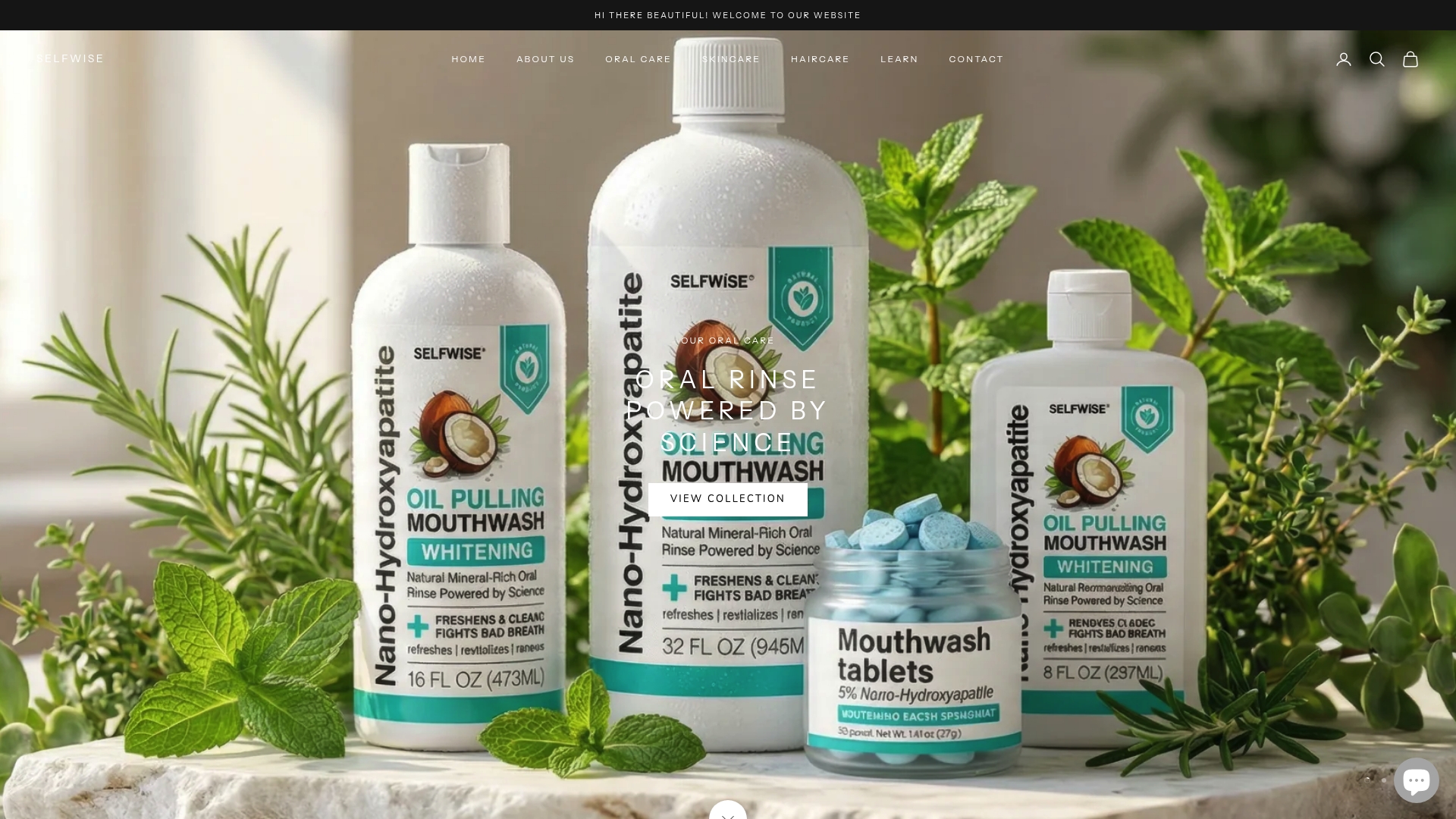
For a more targeted option, the xylitol mouthwash with nano hydroxyapatite combines saliva-stimulating xylitol with gentle enamel support in one alcohol-free formula. If tablets fit your routine better than liquid rinses, the nano hydroxyapatite mouthwash tablets offer the same fluoride-free, remineralizing approach in a different format. Pick whichever fits your routine and give it two weeks before judging the results.
Sources
- Dry mouth treatment: Tips for controlling dry mouth - Mayo Clinic
- A Fresh Look at Mouthwashes—What Is Inside and What Is It For? - PMC
- Effects of Chlorhexidine mouthwash on the oral microbiome | Scientific Reports
- PubMed reference on mouthwash effects (short-term trials) - PubMed
FAQ
Why Is Mouthwash Making My Mouth Dry?
Alcohol in mouthwash pulls moisture from oral tissue and constricts blood flow to salivary glands, which is why many rinses cause a dry, tight feeling shortly after use.
Why Do Dentists Sometimes Warn Against Certain Mouthwashes?
Some dentists caution against daily use of strong antiseptic rinses like chlorhexidine because they can alter the oral microbiome and lower saliva’s buffering capacity over time, which may raise cavity risk in the long run.
What Fixes Dry Mouth Immediately?
Sipping water, using a saliva substitute, and switching to an alcohol-free, xylitol-containing rinse like those in Selfwisebrand’s mouthwash collection all provide fast relief without further drying tissue.
Is Alcohol-Free Mouthwash Actually Better for Dry Mouth?
Yes. The Mayo Clinic specifically recommends alcohol-free rinses with moisturizing agents like carboxymethylcellulose for people managing dry mouth or xerostomia.


%20can...)