How to Eliminate Toxins From Your Dental Routine
Eliminating toxins from your dental routine means replacing products that contain endocrine-disrupting chemicals with safer, science-backed alternatives that still protect your teeth. Most people focus on diet and skincare when reducing chemical exposure, but the mouth is one of the most absorbent surfaces in the body. Oral mucosal tissue absorbs substances directly into the bloodstream, bypassing the digestive filter. Nearly 50% of toothpastes contain at least one suspected endocrine-disrupting chemical, and approximately 11.3% of children aged 8 to 13 show signs of dental fluorosis from excessive fluoride exposure. Those numbers make detox dental care a practical health priority, not a wellness trend.
What toxic chemicals are commonly found in dental products?
The most common offenders in conventional toothpaste, floss, and mouthwash are parabens, triclosan, sodium lauryl sulfate (SLS), artificial sweeteners like saccharin, and excess fluoride. Each one enters the body through a different route, but the mouth makes all of them more dangerous than their labels suggest.
Parabens are preservatives used to extend shelf life. They mimic estrogen in the body and have been detected in human tissue. Triclosan is an antimicrobial agent that the FDA banned from hand soaps in 2016, yet it still appears in some oral care products. SLS is a foaming agent that strips the mucosal lining and can trigger canker sores in sensitive people. Saccharin is a synthetic sweetener with a contested safety record. Excess fluoride, while protective in small amounts, causes fluorosis and raises thyroid concerns at higher doses.
Exposure to these chemicals happens primarily through oral mucosal absorption and accidental ingestion, affecting the endocrine system including thyroid function and metabolism. That pathway is faster and more direct than skin absorption. A two-minute brushing session twice a day adds up to roughly 24 hours of mucosal contact per year.
Long-term cumulative exposure to multiple low-dose endocrine disruptors can produce biological effects that single-chemical safety testing never predicts. Regulators test chemicals one at a time. Your mouth encounters a cocktail of them every morning and night.
- Parabens: methylparaben, ethylparaben, propylparaben
- Triclosan: listed as “triclosan” or “Microban”
- SLS: sodium lauryl sulfate, sodium laureth sulfate
- Artificial sweeteners: saccharin, aspartame
- Excess fluoride: any product with more than 1,000 ppm fluoride for children
Pro Tip: Check the inactive ingredients list, not just the active ones. Most harmful additives hide in the inactive section, which manufacturers are not required to highlight on the front label.
How do you identify and choose toxin-free dental products?
Reading a toothpaste label takes practice. The active ingredients section lists fluoride concentration and antimicrobial agents. The inactive section is where parabens, SLS, and artificial sweeteners live. A clean oral care routine starts with knowing exactly which strings of letters to avoid.
The ingredients to skip on any label include:
- Sodium lauryl sulfate (SLS) or sodium laureth sulfate (SLES)
- Methylparaben, ethylparaben, or propylparaben
- Triclosan or Microban
- Saccharin, aspartame, or acesulfame potassium
- Polyethylene glycol (PEG) compounds
- Artificial colors listed as FD&C Blue No. 1 or similar
Natural alternatives with proven oral health benefits include nano hydroxyapatite, xylitol, and herbal extracts like neem and tea tree oil. Nano hydroxyapatite can effectively substitute fluoride in remineralizing and protecting enamel, making it the strongest fluoride-free option currently available. Xylitol actively disrupts the metabolism of Streptococcus mutans, the primary cavity-causing bacterium, reducing acid production in the mouth.
When verifying product claims, look for third-party certifications from organizations like the Environmental Working Group (EWG) or NSF International. “Natural” on a label is a marketing term with no regulatory definition. A certified EWG Verified product, by contrast, meets specific standards for ingredient safety.
Pro Tip: Use the EWG’s Skin Deep database to check any oral care product before you buy. Enter the product name and get a hazard score for every ingredient in seconds.
Floss is an overlooked source of chemical exposure. Some conventional flosses are coated with PFAS (per- and polyfluoroalkyl substances), a class of chemicals linked to hormonal disruption. Switching to natural silk or PFAS-free nylon floss is a simple upgrade that most people miss when they focus only on toothpaste.
Step-by-step guide to detox your dental routine
A safe dental detox does not require replacing everything overnight. A gradual switch reduces the adjustment period and lets you evaluate each product change independently.
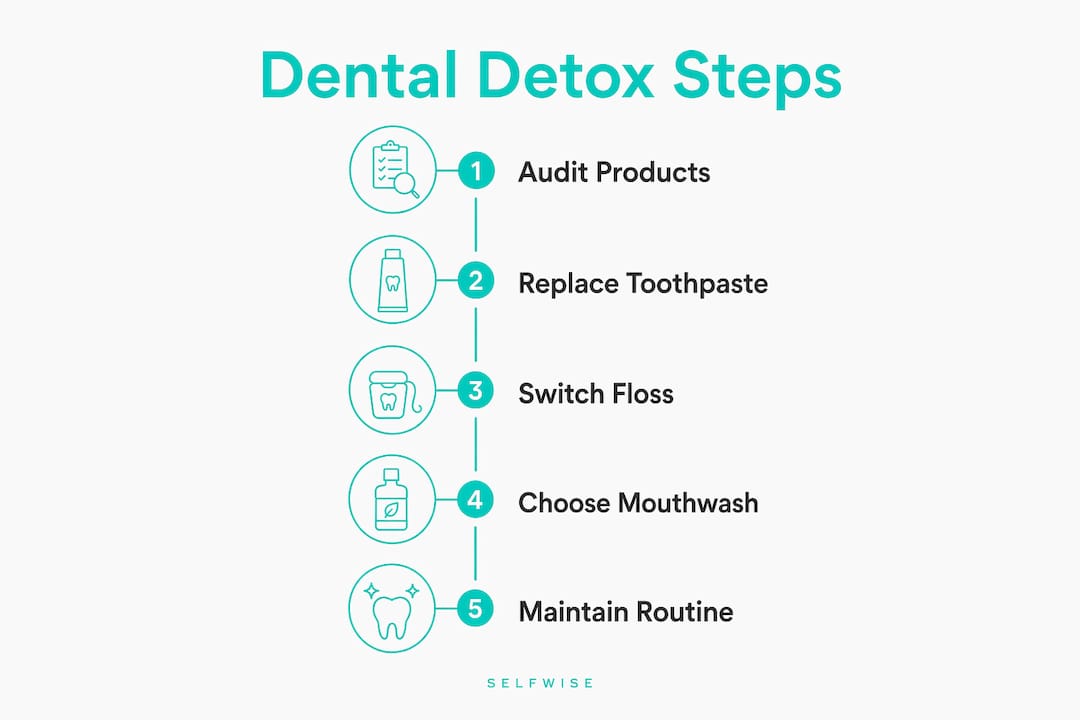
- Audit your current products. List every product you use: toothpaste, mouthwash, floss, tongue scraper, and whitening strips. Check each one against the ingredient list above.
- Replace toothpaste first. Toothpaste has the most mucosal contact time. Switch to a nano hydroxyapatite or xylitol-based formula. Give it two to four weeks before judging effectiveness.
- Switch your floss. Replace conventional floss with a PFAS-free or natural silk option. This takes less than a minute and costs almost nothing extra.
- Replace your mouthwash. Conventional mouthwashes often contain alcohol, artificial dyes, and saccharin. A fluoride-free mouthwash with nano hydroxyapatite or xylitol provides antimicrobial and remineralizing benefits without the chemical load.
- Add oil pulling as a supplemental step. Oil pulling with coconut or sesame oil for 10–15 minutes in the morning draws out bacteria and reduces plaque without any synthetic additives.
- Schedule a dental checkup. A professional cleaning removes calculus that no home routine can address. Tell your dentist you are transitioning to natural products so they can monitor enamel health.
| Step | Product to replace | Natural alternative |
|---|---|---|
| 1 | Conventional toothpaste | Nano hydroxyapatite or xylitol paste |
| 2 | PFAS-coated floss | Natural silk or PFAS-free nylon floss |
| 3 | Alcohol-based mouthwash | Xylitol or nano hydroxyapatite rinse |
| 4 | Whitening strips with peroxide | Activated charcoal or enzyme-based whitening |
| 5 | Plastic tongue scraper | Stainless steel or copper scraper |
Effective dental detox requires vetting all routine components. Toothpaste, floss, and mouthwash must all be toxin-free to avoid secondary chemical exposures. Changing only one product while leaving the others unchanged cuts your exposure only partially.
How to maintain oral health while reducing dental toxins
The most common mistake in detox dental care is removing fluoride without replacing its remineralizing function. Fluoride works primarily through topical enamel remineralization, not systemic absorption. That means a topical alternative like nano hydroxyapatite can replicate the protective effect without the systemic exposure risk.
“The goal is not to strip your routine down to nothing. The goal is to replace each chemical with something that does the same job more cleanly. Nano hydroxyapatite remineralizes enamel. Xylitol fights cavity-causing bacteria. Together, they cover what fluoride does, without the endocrine concerns.”
Children need particular attention during this transition. Using only a pea- to rice-sized amount of fluoride toothpaste significantly reduces fluorosis risk while maintaining cavity protection. For adults making a full switch to fluoride-free products, nano hydroxyapatite is the evidence-based replacement.
A few other common errors to avoid:
- Skipping professional cleanings. Natural products reduce chemical load but cannot remove hardened tartar. Professional cleanings remain non-negotiable.
- Choosing “natural” products without checking labels. Many products marketed as natural still contain SLS, saccharin, or parabens. Always read the full ingredient list.
- Ignoring mouthwash and floss. Most people audit their toothpaste and stop there. A complete oral care detox covers every product that touches your mouth.
- Expecting immediate results. Natural remineralizers like nano hydroxyapatite work over weeks, not days. Give any new product at least 30 days before evaluating.
Oral health supplements can also support the transition. Products like oral health chewables that combine natural antimicrobial and remineralizing ingredients offer a supplemental layer of protection during the switch.
Key Takeaways
Replacing endocrine-disrupting chemicals in your dental products with nano hydroxyapatite, xylitol, and PFAS-free floss is the most direct way to reduce toxin exposure while maintaining full cavity protection.
| Point | Details |
|---|---|
| Audit all products | Check toothpaste, floss, and mouthwash for parabens, SLS, triclosan, and PFAS. |
| Replace toothpaste first | Nano hydroxyapatite remineralizes enamel and substitutes fluoride effectively. |
| Switch floss and mouthwash | PFAS-free floss and xylitol rinses close the exposure gaps most people miss. |
| Avoid incomplete detox | Changing one product while ignoring others leaves significant chemical exposure in place. |
| Keep professional cleanings | Natural products reduce chemical load but cannot replace mechanical plaque removal. |
What I’ve learned after years of watching people switch to natural oral care
Most people who try to detox their dental routine make the same mistake. They buy one “natural” toothpaste, feel good about it, and leave the rest of their routine untouched. Then they wonder why they are not seeing results or why their dentist still finds issues.
The science on endocrine disruptors in oral care is genuinely unsettling, but the consumer response often swings too far. I have seen people abandon fluoride entirely with no replacement plan, and their enamel paid the price. The research is clear: lab studies show some toothpaste additives mimic hormones, but no direct causation of systemic disease from typical use is established. The concern is about cumulative exposure over years, not a single brushing session.
What actually works is a methodical swap, not a panic purge. Nano hydroxyapatite is the most exciting development in natural oral care in the last decade. It is biocompatible, clinically validated, and does what fluoride does without the systemic concerns. Pair it with xylitol for bacterial control and you have a genuinely complete system. The hybrid approach combining natural remineralizers with targeted professional care is emerging as the standard of practice, and I think that is exactly right.
The other thing I tell people: do not underestimate the mouthwash and floss problem. Those two products get almost no scrutiny compared to toothpaste, yet they carry real chemical exposure. A full routine review takes 20 minutes. It is worth doing once and doing right.
— Viktor
Selfwisebrand’s toxin-free oral care lineup
Selfwisebrand builds its entire product line around the principle that your mouth deserves the same ingredient scrutiny as anything else you put in your body. Every formula skips fluoride, parabens, SLS, and artificial sweeteners, and uses nano hydroxyapatite and xylitol as the active core.
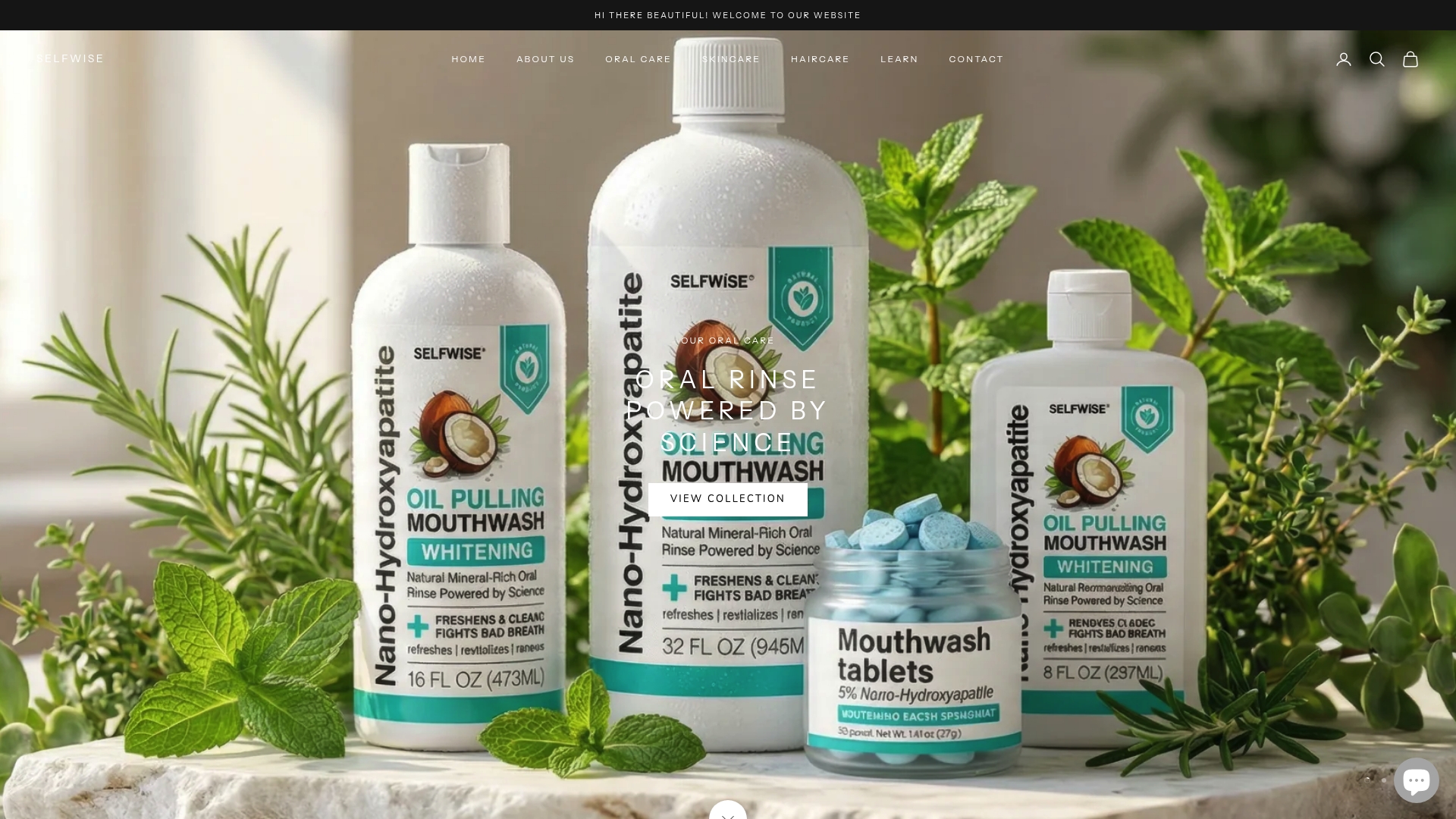
The fluoride-free collection covers toothpaste alternatives, mouthwash tablets, and oil pulling formulas designed to work as a complete system. The nano hydroxyapatite mouthwash tablets deliver remineralizing protection in a solid, preservative-free format with no alcohol or artificial dyes. If you prefer a liquid rinse, the xylitol mouthwash with nano hydroxyapatite combines bacterial control with enamel support in one step. Simple ingredients. Real results.
FAQ
What are endocrine-disrupting chemicals in toothpaste?
Endocrine-disrupting chemicals (EDCs) in toothpaste include parabens, triclosan, and certain artificial sweeteners that interfere with hormone signaling in the body. Nearly 50% of toothpastes contain at least one of these suspected disruptors.
Is nano hydroxyapatite as effective as fluoride?
Yes. Nano hydroxyapatite effectively substitutes fluoride for enamel remineralization and cavity prevention, making it the strongest fluoride-free alternative currently supported by clinical evidence.
How do I detoxify my teeth without losing cavity protection?
Replace fluoride toothpaste with a nano hydroxyapatite formula and add a xylitol-based mouthwash. Both ingredients remineralize enamel and reduce cavity-causing bacteria without the endocrine concerns linked to conventional products.
Does floss contain harmful chemicals?
Some conventional flosses are coated with PFAS, a class of chemicals associated with hormonal disruption. Switching to natural silk or certified PFAS-free nylon floss removes this exposure source from your routine.
When should I see a dentist during a dental detox?
Schedule a checkup before you start and again after 3–6 months. A dentist can monitor enamel health and confirm that your natural products are maintaining adequate protection during the transition.