Why Oil Pulling Reduces Plaque, According to the Research
Oil pulling reduces plaque mainly through two combined actions: the physical, mechanical disruption of biofilm as oil is pulled and pushed between teeth, and chemical processes at the oil-saliva interface that make it harder for bacteria to stick around. Clinical trials measuring plaque index and gingival index scores back this up, and researchers have zeroed in on Streptococcus mutans, the primary bacterial culprit in dental plaque, as a key target of these effects.
- Mechanical disruption: the viscosity of oil and the physical swishing action loosen early biofilm and rinse loose bacteria out before they can colonize further.
- Chemical action: saponification and emulsification at the oil-saliva boundary appear to strip lipid membranes from bacterial cells and reduce their ability to adhere to tooth surfaces.
Randomized controlled trials on this topic remain small and short in duration, but the pattern across them is consistent enough to take seriously.
Table of Contents
- What Clinical Studies Show About Oil Pulling and Plaque
- How Does Oil Pulling Physically and Chemically Break Down Plaque?
- How to Oil Pull Correctly for Plaque Reduction
- Which Oils Work Best for Oil Pulling and Why
- Is Oil Pulling Safe, and What Can’t It Do?
- What Do the Strongest Trials and Reviews Actually Show?
- An Evidence-First Take on Why Oil Pulling Works
- Pair Oil Pulling With a Formula Built for the Job
- Sources
- FAQ
What Clinical Studies Show About Oil Pulling and Plaque
The strongest evidence comes from a meta-analysis of 25 trials covering 1,184 participants, which found that oil pulling produced clinically meaningful improvements in gingival index scores compared with non-chlorhexidine mouth rinses. Plaque index results were less flattering: chlorhexidine outperformed oil pulling on that specific measure, with a standardized mean difference of 0.33 in chlorhexidine’s favor. The review authors rated the overall certainty of evidence as very low, mostly because trial protocols varied widely and sample sizes were small.
Individual trials tell a more encouraging story for plaque specifically. A randomized, examiner-blinded study found that daily sesame oil pulling reduced full-mouth plaque scores (measured using the Rustogi Modified Navy Plaque Index) by a median of 18.98% after eight weeks, nearly double the 10.49% reduction seen with distilled water swishing. That gap, with a p-value of 0.023, suggests the effect isn’t just noise.
Separate work on coconut oil has produced similar directional findings, with small randomized trials reporting reductions in plaque and modified gingival index scores after regular pulling regimens.
Here’s how oil pulling stacks up against common comparators:
- Versus distilled water: oil pulling consistently outperforms plain water rinsing for plaque reduction in controlled trials.
- Versus chlorhexidine: chlorhexidine tends to win on raw plaque index scores, though oil pulling holds its own or edges ahead on gingival inflammation measures in several trials.
The honest takeaway: oil pulling effectiveness is real but moderate, not a chlorhexidine replacement, and best understood as a complementary tool rather than a stronger substitute.
How Does Oil Pulling Physically and Chemically Break Down Plaque?
Dental plaque starts as a thin biofilm. Bacteria adhere to the tooth pellicle, recruit other species through coaggregation, and build a sticky extracellular matrix that shields them from saliva and mechanical removal. Every proposed oil-pulling mechanism targets a different step in that process.
Mechanical action comes first. Oil’s viscosity means it clings to and drags across tooth surfaces as you swish, physically working loose bacteria and debris that haven’t fully anchored into the matrix yet. This is closer to a gentle scrubbing action than a chemical one, and it’s the easiest mechanism to picture: think of oil moving through crevices the way a thick liquid catches on rough surfaces.
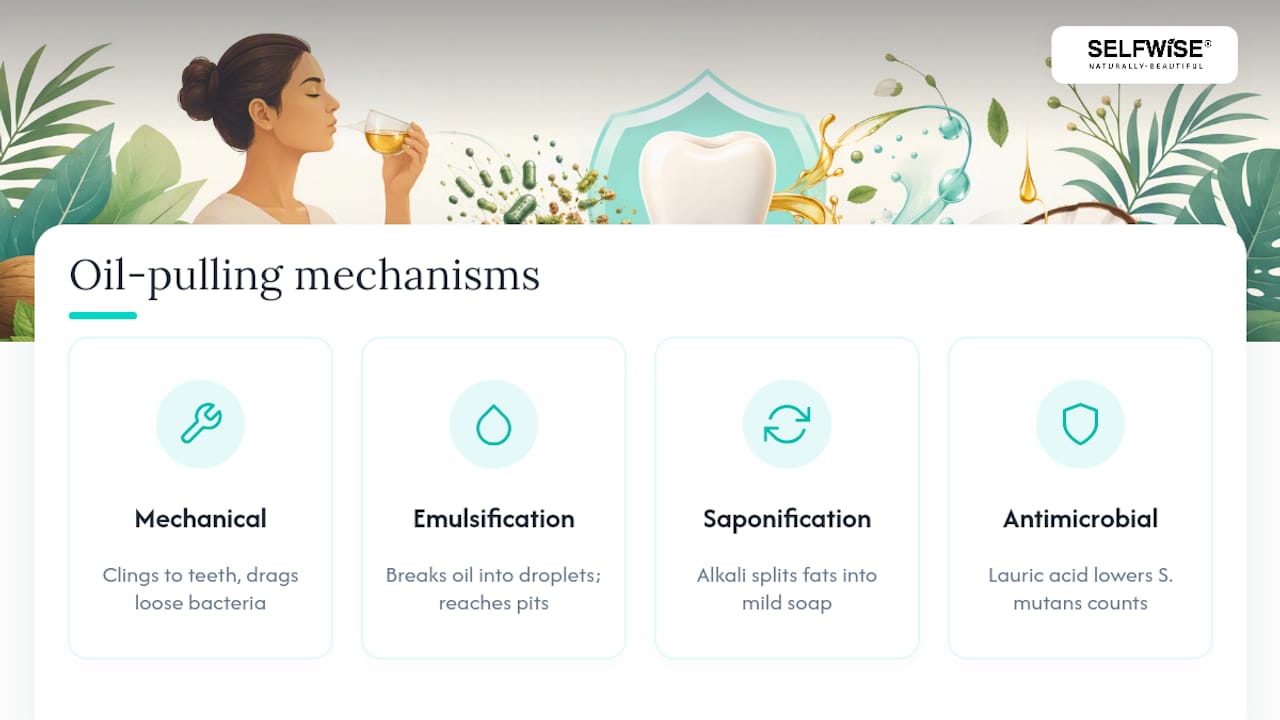
Emulsification and saponification are the more interesting, less intuitive pieces. Saliva contains water, enzymes, and electrolytes; as oil mixes with saliva during swishing, some researchers propose that saponification, an alkali-driven breakdown of fats into soap-like compounds, occurs and produces mild surfactant activity. Emulsification increases the surface area of the oil, letting it reach into pits, fissures, and interproximal spaces that a simple oil coating would miss. A broad review of oil pulling’s proposed mechanisms lists mechanical cleaning, saponification, and emulsification together as the leading explanations for reduced bacterial adhesion and plaque growth.
Antimicrobial activity rounds things out. Coconut oil’s lauric acid, in particular, shows in vitro activity against oral pathogens, and trials using coconut oil for plaque control have reported measurable drops in Streptococcus mutans counts. Not every trial finds this effect matches chlorhexidine’s antibacterial punch, but the direction is consistent.
Pro Tip: Watch the oil in your mouth change from clear to a thin, milky white color as you swish. Dental practitioners treat that shift as a practical sign that emulsification is happening and the oil is actively interacting with bacteria and saliva, not just sitting inert in your mouth.
How to Oil Pull Correctly for Plaque Reduction
- Measure one tablespoon of oil (about 15 milliliters).
- Swish gently for 10 to 15 minutes, letting the oil pull between teeth rather than gargling it toward your throat.
- Watch for the oil to thin out and turn milky white, a sign the emulsification process is working.
- Spit the oil into a trash can, not the sink (it can clog pipes over time).
- Rinse your mouth with warm water, then brush as usual.
Most published regimens run this daily, first thing in the morning on an empty stomach, for a period ranging from one to several weeks before evaluators re-measure plaque scores. Noticeable changes in gum tissue often show up within one to two weeks, while measurable shifts in plaque index tend to take longer, closer to several weeks.
Pro Tip: Never swallow the oil. It’s now carrying loosened bacteria and debris, and swallowing defeats the purpose. Spit it out completely, and skip oil pulling for young children who can’t reliably avoid swallowing or gargling.
Which Oils Work Best for Oil Pulling and Why
- Coconut oil: high in lauric acid, which shows antimicrobial activity against oral bacteria in lab studies, and it has a relatively pleasant taste that helps people stick with the routine.
- Sesame oil: rich in lignans and antioxidant compounds; it was the oil used in the trial that showed a nearly 19% reduction in plaque scores over eight weeks.
- Sunflower oil: a traditional choice in Ayurvedic practice with a favorable saponification index, meaning it reacts readily with saliva’s alkaline environment.
Cold-pressed versions of any of these oils are generally preferred over heavily refined oils, since refining strips out some of the phenolic compounds thought to contribute to antimicrobial and antioxidant activity. Palatability matters more than people expect. Fifteen minutes of swishing a bad-tasting oil is a routine that dies fast. Across most published trials, results were broadly comparable regardless of which of these three edible oils was used, which suggests the shared mechanisms (viscosity, emulsification, saponification) matter more than any single oil’s unique chemistry. If you’re deciding between coconut and sesame oil pulling, taste tolerance is often the deciding factor, not efficacy.
Is Oil Pulling Safe, and What Can’t It Do?
Oil pulling has real limits, and knowing them matters as much as knowing the benefits.
- It does not remove hardened calculus (tartar) once plaque has mineralized; only professional scaling can do that.
- It is not a substitute for brushing and flossing, and trials consistently position it as a complementary practice, not a replacement.
- Chlorhexidine tends to outperform it for raw plaque index reduction in several head-to-head comparisons.
Safety concerns are minor but real; for example, you can learn more about nicotine pouches after a tooth extraction and their safety considerations. Aspiration risk exists, particularly for young children, so oil pulling isn’t recommended for kids who can’t reliably swish and spit without swallowing. Rare cases of allergic reaction or oral keratosis (a thickening of oral tissue) have been reported with prolonged or improper use. If you have gum disease beyond mild inflammation, see a dentist rather than relying on oil pulling alone.
Some practitioners caution that oil pulling works best as an adjunct regimen. It helps manage early plaque and microbial load, but it will not remove established calculus and does not replace professional cleaning.
On the microbiome question, the goal isn’t total bacterial elimination. It’s reducing harmful microbial load without disrupting the broader oral ecosystem, and current evidence on long-term microbiome effects remains genuinely mixed.
What Do the Strongest Trials and Reviews Actually Show?
The best available evidence comes from a mix of small RCTs and one larger meta-analysis, and the picture that emerges is coherent but not definitive. The Wiley systematic review and meta-analysis pooled 25 trials and 1,184 participants, tracking plaque index and gingival index as primary outcomes; oil pulling improved gingival scores versus non-chlorhexidine rinses but lagged chlorhexidine on plaque reduction specifically.
Smaller trials add texture. The sesame oil study used 40 participants over eight weeks with a 15-minute daily protocol and found statistically significant plaque reductions concentrated in anterior, buccal, and lingual tooth surfaces. Coconut oil trials, often run over four days to a few weeks, have reported drops in Streptococcus mutans counts, though some found no significant difference from chlorhexidine on regrowth inhibition while others did.
The recurring limitation across this literature: short trial durations, inconsistent plaque-scoring systems between studies, and small sample sizes that make pooled estimates fragile. The meta-analysis authors explicitly rated evidence quality as very low, which is a meaningful caveat, not a dismissal. It means the direction of the effect looks real, but the exact magnitude remains uncertain until larger, longer, standardized trials are run.
Oil pulling reduces plaque through a combination of mechanical action and chemical processes at the oil-saliva interface, and clinical evidence generally supports this effect, though the data remain limited in scale.
| Point | Details |
|---|---|
| Two main mechanisms | Mechanical swishing dislodges early biofilm while saponification and emulsification limit bacterial adhesion. |
| Evidence is moderate, not definitive | A 25-trial meta-analysis rated overall evidence quality as very low despite positive gingival index findings. |
| Sesame oil trial result | Daily sesame oil pulling cut plaque scores by a median of 18.98% versus 10.49% with water over eight weeks. |
| Not a calculus remover | Oil pulling cannot dissolve hardened tartar and does not replace brushing, flossing, or dental cleanings. |
| Pair it with the right products | Selfwisebrand’s nano hydroxyapatite oil pulling mouthwash is formulated to complement this routine without fluoride or harsh chemicals. |
An Evidence-First Take on Why Oil Pulling Works
The conventional wisdom on oil pulling splits into two camps that are both wrong. One insists it’s an ancient cure-all; the other dismisses it as folk medicine with no mechanism behind it. Neither survives contact with the actual trial data. What the RCTs and meta-analyses actually support is narrower and more useful: oil pulling produces a modest, measurable reduction in plaque and gingival inflammation through mechanisms that make physical sense, viscosity, emulsification, saponification, and mild antimicrobial action.
Where people go wrong is expecting it to replace brushing or to dissolve tartar. It won’t. Where they underrate it is dismissing the biochemistry as implausible; saponification and emulsification are well-understood chemical processes, just not usually discussed at the sink.
My honest read: treat oil pulling as a legitimate adjunct, prioritize consistency over the specific oil you choose, and pair it with a natural rinse and remineralizing routine rather than expecting it to carry your entire oral care regimen alone.
Pair Oil Pulling With a Formula Built for the Job
Plain coconut or sesame oil gets you mechanical action and some antimicrobial benefit, but it stops there. Selfwisebrand’s nano hydroxyapatite oil pulling mouthwash is formulated to combine that same oil-pulling action with nano hydroxyapatite for enamel support, without fluoride, alcohol, or harsh detergents.
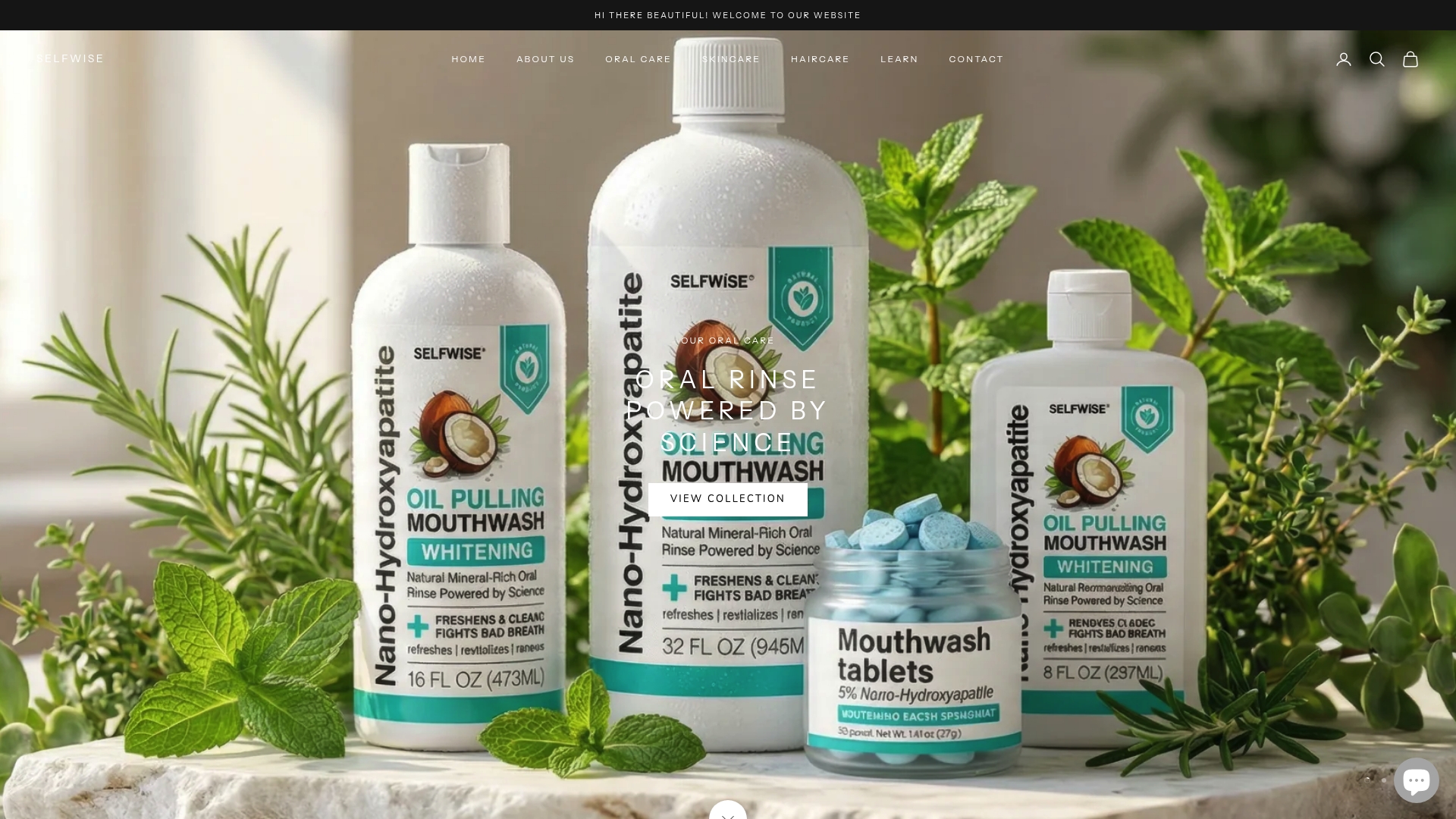
It suits anyone who already swishes with plain oil and wants a formula built specifically for that habit, rather than a raw kitchen oil never designed for oral use. If you’re building out a broader natural routine, the fluoride-free collection covers mouthwash tablets and xylitol-based rinses that work alongside your morning pulling routine. Add it to your routine tomorrow morning and see how it feels after the first week.
Sources
- The effect of oil pulling in comparison with chlorhexidine and other mouthwash interventions in promoting oral health: A systematic review and meta-analysis
- The plaque reducing efficacy of oil pulling with sesame oil: a randomized-controlled clinical study
- Effect of coconut oil in plaque related gingivitis - A preliminary report
FAQ
Does Oil Pulling Remove Hardened Plaque?
No. Oil pulling can reduce soft, early-stage plaque and bacterial load, but it cannot dissolve hardened calculus (tartar) once it has mineralized on the tooth surface. Only professional dental scaling removes calculus.
Why Do Some Dentists Push Back on Oil Pulling?
Many dentists remain cautious because the evidence base is small, the trials are short, and overall certainty was rated very low in the largest available meta-analysis. The concern is less that it doesn’t work and more that patients might skip brushing, flossing, or professional cleanings in favor of it.
What Happens if You Do Oil Pulling Every Day?
Daily oil pulling, the protocol used in most clinical trials, is associated with reduced plaque scores and improved gingival index over several weeks. It carries minimal risk for healthy adults as long as the oil is spit out rather than swallowed.
How Long Does It Take for Oil Pulling to Reduce Plaque?
Trials typically measure results between one and eight weeks of daily use. The sesame oil study found significant plaque score reductions at the eight-week mark, so expect gradual change over weeks, not days.
Which Oil Is Best for Oil Pulling: Coconut, Sesame, or Sunflower?
All three show comparable plaque-reducing effects in clinical trials. Coconut oil offers lauric acid’s antimicrobial properties, sesame oil brings antioxidant lignans, and sunflower oil has a favorable saponification profile, so palatability and consistency matter more than which one you pick.