Xylitol Dry Mouth Relief Guide: What Actually Works
Yes, xylitol helps dry mouth for most people who use it consistently, and it works two ways at once: it triggers your salivary glands to produce more saliva, and it starves the bacteria that cause decay while your mouth is at its most vulnerable. The winning approach isn’t picking one product. It’s pairing a daytime stimulant, like xylitol gum or lozenges, with a nighttime moisture-retention product, like a mucoadhesive disc, gel, or alcohol-free xylitol mouthwash, so your teeth stay protected around the clock.
Here’s what to do in the next five minutes if your mouth feels like sandpaper right now:
- Chew xylitol gum or suck a xylitol lozenge for 5 to 10 minutes after your next meal to jump-start saliva flow.
- Swap any alcohol-containing mouthwash in your cabinet for an alcohol-free, xylitol-labeled rinse. Alcohol pulls moisture out of oral tissue and makes dryness worse.
- Set out a xylitol mouth spray or gel for midday dips, especially if you talk a lot or breathe through your mouth.
- Plan a mucoadhesive disc or moisture gel for bedtime, since saliva production drops naturally overnight.
- Keep any xylitol product locked away from pets. It’s highly toxic to dogs even in small amounts.
Clinical guidance commonly cites daily exposure targets around several grams divided across multiple exposures, according to research summarized in a review on xylitol’s oral health benefits. That’s roughly what you’d get from consistent gum or lozenge use spread through the day, not one large dose. The Merck Manual’s xerostomia guidance backs the same multimodal logic: stimulants during the day, moisture-retentive agents at night. Mayo Clinic lists xylitol-containing saliva substitutes among its recommended nonprescription dry mouth options, while flagging that large amounts can cause gastrointestinal upset in sensitive people.
Key Takeaways
Xylitol relieves dry mouth by stimulating saliva flow and blocking the bacteria that cause decay, but it works best as part of a day-and-night routine rather than a single product.
| Point | Details |
|---|---|
| Combine formats | Use a daytime stimulant like gum or lozenges plus a nighttime moisture product like a disc or gel. |
| Target dose | Clinical guidance points to roughly 5 to 10 grams of xylitol daily, divided across several exposures. |
| Avoid alcohol | Alcohol-containing mouthwashes worsen dryness; choose alcohol-free, xylitol-labeled formulas instead. |
| Watch for red flags | Sudden severe dryness, swallowing trouble, or new cavities despite good care warrant a clinician visit. |
| Keep away from pets | Xylitol is highly toxic to dogs and must be stored securely at all times. |
| Try Selfwisebrand’s lineup | The Xylitol Mouthwash with Nano Hydroxyapatite and Mouthwash Tablets both meet the alcohol-free, xylitol-forward checklist this guide recommends. |
Table of Contents
- What Causes Dry Mouth, and Why It Changes Your Product Choice
- How Does Xylitol Relieve Dry Mouth?
- Which Xylitol Products Work Best for Dry Mouth?
- How to Build a Daily Xylitol Routine for Dry Mouth
- Is Xylitol Safe? Side Effects and Precautions
- When Should You See a Clinician for Dry Mouth?
- What to Look for When Choosing a Xylitol Product
- What Does the Research Actually Show?
- A Practical View on What Actually Works
- Where to Start With Selfwisebrand’s Xylitol Products
- Sources
- FAQ
What Causes Dry Mouth, and Why It Changes Your Product Choice
Dry mouth, known clinically as xerostomia, isn’t one condition with one fix. The cause behind your dry mouth determines whether you need more stimulation, more moisture retention, or both, so it’s worth a minute of honest self-diagnosis before you buy anything.
Common triggers include:
- Medications, especially anticholinergics, antihistamines, and many antidepressants, which are the single most frequent cause clinicians see.
- Autoimmune disease, particularly Sjögren’s syndrome, where the immune system attacks salivary glands directly.
- Head and neck radiation, which can permanently reduce salivary gland output.
- Dehydration and simple aging, since salivary flow tends to decline gradually as adults get older.
- Lifestyle factors like alcohol use, smoking, and vaping, all of which dry oral tissue.
- Mouth breathing, often tied to sleep apnea, allergies, or nasal congestion, which dries the mouth specifically overnight.
Why does this matter for shopping? Medication-induced dryness usually responds well to a routine daytime stimulant plus a nightly moisture barrier, because the glands still work, they’re just under-triggered. Sjögren’s-related or radiation-induced dryness often needs more aggressive moisture retention throughout the day, since gland tissue itself may be damaged and stimulation alone won’t produce much saliva no matter how hard you chew.
A practical way to test the waters:
- Try an over-the-counter xylitol routine, gum plus an alcohol-free xylitol rinse, for 2 to 4 weeks.
- Track whether symptoms improve at rest, during meals, and overnight.
- If dryness persists or worsens despite consistent use, that’s your signal to book a dental or medical evaluation rather than cycling through more products.
How Does Xylitol Relieve Dry Mouth?
Xylitol works on two fronts, and understanding both helps explain why dentists recommend it over sugar-free mints that just mask bad breath.
The first is mechanical and chemosensory: chewing or sucking on xylitol activates the same glandular reflex any flavor or chewing motion would, but research also points to something more specific happening at the cellular level. That’s a fancy way of saying xylitol appears to help cells physically move more water into saliva, not just trigger the reflex to swallow or chew, according to research published in the International Journal of Oral Biology.
The second mechanism protects your teeth while saliva is scarce. Streptococcus mutans, the bacteria most responsible for cavities, can’t metabolize xylitol the way it metabolizes sugar. Instead of feeding the bacteria, xylitol interferes with their energy production, reduces acid output, and suppresses biofilm formation, the sticky layer that becomes plaque. Since saliva itself carries minerals that remineralize enamel, xylitol’s dual action, more saliva plus less bacterial acid, is why it’s become the go-to ingredient for people managing both dryness and cavity risk simultaneously.
Clinical literature on xylitol consistently describes it as reducing Streptococcus mutans counts, impairing biofilm formation, and stimulating salivary flow, with typical protective exposures totaling roughly 5 to 10 grams daily divided across several uses, according to a comprehensive review of xylitol’s oral health benefits.
Which Xylitol Products Work Best for Dry Mouth?
Not every xylitol product does the same job, and using the wrong format at the wrong time wastes both your money and your mouth’s limited moisture window. Here’s how the main categories stack up.
| Product type | Best for | How to use it | Typical frequency |
|---|---|---|---|
| Xylitol gum | Daytime stimulation, post-meal cavity defense | Chew 5 to 10 minutes after eating | 2 to 3 times per day |
| Xylitol lozenges or discs | People who can’t chew (denture wearers, jaw issues) | Let dissolve slowly in the mouth | Every 2 to 3 hours as needed |
| Xylitol mouth spray | Quick relief during talking, public speaking, or mid-meeting dryness | 1 to 2 sprays directly on tongue and cheek tissue | As needed, up to several times daily |
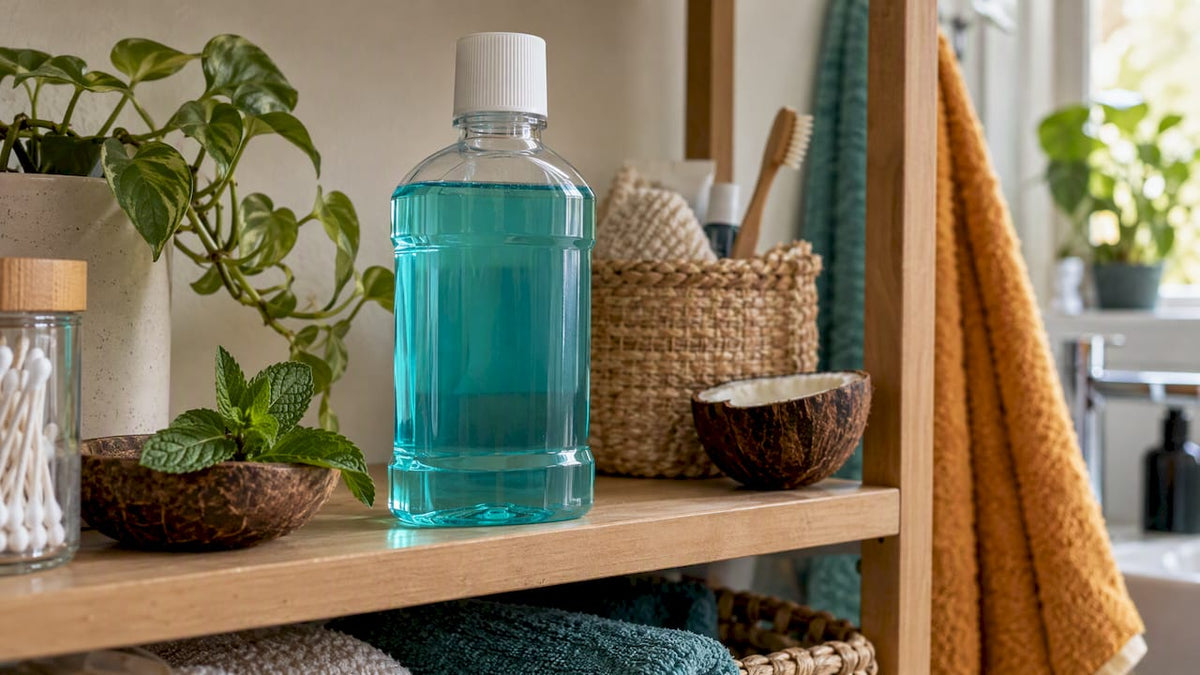
| Alcohol-free xylitol mouthwash | Full-mouth rinse and bacterial control | Swish 30 seconds, morning and night | Twice daily |
| Moisture gel | Severe overnight dryness or radiation-related xerostomia | Apply a thin layer to tongue and gums before bed | Nightly |
| Mucoadhesive disc | Sustained overnight coverage without chewing | Place against the cheek or gum before sleep | Nightly |
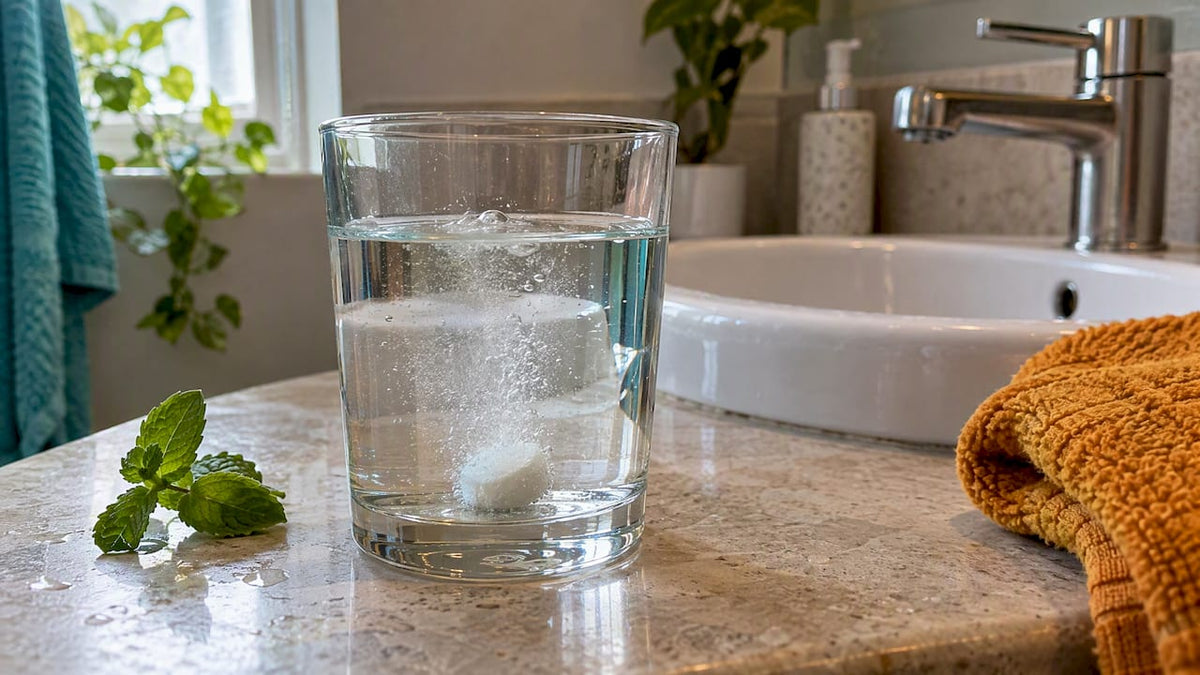
| Solid mouthwash tablets | Travel, portion control, alcohol-free rinsing on the go | Dissolve tablet in water, swish as directed | Twice daily or as needed while traveling |
Gum has the advantage of habit and convenience, but it isn’t practical for anyone with TMJ pain, loose dental work, or dentures. Lozenges solve that problem, though they dissolve faster and need more frequent redosing to hit the same cumulative xylitol exposure.
Sprays are underrated for people whose dryness spikes situationally, during a presentation, a long phone call, or a flight, since they deliver instant relief without the commitment of gum or a rinse. Mouthwash and solid mouthwash tablets do double duty: they rinse away debris and bacteria while depositing xylitol across the entire oral cavity, not just the spot where you’re chewing.
The label matters as much as the format. Look for products where xylitol is explicitly listed (not buried under “natural sweeteners”), and where the formula includes glycerin, carboxymethylcellulose, or hydroxyethyl cellulose, ingredients that help retain moisture on oral tissue rather than evaporating within minutes. Skip anything listing alcohol near the top of the ingredient panel; it undercuts the entire point of the product.
How to Build a Daily Xylitol Routine for Dry Mouth
A routine beats random product use, because dry mouth symptoms follow a predictable daily pattern. Saliva flow is naturally lowest overnight and tends to dip again in mid-afternoon, so your product choices should track those low points.
A sample day-and-night structure:
- Morning: Rinse with an alcohol-free xylitol mouthwash after brushing to start the day with moisture and bacterial control.
- After each meal: Chew xylitol gum for 5 to 10 minutes, or suck a lozenge if chewing isn’t comfortable.
- Mid-afternoon: Use a xylitol spray or a fresh lozenge when the classic afternoon dryness dip hits, especially if you’re talking through meetings or calls.
- Before bed: Apply a moisture gel or place a mucoadhesive disc against your cheek, then rinse with an alcohol-free xylitol mouthwash to coat teeth before saliva flow drops overnight.
If a medication is contributing to your dryness, timing sometimes helps. Some people find that taking a dry-mouth-causing medication earlier in the day, rather than at bedtime, reduces overnight cavity risk, but this is a change to make only with your prescribing clinician’s approval, never on your own, per Merck Manual guidance.
Pro Tip: Store your nighttime mucoadhesive disc somewhere you’ll actually see it, like next to your toothbrush, not in a drawer. The biggest reason these routines fail isn’t the product, it’s forgetting the step that happens right before you fall asleep.
Is Xylitol Safe? Side Effects and Precautions
Xylitol is well tolerated for most adults at typical oral care doses, but it isn’t risk-free, and a few precautions deserve real attention rather than a footnote.
The most common side effect is gastrointestinal: bloating, gas, or diarrhea, particularly when someone consumes large amounts quickly rather than spreading intake across the day. Mayo Clinic notes that high xylitol consumption can cause gastrointestinal upset in sensitive individuals, which is one reason the divided-dose approach, small amounts several times daily rather than one large dose, tends to work better than loading up on gum all at once.
A safety checklist worth running through before you buy:
- Confirm the product is alcohol-free; alcohol worsens the exact symptom you’re treating.
- Check that xylitol appears by name on the ingredient list, not hidden under generic “sugar alcohol” phrasing.
- Look for glycerin, carboxymethylcellulose, or hydroxyethyl cellulose for moisture retention alongside the xylitol.
- Start with a lower daily amount if you have a sensitive digestive system, and increase gradually.
- Store all xylitol products, gum, mints, mouthwash, tablets, well out of reach of pets.
Xylitol is highly toxic to dogs. Even a small amount of xylitol gum or a few lozenges can trigger rapid hypoglycemia and liver damage in a dog, sometimes within 30 to 60 minutes of ingestion. This is a real veterinary emergency, not an exaggeration, so if you share a home with a dog, keep every xylitol product in a closed cabinet or drawer, never a purse or nightstand a curious dog can reach.
Pregnant people, children, and older adults with existing digestive sensitivity should introduce xylitol products gradually and talk to a dentist or physician before making it a daily habit, especially if other medications or conditions are already in the picture.
When Should You See a Clinician for Dry Mouth?
An over-the-counter xylitol routine handles most everyday dryness, but certain symptoms mean it’s time to get evaluated rather than keep experimenting with products.
Red flags that warrant a prompt appointment include:
- Sudden, severe dry mouth that appears with no clear medication or lifestyle change behind it.
- Difficulty swallowing or speaking due to dryness.
- Unexplained weight loss alongside oral dryness.
- Sores, white patches, or signs of infection in the mouth.
- Extensive new cavities despite consistent brushing, flossing, and xylitol use.
When you see a dentist or physician for persistent dryness, expect a fairly standard diagnostic path:
- A full medication review, since dozens of common prescriptions list dry mouth as a side effect.
- Salivary flow measurement, both unstimulated and stimulated rates, to quantify how much saliva you’re actually producing.
- Bloodwork screening for autoimmune markers if Sjögren’s syndrome is suspected.
- Referral to an ENT specialist or additional imaging if structural or glandular issues are suspected.
Bring a current medication list, a rough timeline of when symptoms started or worsened, and, if possible, photos of any oral changes you’ve noticed. That single page of notes often shortens the diagnostic process considerably.
What to Look for When Choosing a Xylitol Product
Reading a mouthwash or gum label sounds tedious until you realize how many products marketed for “fresh breath” or “sensitive mouths” quietly contain alcohol or skip xylitol entirely in favor of cheaper sweeteners. A quick label checklist:
- Alcohol-free is non-negotiable for anyone managing dry mouth.
- Xylitol listed explicitly, ideally near the top of the ingredient panel, not as an afterthought.
- Glycerin, carboxymethylcellulose, or hydroxyethyl cellulose present for moisture retention beyond the xylitol itself.
- No sodium lauryl sulfate or other harsh surfactants that can irritate already-sensitive oral tissue.
Selfwisebrand’s xylitol lineup was formulated around exactly this checklist. The Xylitol Mouthwash with Nano Hydroxyapatite works well as a twice-daily rinse, combining xylitol’s salivary and anti-caries action with nano hydroxyapatite for enamel support, making it a solid fit for the morning-and-night rinse slots in the routine above. For readers who prefer oil pulling as part of their moisture strategy, the Nano Hydroxyapatite Oil Pulling Mouthwash offers an alternative format that still avoids alcohol and harsh detergents. And for travel or discreet daytime use, Mouthwash Tablets dissolve in water for a portable, alcohol-free rinse that fits in a carry-on without spilling.
| Routine slot | Product fit | Why it fits |
|---|---|---|
| Morning and night rinse | Xylitol Mouthwash with Nano Hydroxyapatite | Alcohol-free, xylitol-forward, adds enamel support |
| Oil pulling / moisture step | Nano Hydroxyapatite Oil Pulling Mouthwash | Natural moisture and enamel-focused alternative to rinsing |
| Travel or discreet daytime rinse | Mouthwash Tablets | Solid format, easy to pack, alcohol-free |
If you wear dentures, look specifically for gels and rinses formulated without harsh surfactants, since denture-adjacent tissue tends to be more sensitive to alcohol and detergent-based ingredients, a point echoed in broader guidance on gentle oral rinse ingredients. For a deeper look at alcohol-free formulations generally, this piece on alcohol-free natural rinses is worth a read, and the oral care team at Y-Brush covers similar ground on why alcohol-based rinses fall short for sensitive mouths.
What Does the Research Actually Show?
The evidence for xylitol and dry mouth is genuinely encouraging, but it’s worth being precise about what’s been proven versus what’s mechanistically plausible.
A randomized cross-over clinical trial testing a topical combination product containing xylitol, olive oil, and betaine found significantly increased unstimulated whole salivary flow and reduced xerostomia complaints in adults with polypharmacy-induced dry mouth, over a one-week treatment period. That’s a real, measured improvement in an objective marker, not just a subjective “feels better” report, and it’s one of the stronger pieces of evidence supporting combination xylitol products.
Broader reviews of topical dry mouth agents note consistent short-term subjective improvement, but caution that objective salivary flow gains are inconsistent across studies, and most trials involve small samples over just days or weeks rather than months.
The cellular mechanism research, the M3R and aquaporin 5 findings from the International Journal of Oral Biology, explains plausibly how xylitol might increase water transport at the gland level, but it’s laboratory work, not a clinical outcome study. That distinction matters when weighing how confidently to expect results. Taken together, the evidence supports xylitol as a reasonable, low-risk first step for most dry mouth cases, with the strongest data behind combination products used consistently over at least a couple of weeks, rather than a single dose or occasional use.
A Practical View on What Actually Works
The biggest mistake people make with dry mouth isn’t picking the wrong product, it’s picking only one. Gum alone rarely gets someone through a full night. A mouthwash alone rarely handles a dry afternoon spent talking on calls. The routines that hold up are the ones that treat morning, midday, and night as three separate problems with three different tools, rather than expecting one xylitol gum to cover sixteen waking hours plus sleep.
Persistence matters more than perfection here. Xylitol’s effects on saliva and bacterial suppression build with consistent use, not a single application, so someone who tries a lozenge for two days and gives up hasn’t really tested whether it works. Flavor matters more than people expect too. If a mint-flavored lozenge tastes unpleasant enough that it sits in a drawer unused, a cinnamon or fruit version that actually gets used every day will outperform it. The best xylitol routine is the one you’ll still be doing in three weeks, not the one with the most impressive ingredient list.
Where to Start With Selfwisebrand’s Xylitol Products
If the routines above sound reasonable but you’re not sure which bottle to actually buy, that’s the exact gap Selfwisebrand’s xylitol lineup was built to close: alcohol-free formulas where xylitol is a headline ingredient, not a trace additive buried in a long list of fillers.
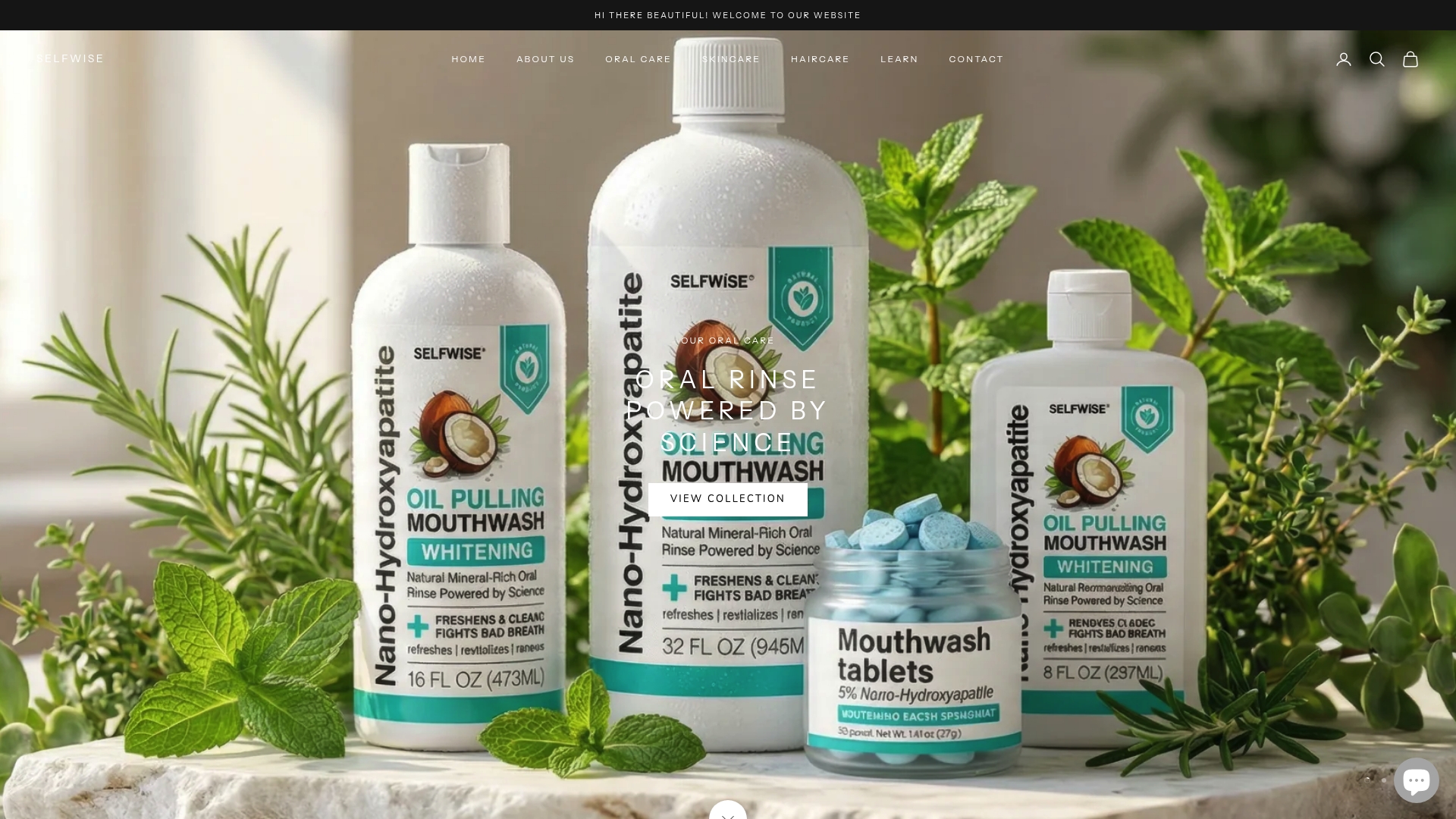
For the twice-daily rinse slot in your routine, the Xylitol Mouthwash with Nano Hydroxyapatite pairs xylitol’s salivary and anti-caries action with enamel support, making it a straightforward morning-and-night pick. If you travel often or want a spill-proof option for a gym bag or carry-on, the Mouthwash Tablets dissolve in water on demand, so you’re never stuck with a half-empty bottle of liquid mouthwash leaking in your luggage. And if you already practice or want to try oil pulling as part of your moisture strategy, the Nano Hydroxyapatite Oil Pulling Mouthwash offers a natural alternative built on the same alcohol-free foundation. Browse the full mouthwash collection to compare formats and pick the one that matches your daily routine.
Sources
- Multifaceted benefits of xylitol in oral health: from caries prevention to periodontal therapy - PMC
- Safety and effectiveness of topical dry mouth products containing olive oil, betaine, and xylitol in reducing xerostomia for polypharmacy-induced dry mouth
- International Journal of Oral Biology
- Dry Mouth (Xerostomia) Management - Merck Manual
- Dry mouth treatment: Tips for controlling dry mouth - Mayo Clinic
This article is general information, not a substitute for advice from a qualified doctor. Consult a qualified healthcare professional about your own circumstances before acting on anything here.
FAQ
Does xylitol fix dry mouth?
Xylitol doesn’t cure the underlying cause of dry mouth, but it reliably stimulates saliva flow and protects teeth while saliva is low, which is why clinical guidance from Merck Manual recommends it as part of a multimodal routine rather than a standalone cure.
What fixes dry mouth immediately?
Chewing xylitol gum or using a xylitol spray provides the fastest relief, usually within minutes, by directly triggering saliva flow. For longer-lasting comfort, follow up with an alcohol-free xylitol mouthwash or a moisture gel.
Is it okay to use mucoadhesive discs every night?
Yes, nightly use is exactly how these products are designed to work, since they provide sustained moisture during the hours when saliva flow naturally drops. Just confirm the disc is xylitol-based and alcohol-free, and check with your dentist if you notice irritation.
What vitamin am I lacking if I have dry mouth?
Dry mouth is more commonly tied to medications, autoimmune conditions, or dehydration than a single vitamin deficiency, though some cases have been linked to low vitamin A or B vitamins. A clinician can order bloodwork to check for deficiencies or autoimmune markers if the cause isn’t clear.
This guide provides general oral care information and isn’t a substitute for personalized advice from a dentist or physician, especially if dry mouth is severe, sudden, or tied to a diagnosed medical condition.