Switch to Natural Toothpaste: Your Complete 2026 Guide
Natural toothpaste is defined as any oral care formula that replaces synthetic chemicals with plant-based or mineral ingredients to clean teeth and support gum health. This switch to natural toothpaste guide covers everything you need to make the change safely, from understanding active ingredients like nano hydroxyapatite and xylitol to building a routine that actually protects your enamel. Conventional toothpaste often contains sodium lauryl sulfate (SLS), triclosan, parabens, and artificial sweeteners. These ingredients can irritate the mouth lining, disrupt the oral microbiome, and raise long-term chemical exposure concerns. Natural alternatives from brands like MooGoo and formulas featured by TheWellthieone show that you can get real oral health results without them.
What are the main benefits of natural toothpaste ingredients?
Natural toothpaste works because its active ingredients address the same core problems as conventional formulas, just through different chemistry. The key is knowing what each ingredient does and why it belongs in your routine.
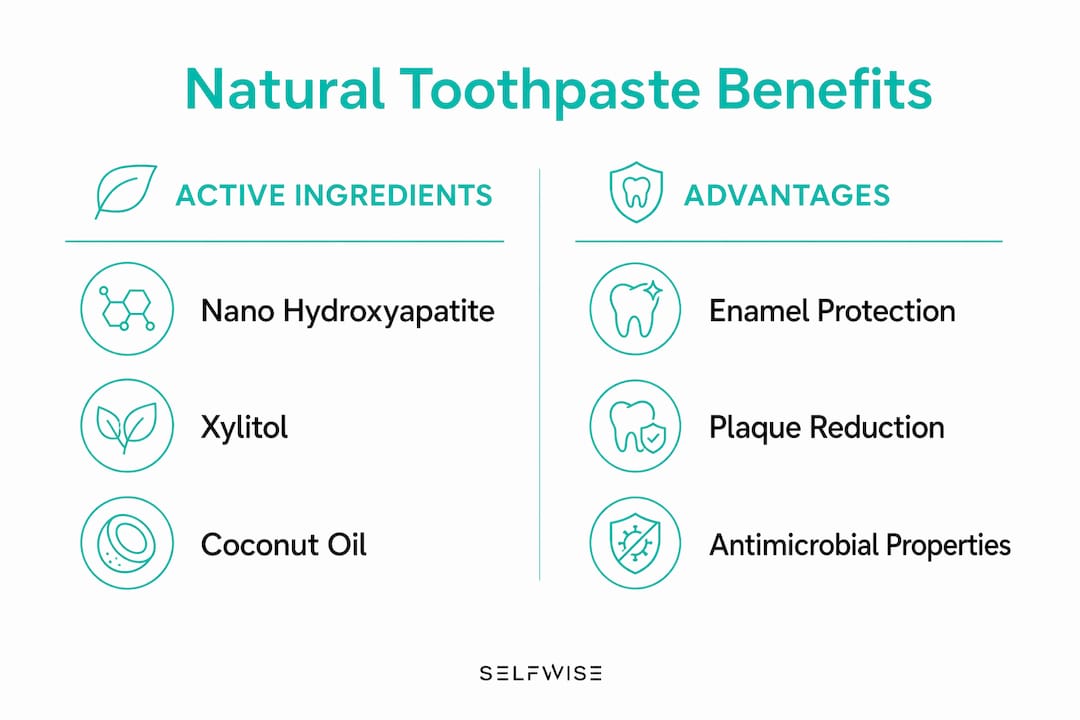
Nano hydroxyapatite is the standout ingredient in modern natural toothpaste. It is a scientifically proven fluoride alternative that remineralizes enamel, reduces sensitivity, and fills microscopic surface cracks. That makes it the closest natural match to fluoride’s protective function, without the controversy around fluoride ingestion.
Xylitol is a natural sweetener that does more than improve taste. Xylitol prevents plaque formation and inhibits the bacteria most responsible for tooth decay. That dual action makes it one of the most clinically supported ingredients in natural oral care.
Coconut oil is not just a carrier. It contains lauric acid, which gives it antimicrobial and anti-inflammatory properties that actively fight the bacteria linked to plaque and gingivitis. Unlike inert bases like glycerin, coconut oil contributes directly to oral health.
Theobromine, a compound found in cacao, supports enamel hardening through a mechanism similar to fluoride. Research into theobromine is still growing, but early findings position it as a promising natural enamel strengthener.
Natural formulas also protect by leaving things out. Natural toothpaste avoids SLS, triclosan, parabens, and artificial sweeteners, all of which can cause mouth ulcers and disrupt the oral microbiome. Removing these irritants often produces noticeable improvements in gum comfort within the first few weeks.
Pro Tip: When reading a natural toothpaste label, look for nano hydroxyapatite and xylitol together. That combination covers both remineralization and bacterial control, which is the same dual goal conventional fluoride toothpaste targets.
One more factor worth checking: abrasiveness. Natural toothpastes with lower Relative Dentin Abrasivity scores protect enamel from wear better than harsher synthetic abrasives. Baking soda and calcium phosphate, common in natural formulas, sit at the gentler end of that scale.
How do you transition smoothly from conventional to natural toothpaste?
Switching dental care products cold turkey can create a rough adjustment period. A gradual approach works better and produces lasting results.
- Start with once-daily use. Use your natural toothpaste in the morning and keep your conventional formula at night for the first week. This gives your mouth flora time to adjust without a sudden shift.
- Expect a 1–2 week adjustment period. Transitioning gradually over 1–2 weeks helps acclimate the oral microbiome and reduces initial discomfort like temporary sensitivity or a different taste experience.
- Try different flavors. Natural toothpaste comes in peppermint, spearmint, cinnamon, and unflavored varieties. Finding a flavor you enjoy dramatically improves daily compliance.
- Do not expect foam. Natural toothpaste does not foam like conventional formulas because it lacks SLS. Foam is a sensory experience, not a cleaning mechanism. The absence of foam does not mean the product is not working.
- Maintain strong brushing habits. The toothpaste is only part of the equation. Brushing technique, flossing, and toothbrush quality matter just as much. Check out these essential brushing tips to make sure your technique supports the switch.
Some people notice temporary gum sensitivity or a slightly different mouth feel in the first week. Both are normal and typically resolve as the oral microbiome rebalances. If sensitivity persists beyond two weeks, look for a formula specifically designed as natural toothpaste for sensitive teeth, one that leads with nano hydroxyapatite rather than baking soda.
Pro Tip: Keep both toothpastes on your bathroom counter during the transition. The visual reminder makes it easier to stick to the gradual schedule instead of defaulting to habit.
What are the best homemade toothpaste recipes and safety tips?
Homemade toothpaste recipes give you full control over every ingredient. The key is choosing the right base first, then adding actives for your specific oral health goals.
Choosing your base
The base determines the texture and the core benefit of your formula:
- Coconut oil: Antimicrobial and creamy. Best for people who want active bacterial control built into the base itself.
- Bentonite clay: Detoxifying and mildly abrasive. Good for whitening-focused formulas.
- Hydroxyapatite powder: The most clinically supported base for enamel remineralization and sensitivity relief.
Choosing the base first is the most critical step in any DIY formula. The base shapes everything else, from texture to efficacy.
Essential actives to add
Once you have your base, add actives based on your oral health needs:
- Baking soda: Mild abrasive and pH balancer. Helps neutralize acids that erode enamel.
- Xylitol: Adds sweetness and reduces cavity-causing bacteria.
- Peppermint, cinnamon, or clove essential oil: Flavor and additional antimicrobial action. Use 5–10 drops per batch.
Safety tips that most guides skip
Two safety rules apply specifically to DIY toothpaste. First, avoid metal utensils when mixing bentonite clay. Metal reacts with the clay and reduces its mineral-binding properties. Use glass, plastic, or wood tools instead. Second, store coconut oil-based toothpaste at 70–75°F in glass containers and use it within two weeks. Homemade batches lack synthetic preservatives, so small, frequent batches are safer than large ones. For a deeper look at preservative-free oral care, the guide on preservative-free oral care products covers what to watch for.
Pro Tip: Label each batch with the date you made it. Two weeks passes faster than you think, and a labeled jar removes any guesswork about freshness.
| Goal | Base | Key Active |
|---|---|---|
| Enamel remineralization | Hydroxyapatite powder | Xylitol |
| Bacterial control | Coconut oil | Clove essential oil |
| Whitening | Bentonite clay | Baking soda |
| Sensitivity relief | Hydroxyapatite powder | Nano hydroxyapatite |
How does natural toothpaste compare to conventional formulas?
The differences between natural and conventional toothpaste go beyond the ingredient list. They affect how your mouth feels, how your enamel responds, and what you are exposed to over years of daily use.
Enamel protection
Conventional toothpaste uses fluoride as its primary enamel defense. Fluoride is effective, but it carries ingestion concerns, especially for children. Nano hydroxyapatite delivers comparable remineralization without that risk. It is the same mineral that makes up 97% of tooth enamel, so the body recognizes and integrates it naturally.
Irritant profile
Conventional formulas frequently contain SLS, which creates foam but also strips the mouth’s protective mucous layer. That stripping effect is directly linked to increased mouth ulcer frequency in sensitive individuals. Natural formulas skip SLS entirely, which is why many people report fewer ulcers and less gum irritation after switching.
Cost and availability
Natural toothpaste typically costs more per tube than conventional drugstore options. The gap narrows when you factor in DIY recipes, which can cost significantly less per batch. Availability has improved sharply. Most health food stores, pharmacies, and online retailers now carry multiple natural options. For a curated list of fluoride-free natural options, Selfwisebrand’s guide covers the top picks for 2026.
What natural toothpaste does not do
Natural toothpaste is not a shortcut. It does not replace flossing, regular dental checkups, or proper brushing technique. It also does not whiten teeth overnight. Whitening results from natural formulas come gradually, primarily through gentler abrasion and the removal of surface stains over time.
Key Takeaways
Switching to natural toothpaste delivers real oral health benefits when you choose the right ingredients, transition gradually, and maintain strong brushing habits throughout.
| Point | Details |
|---|---|
| Lead with nano hydroxyapatite | This ingredient remineralizes enamel and reduces sensitivity, matching fluoride’s core function. |
| Transition over 1–2 weeks | Starting with once-daily use reduces oral microbiome disruption and improves long-term compliance. |
| No foam does not mean no clean | Natural toothpaste skips SLS, so it does not foam, but cleaning efficacy is not reduced. |
| DIY safety requires two rules | Avoid metal with bentonite clay and use coconut oil batches within two weeks. |
| Natural formulas reduce irritant exposure | Removing SLS, triclosan, and parabens lowers the risk of mouth ulcers and microbiome disruption. |
What I learned after switching, and what I wish I had known sooner
The first week felt wrong. No foam, a different texture, and a taste I had not chosen yet. I almost quit on day four. What kept me going was understanding that the discomfort was not a sign the product was failing. It was my mouth adjusting to the absence of SLS and artificial flavoring, not to something harmful.
The change I noticed first was not whitening or sensitivity relief. It was gum comfort. Within ten days, the mild irritation I had normalized along my gum line was gone. I had assumed that was just how my mouth felt. It was not. It was a low-grade reaction to SLS that I had been living with for years.
My biggest mistake was choosing a formula with too much baking soda too early. Baking soda is effective, but it is also alkaline and mildly abrasive. For someone with existing sensitivity, starting with a hydroxyapatite-forward formula is a smarter first step. Save the baking soda-heavy options for later, once your enamel has had time to remineralize.
The practical advice I give everyone now: pick one base, commit to two weeks, and do not judge the product by its foam. The results show up in how your mouth feels after a month, not in the first rinse. If you want a broader view of swapping conventional dental products across your whole routine, that is the logical next step after getting your toothpaste right.
— Viktor
Selfwisebrand’s natural oral care lineup
Selfwisebrand formulates every product around the same principle this guide is built on: simple ingredients, real results. The fluoride-free toothpaste collection uses nano hydroxyapatite and xylitol to support enamel remineralization and reduce sensitivity without synthetic additives.
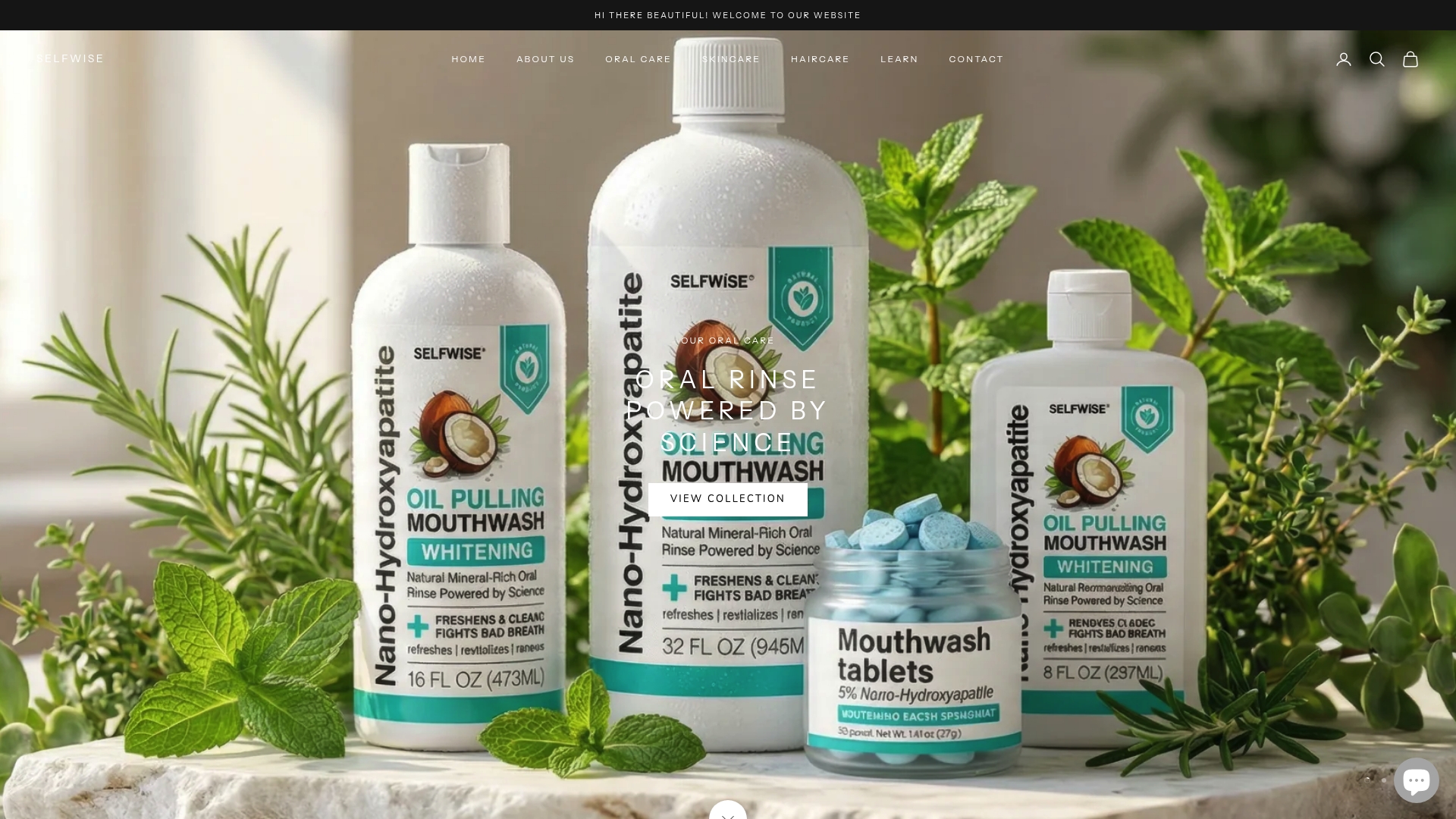
For a complete natural oral care routine, pair your toothpaste with the nano hydroxyapatite mouthwash tablets, which deliver enamel support in a preservative-free, fluoride-free solid format. The oil pulling mouthwash adds an antimicrobial layer that complements natural toothpaste use. If you are building a broader natural self-care routine, the body oils collection rounds out the Selfwisebrand lineup with the same clean-ingredient standard.
FAQ
What is the best natural toothpaste ingredient for sensitive teeth?
Nano hydroxyapatite is the most effective natural ingredient for sensitive teeth. It fills microscopic enamel cracks and reduces sensitivity without fluoride.
Are homemade toothpaste recipes safe to use daily?
Yes, when made correctly. Use glass or plastic tools with bentonite clay, store coconut oil-based batches at room temperature, and replace each batch within two weeks.
Does natural toothpaste actually clean teeth without SLS?
Natural toothpaste cleans effectively without SLS. Foam is a sensory effect, not a cleaning mechanism, and its absence does not reduce how well the formula removes plaque.
How long does it take to adjust to natural toothpaste?
Most people adjust within 1–2 weeks. Starting with once-daily use and gradually increasing helps the oral microbiome adapt with minimal discomfort.
Is xylitol in natural toothpaste actually effective?
Xylitol is clinically supported for reducing cavity-causing bacteria and preventing plaque adhesion. It is one of the most well-researched ingredients in natural oral care.