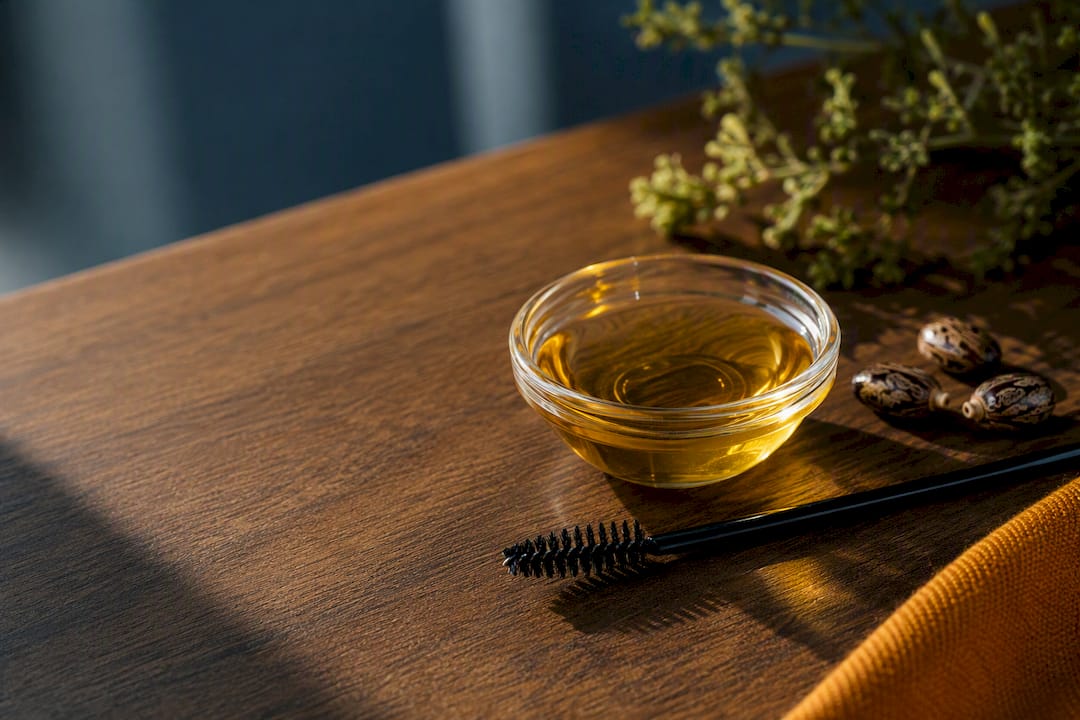
Use Castor Oil 3 to 4 Times a Week: Clean Tools Matter for Eyebrows
Castor oil can make brow hairs look shinier, softer, and slightly fuller by coating each strand and reducing breakage, but there is no strong clinical evidence it stimulates new follicle growth. The realistic win is cosmetic conditioning, not regrowth. If you try it, use a thin layer, keep your applicator clean, and stop if you notice patchy or unexplained hair loss, that needs a dermatologist, not more oil.
TL;DR:
- Castor oil mainly conditions existing eyebrow hairs by smoothing the cuticle and reducing breakage, but lacks reliable evidence for stimulating new growth.
- Scientific reviews confirm that castor oil improves shine and density temporarily but does not promote follicle regeneration or thicker eyebrows.
- Safe application involves using a clean, minimal-ingredient, fragrance-free product with a dedicated applicator, and avoiding heavy, repeated use near sensitive eye skin.
- Patchy, sudden, or progressive eyebrow loss requires prompt evaluation by a dermatologist, as home remedies cannot address underlying scarring or autoimmune conditions.
- Expect cosmetic improvements like sheen and better hair alignment within days, but real growth cycles take months, and results are often overestimated.
Table of Contents
- Castor Oil for Eyebrows: What It Is and Why People Use It
- What the Research Actually Shows
- How to Apply Castor Oil to Eyebrows Safely
- Side Effects and How to Avoid Contamination
- When Eyebrow Loss Needs a Dermatologist, Not Oil
- Setting a Realistic Timeline and Tracking Real Change
- How Selfwisebrand Approaches Castor Oil for Brows
- An Honest Take on Castor Oil and Eyebrow Hopes
- Try a Hygiene-First Castor Oil Routine
- Sources
- FAQ
Castor Oil for Eyebrows: What It Is and Why People Use It
Castor oil comes from pressing the seeds of the Ricinus communis plant, and its defining ingredient is ricinoleic acid, a fatty acid that makes up roughly 90% of its composition. That fatty acid gives the oil an unusually thick, syrupy texture and strong humectant properties, meaning it draws in and holds moisture along the hair shaft.
That texture is the whole story behind why people reach for it on their brows. A thick coating smooths the hair cuticle, so light reflects more evenly and strands look glossier. It also reduces friction between hairs, which can mean less breakage over time and hairs that lie flatter and appear denser, even when the actual follicle count hasn’t changed.
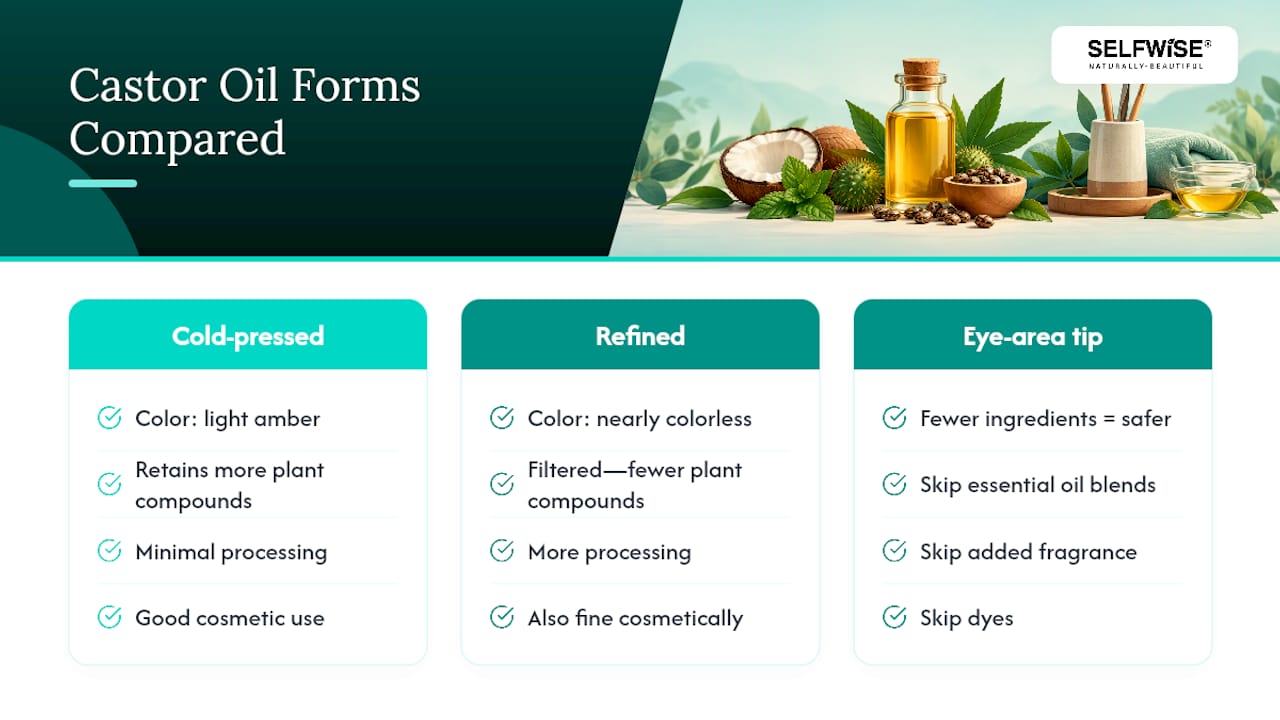
Cosmetic-grade castor oil comes in two common forms: cold-pressed, which retains more of the plant’s natural compounds and has a light amber color, and refined, which is filtered and nearly colorless. Both are generally fine for cosmetic use, but for eye-area application, skip products with added fragrance, dyes, or essential oil blends. Fewer ingredients mean fewer chances for irritation near your eyes.
What the Research Actually Shows
Here’s the honest answer, stripped of marketing language: dermatology literature does not support the claim that castor oil regrows eyebrow hair. A systematic review of hair oils concluded that oils function primarily as conditioners, smoothing the hair shaft and reducing moisture loss, rather than acting on the biological processes that trigger new follicle activity. No study reviewed showed castor oil reliably producing new hair growth in humans.
A separate systematic review focused on coconut, castor, and argan oil reached a similar conclusion. It found weaker evidence that castor oil improves hair luster, and no strong evidence at all supporting its use as a growth agent. That’s a meaningful distinction. Shinier hair is a real, observable effect. Thicker, denser brows from new growth is a separate claim the data doesn’t back up.
Some confusion comes from blended-oil studies. A randomized trial comparing rosemary-castor and rosemary-lavender oils against coconut oil found improved hair growth measures for the rosemary-based blends. That’s an interesting result, but it studied scalp hair, used a specific rosemary formulation, and doesn’t translate directly to plain castor oil on eyebrows.
Dermatology guidance draws a clear line here:
- Oils can condition, soften, and reduce breakage in existing hair.
- No major dermatology body currently endorses castor oil as a treatment for hair regrowth.
- Persistent or patchy brow loss needs a medical evaluation, not a longer trial of home remedies.
How to Apply Castor Oil to Eyebrows Safely
Eye-area skin is thin and sensitive, so the application method matters more than the product itself. Following a clean, minimal routine limits your risk while giving you the best shot at seeing whatever cosmetic benefit is possible.
- Wash your hands and cleanse the brow area to remove makeup, dirt, or excess oil buildup.
- Dip a fresh disposable cotton swab or a dedicated small brush into the oil, never your fingertip directly into the bottle.
- Apply a thin, nearly invisible film across brow hairs and skin, avoiding direct contact with your eyeball.
- Use it three to four times a week, or nightly if your skin tolerates it well, and wipe it off in the morning if you apply before bed.
- Store the bottle capped and away from heat, and replace your applicator regularly rather than reusing the same swab for weeks.
Choose a cosmetic-grade, cold-pressed or refined castor oil with no added fragrance or dye. A sealed roller applicator helps limit contamination since you’re not dipping fingers or brushes into the bottle repeatedly.
Pro Tip: Take a clean, well-lit photo of your brows before you start, with no oil on them, and repeat that same photo setup every two weeks. It’s the only reliable way to tell if you’re seeing a real change or just the temporary sheen from the oil itself.

Side Effects and How to Avoid Contamination
The eye area punishes sloppy habits more than almost anywhere else on your face, so hygiene isn’t optional. FDA guidance on eye cosmetic safety is direct: keep your hands and tools clean, discard any product that’s been contaminated, never apply near inflamed or infected skin, and stop immediately if you notice a reaction.
Watch for these warning signs:
- Redness, swelling, or itching around the brow or eyelid
- Blurred vision or a gritty feeling in the eye
- Bumps, breakouts, or a rash spreading beyond the application area
If any of these show up, stop using the product and rinse the area with clean water. One rare but documented risk is acute hair felting, a matting of hair strands that has been linked to heavy, repeated castor oil application, largely because of the oil’s thick viscosity. This is more relevant to longer hair than short brow hairs, but it’s a good reminder that more oil is not better. A thin film does the job; a heavy, sticky layer just increases residue and the odds of transferring bacteria if you’re double-dipping your applicator. Never share an applicator between the bottle and your skin without cleaning it first.
When Eyebrow Loss Needs a Dermatologist, Not Oil
Some brow loss has nothing to do with dryness or breakage, and no amount of conditioning oil will fix it. Pay attention if you notice sudden or patchy loss, especially if your eyelashes or scalp are thinning too. Itching, pain, scaling, or small red bumps around the follicles are also signs that point toward something oil can’t address.
Possible causes include alopecia areata, an autoimmune condition that attacks hair follicles, frontal fibrosing alopecia, a scarring condition that can cause permanent loss if untreated, or traction alopecia from over-plucking, threading, or tight brow shaping. The American Academy of Dermatology recommends prompt evaluation for unexplained or progressive brow loss, since scarring conditions can destroy follicles permanently if diagnosis is delayed. A dermatologist may consider intralesional steroid injections, topical treatments, or systemic medications depending on the cause. Waiting it out with home remedies costs you time you can’t get back if the underlying issue is progressive.
Setting a Realistic Timeline and Tracking Real Change
Search around and you’ll find anecdotal claims of eyebrow transformations in two to four weeks. Treat those with skepticism. There is no dermatology-backed timeline for castor oil and eyebrow growth, because the research doesn’t confirm the growth effect in the first place.
What you can expect on a realistic timeline is cosmetic: hairs may look glossier and lie flatter within days, simply because the oil is coating the shaft. That’s a surface effect, not biological change, and it disappears once you wash the oil off. True hair growth cycles, if anything were influencing them, would take months to show, not weeks.
To judge honestly whether anything has changed:
- Stop applying oil for a day or two before taking your comparison photo.
- Cleanse the brows thoroughly so you’re looking at hair, not residue and shine.
- Use the same lighting, angle, and distance every time.
- Compare photos at a fixed interval, such as every four weeks, rather than checking daily.
How Selfwisebrand Approaches Castor Oil for Brows
Selfwisebrand built its castor oil face roller around the same hygiene principles dermatology guidance recommends: a sealed, reusable applicator that avoids finger-to-bottle contact, and a minimal ingredient list with no added fragrance or dye near the eye area. The formula itself follows the same cold-pressed, cosmetic-grade standard covered earlier in this guide.
Our own guide to castor oil and hair growth walks through the same evidence limits discussed here. We’d rather you go in with accurate expectations than a bottle and a hope. If you decide to try it, patch test on your inner arm first, apply thinly, and track your results with photos rather than guesswork.
An Honest Take on Castor Oil and Eyebrow Hopes
The gap between what’s marketed and what’s proven is wide here. Castor oil is a decent conditioner, nothing more, nothing less, and there’s no shame in wanting shinier, better-groomed brows. Where I’d push back is on the idea that it’s a substitute for medical attention when something is actually wrong. If your brows are thinning in a way you can’t explain, see a dermatologist before you spend another month waiting on an oil to work.
— Viktor
Try a Hygiene-First Castor Oil Routine
If you’re going to use castor oil on your brows, the applicator matters as much as the oil itself, and that’s the gap Selfwisebrand’s castor oil face roller was built to close. Instead of dipping fingers or shared brushes into a bottle, the sealed roller applicator limits contamination with every use, aligning with the same clean-tool guidance dermatologists recommend for anything applied near the eye.
This is a conditioning cosmetic, formulated with cold-pressed castor oil and no added fragrance or dyes, intended for eye-area use. It’s designed to make brow hair look smoother and better cared for, not to serve as a medical treatment for hair loss. If you’re dealing with unexplained or patchy brow thinning, see a dermatologist first. For everyone else looking for a cleaner way to add a little conditioning to their brow routine, you can check the full product details and current pricing and decide if it fits your routine.
This article is general information, not a substitute for advice from a qualified doctor. Consult a qualified healthcare professional about your own circumstances before acting on anything here.
Sources
- Hair Oils
- Coconut, Castor, and Argan Oil for Hair in Skin of Color Patients: A Systematic Review.
- Cosmetics Safety Q&A: Eye Cosmetic Safety | FDA
- Frontal fibrosing alopecia treatment | AAD
FAQ
Can castor oil really grow eyebrows?
Systematic reviews of hair oils found castor oil conditions hair and may improve shine, but there’s no strong evidence it stimulates new follicle growth.
How long does it take for castor oil to work on eyebrows?
There’s no established timeline because the growth effect itself isn’t well supported by research. Cosmetic changes like added shine can appear within days, but that’s surface conditioning, not evidence of new hair.
How do I use castor oil for eyebrow growth safely?
Apply a thin film with a clean cotton swab or dedicated applicator, avoiding direct contact with your eyeball, and remove it in the morning if used overnight. Choose a cosmetic-grade, fragrance-free oil, and follow FDA eye-area safety guidance around clean tools and hands.
What are the side effects of using castor oil on eyebrows?
Possible reactions include redness, swelling, itching, or irritation, and you should stop use immediately if these occur. Heavy, repeated application has also been linked to rare cases of hair felting or matting, so a thin layer is safer than a thick one.
When should I see a dermatologist instead of trying home remedies?
See a dermatologist if you notice sudden, patchy, or progressive eyebrow loss, especially alongside eyelash or scalp thinning, itching, or scaling. The American Academy of Dermatology notes that conditions like frontal fibrosing alopecia can cause permanent damage if diagnosis is delayed.