Mouthwash Staining Teeth? Most Stains Clear in One Cleaning
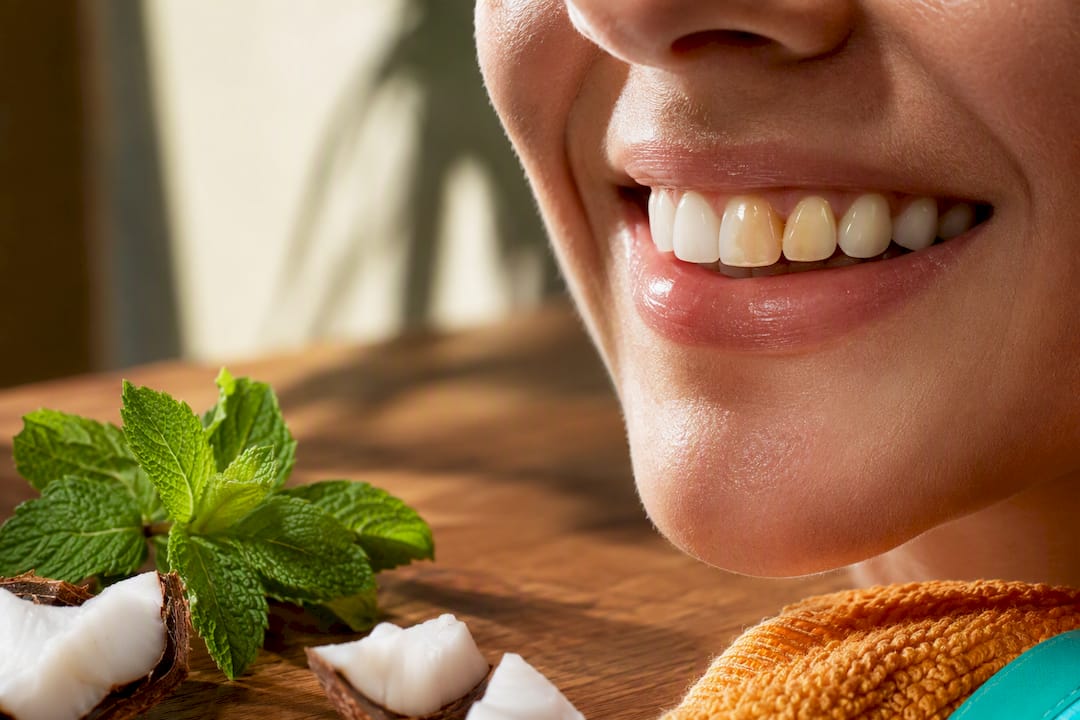
Certain mouthwashes, most notably chlorhexidine (CHX) and some metal or dye-based formulations, can leave teeth with a brownish or grayish surface stain. This is not damage to the tooth itself. The discoloration sits on the outer surface, and it responds well to professional cleaning and, in milder cases, to whitening toothpaste at home. Anti-discoloration systems (ADS) and lower-stain rinse categories can cut the risk further without giving up the antibacterial benefit.
TL;DR:
- Chlorhexidine mouthwashes at 0.12% to 0.2% commonly cause surface stains that can be removed with professional cleaning or whitening toothpaste.
- Formulation components like excipients, buffering agents, and flavor systems significantly influence staining risk alongside active ingredients.
- Staining predominantly results from chromogens binding to the pellicle and plaque, with staining amount increasing over time and plateauing after about two months.
- Using anti-discoloration systems, starting with a professional cleaning, and limiting prolonged use reduce staining without sacrificing antimicrobial effectiveness.
- Lower-stain alternatives like nano hydroxyapatite and xylitol rinses support enamel health and biofilm control without the cosmetic side effects associated with chlorhexidine.
Table of Contents
- Which mouthwashes and ingredients are most likely to stain teeth
- How mouthwash causes staining: pellicle, chromogens, and plaque
- How to remove or reverse mouthwash-induced stains
- How to prevent staining while still using an effective mouthwash
- Lower-stain alternatives and natural options for health-conscious readers
- Balancing clinical effectiveness with cosmetic concerns
- Where nano hydroxyapatite and xylitol fit into your routine
- Sources
- FAQ
Which mouthwashes and ingredients are most likely to stain teeth
Not every rinse carries the same risk. Staining potential comes down to the active ingredient, its concentration, and what else is in the bottle.
- Chlorhexidine (CHX): the best-documented cause of mouthwash staining. Even at 0.12% to 0.2%, it produces the classic brown surface discoloration dentists see constantly in patients using it for periodontal treatment.
- Quaternary ammonium compounds and some essential-oil or phenolic rinses: risk varies widely by formula, and staining is generally milder and less consistent than with CHX.
- Metal salts like copper, iron, and stannous compounds: these can cause green, black, or brown discoloration, sometimes independent of any antiseptic action.
- Colored dyes added for flavor or branding purposes: cosmetic, but they can contribute to surface tint over repeated use.
- Experimental nanoparticle rinses (nanoTiO2, nanoZnO, nanoAg, nanoCuO): lab testing found these produced enamel discoloration comparable to or greater than 0.2% chlorhexidine, with nanoZnO performing worst of the group.
- ADS-modified CHX formulas and lower-concentration versions: built specifically to reduce staining while keeping the antibacterial effect intact.
Formulation matters more than the active ingredient alone. Excipients, buffering agents, and even the flavor system can shift how much a given rinse stains, which is why two products with the same CHX percentage don’t always perform the same in the mouth.
How mouthwash causes staining: pellicle, chromogens, and plaque
The mechanism is chemistry, not damage. Cationic agents like chlorhexidine bind to the acquired pellicle, the thin protein film that coats every tooth surface within minutes of brushing. Once bound, that positively charged layer acts almost like a magnet for anionic dietary chromogens, the pigmented compounds in tea, coffee, and red wine. Those chromogens precipitate onto the pellicle and build up as visible stain.
Plaque makes it worse. Chromogens bind more readily to biofilm than to a clean, well-brushed enamel surface, which is why staining tends to concentrate along the gumline and in spots where brushing is inconsistent.
A meta-analysis of orthodontic patients found staining accelerated over time rather than appearing all at once: tooth color change measured a mean difference of 0.91 at 30 days and 1.23 at 60 days, after which it tended to level off.
That timeline matters for anyone weighing whether to stick with a medicated rinse. Staining is not a sign that something is going wrong. It is a predictable, dose-and-time-related side effect that plateaus rather than worsens indefinitely.
The important distinction is extrinsic versus intrinsic discoloration. Intrinsic stains form inside the tooth structure and are far harder to reverse. Extrinsic stains, which is what mouthwash produces, sit on the surface deposit layer and can be physically removed. That’s the good news buried in an otherwise cosmetic annoyance.
How to remove or reverse mouthwash-induced stains
Stains from CHX and similar rinses respond to a fairly predictable escalation of treatment. Here’s the order that actually works:
- Get a professional dental cleaning. Prophylaxis and polishing is the most reliable way to remove chlorhexidine stains, and for most people it’s the only step needed.
- Switch to a peroxide-containing whitening toothpaste in the weeks between cleanings. This is the strongest at-home option and works better than a standard fluoride toothpaste against surface discoloration.
- Pay extra attention to plaque-prone zones near the gumline and between teeth, since chromogens bind more aggressively wherever biofilm accumulates.
- Reserve full whitening or bleaching treatments for genuine cases of need. Extrinsic mouthwash staining rarely requires it once the surface deposits are cleared.
Set your expectations correctly before you start. Laboratory studies found that brushing alone had limited effect on removing stains from some mouthrinse formulations, including certain nanoparticle solutions. Brushing helps maintain results, but it isn’t a fix for stains that have already set in.
Pro Tip: If you’re mid-course on a prescribed CHX rinse and staining bothers you, don’t stop the rinse on your own. Book a cleaning around the midpoint of your treatment instead of waiting until the end. It keeps staining from compounding and keeps you compliant with what your dentist actually prescribed.
See a dental professional if staining persists after a cleaning, if it’s affecting a visible restoration or crown, or if the discoloration looks uneven rather than a uniform surface tint. Stained composite or ceramic work sometimes needs different handling than natural enamel.
How to prevent staining while still using an effective mouthwash
You don’t have to choose between plaque control and a bright smile. A few adjustments cut staining risk substantially without weakening the antiseptic effect.
- Start with a clean slate. Have your teeth professionally cleaned before beginning a course of CHX or another medicated rinse, so there’s less existing plaque for chromogens to grip onto.
- Follow the prescribed duration and concentration. Longer courses and higher concentrations both increase staining risk, so don’t extend use past what your dentist recommends.
- Space out high-chromogen drinks. Black tea, coffee, and red wine are the worst offenders when combined with CHX, so avoid rinsing immediately before or after drinking them.
- Ask about an ADS formula. Clinical trials found chlorhexidine with an anti-discoloration system produced significantly lower staining than CHX without it, while controlling plaque and gingivitis just as well.
- Keep plaque control tight between rinses. Thorough brushing and interdental cleaning reduce the biofilm that chromogens latch onto in the first place.
None of this eliminates staining entirely if you’re on a strong CHX regimen. It does keep the cosmetic side effect manageable until your course ends and a cleaning resets your baseline.
Lower-stain alternatives and natural options for health-conscious readers
If you’re not under a specific prescription for CHX, there’s little reason to accept staining risk as part of your daily routine. A few categories offer meaningfully lower risk for everyday maintenance.
- Remineralizing rinses with nano hydroxyapatite work by supporting enamel surface chemistry rather than introducing a cationic antiseptic, which sidesteps the pellicle-binding mechanism that drives CHX staining.
- Xylitol-based rinses reduce the sugars that feed staining-friendly plaque bacteria, addressing the biofilm side of the equation instead of adding a pigment-attracting compound.
- Alcohol-free natural formulations generally skip the dyes and metal salts most associated with cosmetic discoloration, though every finished product should be judged on its own ingredient list.
One caution worth flagging honestly: not every “natural” or novel ingredient is automatically stain-free. Lab testing on experimental nanoparticle rinses, including nanoZnO, found staining potential that matched or exceeded standard chlorhexidine, a reminder that finished formulations need real-world evidence, not just a marketing claim.
Selfwisebrand’s nano hydroxyapatite and xylitol mouthwash lines were formulated with that staining mechanism specifically in mind, positioning them as daily, low-stain options that fit a health-conscious routine rather than a short-term medicated one.
Balancing clinical effectiveness with cosmetic concerns
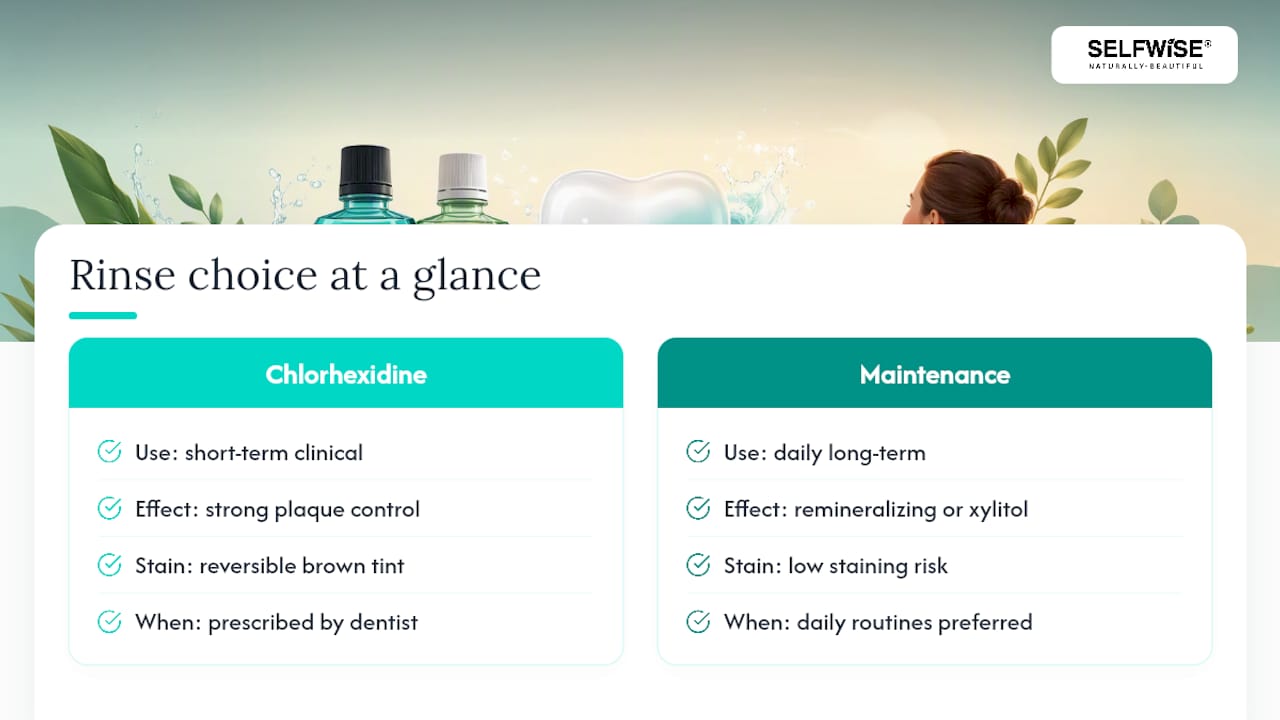
Chlorhexidine earns its reputation. When a dentist prescribes it for periodontitis or post-surgical care, the plaque control it delivers is worth the temporary brown tint, and that staining is a known, reversible trade-off rather than a reason to skip treatment.
Daily maintenance is a different question. Most people rinsing every day for years, not weeks, are better served by a remineralizing or xylitol-based formula that doesn’t carry the same pellicle-binding staining mechanism. Save the medicated rinses for the specific clinical windows where they’re actually indicated, and always run that decision by a dental professional rather than guessing at concentration or duration on your own.
— Viktor
Where nano hydroxyapatite and xylitol fit into your routine
If chlorhexidine handles the short-term clinical job, Selfwisebrand handles the other 350 days a year: daily maintenance without the staining trade-off. The nano hydroxyapatite mouthwash tablets support enamel surface chemistry without the cationic binding mechanism that turns teeth brown, and they skip fluoride entirely for readers who prefer that.
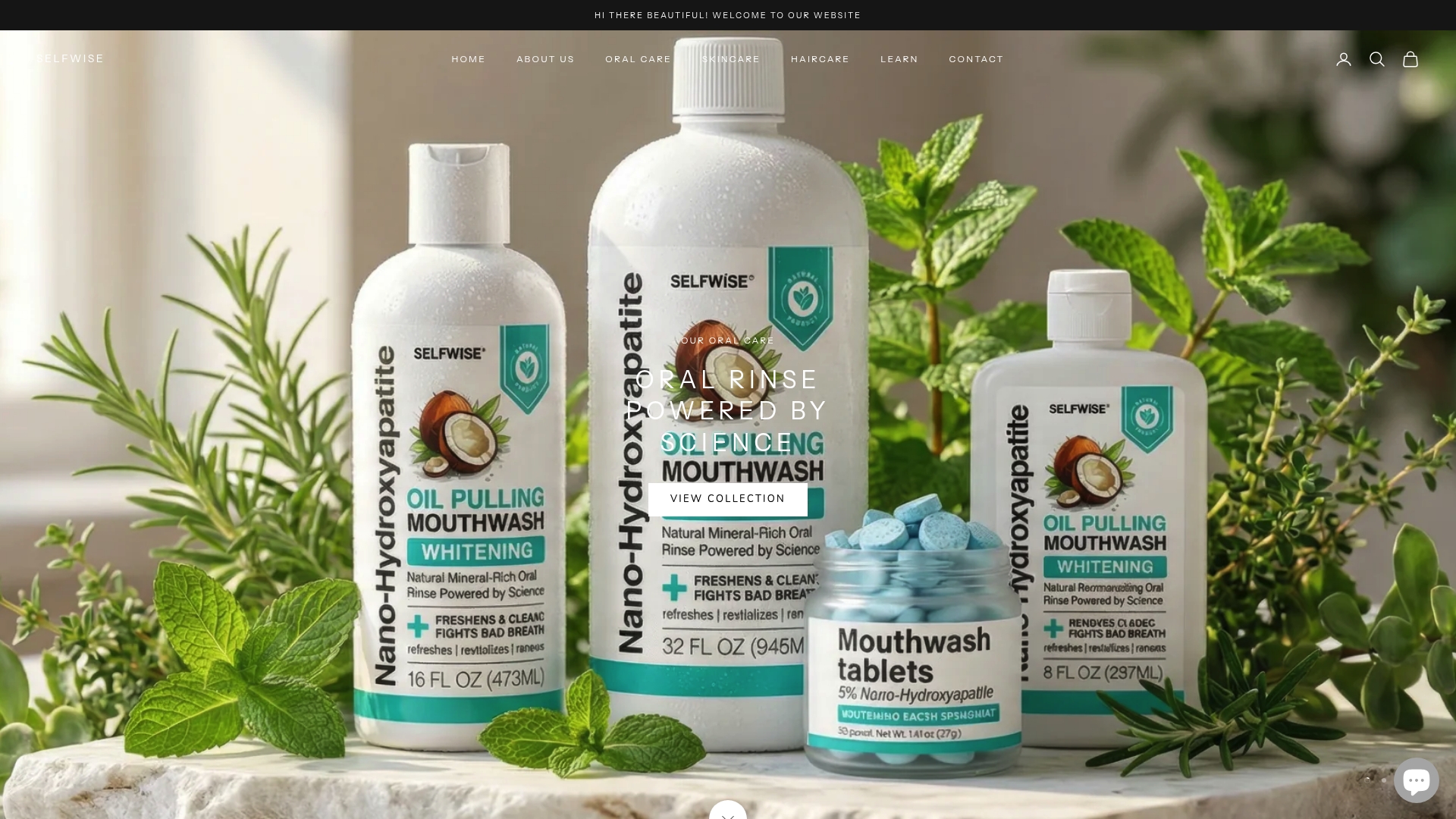
For anyone managing dry mouth or looking to combine oil pulling with a modern remineralizing rinse, the nano hydroxyapatite oil pulling mouthwash pairs a traditional technique with current enamel-support science. Prefer something sweeter and plaque-focused? The xylitol mouthwash with nano hydroxyapatite targets the biofilm side of staining directly, since less plaque means fewer surfaces for chromogens to grab onto.
If you’re currently on a prescribed CHX rinse, keep using it exactly as directed. Once that course ends, browse the full mouthwash collection and switch your daily routine to a formula that won’t leave you booking extra cleanings just to stay stain-free.
Sources
- The staining effect of different mouthwashes containing nanoparticles on dental enamel — PMC
- The Effect of Different Mouthwashes on Tooth Enamel Color in Fixed Orthodontic Patients: A Systematic Review and Meta-analysis
- How To Remove Chlorhexidine Stains From Teeth - Jackson Ave Dental
FAQ
How do you get rid of stains on teeth from mouthwash?
A professional dental cleaning removes most mouthwash staining in a single visit; a peroxide-containing whitening toothpaste can manage milder staining between appointments.
Which mouthwashes don’t stain teeth?
Nano hydroxyapatite rinses, xylitol-based rinses, and alcohol-free natural formulations without metal salts or dyes carry much lower staining risk than chlorhexidine or metal-nanoparticle rinses.
Is teeth staining from chlorhexidine reversible?
Yes. Chlorhexidine staining is extrinsic, meaning it sits on the tooth surface rather than inside the enamel, and it responds well to professional cleaning and polishing.
What is the brown stuff after using mouthwash?
That brown residue is precipitated dietary chromogens, the pigments from tea, coffee, or wine, binding to a cationic antiseptic like chlorhexidine that has already attached to the tooth’s pellicle layer.



%20and%20some%20metal%20or%20dye-based%20formulations,%20can%20leave%20teeth%20with%20a%20brownish%20or%20grayish%20surface%20stain.%20This%20is%20not%20damag...)