How to Replace SLS Toothpaste Safely for Gentler Oral Care
You can replace SLS toothpaste safely by switching immediately to an SLS-free formula built on milder surfactants and proven actives like xylitol or nano-hydroxyapatite. Clinical research links sodium lauryl sulfate to mucosal irritation in a subset of users, and switching away from it tends to reduce canker sore frequency for people prone to recurrent aphthous stomatitis.
The evidence isn’t dramatic, but it’s consistent. A scoping review of SLS side effects found limited but real evidence that SLS-free dentifrice helps patients with recurrent mouth ulcers. Separate lab work found SLS-containing toothpaste caused more nuclear changes in buccal epithelial cells than SLS-free versions of the same product line over a 60-day period. None of this means SLS is dangerous for everyone. It means a specific group of people, those with sensitive mucosa or a history of mouth sores, have a documented reason to switch.
Here’s what to do right now:
- Stop using your current SLS toothpaste today, especially if you notice mouth sores, peeling tissue, or a burning sensation after brushing.
- Pick an SLS-free toothpaste that still delivers fluoride or a proven remineralizing active like nano-hydroxyapatite, so you’re not trading comfort for cavity protection.
- Track your symptoms for two to four weeks. If soreness or ulcers persist past that window, see a dentist rather than assuming the new toothpaste alone will fix an underlying issue.
Key Takeaways
Replacing SLS toothpaste safely means swapping to a milder formula with proven actives, tracking symptoms for two to four weeks, and seeing a dentist if irritation persists.
| Point | Details |
|---|---|
| Switch immediately if irritated | Stop SLS toothpaste right away if you notice sores, peeling, or burning after brushing. |
| Check the label for actives | Look for fluoride, xylitol, or nano-hydroxyapatite instead of relying on foam as a cleaning cue. |
| Give it two to four weeks | Most symptom changes from switching show up within this window, not overnight. |
| Pair paste with mouthwash | A gentle, SLS-free mouthwash reinforces plaque control without reintroducing harsh detergents. |
| Selfwise as a starting option | Selfwise’s nano-hydroxyapatite and xylitol mouthwash tablets and rinses fit directly into a safe switching plan. |
Table of Contents
- What Sls Is and Why Brands Use It in Toothpaste
- Is Sls Safe? What the Research Actually Shows
- Do Sls-Free Toothpastes Clean as Well?
- Signs You Should Replace Your Sls Toothpaste
- Step-By-Step: How to Replace SLS Toothpaste Safely
- What to Look for on the Label
- Types of SLS-Free Oral Care Options
- What Dentists and Studies Say About Switching
- Why We Build Around Gentle, Natural Ingredients
- A Practical Next Step If You’re Ready to Switch
- Sources
- FAQ
What Sls Is and Why Brands Use It in Toothpaste
Sodium lauryl sulfate is a surfactant, a detergent molecule that lowers the surface tension of water so oil and debris lift away more easily. It’s the same chemical family that makes shampoo lather and dish soap cut through grease. In toothpaste, manufacturers add it in small concentrations, typically 0.5% to 2%, for three practical jobs: generating foam, distributing flavor evenly across your mouth, and helping suspend plaque debris so it rinses away instead of resettling on your teeth.
None of those jobs is cleaning, at least not directly. Foam is a delivery mechanism and a sensory signal, not the active ingredient doing the work on plaque and bacteria. That distinction matters once you switch to an SLS-free paste, because the first thing most people notice is less lather. Your brain reads foam as “working.” When it’s gone, the toothpaste can feel like it’s doing less, even when the fluoride, xylitol, or nano-hydroxyapatite underneath is doing exactly what it’s supposed to do. Mechanical brushing plus those actives is what actually breaks up plaque and protects enamel. The suds were always just theater.
Is Sls Safe? What the Research Actually Shows
For most people, yes. SLS is not classified as a carcinogen at normal use levels, and regulatory bodies monitor it as a standard cosmetic ingredient. But “safe for most people” and “irritant-free for everyone” are two different claims, and the research draws a clear line between them.
Multiple studies point the same direction:
- A randomized crossover study using the Oral Mucosal Sloughing Index found that toothpaste with Steareth 30, a milder surfactant, caused significantly less short-term tissue desquamation than an SLS-containing formula, with the difference reaching high statistical significance.
- An older crossover trial recorded 45 total desquamative reactions across the study period, 42 of them during SLS use and only 3 during use of cocoamidopropyl betaine (CAPB), a gentler alternative surfactant.
- The in vivo epithelial cell study found measurably more cellular stress markers, including pyknotic cells and nuclear budding, in tissue exposed to SLS toothpaste compared to the same brand’s SLS-free version.
The nuance worth remembering: SLS is a known topical irritant for a subset of users at typical concentrations, even though it’s broadly approved and considered noncarcinogenic. If you have recurring canker sores, chronic mucosal peeling, or persistent burning after brushing, you fall into the group the research consistently flags. If none of that describes you, SLS toothpaste isn’t a health hazard sitting in your bathroom cabinet.
If symptoms persist after you switch, or if you notice unexplained sores that don’t heal within two weeks, talk to a dentist. Persistent mucosal changes deserve a professional look regardless of what toothpaste you’re using, and this article isn’t a substitute for that evaluation.
Do Sls-Free Toothpastes Clean as Well?
Yes, and the mechanism explains why. Cleaning happens through mechanical brushing combined with active ingredients, not through foam volume. Fluoride strengthens enamel against acid attack. Xylitol interferes with the bacteria that produce plaque acid. Nano-hydroxyapatite fills microscopic enamel defects with a mineral structurally similar to your natural tooth surface. None of those actives need SLS to function, which is why an SLS-free paste with the right formulation can match or exceed a traditional paste on actual outcomes.
Where formulas differ is in the surfactant they use instead, and each choice comes with trade-offs.
| Surfactant type | Foam level | Mucosa interaction | Common in |
|---|---|---|---|
| Sodium lauryl sulfate (SLS) | High | More irritating for sensitive users | Conventional mass-market pastes |
| Cocoamidopropyl betaine (CAPB) | Moderate | Notably gentler in crossover trials | Mid-range natural formulas |
| Steareth-type emulsifiers (e.g., Steareth 30) | Low to moderate | Significantly less desquamation than SLS | Sensitive-formula and clinical-grade pastes |
| Amphoteric/nonionic surfactants | Low | Generally mild, minimal irritation reports | Natural and fluoride-free formulas |
If you’re prone to cavities, look for an SLS-free paste that still includes fluoride, since fluoride’s cavity-prevention track record doesn’t depend on the surfactant carrying it. If your cavity risk is low and your priority is remineralization or sensitivity relief, a fluoride-free formula built around nano-hydroxyapatite is a reasonable, well-supported substitute. The choice comes down to your risk profile, not a universal rule.
Signs You Should Replace Your Sls Toothpaste
Some signals are obvious. Others are easy to dismiss as “just how my mouth is.”
The clear ones: recurring canker sores that show up every few weeks, visible peeling or sloughing on the inside of your cheeks or along your gumline, and a burning or raw sensation that starts during or right after brushing and fades over the following hour.
The less obvious ones are worth paying attention to as well. If your symptoms flared up specifically after you switched to a new high-foam whitening toothpaste, that timing is a clue, not a coincidence. Some people also notice their mouth feels noticeably better during a few days without any toothpaste, like traveling and forgetting to pack it, only for symptoms to return once they resume their normal brand. That pattern points at the toothpaste itself.
If you try an SLS-free swap and symptoms don’t improve within two to four weeks, the toothpaste probably isn’t the culprit. That’s the point to schedule a dental visit rather than keep experimenting with formulas.
Step-By-Step: How to Replace SLS Toothpaste Safely
Switching well takes more than grabbing a different tube off the shelf. Follow this sequence to avoid gaps in protection and manage the adjustment period.
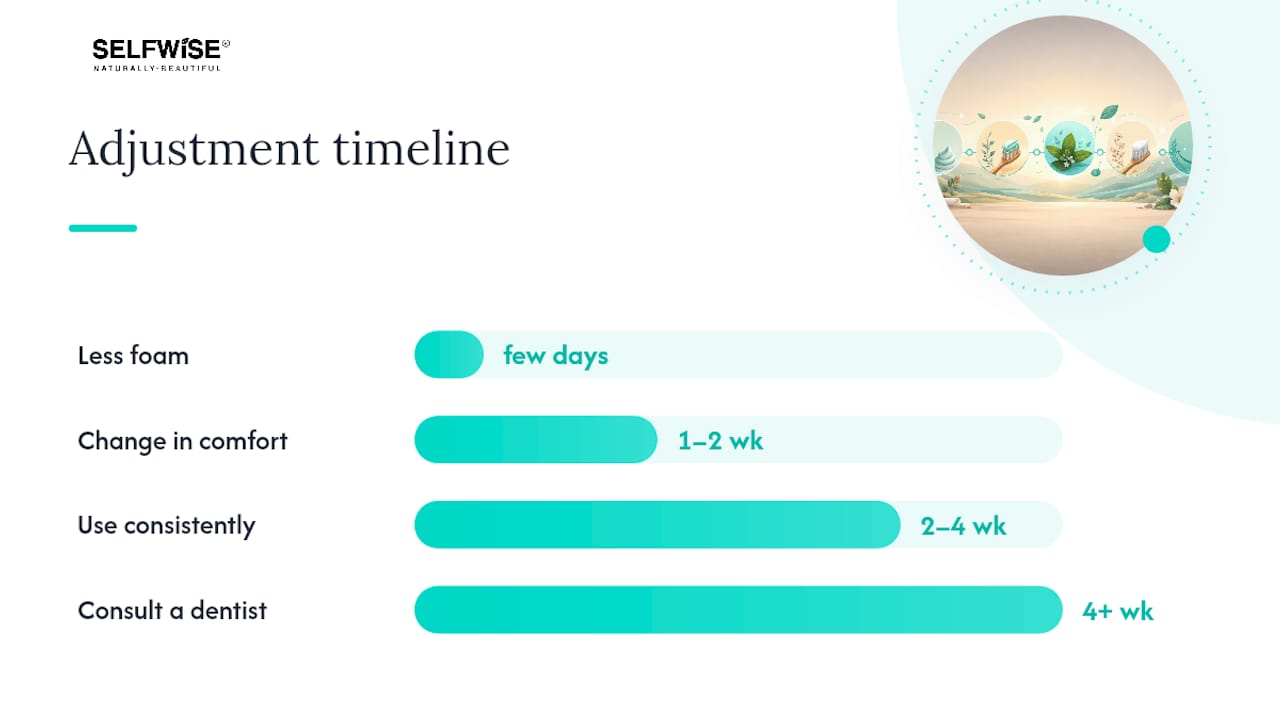
- Stop your current SLS toothpaste immediately once you’ve identified it as a likely irritant, rather than tapering off.
- Choose an SLS-free formula that matches your needs. Prioritize fluoride if you have active cavity risk; prioritize nano-hydroxyapatite or xylitol if remineralization and gentleness are your main concerns.
- Use it consistently for two to four weeks and keep a simple note of symptoms: sore frequency, burning sensation, and how your gums feel each morning.
- Pair it with a gentle mouthwash. A xylitol and nano-hydroxyapatite mouthwash adds plaque control without reintroducing harsh detergents, and proper brushing technique, soft bristles, gentle pressure, two minutes twice daily, matters more without the foam cueing you to stop early.
- Consult a dentist if you see no improvement after four weeks, since persistent irritation may point to something other than your toothpaste.
Expect less foam and a different flavor profile in the first few days. That’s the formula working differently, not working less. Most people notice a change in comfort within one to two weeks if SLS was genuinely the trigger.
Pro Tip: Don’t load extra paste onto your brush to compensate for missing foam. It won’t restore lather since the surfactant is what’s absent, and it just wastes product. A pea-sized amount is still the right dose regardless of how much it foams.
If you choose a fluoride-free option temporarily and later develop new cavity risk, whether from diet changes, dry mouth medication, or a dentist’s recommendation, you can reintroduce a fluoride-containing SLS-free paste without undoing your progress on mucosal comfort.
What to Look for on the Label
Ingredient labels use INCI (International Nomenclature of Cosmetic Ingredients) names, which read like chemistry rather than plain English. Here’s the translation you actually need.
Look for these:
- Cocamidopropyl betaine (CAPB), a gentler surfactant with far fewer desquamation reports in crossover trials.
- Steareth 20 or Steareth 30, emulsifiers shown to cause significantly less mucosal sloughing than SLS.
- Xylitol, listed by name, for plaque-bacteria interference.
- Hydroxyapatite or nano-hydroxyapatite, for enamel remineralization.
- Sodium fluoride or stannous fluoride, if cavity protection is a priority for you.
Red flags:
- Sodium lauryl sulfate or sodium laureth sulfate, both detergents in the same irritation-prone family.
- Vague “natural flavoring” blends paired with high-foam claims on the front label, which sometimes signal a reformulated SLS-adjacent surfactant rather than a genuinely gentle one.
- Added alcohol in a paste or accompanying mouthwash, which compounds mucosal irritation rather than easing it.
Our guide to oral care ingredients worth avoiding breaks down more of these substitutions if you want the fuller ingredient-by-ingredient reference.
Types of SLS-Free Oral Care Options
SLS-free doesn’t mean one product category. It’s a spectrum, and matching the right type to your situation matters more than picking whatever’s trending.
- SLS-free fluoride toothpastes suit anyone with active cavity risk who still wants the mucosal benefits of dropping SLS.
- Fluoride-free remineralizing pastes with nano-hydroxyapatite work well for people prioritizing enamel repair and natural-first ingredient lists over fluoride specifically.
- Xylitol-based pastes target plaque-producing bacteria directly and pair naturally with either fluoride or nano-hydroxyapatite formulas.
- Mouthwash tablets and solid mouthwash offer an alcohol-free, SLS-free rinse format that’s easy to travel with and typically skips the harsh detergents found in some liquid rinses.
- Oil-pulling formulas appeal to natural-first shoppers looking for a traditional practice alongside, not instead of, brushing.
Fluoride shows up across several of these categories, so the decision isn’t fluoride versus no fluoride as a blanket rule. It’s about matching form factor to your priorities: sensitive mucosa points toward gentle pastes and tablets, active cavity concerns point toward fluoride-inclusive options regardless of format, and natural-first shoppers often gravitate toward nano-hydroxyapatite and xylitol combinations. Our natural oral care guide walks through how these categories fit together in a full routine.
What Dentists and Studies Say About Switching
The clinical picture, pulled together, supports a specific and fairly narrow claim: SLS-free toothpaste helps a defined group of people, and the mechanism behind why is well understood.
| Study | Design | Main outcome | Practical takeaway |
|---|---|---|---|
| Scoping review, SLS side effects | Review of multiple trials | Limited but consistent evidence SLS-free dentifrice helps recurrent aphthous ulcer patients | Worth trying if you get frequent canker sores |
| OMSI crossover trial | Randomized crossover | Steareth 30 caused significantly less desquamation than SLS (p < 0.0001) | Gentler surfactants measurably reduce tissue sloughing |
| In vivo epithelial cell study | 60-day in vivo comparison | SLS toothpaste linked to more nuclear cell changes than SLS-free version | Supports switching for those with sensitive mucosa |
| Crossover desquamation trial | Randomized crossover | 42 of 45 desquamative reactions occurred during SLS use versus CAPB | CAPB-based formulas are a well-supported alternative |
Clinician commentary lines up with the trial data. Dental hygienists writing on the topic note that not every patient needs to switch, but patients with recurrent mucosal irritation typically see meaningful relief from SLS-free options that still deliver antigingivitis benefits. The people who benefit most are those with a documented pattern of sores or peeling. Most others see change within two to four weeks if SLS was truly the trigger. Clinicians generally recommend incorporating SLS-free choices as a first, low-risk step before pursuing more invasive testing for chronic mouth sore patients.
Why We Build Around Gentle, Natural Ingredients
At Selfwise, we built our oral care line around a simple observation: foam sells toothpaste, but it doesn’t clean teeth. Once we understood that mechanical brushing paired with the right actives does the actual work, formulating without harsh detergents stopped being a compromise and started being the obvious choice.
Our approach centers on ingredients with a real track record rather than marketing appeal:
- Nano-hydroxyapatite for enamel remineralization, chosen because its mineral structure closely resembles natural tooth enamel.
- Xylitol for plaque-bacteria interference, backed by decades of use in dental research.
- Formulations built without sodium lauryl sulfate, alcohol, or unnecessary synthetic detergents, so sensitive mucosa isn’t collateral damage to a satisfying lather.
We’re not claiming our products cure canker sores or replace a dentist. We’re saying the ingredient choices behind them reflect what the research actually supports, not what tests best in a focus group.
A Practical Next Step If You’re Ready to Switch
If you’ve read this far, you already know the alternatives out there, other SLS-free pastes on drugstore shelves, DIY baking soda mixes, or simply switching brands at random and hoping for the best. What most of those options skip is the pairing that actually accelerates comfort: a toothpaste swap alongside a gentle, targeted mouthwash.
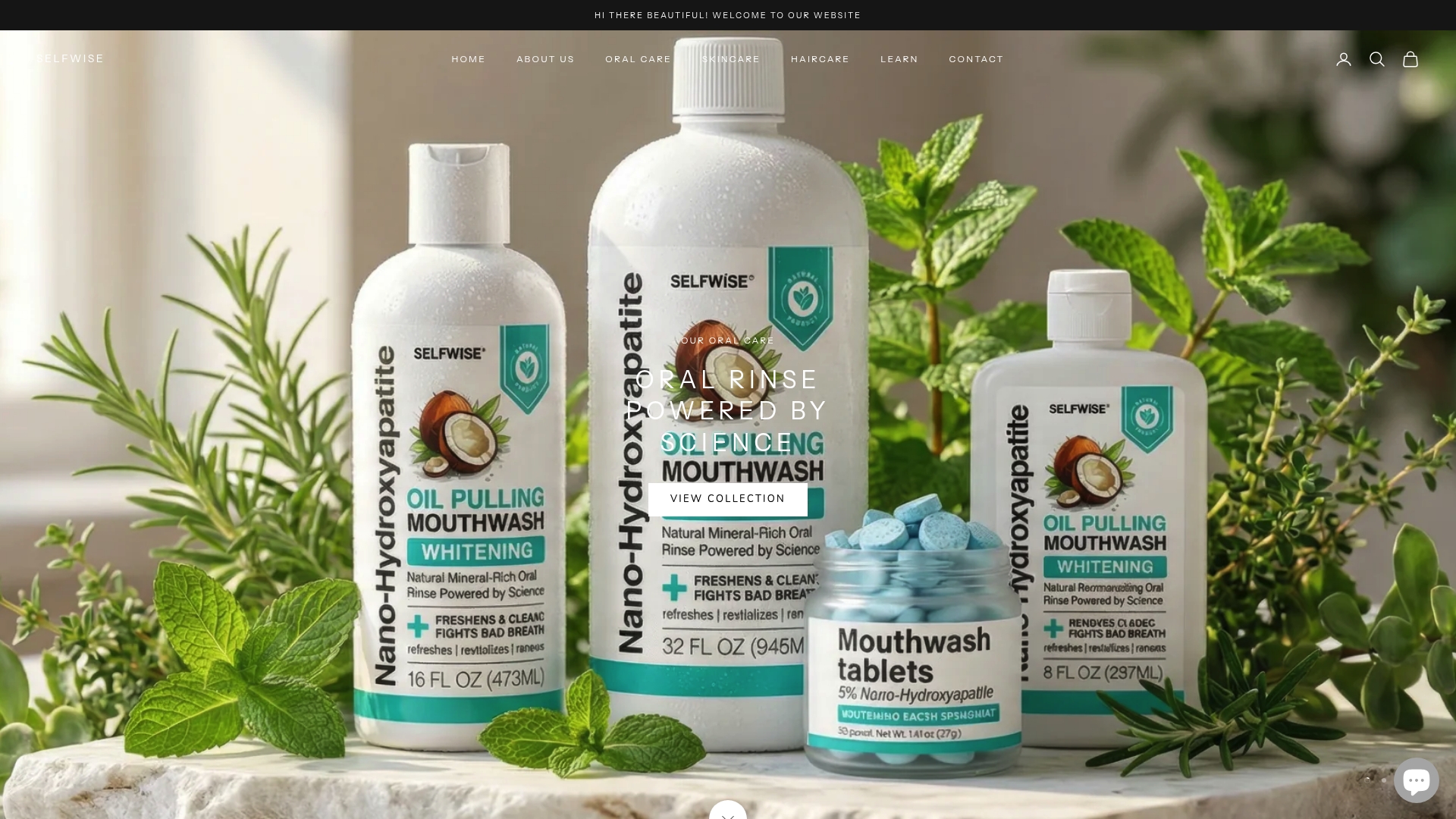
Selfwise’s nano-hydroxyapatite mouthwash tablets give you a fluoride-free, alcohol-free rinse that pairs naturally with the two-to-four-week trial window this article recommends. If you’d rather combine remineralization with active plaque control, the xylitol and nano-hydroxyapatite mouthwash covers both in one step. Either one slots directly into the switching plan above: start your SLS-free toothpaste, add the mouthwash, track your symptoms for two to four weeks, and see a dentist if nothing changes. Browse the full oral care collection to pick the combination that fits your routine, and place an order today if you’re ready to start the trial.
Sources
The clinical claims in this guide draw on peer-reviewed research and professional dental commentary, not manufacturer marketing copy.
- Side effects of sodium lauryl sulfate applied in toothpastes: A scoping review
- In vivo evaluation of fluoride and sodium lauryl sulphate in toothpaste on buccal epithelial cells toxicity
- Oral mucosal sloughing index study comparing Steareth 30 and SLS
- Oral mucosal desquamation caused by two toothpaste detergents in an experimental model
- How would you like your toothpaste: With or without sodium lauryl sulfate? | Registered Dental Hygienists
A scoping review’s “limited evidence” doesn’t mean weak evidence. It means the number of high-quality randomized trials is small, even when the trials that exist point consistently in one direction. Randomized crossover trials matter here specifically because they test the same person under both conditions, SLS and non-SLS, which controls for individual variation in mucosal sensitivity far better than comparing two separate patient groups.
This article is general information, not a substitute for advice from a qualified doctor. Consult a qualified healthcare professional about your own circumstances before acting on anything here.
FAQ
Is SLS in toothpaste unhealthy?
For most people, no. SLS is not classified as a carcinogen and is broadly approved for use, but it’s a documented topical irritant for people prone to canker sores or mucosal sensitivity.
Can you get toothpaste without SLS?
Yes. SLS-free toothpastes are widely available and use alternative surfactants like CAPB or Steareth-type emulsifiers alongside actives such as fluoride, xylitol, or nano-hydroxyapatite to clean effectively without the same irritation profile.
What is the least irritating toothpaste to use if I have sensitive mucosa?
Look for formulas free of SLS, alcohol, and artificial dyes, built instead around nano-hydroxyapatite and xylitol. Clinical trials comparing surfactants found significantly less tissue desquamation with gentler alternatives like Steareth 30 compared to SLS.
Is there any toothpaste without sodium lauryl sulfate?
Yes, and it’s become common across natural oral care brands, including Selfwise’s oral care line, which formulates without SLS, alcohol, or harsh synthetic detergents.
How long does it take to notice a difference after switching?
Most people who benefit from switching notice changes in mucosal comfort within one to two weeks, though the full two to four week window gives a clearer picture before deciding whether to see a dentist.