Xylitol Saliva Stimulation: How It Works and How to Use It
Xylitol raises salivary flow by combining a strong sweet taste signal with a true secretagogue effect on the salivary glands themselves. That dual action is the role of xylitol in stimulating saliva: it triggers the gustatory reflex that gets your mouth watering during chewing, and it appears to act directly on gland cells through pathways tied to muscarinic receptor signaling and Aquaporin-5 water channels. For someone dealing with a persistently dry mouth, the practical takeaway is simple: short, repeated exposures beat one big dose, and staying hydrated with tools like the EverSip Hydration Bottle can also support oral moisture.
Clinical trials using the Xerostomia Inventory (XI), a standard symptom questionnaire, report measurable drops in dry-mouth complaints alongside real increases in unstimulated salivary flow after xylitol use. That is not a marginal effect. It is the kind of change researchers can actually put a number on, which is rare for a symptom as subjective as “dry mouth.”
Here’s what to do with that information right now:
- Chew a xylitol gum or dissolve a xylitol lozenge for 5 to 10 minutes after meals, when saliva naturally dips.
- Follow up with a xylitol-containing rinse if your mouth still feels tacky an hour later.
- Check the ingredient label for alcohol or sodium lauryl sulfate (SLS) and skip anything that lists them near the top, since both dry out oral tissue further.
- Consider a formula like Selfwisebrand’s xylitol-based products if you want the saliva-stimulating benefit without the sting of a conventional rinse.
Key Takeaways
Xylitol increases salivary flow through combined gustatory stimulation and a direct secretagogue effect on salivary gland cells, and using it in short, repeated exposures produces measurable relief for dry mouth.
| Point | Details |
|---|---|
| Dual mechanism drives the effect | Taste and chewing trigger reflex saliva flow, while muscarinic and aquaporin-5 pathways may add a direct secretagogue effect. |
| Clinical trials confirm real change | A 40-person crossover trial found significant salivary flow improvement within one week of topical xylitol use. |
| Delivery form changes exposure time | Gum sustains the longest exposure, rinses give a fast high-concentration burst, lozenges sit in between. |
| Dosing pattern matters more than a single amount | Roughly 5 to 10 grams daily split across three or more short exposures aligns with the research. |
| Pet safety is non-negotiable | Xylitol is highly toxic to dogs, so all products must be stored well out of pet reach. |
| Selfwise builds around this research | Selfwisebrand’s Xylitol Mouthwash with Nano Hydroxyapatite and Mouthwash Tablets combine saliva stimulation with alcohol-free, remineralizing formulation. |
This article is general information, not a substitute for advice from a qualified doctor. Consult a qualified healthcare professional about your own circumstances before acting on anything here.
Table of Contents
- The Role of Xylitol in Stimulating Saliva: What’s Actually Happening
- What the Clinical Trials Actually Show
- How Delivery Form Changes Saliva Xylitol Concentration
- Why More Saliva Actually Improves Your Oral Health
- Practical Guidance: Dosing, Timing, and What to Check on Labels
- Safety, Side Effects, and Who Should Be Careful
- Bringing the Research Into Selfwise’s Formulations
- Sources
- FAQ
The Role of Xylitol in Stimulating Saliva: What’s Actually Happening
Sweetness alone does not explain it. Plenty of sweet substances make your mouth water briefly, but xylitol’s effect on salivary flow goes beyond a passing gustatory jolt. It appears to work through two distinct channels at once, and understanding both is the difference between using xylitol casually and using it strategically for dry mouth.
The first channel is the one everybody already intuits: taste and mechanical stimulation. When xylitol hits your taste buds, especially the sweet receptors, it fires a cephalic reflex arc that runs from your tongue to your brainstem and back out through the parasympathetic nervous system. Chewing gum adds a mechanical layer on top of that, since jaw movement itself stimulates the trigeminal nerve and cranks up flow independent of taste. This is why gum tends to outperform a lozenge that just sits and dissolves.
The second channel is more interesting and less obvious: xylitol may act as a genuine secretagogue, meaning it appears to prompt gland cells to secrete water directly rather than only relying on nerve signaling from taste buds. The proposed pathway runs roughly like this: taste receptor activation and the cephalic reflex trigger parasympathetic output, which activates muscarinic type 3 receptors (M3R) on acinar cells inside the salivary glands. That receptor activation raises intracellular calcium, and the calcium signal is thought to drive aquaporin-5 channels to migrate to the cell membrane, where they let water move rapidly into the ductal system and out into the mouth.
Here is the mechanistic chain laid out step by step:
- Gustatory and chewing stimulation trigger the cephalic reflex arc.
- Parasympathetic nerve signals activate muscarinic M3 receptors on salivary acinar cells.
- Intracellular calcium concentration rises.
- Aquaporin-5 channels traffic to the cell membrane, accelerating water transport.
- Osmotic pressure changes pull additional water into the ductal fluid.
- Xylitol’s non-fermentable structure means none of this triggers a compensatory acid response from oral bacteria.
It’s worth being honest about where the evidence stands on each of these steps. The gustatory and chewing reflex components have solid human data behind them; multiple crossover trials measure flow rate directly and see it rise in real time. The molecular end of the chain, the M3R and aquaporin-5 trafficking piece, rests more heavily on cell and animal work, with human confirmation still limited. That distinction matters if you’re trying to separate what’s proven from what’s a promising but not-yet-nailed-down mechanism.
One structural detail deserves its own mention. Xylitol is a five-carbon sugar alcohol that oral bacteria, particularly Streptococcus mutans, cannot ferment the way they ferment glucose or sucrose. No fermentation means no acid byproduct, so the saliva xylitol stimulates is not immediately neutralizing an assault it just enabled. Compare that to chewing a regular sugary gum, which might briefly increase saliva through the same mechanical reflex but simultaneously feeds the bacteria producing the acid that saliva then has to buffer. Xylitol skips that whole counterproductive loop, a distinction covered in more depth in reviews on xylitol and oral health.
If you want to compare this to other sugar alcohols used as humectants in oral care, sorbitol works differently and produces a noticeably weaker saliva response; that comparison is worth reading if you’re deciding between xylitol and sorbitol formulations.
What the Clinical Trials Actually Show
Multiple clinical trials and crossover studies report increases in both stimulated and unstimulated whole salivary flow after people use xylitol gum, lozenges, or mouthwash. That is the short version. The longer version involves paying attention to how big the effect is, how fast it shows up, and how long it sticks around, because those details determine whether xylitol is a minor bump or a meaningful daily tool for someone with chronic dry mouth.
A cross-over study of 40 participants using a topical dry-mouth product combining xylitol with olive oil and betaine found a statistically significant improvement in unstimulated whole salivary flow after just one week of regular use, along with better scores on xerostomia-related quality-of-life measures. One week is fast. That timeline tells you the mechanism doesn’t require months of habituation, unlike some other interventions people try for dry mouth.
Older work on xylitol gum specifically, including the classic multi-week trials led by Loesche and colleagues, measured changes in both plaque composition and salivary xylitol concentration over repeated use. Chewing produced consistent, repeatable rises in salivary xylitol levels tied directly to gum use, alongside detectable shifts in plaque, evidence that the effect isn’t a one-off novelty but something that compounds with regular use.
Here’s how the major study types line up:
| Delivery Form | Population | Outcome Measured | Reported Effect | Time Course |
|---|---|---|---|---|
| Topical rinse/gel (xylitol + olive oil + betaine) | Adults with polypharmacy-induced dry mouth (n=40) | Unstimulated whole salivary flow, xerostomia quality of life | Significant improvement | Within 1 week of daily use |
| Chewing gum | General adult volunteers, multi-week trials | Salivary xylitol concentration, plaque changes | Measurable, repeatable increase | Builds over weeks of regular chewing |
| Oral xylitol regimen | Hemodialysis patients with high xerostomia prevalence | Xerostomia Inventory (XI) score | Significant reduction in XI score | Assessed after 3 months, thrice-daily dosing |
That third row is worth sitting with. Hemodialysis patients suffer from some of the highest rates of chronic dry mouth of any patient population, largely from fluid restriction, and a trial testing oral xylitol therapy administered three times daily found a significant drop in XI scores over three months. Hemodynamic measures like fluid weight gain didn’t shift, which tells you the saliva benefit is a local, mouth-specific effect rather than a systemic hydration fix.
The consistent theme across healthy volunteers, older adults on multiple medications, and dialysis patients: the saliva response shows up regardless of why the dry mouth started in the first place. That’s a meaningful signal, because xerostomia has wildly different root causes, from medication side effects to autoimmune disease to dialysis-related fluid limits, and an intervention that works across all of them is more broadly useful than one that only helps a narrow subgroup.
None of this comes without caveats. Sample sizes in the topical-product trial and similar studies tend to run small, often a few dozen participants, and several are open-label rather than blinded against a placebo. Duration is often short too, a week or a few months, not a year or more. None of that erases the finding, but it does mean the size of the effect you’ll get in your own daily routine could vary from what a 40-person study reports.
How Delivery Form Changes Saliva Xylitol Concentration
Delivery form is what decides how much xylitol actually sits in your saliva and for how long. A chewing gum, a mouthwash, and a lozenge all put xylitol in your mouth, but they behave completely differently once they get there, and picking the wrong one for your situation means leaving benefit on the table.
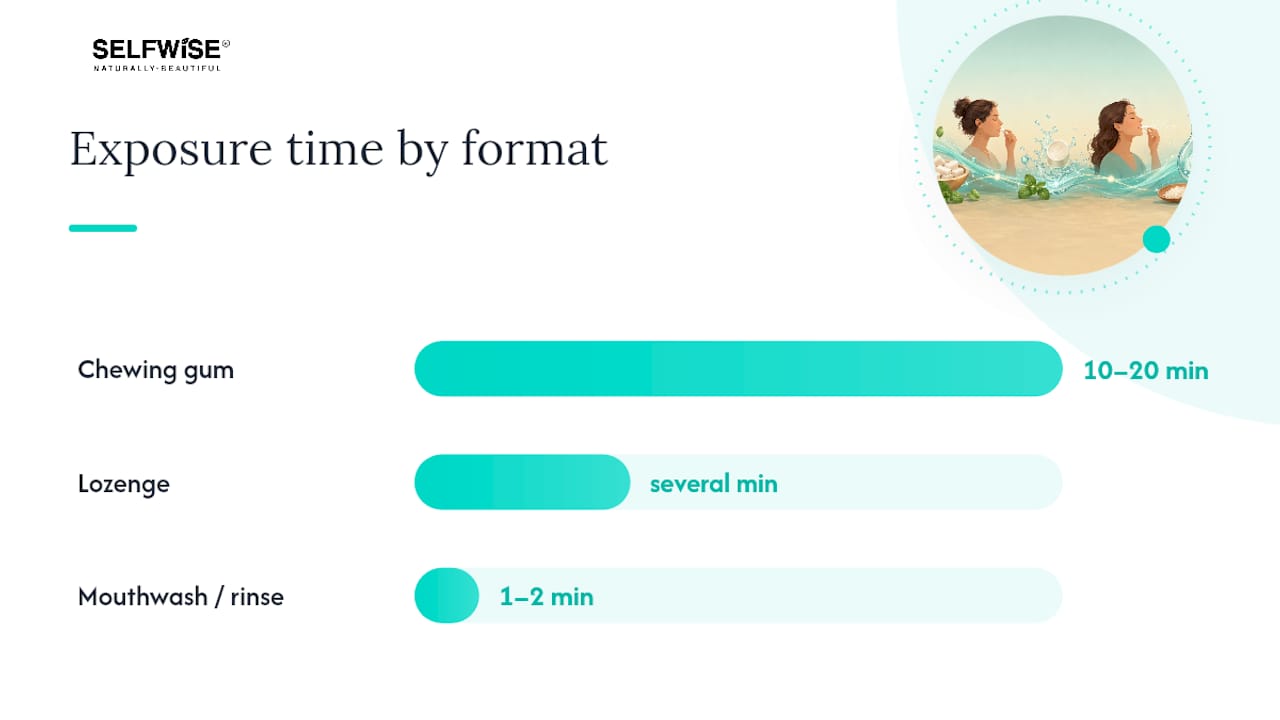
Gum wins on duration. Because you’re chewing continuously, gum delivers a steady, extended release of xylitol alongside constant mechanical stimulation, which is why it tends to produce the longest sustained rise in salivary flow of any format, typically for as long as you chew, often 10 to 20 minutes.
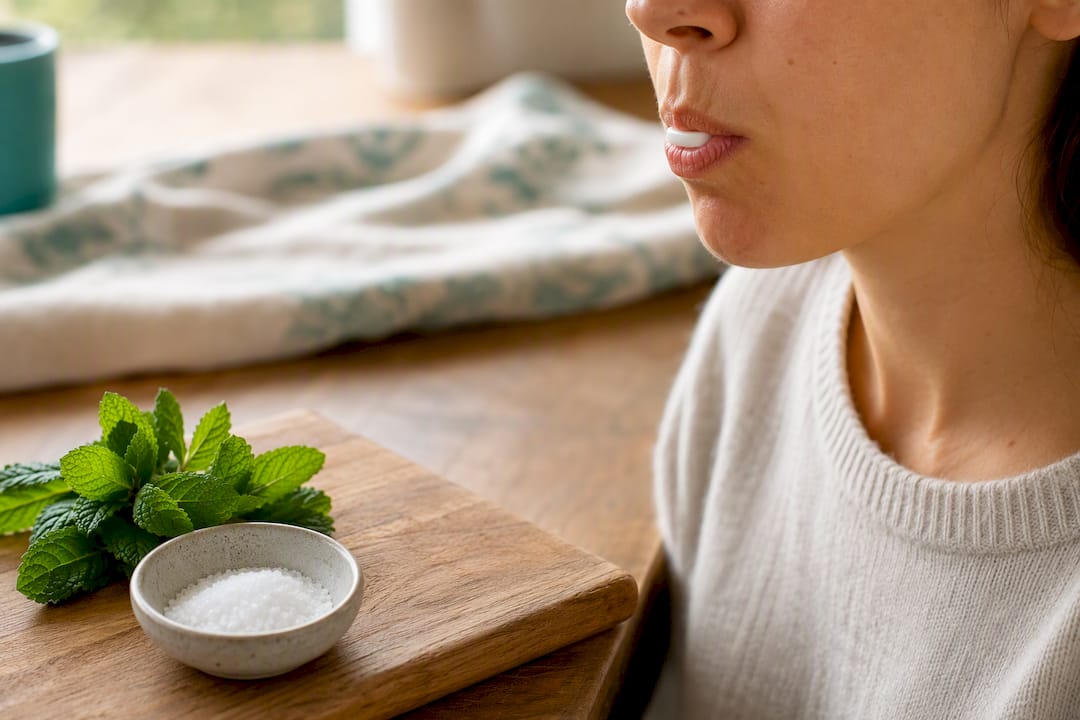
Mouthwash and rinses work at the opposite end of the spectrum: a short burst of high concentration, then it’s gone. Swishing a xylitol rinse floods your mouth with a strong dose all at once, but you swallow or spit it out within a minute or two, so the exposure window is brief compared to gum. That makes rinses ideal for a quick reset, right after a meal or before a meeting, but poor for sustained relief on their own.
Lozenges sit in the middle. A dissolving lozenge releases xylitol slowly over several minutes without the mechanical chewing component, giving you a moderate, steady concentration for longer than a rinse but without the peak intensity of gum.
Quick comparison of the common formats:
- Chewing gum: longest sustained exposure, adds mechanical stimulation, best for post-meal use when you have a few minutes to chew.
- Lozenge: slow, steady release without chewing, convenient during meetings or driving, moderate peak concentration.
- Mouthwash/rinse: fast, high-concentration burst, short duration, best paired with another format for lasting effect.
- Mouthwash tablets: dissolve into a rinse on demand, useful for travel since they avoid carrying liquid, similar exposure profile to a standard rinse once dissolved.
- Spray: very brief, low-volume exposure, best as an emergency top-up rather than a primary strategy.
Pro Tip: Pair formats instead of picking one. Rinse with a xylitol mouthwash right after a meal for a fast concentration spike, then follow with a lozenge or gum 30 to 60 minutes later to extend the exposure window without going over a sensible daily total.
Formulation details matter here too. A mouthwash built with viscosity agents or particulate binders, such as nano hydroxyapatite, tends to cling to oral surfaces longer than a thin, water-like rinse, which stretches out contact time even after the initial swish. That’s part of why formulation, not just the xylitol content on the label, changes what you actually feel afterward.
Why More Saliva Actually Improves Your Oral Health
More saliva from xylitol reduces cavity risk and improves comfort through three concrete mechanisms: mechanical clearance, chemical buffering, and antimicrobial action. This isn’t a vague “hydration is good” claim. Each mechanism does a specific, measurable job in your mouth.
Mechanical clearance is the most intuitive one. Saliva physically washes food debris and loose bacteria off your teeth and gums, the way a running faucet clears a sink better than a still one. More flow means more clearance, plain and simple.
Buffering matters just as much, if less visibly. Saliva carries bicarbonate that neutralizes the acid produced when oral bacteria metabolize sugars, which is exactly the acid that erodes enamel over time. A drier mouth has less bicarbonate circulating, so acid lingers longer and does more damage per exposure.
Then there’s the antimicrobial layer: proteins like lysozyme and lactoferrin in saliva actively suppress bacterial growth, and higher flow means more of these proteins reaching the surfaces that need them.
- Mechanical clearance sweeps away food particles and loose plaque before bacteria can establish a foothold.
- Bicarbonate buffering neutralizes acid before it demineralizes enamel.
- Lysozyme and lactoferrin suppress bacterial colonization on tooth surfaces.
- Adequate saliva flow supports the mineral exchange that remineralization depends on, particularly when paired with a remineralizing agent like nano hydroxyapatite.
Xylitol earns a specific mention here because of what it doesn’t do. Since Streptococcus mutans can’t ferment it, xylitol doesn’t feed the acid-producing cycle the way other sweeteners or even other sugar alcohols can. Recent reviews on xylitol’s multifaceted role in oral health describe this combination, more saliva plus zero fermentable substrate, as the reason xylitol shows up consistently in anti-caries research while plain sugar-free gums with other sweeteners show weaker or inconsistent effects. Some of this is well-documented clinically, like the caries-prevention data; some of it, like the precise contribution of saliva volume versus the non-fermentable property alone, is harder to fully separate in the existing trials.
Practical Guidance: Dosing, Timing, and What to Check on Labels
Aim for multiple short xylitol exposures spread across your day rather than one large dose. Reviews on xylitol and oral health commonly point to a daily total in the range of roughly 5 to 10 grams, split across at least three separate exposures, as the pattern associated with meaningful saliva and anti-caries benefit. Treat that as a research-informed starting point, not a prescription, since individual tolerance and needs vary.
Before buying anything, run through this label checklist:
- Confirm xylitol appears on the ingredient list, ideally near the top rather than buried at the bottom in trace amounts.
- Skip products listing alcohol or sodium lauryl sulfate (SLS) high on the ingredient panel, both of which can dry and irritate oral tissue further.
- Look for complementary ingredients like olive oil or betaine, which function as lubricants or osmoprotectants and are associated with better comfort in dry-mouth formulation research.
- Favor alcohol-free formulas generally, since alcohol-based rinses tend to worsen the underlying dryness even while they freshen breath temporarily.
For actual dosing patterns, one stick of xylitol gum chewed for 5 to 10 minutes counts as a single solid exposure. One lozenge, dissolved slowly rather than crunched, is roughly equivalent. Space these after meals and snacks, when your mouth naturally produces less saliva anyway, and add an extra exposure whenever you notice dryness creeping in between meals.
Pro Tip: Time your last xylitol exposure at least an hour before bed if you notice any stomach sensitivity. GI effects from sugar alcohols are dose-dependent, and lying down soon after a large exposure can make mild bloating more noticeable than it would be during the day.
If you’re building this into an existing routine, an alcohol-free rinse used after brushing, followed by gum or a lozenge later in the day, covers both the concentrated burst and the sustained exposure without overcomplicating your day.
Safety, Side Effects, and Who Should Be Careful
Xylitol is generally safe for humans in the doses used for oral care, but it carries real caveats worth knowing before you build a routine around it. The most important one isn’t even about people.
Xylitol is extremely toxic to dogs, even in small amounts. A single piece of xylitol gum can trigger a rapid, dangerous drop in blood sugar in a dog, and larger amounts have been linked to liver failure. Store all xylitol products, gum, lozenges, mouthwash tablets, well out of reach of pets, and treat any suspected ingestion as a veterinary emergency.
Beyond that critical warning, the side-effect profile in humans is mild and dose-dependent:
- Gastrointestinal upset: bloating, gas, or mild laxative effects can occur at higher total daily intake, since unabsorbed sugar alcohols draw water into the gut.
- Children and infants: xylitol is used in pediatric dental products, but dosing should follow pediatric guidance rather than adult amounts scaled down casually.
- Individual sensitivity: some people notice GI effects at lower doses than others; if you notice discomfort, reduce total daily exposure before stopping altogether.
- Topical oral products: clinical trials testing topical xylitol formulations for dry mouth reported no clinically significant adverse events over the study periods, which is reassuring for rinses and lozenges specifically rather than large ingested amounts.
If you have a diagnosed metabolic condition, check with a healthcare provider before adding any new sugar alcohol to your routine, rather than assuming oral-care-level amounts are automatically fine.
How Scientists Measure Xylitol’s Effect on Saliva
Researchers rely on a handful of standard endpoints to judge whether xylitol is actually working: stimulated versus unstimulated whole salivary flow rate, salivary xylitol concentration over time, and validated symptom scales like the Xerostomia Inventory.
| Endpoint | What It Measures |
|---|---|
| Unstimulated flow rate | Baseline saliva production at rest, without chewing or tasting anything |
| Stimulated flow rate | Saliva production during active chewing or gustatory stimulation |
| Salivary xylitol concentration | Xylitol levels in saliva over time, typically measured by chromatography |
| Xerostomia Inventory (XI) | A validated questionnaire capturing self-reported dry-mouth severity |
A few caveats apply across nearly all of this research: sample sizes are frequently small, some crossover trial designs risk inadequate washout periods between treatment arms, follow-up windows are often just weeks rather than months or years, and formulations vary enough between studies that direct comparisons get murky. Subjective symptom improvement and objectively measured flow rate don’t always move together either, so a study reporting one without the other tells an incomplete story.
Where the Evidence Runs Thin
Short-term increases in salivary flow after xylitol use are well documented, but questions about long-term benefit and ideal dosing across different groups remain open. A few gaps stand out clearly:
- Long-term caries reduction tied specifically to the saliva increase, rather than to xylitol’s non-fermentable property alone, hasn’t been isolated in large trials.
- Optimal daily dose and exposure schedule across different populations, older adults, children, dialysis patients, still lacks consensus.
- Effects in autoimmune-driven dry mouth conditions like Sjögren’s syndrome are not well studied specifically.
- Interactions between xylitol use and concurrent medications that cause dry mouth as a side effect need more direct investigation.
What the field needs next is straightforward: larger randomized controlled trials using objective flow-rate measurement alongside validated symptom scales, run long enough to separate a real, durable benefit from a short-term novelty effect.
Bringing the Research Into Selfwise’s Formulations
Selfwisebrand formulates xylitol mouthwashes and mouthwash tablets specifically to take advantage of xylitol’s saliva-stimulating, non-fermentable properties, while deliberately leaving out alcohol and SLS that would work against the goal of relieving dry mouth.
Three products built around that principle:
- Xylitol Mouthwash with Nano Hydroxyapatite pairs xylitol’s saliva and anti-caries benefits with nano hydroxyapatite for remineralization support in one alcohol-free rinse.
- Nano Hydroxyapatite Oil Pulling Mouthwash adds an oil-pulling base for extra lubrication, useful alongside xylitol exposures for people who need more comfort throughout the day.
- Mouthwash Tablets containing xylitol give a travel-friendly way to get a rinse exposure without carrying liquid, dissolving into a full mouthwash on demand.
The logic connecting the research to the formula is direct: xylitol drives the gustatory and secretagogue response that raises saliva, nano hydroxyapatite supports the remineralization that saliva’s mineral exchange depends on, and cutting alcohol avoids undermining the whole effort with an ingredient known to dry out oral tissue further.
The products we build aim to work with saliva’s own chemistry rather than against it, using ingredients with real research behind them instead of masking dryness with menthol and calling it relief.
A Practical Take on Building This Into Daily Routine
I’d rather see someone use a xylitol rinse and gum inconsistently than a fluoride mouthwash with alcohol religiously twice a day, because the dry-mouth math simply favors the former. A practical routine looks like this: rinse after brushing morning and night, chew a xylitol gum or dissolve a lozenge after lunch, and keep a travel-friendly mouthwash tablet on hand for the afternoon slump when your mouth always seems to dry out first.
- Morning: brush, then rinse with an alcohol-free xylitol mouthwash.
- After meals: chew xylitol gum or use a lozenge for 5 to 10 minutes.
- Evening: repeat the rinse, add oil pulling a few times a week for extra lubrication.
If dryness persists despite consistent use for a few weeks, or if it comes with difficulty swallowing or swollen glands, see a dentist or physician. Xerostomia that doesn’t respond to basic measures can point to something that needs actual diagnosis, not just a better mouthwash.
Try Xylitol Where the Research Says It Works Best
Everything above points to the same practical conclusion: the saliva boost from xylitol is real, well-documented across multiple delivery forms, and easy to build into a routine you already have. The harder part is finding a product that delivers xylitol without also delivering alcohol, SLS, or synthetic flavoring that undoes the comfort you’re chasing in the first place.
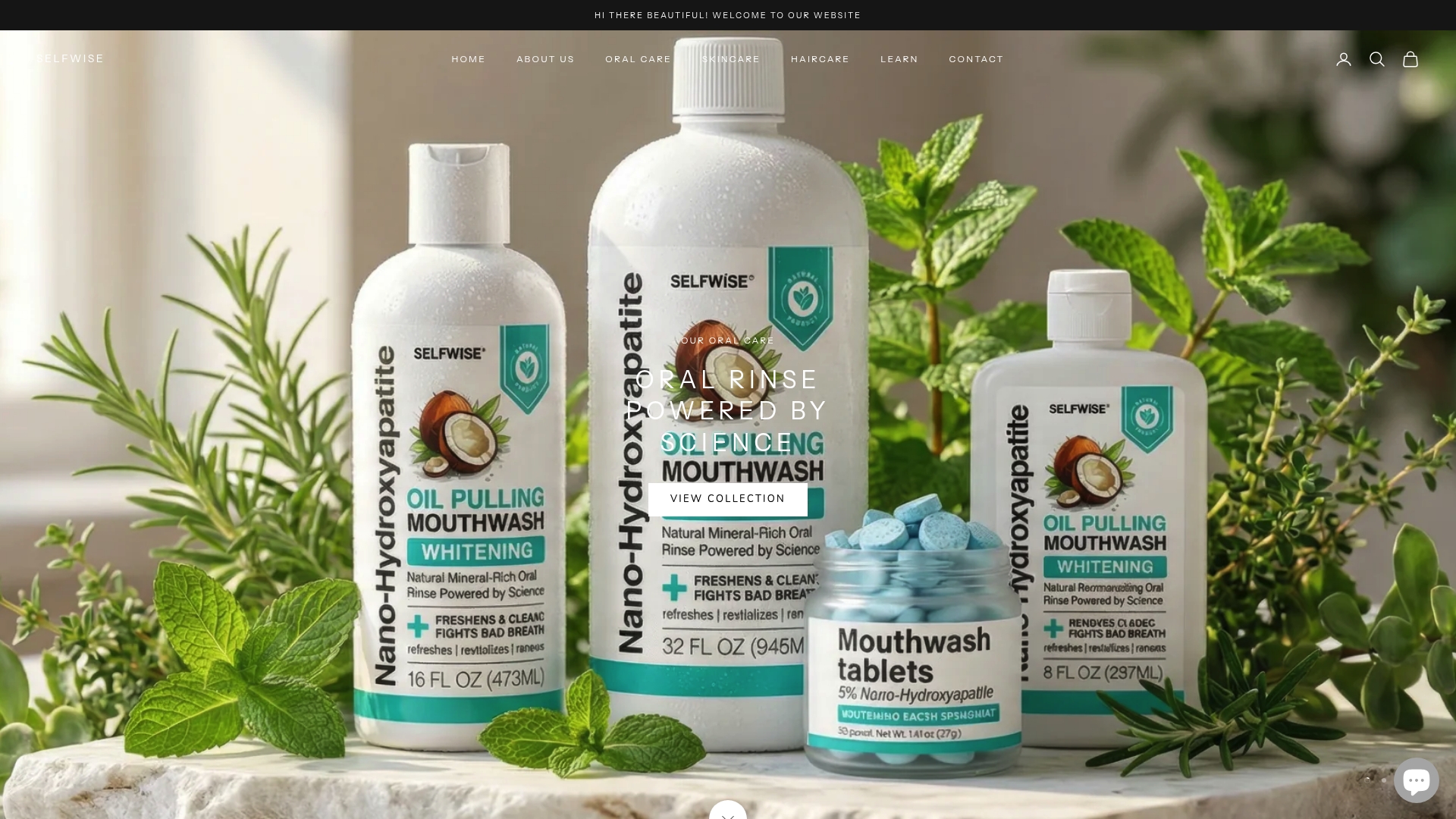
That’s the gap Selfwisebrand’s lineup is built to close. The Xylitol Mouthwash with Nano Hydroxyapatite combines the saliva-stimulating mechanism covered throughout this article with remineralization support, in a formula with no alcohol to fight against the dryness you’re trying to fix. Pair it with the Nano Hydroxyapatite Oil Pulling Mouthwash for added lubrication, or keep xylitol Mouthwash Tablets on hand for a travel-ready rinse between meals. Browse the full mouthwash collection to see which combination fits your routine.
If your dry mouth is severe, persistent, or tied to a diagnosed condition like Sjögren’s syndrome, talk to a dentist or physician before relying on any over-the-counter product as your main strategy. For everyday dryness, though, start with one rinse and one gum or lozenge exposure today and see how your mouth feels by tomorrow morning.
Sources
- Safety and effectiveness of topical dry mouth products containing olive oil, betaine, and xylitol in reducing xerostomia for polypharmacy‐induced dry mouth
- Xylitol and oral health: review (PMC article)
- Clinical guidance on oral dryness and formulation considerations (PMC article)
- The effect of chewing xylitol gum on plaque and saliva (WJ Loesche et al.)
FAQ
Does Xylitol Help Stimulate Saliva Production?
Yes. Clinical trials show xylitol increases both stimulated and unstimulated salivary flow through gustatory stimulation and a likely direct secretagogue effect on salivary gland cells.
What’s the Downside of Xylitol?
The main downside is dose-dependent gastrointestinal upset, including bloating or a mild laxative effect at higher daily amounts, and it is extremely toxic to dogs even in small quantities.
Does Xylitol Rebuild Gums?
Xylitol itself doesn’t rebuild gum tissue, but the increased saliva flow it stimulates supports healthier gums by clearing bacteria and buffering acid; pairing it with a remineralizing ingredient like nano hydroxyapatite targets enamel support more directly.
Does Xylitol Destroy Gut Bacteria?
No research supports the idea that xylitol destroys gut bacteria; at high doses it can cause temporary digestive discomfort as unabsorbed sugar alcohol draws water into the intestine, but this is different from disrupting the gut microbiome.
How Long Does Xylitol’s Saliva Effect Last?
The duration depends on delivery form: gum sustains elevated flow for as long as you chew, often 10 to 20 minutes, while a rinse produces a shorter, more concentrated burst that fades within minutes.