What Is an Oil-in-Water Emulsion Rinse for Oral Care
An oil-in-water emulsion rinse is a liquid oral care product where tiny oil droplets are suspended evenly within a continuous water phase, allowing effective cleansing and easy rinsing without greasy residue. This structure differs from traditional mouthwashes because it delivers the antimicrobial power of oils like coconut oil while remaining lightweight enough to rinse cleanly. The emulsion format is why some natural mouthwashes turn milky when you swish them. Understanding how this works helps you choose and use these products far more effectively.
What is an oil-in-water emulsion rinse?
An oil-in-water (O/W) emulsion rinse is defined as a formulation where oil droplets are dispersed throughout a continuous water phase, held stable by emulsifiers. The industry term for this category is an oil-in-water emulsion, and it sits in contrast to water-in-oil (W/O) emulsions, where water droplets are suspended inside an oil phase. In oral care, the O/W format is the preferred structure because your mouth is already a water-rich environment, and the rinse needs to interact cleanly with saliva.
Emulsifiers are the key ingredient that makes this possible. They reduce interfacial tension between oil and water, which would otherwise cause the two phases to separate immediately. Without an emulsifier, you get a bottle of oil floating on water. With one, you get a stable, pourable liquid that behaves predictably every time you use it.
The oil droplet dispersion in an O/W rinse means oily impurities, biofilm components, and debris in your mouth attach to the oil phase and get carried away when you spit. This is the functional basis for why oil-based oral rinses clean more thoroughly than plain water. The water phase makes the product feel light and rinse-off friendly, while the oil phase does the actual cleansing work.

How does oil-in-water emulsion chemistry work in oral rinses?
The chemistry behind an O/W emulsion rinse starts with emulsification, the process of forcing two immiscible liquids to coexist stably. Emulsifiers achieve this by positioning themselves at the oil-water interface, with one end attracted to oil and the other attracted to water. This lowers the energy required to keep oil droplets dispersed, preventing them from coalescing back into a separate layer.
When you swish an O/W oral rinse, the mechanical action of swishing further breaks oil droplets into smaller particles, increasing surface area and contact with oral tissues. The rinse reaches into gum pockets, between teeth, and across the tongue surface. As the oil droplets contact bacteria and debris, they bind to the lipid membranes of bacterial cells, disrupting them. This is the same mechanism that makes oil pulling effective, but in a more controlled, emulsified format.
The visual cue that tells you emulsification is working is the milky appearance the rinse takes on. Milky appearance signals that oil droplets are fully suspended and ready to be expelled cleanly. If the rinse stays clear or oily looking, emulsification is incomplete, and spitting it out at that stage can leave a slick residue on your teeth and gums.
The O/W format also matters because saliva is water-based. An O/W emulsion contacts saliva and emulsifies further on contact, which is a built-in advantage over straight oil pulling. The mouth environment actually helps the product work better, not against it.
Pro Tip: Swish for a full 30 to 60 seconds before spitting. The milky color change is your confirmation that emulsification has occurred and the rinse is ready to carry debris out cleanly.
Key factors that determine how well an O/W oral rinse performs:
- Emulsifier type and concentration: Natural emulsifiers like lecithin or polysorbate 20 behave differently from synthetic ones, affecting stability and taste.
- Oil droplet size: Smaller droplets mean greater surface area and more effective cleansing contact.
- Oil-to-water ratio: Too much oil and the product feels heavy; too little and the antimicrobial effect weakens.
- Swish time: Contact time directly affects how much bacterial disruption occurs before you spit.
What are the benefits of oil-in-water emulsion rinses versus other oral rinse types?
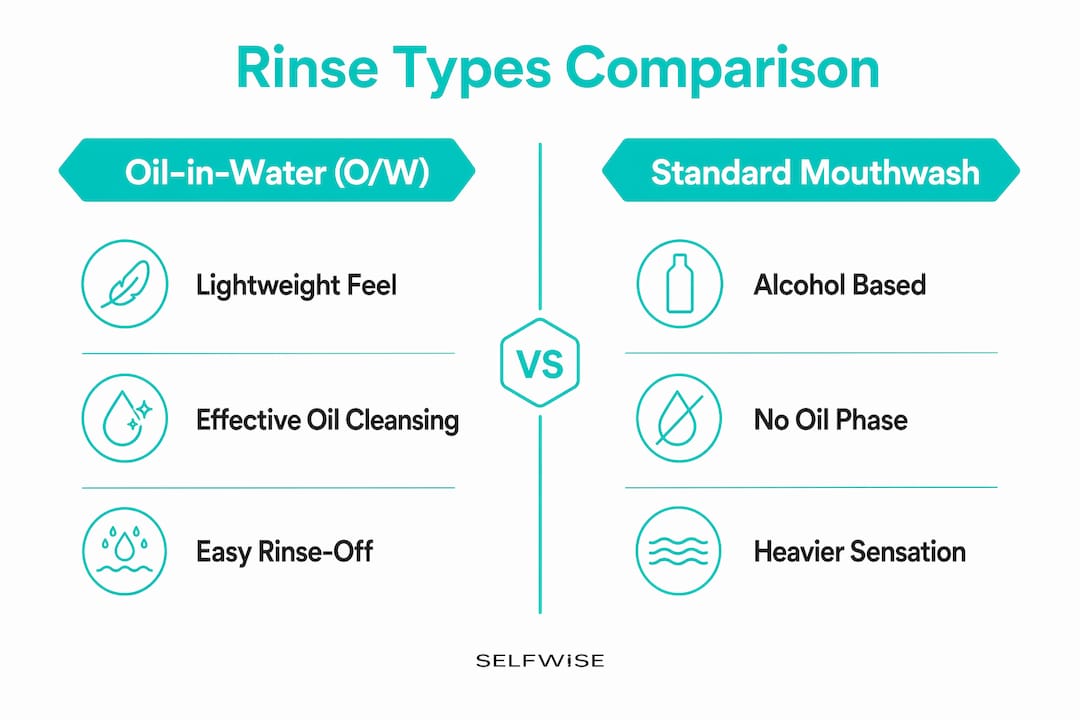
O/W emulsion rinses outperform both water-in-oil systems and standard aqueous mouthwashes in several measurable ways. O/W emulsions rinse cleaner because the continuous water phase means the product disperses instantly in water, leaving no oily film behind. W/O emulsions, by contrast, have a continuous oil phase that coats surfaces and resists rinsing, which is why they are used in leave-on products like lip balms, not rinse-off ones.
Standard aqueous mouthwashes (think alcohol-based formulas) contain no oil phase at all. They work primarily through chemical antiseptics like chlorhexidine or cetylpyridinium chloride. These are effective but come with trade-offs: chlorhexidine stains teeth with extended use, and alcohol-based formulas dry out oral tissues. An O/W emulsion rinse delivers antimicrobial action through the oil phase while remaining gentle on soft tissue.
The sensory experience also differs significantly. O/W rinses feel lightweight and water-like in the mouth, not coating or heavy. The milky rinse visual is actually reassuring to users because it confirms the product is working as designed.
| Property | O/W emulsion rinse | W/O emulsion | Standard aqueous mouthwash |
|---|---|---|---|
| Rinse-off ease | High | Low | High |
| Greasy feel | None | Significant | None |
| Oil-based cleansing | Yes | Yes | No |
| Gentle on tissues | Yes | Moderate | Varies |
| Milky visual cue | Yes | No | No |
| Natural formulation potential | High | Moderate | Low |
The table makes the practical case clear. For natural oral care users who want the cleansing power of oils without the residue or harshness of chemical antiseptics, the O/W format is the logical choice.
How are oil-in-water emulsion rinses formulated for natural oral care?
Natural O/W oral rinses use a specific set of ingredients to achieve both stability and efficacy. The formulation must balance the oil and water phases precisely, and every ingredient has a functional role.
Common ingredients in natural O/W oral rinse formulations include:
- Coconut oil (0.2 to 3%): The primary active oil phase. Coconut oil contains lauric acid, which disrupts bacterial cell membranes. Coconut oil and xylitol combined in mouthwash patents showed significant bacterial reduction with twice-daily 30-second rinses.
- Xylitol (5 to 15%): A natural sugar alcohol that inhibits Streptococcus mutans, the primary cavity-causing bacterium. Xylitol also improves taste, making the rinse more pleasant to use consistently.
- Natural emulsifiers: Ingredients like sunflower lecithin or plant-derived polysorbates stabilize the oil-water interface. Understanding natural surfactants in rinses helps explain why some formulas feel cleaner than others.
- Water and glycerin base: Glycerin adds viscosity and a mild sweetness while helping maintain moisture in oral tissues.
- Nano hydroxyapatite: Some advanced formulas include nano hydroxyapatite, which remineralizes enamel while the oil phase handles bacterial disruption.
ISO 16408:2025 standardizes oral rinses with physical and chemical requirements but does not classify products by emulsion type. This means the O/W designation is a formulation detail you need to identify by reading ingredient labels, not by relying on regulatory categories. Look for oil ingredients listed early in the formula alongside emulsifier names.
The balance of oil and water phases also affects taste and texture. Too much oil creates a heavy, coating sensation. Too little reduces the antimicrobial effect. Well-formulated natural O/W rinses hit a balance where the product feels like a slightly richer water, not an oil.
How to use oil-in-water emulsion rinses effectively
Getting the most from an O/W oral rinse requires technique, not just compliance. The emulsification step is where most users underperform, and it directly affects how clean your mouth feels afterward.
Follow these steps for best results:
- Measure the correct amount. Use the volume specified on the label, typically 10 to 15 ml. Using too much product is a common cause of incomplete emulsification and slippery residue.
- Swish actively for 30 to 60 seconds. Move the rinse through all areas of your mouth, including between teeth and along the gumline. Active swishing breaks oil droplets smaller and increases contact with bacteria.
- Watch for the milky color change. This is your signal that emulsification is complete. The rinse should shift from its original color to a white or milky appearance as saliva and the water phase interact with the oil droplets.
- Spit only after the milky stage. Spitting before full emulsification leaves oily residue on teeth. Incomplete emulsification can also carry plaque-forming debris back onto tooth surfaces rather than removing it.
- Rinse briefly with water if needed. A short water rinse after spitting removes any remaining emulsified residue. This step is optional but useful for users with sensitive gums.
Pro Tip: If the rinse feels slippery after spitting, you likely used too much product or did not swish long enough. Add a small amount of water to your mouth, swish for 15 more seconds, and spit again. More water and swishing resolves most residue issues.
What should consumers know about safety and efficacy?
The safety profile of natural O/W oral rinses is strong. Coconut oil and xylitol are both well-tolerated ingredients with no known adverse effects at the concentrations used in oral care. Unlike chlorhexidine, which causes tooth staining and disrupts the oral microbiome with extended use, natural O/W rinses support rather than suppress the healthy bacterial balance in your mouth.
Clinical evidence supports the antibacterial effect. Formulations combining coconut oil and xylitol demonstrated measurable bacterial reduction in dental patients using a 30-second twice-daily protocol. The limitation is contact time: the antibacterial effect depends on the oil phase actually reaching and disrupting bacterial cells, which requires adequate swish time. Users who rinse for less than 20 seconds see significantly reduced benefits.
The comparison to chemical mouthwash agents is worth stating directly. Chlorhexidine is more potent in short-term bacterial reduction but is not recommended for daily long-term use. Natural O/W rinses are designed for daily use and build cumulative benefit over time. Choosing a quality formulation matters: look for products that list their emulsifier and active oil ingredients clearly, and avoid formulas that rely on artificial flavors or synthetic preservatives to mask formulation weaknesses.
Key takeaways
An oil-in-water emulsion rinse delivers the cleansing power of natural oils like coconut oil in a water-based format that rinses cleanly, making it the most practical and gentle option for daily natural oral care.
| Point | Details |
|---|---|
| Core definition | O/W emulsion rinses suspend oil droplets in a water phase, enabling clean rinsing without greasy residue. |
| Emulsification cue | The milky color change during swishing confirms emulsification is complete and the rinse is ready to spit. |
| Natural actives | Coconut oil and xylitol together provide antibacterial and cavity-preventing benefits in proven concentrations. |
| Technique matters | Swishing for 30 to 60 seconds is required for full emulsification and effective bacterial disruption. |
| Safety advantage | Natural O/W rinses support daily use without the staining or microbiome disruption associated with chlorhexidine. |
Why I think O/W emulsion rinses are underrated in natural oral care
Most people who switch to natural oral care focus on toothpaste first. They swap fluoride for nano hydroxyapatite, add xylitol, and feel good about it. The mouthwash step gets less attention, and that is a mistake.
An O/W emulsion rinse reaches places a toothbrush cannot. It coats the entire oral cavity in one swish, and the oil phase disrupts bacterial membranes in a way that no aqueous rinse can replicate. I have seen users report noticeably cleaner-feeling mouths within a week of switching from an alcohol-based mouthwash to a well-formulated O/W rinse, and the science explains exactly why.
The milky color change is also a genuinely useful feedback mechanism. Most oral care products give you no signal that they are working. The emulsification visual is rare and worth paying attention to. It tells you the chemistry is happening in real time.
My one caution: not every product marketed as a natural oil rinse is actually formulated as a true O/W emulsion. Some are just oil blends with no emulsifier, which means they do not rinse cleanly and can leave residue. Read the ingredient list. If you see a named emulsifier alongside the oil and water phases, you have a real O/W product. If you see only oils and essential oils, you have a different product with different behavior.
The future of this category will likely involve nano hydroxyapatite integrated directly into O/W emulsion formulas, combining remineralization and antimicrobial action in a single rinse. That combination is where natural oral care is heading, and it is worth getting familiar with the emulsion format now.
— Viktor
Try Selfwisebrand’s natural oil-based mouthwash
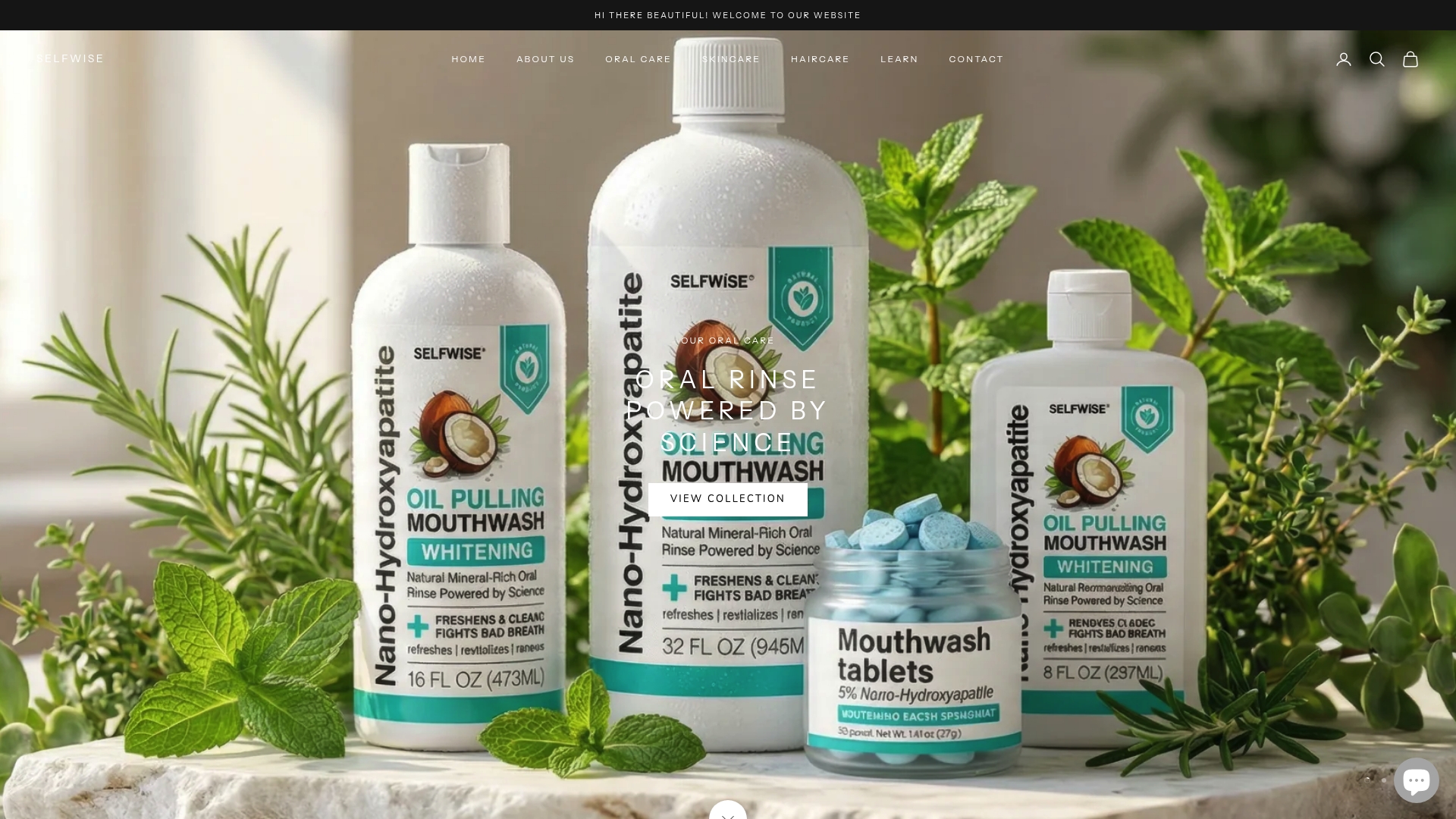
Selfwisebrand formulates its natural mouthwash line around the same oil-in-water emulsion principles covered in this article. The flagship nano hydroxyapatite oil pulling mouthwash combines coconut oil, nano hydroxyapatite, and xylitol in a true O/W emulsion format, delivering antibacterial action, enamel remineralization, and clean rinsing in one product. Every formula is fluoride-free and built without harsh synthetic preservatives. If you want a daily rinse that works with your oral biology rather than against it, Selfwisebrand’s lineup is the place to start.
FAQ
What is an oil-in-water emulsion rinse?
An oil-in-water emulsion rinse is an oral care product where tiny oil droplets are dispersed in a continuous water phase, stabilized by emulsifiers. This structure allows the rinse to deliver oil-based cleansing and antimicrobial benefits while rinsing off cleanly without leaving greasy residue.
How do I know if my rinse has fully emulsified?
The rinse turns milky or white during swishing when emulsification is complete. If it stays clear or oily, continue swishing for another 15 to 30 seconds before spitting.
Are oil-in-water emulsion rinses safe for daily use?
Yes. Natural O/W rinses using coconut oil and xylitol are safe for daily use and do not cause the tooth staining or microbiome disruption associated with chlorhexidine-based mouthwashes.
What makes O/W rinses better than standard mouthwash?
O/W emulsion rinses deliver oil-based antimicrobial action that standard aqueous mouthwashes cannot provide, while remaining gentle on oral tissues. They avoid alcohol and synthetic antiseptics, making them suitable for long-term daily use.
How long should I swish an oil-in-water emulsion rinse?
Swish for 30 to 60 seconds to allow full emulsification and adequate contact time with oral bacteria. Shorter swish times reduce the antibacterial effect significantly.