Best Preservative-Free Oral Care Products in 2026
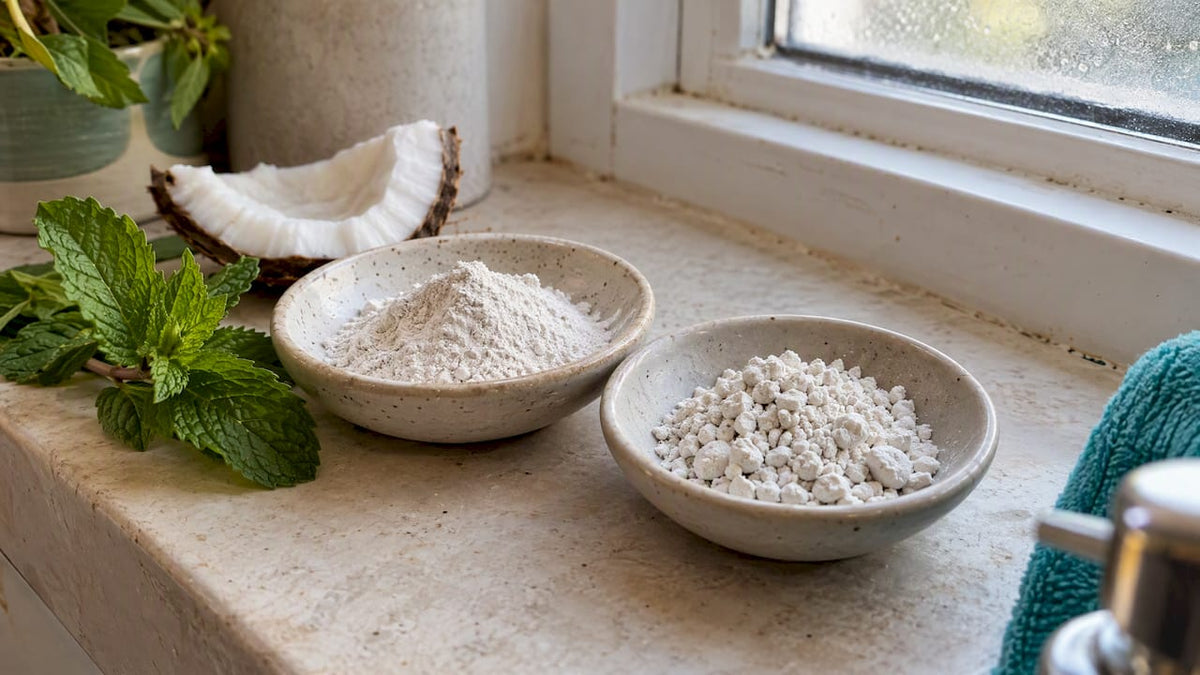
Preservative-free oral care products are formulated without traditional synthetic preservatives like parabens, phenoxyethanol, MIT, or MCI, relying instead on natural antimicrobial systems to maintain safety and shelf life. This category has grown sharply as health-conscious consumers read ingredient labels more carefully and connect conventional preservatives to sensitivity, irritation, and long-term concerns. Brands like MooGoo have led the way by showing that effective, naturally preserved formulas are commercially viable. The result is a market full of options, from chemical-free toothpaste to organic mouthwash, but not all of them deliver on their claims.
1. What ingredients replace traditional preservatives in preservative-free oral care products?
The term “preservative-free” is accurate but incomplete. Many products labeled this way still contain low-level antimicrobial agents that prevent microbial growth without using the synthetic preservatives consumers want to avoid. Understanding what replaces traditional preservatives is the most useful thing you can do before buying.
The most common replacement ingredients fall into three categories:
- Natural antimicrobial agents: 1,2-hexanediol and caprylyl glycol are fatty acid derivatives that disrupt bacterial cell membranes. MooGoo’s spearmint mouthwash uses these as its preservation system while excluding phenoxyethanol, MIT, and MCI entirely.
- Polyols: Xylitol and sorbitol do more than sweeten. Both reduce the ability of Streptococcus mutans to adhere to tooth enamel, giving them a dual role as flavor agents and mild antimicrobials. Xylitol in particular is well-documented for its role in plaque reduction and cavity prevention.
- Humectants and pH control: Glycerin and water-activity-reducing agents lower the moisture available for bacterial growth. Combined with pH modifiers, they create an environment where spoilage organisms cannot thrive.
Natural oral care products often combine two or three of these systems rather than relying on a single ingredient. This layered approach is what makes modern preservative-free formulas genuinely stable and safe.
Pro Tip: When reading a label, look for xylitol, 1,2-hexanediol, or caprylyl glycol near the end of the ingredient list. Their presence confirms the product uses a natural preservation system rather than just removing preservatives with no replacement.
2. Nano hydroxyapatite toothpaste and remineralizing options
Nano hydroxyapatite (nHAp) is the synthetic form of the mineral that makes up 97% of tooth enamel, and it is the most scientifically supported fluoride-free remineralizing agent available. Japanese research first validated it as an enamel repair ingredient in the 1970s, and it has since become the cornerstone of non-toxic dental care for consumers who want cavity protection without fluoride or harsh additives.
Products built around nHAp typically skip SLS, parabens, and synthetic preservatives because the ingredient itself is biocompatible and gentle. SLS-free formulations show better biocompatibility than their SLS-containing counterparts, making nHAp toothpastes a strong choice for anyone with a reactive mouth. Selfwisebrand’s nano hydroxyapatite line pairs nHAp with xylitol, giving you both remineralization and antimicrobial support in a single, clean formula.
The practical benefit is real. Users with enamel sensitivity often report reduced discomfort within two to four weeks of switching to nHAp-based products, because the mineral physically fills microtubules in exposed dentin rather than just masking pain.
3. Xylitol-based toothpaste and mouthwash
Xylitol earns its place in safe oral hygiene products not through marketing but through mechanism. Oral bacteria metabolize regular sugar to produce acid that erodes enamel. They attempt to metabolize xylitol but cannot complete the process, which starves them of energy and reduces their population over time.
Products with at least 10% xylitol concentration deliver measurable plaque reduction when used consistently. Toothpastes from brands like Spry and mouthwashes from Xlear are built around this principle, using xylitol as both the functional active and the primary sweetener. This eliminates the need for saccharin or other synthetic sweeteners that appear in many conventional formulas.
For dry mouth sufferers, xylitol-based rinses offer an additional benefit. Xylitol stimulates saliva production, which is the mouth’s natural defense against acid and bacterial overgrowth. This makes it one of the few ingredients that addresses both comfort and protection simultaneously.
4. Alcohol-free organic mouthwash
Alcohol is the most common irritant in conventional mouthwash, and its removal is often the first step consumers take when moving toward natural oral care. Alcohol-free formulas show better user compliance for sensitive mouths, and consistent use is what actually drives gum health improvements.
The best alcohol-free organic mouthwashes replace ethanol with a combination of essential oils, xylitol, and natural antimicrobial agents. Peppermint oil, tea tree oil, and neem extract each have documented antibacterial activity against the pathogens most associated with gingivitis and bad breath. The key is concentration. Too little and the formula is ineffective. Too much and essential oils themselves become irritants, which is a real risk for people with oral sensitivities.
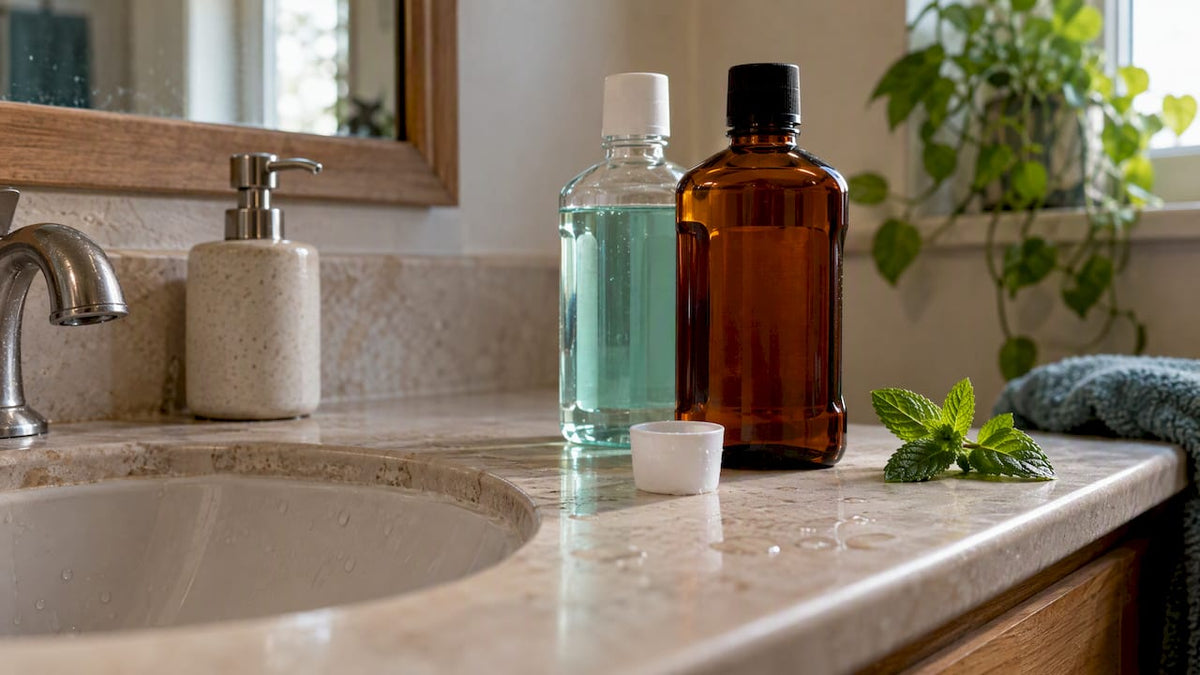
MooGoo’s spearmint mouthwash is a well-formulated example: alcohol-free, fluoride-free, pH-balanced, and preserved with 1,2-hexanediol and caprylyl glycol rather than synthetic preservatives. It demonstrates that an organic mouthwash can be both genuinely clean and genuinely functional.
5. Oil pulling mouthwash with natural ingredients
Oil pulling is a traditional Ayurvedic practice that involves swishing oil in the mouth for several minutes to reduce bacterial load and support gum health. Modern formulations have updated this practice by combining coconut or sesame oil with nano hydroxyapatite, xylitol, and botanical extracts to create products that work faster and taste better than plain oil.
The mechanism is mechanical and chemical. Oil physically binds to lipid-coated bacteria and pulls them away from gum tissue and tooth surfaces. When the oil is enriched with nHAp, it also deposits remineralizing minerals during the swishing process. This dual action makes oil pulling mouthwash one of the most efficient preservative-free dental products available for people who want to do more in less time.
Selfwisebrand’s nano hydroxyapatite oil pulling mouthwash is formulated on exactly this principle, combining traditional oil pulling with modern remineralizing science in a fluoride-free, preservative-free base.
6. Mouthwash tablets without synthetic preservatives
Mouthwash tablets are one of the most practical innovations in non-toxic dental care. Because they are solid and anhydrous (containing no water), they require no preservatives at all. Bacteria and mold need water to grow, so a dry tablet format eliminates the preservation problem entirely rather than solving it with alternative antimicrobials.
You dissolve one tablet in water, swish, and spit. The result is a fresh, effective rinse with zero preservatives, zero plastic waste from single-use bottles, and a format that travels easily. For consumers who want the cleanest possible label, tablets are the most straightforward answer.
Selfwisebrand’s nano hydroxyapatite mouthwash tablets use this format with nHAp and xylitol as the active ingredients, delivering enamel support and antimicrobial activity with a genuinely minimal ingredient list.
7. SLS-free and gentle whitening toothpaste
Sodium lauryl sulfate (SLS) is the foaming agent in most conventional toothpastes, and it is one of the most common causes of canker sores and mucosal irritation. Research confirms that toothpastes containing SLS show higher cytotoxicity and potential irritation compared to SLS-free formulations, making its removal a meaningful upgrade for sensitive users.
Gentle whitening toothpastes that skip SLS typically use mild abrasives like hydrated silica or calcium carbonate to lift surface stains without chemical bleaching agents. When combined with nHAp, these formulas can whiten while simultaneously remineralizing, which is the opposite of what peroxide-based whitening products do to enamel.
Brands like Davids Natural Toothpaste and Burt’s Bees offer SLS-free options with clean ingredient lists. For the most thorough coverage of fluoride-free toothpaste alternatives, including whitening options, the holistic oral care space has expanded significantly in 2026.
8. How to choose the right product for your oral health goals
Matching your rinse or toothpaste to a specific oral health goal matters more than any “natural” or “chemical-free” label. The ADA recommends anti-gingivitis rinses for bleeding gums, fluoride or nHAp-based products for cavity prevention, and alcohol-free options for sensitive mouths. A preservative-free label tells you what is absent. It does not tell you what the product actually does.
Use this framework when evaluating products:
- For gum health: Look for xylitol, nHAp, or essential oil actives with documented anti-gingivitis activity. Alcohol-free formulas improve compliance, which is what drives results.
- For enamel support: Prioritize nHAp or calcium phosphate systems. Avoid high-acid formulas with citric acid as a primary ingredient.
- For sensitive mouths: Check for essential oils, flavor compounds, and pH modifiers. Irritation often persists even in preservative-free products because essential oils and acidity agents cause reactions in susceptible individuals.
- For dry mouth: Choose xylitol-rich formulas. Xylitol stimulates saliva production and provides antimicrobial coverage simultaneously.
- For children: Follow FDA guidance on age-appropriate use. Children under 6 should not use standard fluoride rinses, and the same caution applies to any rinse with active antimicrobial agents.
Pro Tip: Do not stop at the “preservative-free” claim on the front of the package. Flip it over and scan for citric acid, menthol, clove oil, and cinnamon extract. These are common irritants that appear in otherwise clean formulas and can cause the same sensitivity symptoms as the preservatives you were trying to avoid.
For guidance on sensitive mouth product selection, reading the full ingredient list is always the starting point.
9. How preservative-free products fit into a long-term oral care routine
Long-term gum health is supported by consistent use of properly formulated preservative-free products as adjuncts to brushing, flossing, and dental visits. The word “adjunct” matters here. No mouthwash or toothpaste, natural or conventional, replaces mechanical plaque removal or professional cleaning.
What preservative-free products do exceptionally well is support the oral microbiome. Harsh preservatives and alcohol can disrupt the balance of beneficial bacteria in the mouth, just as antibiotics disrupt gut flora. Switching to gentler formulas allows the microbiome to stabilize, which supports gum tissue health and reduces chronic inflammation over time.
The practical routine looks like this: brush twice daily with an nHAp or xylitol-based toothpaste, floss once daily, and use an alcohol-free, preservative-free rinse as a finishing step. Add oil pulling two to three times per week if you want deeper antimicrobial support. Visit your dentist every six months. This combination delivers results that no single product can achieve alone.
Ingredient clarity and daily use comfort are what sustain a routine. Products that taste good and feel gentle get used consistently, and consistency is the variable that actually determines oral health outcomes.
Key takeaways
Preservative-free oral care products work because they replace synthetic preservatives with natural antimicrobial systems like xylitol, nHAp, 1,2-hexanediol, and caprylyl glycol, delivering genuine microbial control without the irritants consumers want to avoid.
| Point | Details |
|---|---|
| “Preservative-free” needs context | These products still contain antimicrobial agents. Check labels for xylitol, caprylyl glycol, and 1,2-hexanediol. |
| Match product to goal | Gum health, cavity prevention, dry mouth, and sensitivity each require different active ingredients. |
| SLS and alcohol cause irritation | Removing these two ingredients improves biocompatibility and user compliance more than any marketing claim. |
| Tablets need zero preservatives | Anhydrous tablet formats eliminate the preservation problem entirely, giving the cleanest possible label. |
| Routine consistency drives results | Preservative-free products work as adjuncts to brushing, flossing, and professional care, not as replacements. |
What I’ve learned after years of watching people switch to natural oral care
Most people who switch to preservative-free products do it for the right reasons but evaluate success with the wrong timeline. They expect to feel a dramatic difference in two weeks and give up when their gums still bleed or their breath is not noticeably fresher. The reality is that the oral microbiome takes six to twelve weeks to stabilize after a significant formula change. Patience is not optional here.
The other mistake I see constantly is treating “natural” as a synonym for “safe for everyone.” Essential oils are natural. Citric acid is natural. Both can cause real irritation in sensitive mouths. I always recommend keeping a simple symptom log for the first four weeks after switching: note any new sores, increased sensitivity, or gum tenderness. If symptoms appear, the culprit is usually a flavoring agent or pH modifier, not the absence of preservatives.
The products I trust most are the ones with short, readable ingredient lists where every ingredient has a documented function. Nano hydroxyapatite for remineralization. Xylitol for antimicrobial activity and saliva stimulation. A natural preservation system like caprylyl glycol for shelf stability. That is a complete formula. Anything beyond that should earn its place.
Transparent labeling is the single most reliable signal of a brand worth trusting. If a company cannot explain why each ingredient is in the formula, that tells you something.
— Viktor
Selfwisebrand’s natural oral care collection
Selfwisebrand builds every product around the principle that fewer, better ingredients outperform long conventional formulas. The fluoride-free collection covers the full routine, from remineralizing toothpaste alternatives to oil pulling mouthwash, all formulated without synthetic preservatives, SLS, or alcohol.
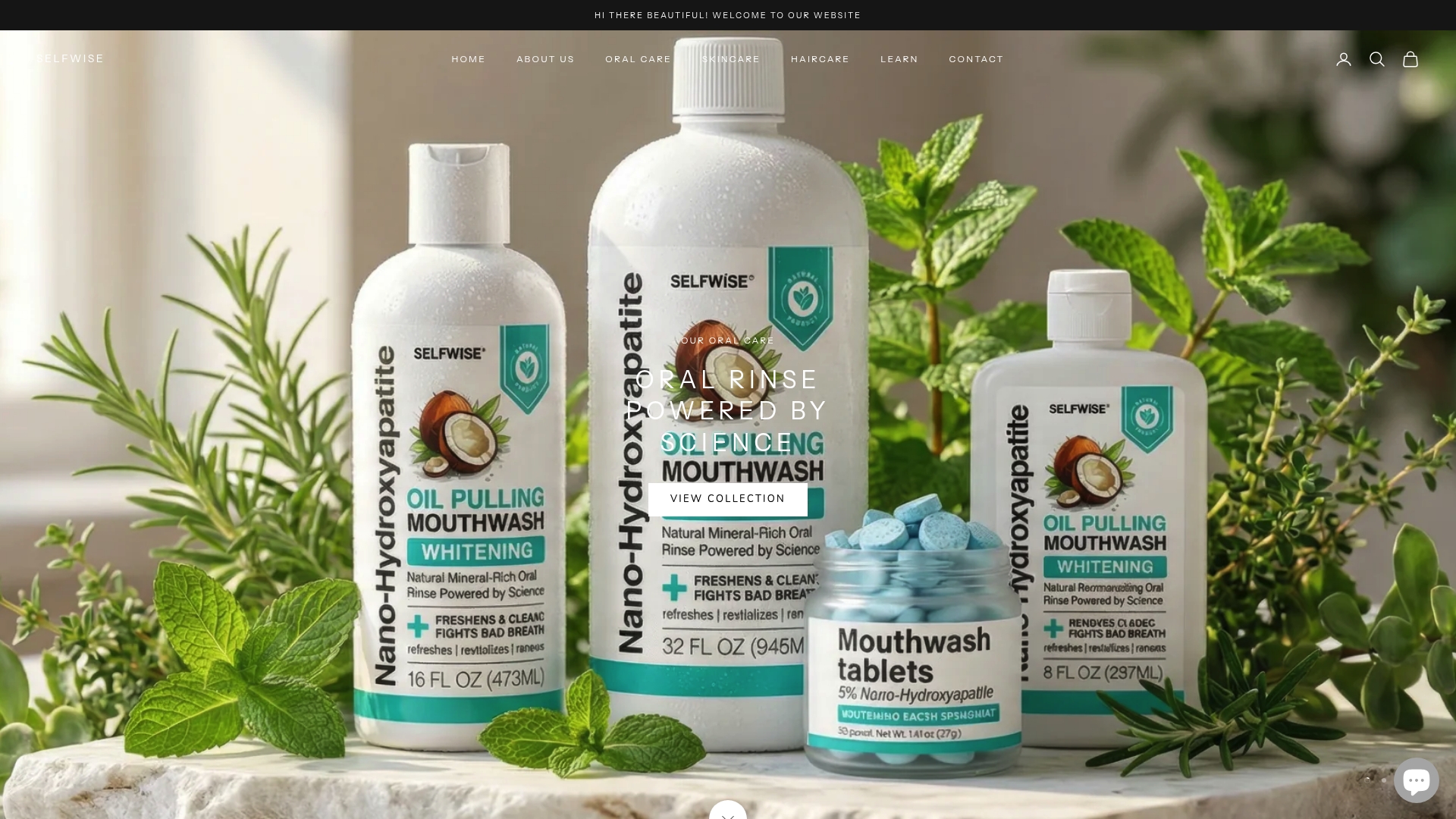
The nano hydroxyapatite mouthwash tablets are the cleanest entry point: no water, no preservatives needed, and a genuinely short ingredient list built around nHAp and xylitol. For a full overview of how to build a natural routine that actually holds up, the natural oral care guide walks through every step with product recommendations matched to specific oral health goals.
FAQ
What does “preservative-free” actually mean on oral care labels?
It means the product excludes named synthetic preservatives like parabens, phenoxyethanol, MIT, and MCI. Most preservative-free products still contain natural antimicrobial agents like xylitol or caprylyl glycol to maintain microbial stability.
Are preservative-free toothpastes as effective as conventional ones?
Yes, when formulated with active ingredients like nano hydroxyapatite or xylitol. Effectiveness depends on the active ingredients present, not on whether traditional preservatives are included.
Can preservative-free mouthwash still irritate sensitive mouths?
It can. Irritation in sensitive individuals often comes from essential oils, flavoring agents, or citric acid rather than preservatives. Reading the full ingredient list is the only reliable way to identify potential triggers.
Are mouthwash tablets truly preservative-free?
Yes. Solid, anhydrous tablet formats contain no water, which eliminates the conditions bacteria and mold need to grow. No water means no preservation system is required, making tablets the cleanest format available.
What is the safest preservative-free option for children?
Choose alcohol-free, SLS-free formulas with xylitol as the primary active ingredient. Follow FDA age guidelines for any rinse product, and avoid giving children under 6 any mouthwash not specifically formulated for their age group.