
What Is a Plant-Derived Oral Cleanser? Natural Care Guide
A plant-derived oral cleanser is an oral hygiene product whose active antimicrobial and cleaning agents come entirely from botanical sources, using compounds like polyphenols, terpenes, and flavonoids to reduce oral microorganisms and control plaque biofilm. These products differ from conventional synthetic mouthwashes by drawing on plant secondary metabolites that disrupt bacterial adhesion and inhibit biofilm formation. You will find them in formats including rinses, gels, and mouthwash sprays. Brands like Desert Essence and Dr. Bronner’s have built product lines around this concept, and Selfwisebrand applies the same philosophy to its natural mouthwash range. One critical point from the start: plant-derived oral cleansers complement mechanical cleaning rather than replace brushing and flossing.
What is a plant-derived oral cleanser made of?
The active ingredients in plant-derived oral cleansers belong to a class called secondary metabolites. These are compounds plants produce for their own defense, and they happen to be highly effective against oral bacteria. The main categories are polyphenols, flavonoids, terpenes, and phenolics. Each group works through a slightly different mechanism, but all of them share one core function: they interfere with how bacteria attach to tooth surfaces and build the sticky colonies known as biofilm.
Specific medicinal plants appear repeatedly in both research and formulated products. Neem, tulsi, peppermint, clove, cinnamon, and green tea are among the most studied. Neem and green tea polyphenols act directly against oral pathogens including Streptococcus mutans, the primary bacterium behind tooth decay. Clove contains eugenol, a terpene with well-documented antimicrobial and anti-inflammatory activity. Peppermint delivers menthol, which provides both sensory freshness and mild antibacterial effects.
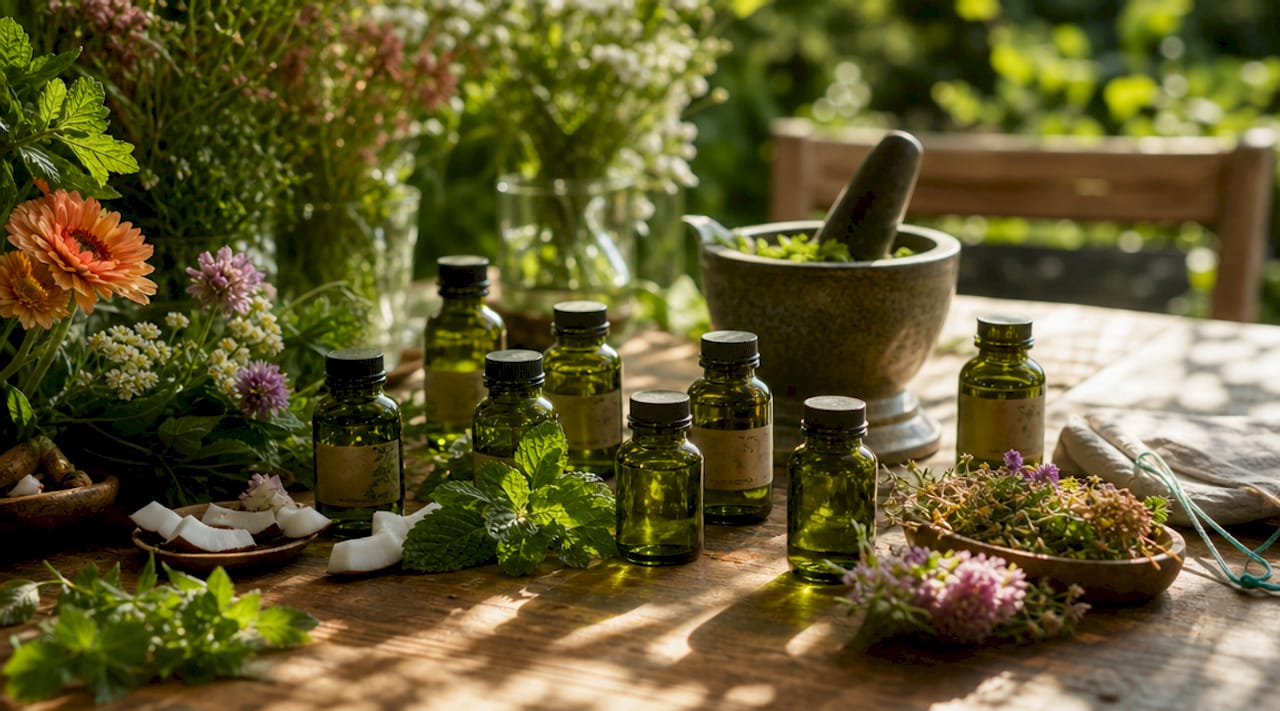
Manufacturers prepare these botanicals through several methods. Infusions and decoctions extract water-soluble compounds from roots or aerial plant parts. Cold-press and steam distillation methods yield essential oils with concentrated terpene profiles. The preparation method matters because it determines which compounds end up in the final product and at what concentration. Standardized extraction methods are what separate a well-formulated product from one that simply lists botanical names on its label without delivering meaningful activity.
Beyond the actives, every mouthwash formula also contains a base. Water and glycerin form the solvent system. Surfactants help distribute ingredients evenly. Sweeteners like xylitol improve taste and, in the case of xylitol specifically, add genuine anti-caries benefit. These supporting ingredients are not botanicals, but they are not harmful either. Understanding this distinction matters when you evaluate what you are actually buying.
Pro Tip: When reading an ingredient list, look for the botanical ingredient in the top half of the list. If it appears near the bottom after preservatives and flavoring, the concentration is likely too low to deliver meaningful antimicrobial activity.
You can explore a detailed breakdown of natural antibacterial oral ingredients to understand which botanicals have the strongest evidence behind them.
How do plant-derived cleansers compare with conventional mouthwashes?
This is where honest evaluation matters more than marketing. The comparison between plant-based oral hygiene products and conventional synthetic mouthwashes is not a simple win for either side. Both have real strengths and real limitations.
| Feature | Plant-derived cleansers | Conventional synthetic mouthwashes |
|---|---|---|
| Antimicrobial activity | Moderate to good, varies by formulation | Strong and consistent with agents like chlorhexidine |
| Anti-inflammatory effect | Present via polyphenols and flavonoids | Limited unless specifically formulated |
| Side effects | Generally mild; rare sensitivity reactions | Chlorhexidine causes staining and taste disruption |
| Alcohol content | Often absent, but not always | Frequently present as a solvent and preservative |
| Biofilm inhibition | Targets adhesion and early biofilm stages | Disrupts established biofilm more aggressively |
| Formulation consistency | Variable across products | Standardized and regulated |
| Long-term safety profile | Strong traditional use record | Well-studied but with known adverse effects |
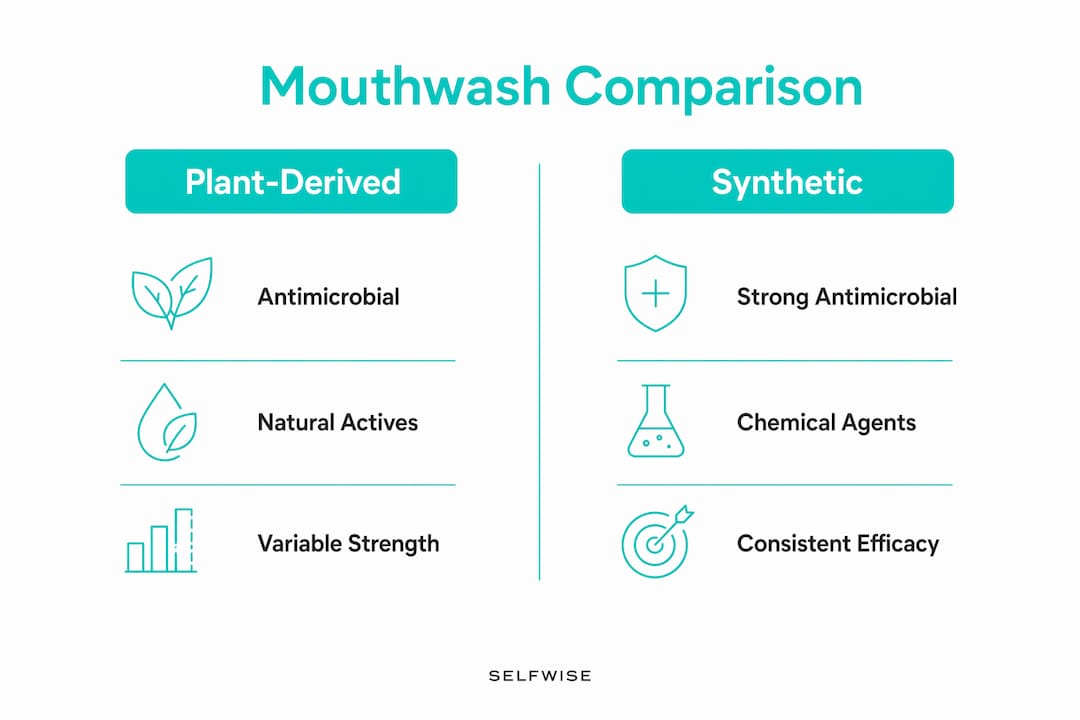
Chlorhexidine gluconate, the gold standard in prescription mouthwash, delivers powerful short-term antimicrobial results. However, extended use causes tooth staining, altered taste perception, and disruption of the oral microbiome. Plant-based alternatives avoid these effects, which is why herbal mouthwashes made from tulsi, peppermint, cinnamon, and ginger show good antimicrobial activity with pleasant sensory properties and no synthetic additives.
The biggest misconception in this space is the “chemical-free” label. Every mouthwash formula contains chemicals. Water is a chemical. Glycerin is a chemical. The more accurate goal is minimizing harsh or unnecessary synthetic compounds, particularly ethanol and aggressive surfactants. Most mouthwash bases include water, glycerin, and a range of additives regardless of whether the active ingredients are botanical or synthetic.
Plant-derived cleansers also show more variability in efficacy. Two products both labeled “plant-based” can perform very differently depending on extraction quality and botanical concentration. This is not a reason to avoid them. It is a reason to choose carefully.
Benefits and limitations of plant-derived dental care
The case for switching to or supplementing with plant-derived dental care products is grounded in real evidence, not just wellness trends. Here is what the research actually supports.
The genuine benefits include:
- Antimicrobial activity without harsh side effects. Plant phytochemicals target biofilm formation at the adhesion stage, making them effective preventive tools rather than purely reactive treatments.
- Anti-inflammatory and antioxidant properties. Polyphenols from green tea and clove reduce gingival inflammation, which matters for anyone managing early gum disease or sensitivity.
- Reduced mucosal irritation. Alcohol-free plant-based formulas are significantly gentler on oral tissues, making them suitable for people with dry mouth, canker sores, or sensitivity to ethanol.
- Compatibility with a natural oral care routine. Products using xylitol alongside botanical actives deliver dual benefit: xylitol starves cavity-causing bacteria while the botanicals address biofilm.
- Eco-friendly mouthwash options. Many plant-derived products use biodegradable ingredients and sustainable sourcing, which matters to environmentally conscious consumers.
The limitations are equally real and worth stating plainly. Plant-derived cleansers generally work best as preventive tools rather than treatments for active infection. Consistency of use matters more with botanical products than with synthetic ones because the antimicrobial effect builds over time rather than delivering an immediate knockout dose. Potency also varies. A diluted peppermint rinse with no standardized extraction is not equivalent to a clinically tested neem formulation.
Pro Tip: Use your plant-derived rinse after brushing and flossing, not before. This maximizes contact time with clean tooth surfaces and lets the botanical actives work on areas your brush already cleared of debris.
Reading labels carefully is non-negotiable. Plant-derived does not automatically mean fluoride-free or alcohol-free. Some plant-based mouthwashes include non-plant actives like cetylpyridinium chloride. If your goal is a genuinely minimalist formula, you need to verify every ingredient, not just the botanical claims on the front of the bottle.
How to choose and use plant oral cleansers effectively
Choosing a quality product and using it correctly are two separate skills. Both matter.
- Check the botanical actives first. Look for named plant extracts with a stated concentration or standardized extract ratio. Vague terms like “herbal blend” without specifics are a red flag.
- Verify the full ingredient list. Confirm whether alcohol, fluoride, or synthetic preservatives are present. Decide based on your personal health goals, not marketing language.
- Match the format to your routine. Rinses work well for broad oral coverage. Gels suit targeted application around the gumline. Mouthwash sprays are convenient for travel or midday use.
- Time your rinse correctly. Use it after brushing and flossing for maximum benefit. Swish for at least 30 seconds to allow the botanical actives to reach interdental spaces and the back of the mouth.
- Use it consistently. Plant-based oral hygiene products deliver their best results with daily use over weeks, not occasional application. Treat it like a supplement to your mechanical cleaning, not a substitute.
- Pair with proven ingredients. Products combining botanical actives with nano hydroxyapatite or xylitol address both the microbial and remineralization sides of oral health simultaneously.
Effective plant-derived cleansers depend on three factors working together: identified botanical actives, standardized extraction for consistency, and a formulation that keeps those actives stable and bioavailable in the mouth. When you find a product that checks all three, you have found something worth using. The natural oral care space has grown significantly, and quality options now exist across every price point.
Key takeaways
Plant-derived oral cleansers work best as daily preventive adjuncts to brushing and flossing, using standardized botanical actives like neem, green tea, and clove to inhibit biofilm formation without the side effects of synthetic agents.
| Point | Details |
|---|---|
| Definition | A plant-derived oral cleanser uses botanical actives like polyphenols and terpenes to reduce oral bacteria and control plaque. |
| Key ingredients | Neem, tulsi, peppermint, clove, cinnamon, and green tea are the most evidence-backed botanical actives in oral care. |
| Not truly “chemical-free” | Every mouthwash contains non-botanical components; the realistic goal is minimizing harsh synthetic additives. |
| Efficacy varies | Product quality depends on standardized extraction methods and botanical concentration, not just the ingredient list. |
| Best use practice | Rinse after brushing for 30 or more seconds daily to maximize contact with clean tooth surfaces. |
Why I think the “natural vs. synthetic” framing misses the point
The conversation around plant-derived oral cleansers gets stuck in a false binary. Natural good, synthetic bad. That framing does not hold up when you look at the actual evidence, and it leads people to make poor purchasing decisions.
What I have found is that the more useful question is not “is this natural?” but “is this formulated well?” A poorly extracted neem rinse with no standardized concentration does almost nothing. A well-formulated product combining green tea polyphenols with xylitol and nano hydroxyapatite does quite a lot. The botanical origin is almost secondary to the quality of the science behind the formula.
The other thing worth saying plainly: plant-derived cleansers are genuinely better than synthetic alternatives in specific situations. For people with alcohol sensitivity, dry mouth, or a history of mucosal irritation from chlorhexidine, the switch to a botanical rinse is not just a preference. It is a clinically sensible choice. The side effect profile of well-formulated herbal products is consistently gentler, and the anti-inflammatory properties of polyphenols add real value for gum health that synthetic antiseptics do not replicate.
Where I push back on the natural oral care community is on the consistency question. You cannot use a botanical rinse twice a week and expect results. These products require daily use, proper technique, and pairing with mechanical cleaning. The evidence supports them as adjuncts, not as standalone solutions. Anyone selling you a plant-based mouthwash as a replacement for your toothbrush is selling marketing, not science.
The future of this category is in standardized, evidence-tested botanical formulations that combine traditional plant knowledge with modern extraction science. That intersection is where the genuinely useful products live.
— Viktor
Try Selfwisebrand’s plant-based mouthwash range
If this article has you rethinking your oral care routine, Selfwisebrand makes it straightforward to act on that.
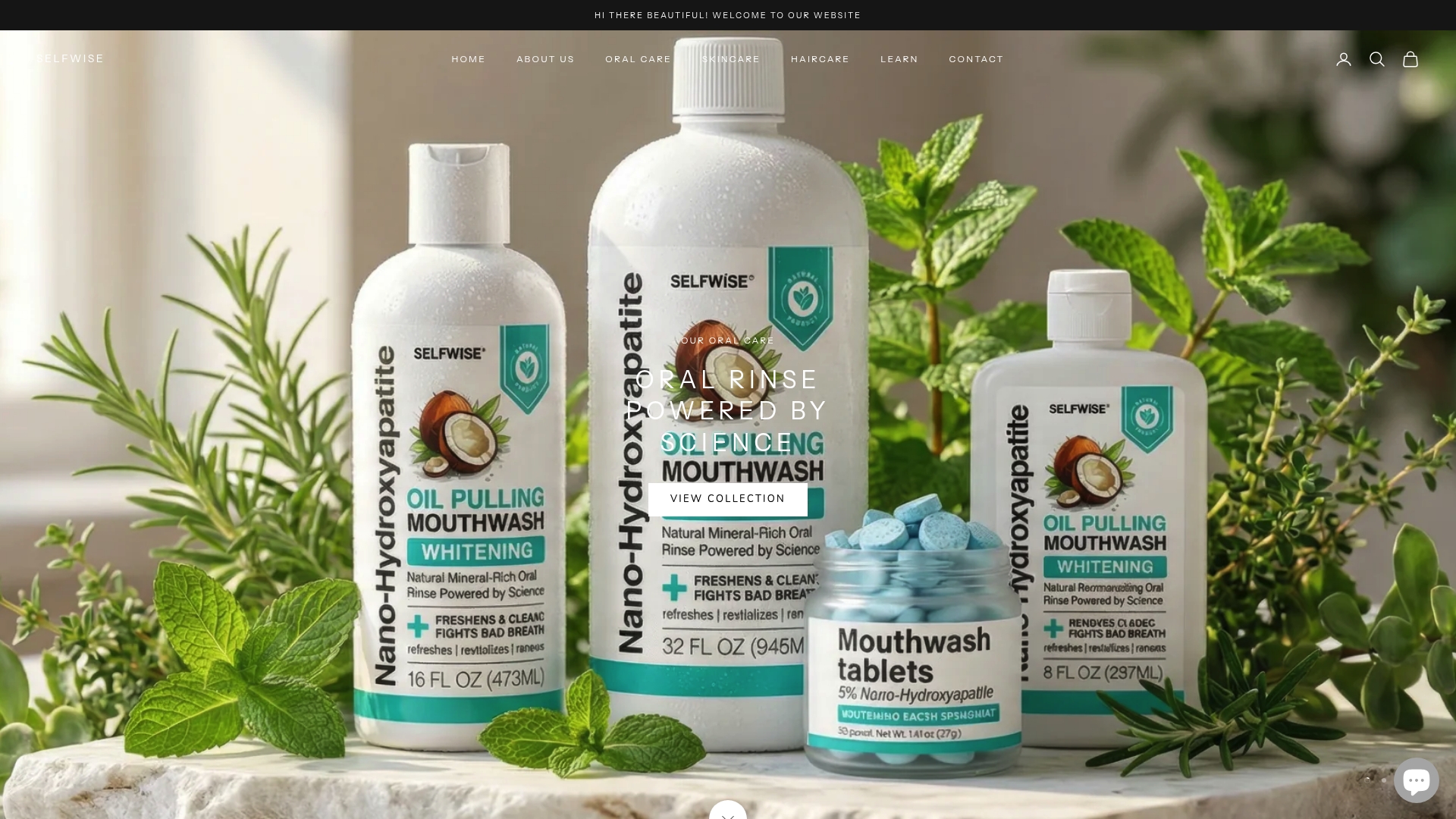
Selfwisebrand formulates its natural mouthwash collection around simple, effective ingredients with real science behind them. The range includes alcohol-free and fluoride-free options built for people who want to minimize harsh chemicals without sacrificing results. Ingredients like xylitol and nano hydroxyapatite work alongside botanical actives to address both microbial control and remineralization in a single daily routine. If you are ready to build a natural oral care routine that actually holds up to scrutiny, Selfwisebrand is a practical place to start.
FAQ
What is a plant-derived oral cleanser?
A plant-derived oral cleanser is an oral hygiene product that uses active ingredients sourced from plants, including essential oils and botanical extracts containing polyphenols, terpenes, and flavonoids, to reduce oral bacteria and control plaque biofilm.
Are plant-based oral cleansers as effective as chlorhexidine mouthwash?
Plant-based cleansers show good antimicrobial activity but are generally less potent than chlorhexidine for treating active infection. They are most effective as daily preventive tools and carry significantly fewer side effects, including no staining or taste disruption.
Does “plant-derived” mean the product is free from alcohol and fluoride?
Not automatically. Some plant-based mouthwashes still contain alcohol, fluoride, or synthetic preservatives. Always read the full ingredient list rather than relying on front-label claims to confirm what is actually in the formula.
Which plant ingredients are most effective in oral cleansers?
Neem, green tea, tulsi, clove, peppermint, and cinnamon have the strongest research support. These botanicals inhibit Streptococcus mutans and other oral pathogens while reducing gingival inflammation through their polyphenol and terpene content.
How often should you use a plant-derived oral rinse?
Daily use is recommended for meaningful results. Swish for at least 30 seconds after brushing and flossing to maximize contact with tooth surfaces and reach areas that mechanical cleaning misses.