Article: Avoid Lipoid Pneumonia: Oil Pulling Side Effects and 7 Safety Steps

Avoid Lipoid Pneumonia: Oil Pulling Side Effects and 7 Safety Steps
Oil pulling is low-risk for most healthy adults, but it isn’t harmless. Expect mild, temporary nuisances like nausea, jaw soreness, and headaches. A rare but serious risk, exogenous lipoid pneumonia from inhaling oil, has been documented in case reports. Stop and see a doctor if you develop coughing, breathing trouble, or persistent mouth symptoms, and never let oil pulling replace brushing, flossing, or dental checkups.
TL;DR:
- Oil pulling can cause minor side effects like nausea, jaw soreness, and temporary taste changes, which usually resolve within a week or two.
- The rare risk of inhaling oil leading to lung inflammation is documented but extremely uncommon, especially in people with airway or swallowing issues.
- Children, individuals with respiratory or swallowing difficulties, and those with active mouth infections should avoid oil pulling altogether due to higher complication risks.
- Oil pulling is not proven to prevent cavities, treat gum disease, or replace brushing and flossing, and should only complement regular dental care.
- Proper technique, including starting with short swishing times and avoiding reclining, is essential to minimize side effects and safety risks.
Table of Contents
- What Are the Common Side Effects of Oil Pulling?
- Can Oil Pulling Cause Serious Lung Problems?
- Who Should Avoid Oil Pulling Entirely?
- Does Oil Pulling Replace Brushing and Flossing?
- How Do You Practice Oil Pulling Safely?
- What Does the Research Actually Show?
- Balancing Tradition, Safety, and a Real Routine
- Building a Natural Oral Care Routine Beyond Oil Pulling
- Sources
- FAQ
What Are the Common Side Effects of Oil Pulling?
Most people who try oil pulling notice one of a handful of minor complaints before they ever get to a serious one. Swishing a tablespoon of oil for extended periods triggers the gag reflex in plenty of people, especially with coconut oil’s thick, waxy texture. That gag response, plus the unfamiliar sensation of oil sitting in the mouth, is behind most reports of nausea.
Jaw and tongue fatigue is the other big complaint. Ten to twenty minutes of repetitive swishing works muscles most people never consciously use, and that can translate into soreness or a dull tension headache by the time you’re done. Some people also report temporary tooth sensitivity or a strange lingering taste, though this tends to fade within the first few sessions.
Swallowing oil, even a small amount, can upset the stomach. Healthline notes that oil pulling is generally low-risk but commonly causes nausea, jaw soreness, and digestive upset like mild diarrhea when oil is swallowed rather than spit out.
- Nausea or gagging, usually tied to oil texture or swishing too long on the first try
- Jaw or tongue soreness from unfamiliar muscle use
- Mild headache from jaw tension
- Temporary tooth sensitivity or taste changes
- Digestive upset or loose stools if oil is accidentally swallowed
Nearly all of these ease up within a week or two as your mouth adjusts. If soreness or nausea gets worse instead of better, that’s a signal to shorten your sessions or stop altogether.
Pro Tip: Start with 30 to 60 seconds of gentle swishing instead of jumping straight to 20 minutes. Testing your tolerance first cuts down on both gagging and jaw strain.
Can Oil Pulling Cause Serious Lung Problems?
The rare but genuinely serious risk is exogenous lipoid pneumonia, a lung condition that happens when oil is accidentally inhaled, or aspirated, instead of staying in the mouth or being spit out. Case reports documented in PMC describe habitual oil pulling leading to this condition, though it remains uncommon.
The tricky part is that early lipoid pneumonia can look like almost nothing. Some cases are found only when a chest scan turns up an abnormality for an unrelated reason. Oil sitting in lung tissue triggers a slow inflammatory response rather than a sudden crisis, which is why symptoms can take time to surface.
What the case reports show: Lipoid pneumonia from oil aspiration during swishing is rare, but the condition can progress quietly before symptoms appear, which is why clinicians urge caution for anyone with impaired swallowing or airway control.
Beyond the lungs, dentists occasionally report dislodged fillings or crowns from aggressive swishing, and people with existing mouth sores sometimes find oil pulling irritates them further. Watch for a persistent cough, shortness of breath, fever, or unexplained weight loss. Any of those warrants a call to a doctor, not another week of swishing to “wait it out.”
Who Should Avoid Oil Pulling Entirely?
Certain groups face a higher chance of complications and should either skip oil pulling or talk to a dentist first.
- Young children, who are more prone to accidentally swallowing or inhaling oil during swishing
- People with swallowing difficulties, including those with dementia or Parkinsonism, where airway protection is already compromised
- Anyone with respiratory disease, since reduced lung reserve makes aspiration complications more dangerous
- Patients recovering from oral surgery, or anyone with loose fillings, crowns, or active infections in the mouth
- People allergic to the specific oil, whether that’s coconut, sesame, or sunflower
Clinicians specifically flag impaired airway protection as a reason to avoid oil pulling altogether, since early lipoid pneumonia can stay silent while it progresses. If mucosal tissue becomes irritated or abraded from excessive rinsing, that’s also a cue to stop and check in with a dentist rather than push through.
Does Oil Pulling Replace Brushing and Flossing?
No. The American Dental Association does not recommend oil pulling as a substitute for brushing, flossing, or professional dental care, because the clinical evidence behind it is too thin to support that role.
Oil pulling has no proven ability to reverse cavities, cure gum disease, or repair enamel. Those problems need diagnosis and treatment from a dentist. Cleveland Clinic’s guidance frames it the same way: an optional complement at best, never a replacement for fluoride, brushing, or regular checkups. If you’re using oil pulling instead of seeing a dentist for pain, bleeding gums, or visible decay, you’re gambling with something that needs real treatment.
How Do You Practice Oil Pulling Safely?
Getting the technique right does most of the work in avoiding side effects. Follow these steps to keep the risk low:
- Pick an edible oil you’re not allergic to, like coconut or sesame oil, and start with a tablespoon or less.
- Sit upright with your chin slightly raised. Never lie down or talk while the oil is in your mouth.
- Swish gently for about 5 minutes to start, working up gradually if you tolerate it well.
- Stop immediately if you start coughing or gagging. Forcing through it raises aspiration risk.
- Spit the oil into a tissue or the trash, not the sink, since oil can clog drains over time.
- Rinse your mouth with water afterward and avoid swallowing any oil during the process.
- Pause the practice after oral surgery, during an active infection, or if you notice persistent soreness, irritation, or sensitivity.
The upright posture matters more than people assume. Lying down or reclining while swishing increases the odds that a stray bit of oil slips toward the airway instead of staying where it belongs.
Pro Tip: Keep the swishing motion loose and low-effort rather than aggressive. A relaxed jaw does the same job with far less soreness afterward, and it lowers your gagging risk too.
If you want a fuller walkthrough of timing and daily habit-building, Selfwisebrand’s guide on oil pulling morning routine steps covers the practical side in more depth, and the piece on oil pulling mistakes to avoid walks through the most common technique errors.
What Does the Research Actually Show?
The clinical evidence for oil pulling is thin. A 2022 meta-analysis of nine randomized controlled trials found no significant difference in plaque or gingival index scores between oil pulling and control groups, and systematic reviews consistently rate the overall evidence quality as low.

The trials that do exist tend to be small, short, and inconsistent in design, so even where a study reports a modest bacterial reduction, that rarely translates into a durable outcome like fewer cavities or resolved gum disease. Meanwhile, the aspiration risk tied to lipoid pneumonia is documented in case reports rather than large trials, which makes it uncommon but not theoretical.
Put together, the honest conclusion is this: oil pulling may offer a small complementary benefit for some people, but its safety and value depend heavily on proper technique and who’s doing it. Choosing between coconut and sesame oil, for instance, comes down largely to personal tolerance and allergy status, a comparison Selfwisebrand breaks down in its coconut vs. sesame oil pulling guide.
Balancing Tradition, Safety, and a Real Routine
I think the honest takeaway is simpler than most articles make it sound: oil pulling can be a reasonable, low-cost addition to an oral care routine, but only if you treat the safety guidance as non-negotiable and the benefits as modest at best. It’s not a cure for anything, and it’s not a shortcut around brushing or your dentist. Where it earns a place is as one small piece of a broader natural routine, alongside things like proper brushing and a mouthwash that actually supports remineralization. If you want a technique refresher before you start, Selfwisebrand’s guide to what oil pulling actually is is a solid next stop.
— Viktor
Building a Natural Oral Care Routine Beyond Oil Pulling
Oil pulling has real limits, and some brands build products meant to work alongside it, not depend on it. Formulas using nano hydroxyapatite and xylitol include ingredients with a clearer, more direct role in supporting remineralization and fresh breath, formulated without fluoride, alcohol, or harsh chemicals.
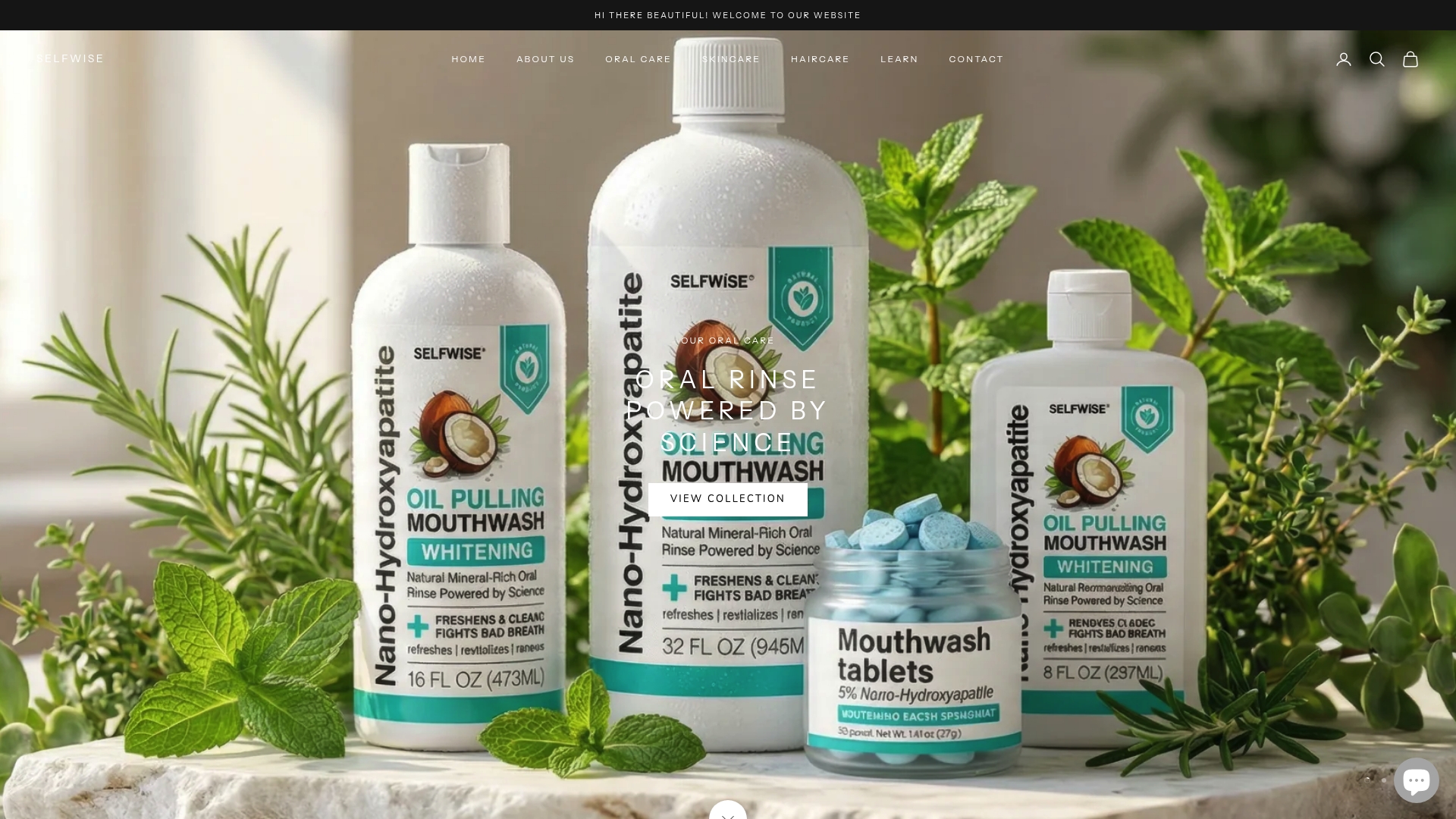
If you’re already spitting oil into the trash every morning, pairing that habit with a natural mouthwash designed to pick up where oil pulling leaves off makes sense. Browse the oral care collection to see the full lineup, or start with the natural oral care guide if you want a complete routine rather than a single product swap. Either page is a good place to start building something more consistent than oil pulling alone can deliver.
This article is general information, not a substitute for advice from a qualified doctor. Consult a qualified healthcare professional about your own circumstances before acting on anything here.
Sources
- Is Coconut Oil Pulling Safe? Avoiding Unsafe Practices — Healthline
- Oil pulling and oral health: swish or not? — Tufts Now
- Meta-analysis on oil pulling outcomes — PubMed
- Case reports and discussion of lipoid pneumonia related to aspiration — PMC
- Is oil pulling your best choice for dental health? — Cleveland Clinic
FAQ
What happens if you do oil pulling every day?
Daily oil pulling is generally tolerated well by healthy adults, though jaw soreness and mild nausea are common while your body adjusts. Long-term daily use hasn’t shown proven cavity or gum-disease benefits in systematic reviews, so treat it as a habit, not a treatment.
Why don’t dentists recommend oil pulling?
Dentists hold back from recommending it because the American Dental Association says the clinical evidence for real benefit is too weak to support it as a standard treatment. Relying on it alone risks missing cavities or gum disease that need professional care.
What are the disadvantages of oil pulling?
The main downsides are minor: nausea, jaw fatigue, headaches, and digestive upset if oil is swallowed. The rare but serious downside is aspiration-related lipoid pneumonia, which is why people with swallowing or breathing difficulties should avoid the practice.
Is 10 minutes of oil pulling enough?
Ten minutes is a reasonable middle ground for most people, though starting with just a minute or two to test tolerance is safer for beginners. There’s no research-backed minimum duration tied to better clinical outcomes, so comfort and consistency matter more than hitting a specific number.
Does Selfwisebrand recommend oil pulling as a full oral care routine?
No. Selfwisebrand treats oil pulling as an optional complement, not a replacement for brushing, flossing, or dental visits. Its oral care products are designed to support a fuller natural routine alongside, not instead of, standard hygiene practices.