How to remineralize teeth naturally: step-by-step guide
You notice a chalky white spot on your tooth, or maybe a dull ache when you sip something cold. These are early signs of enamel demineralization, and they’re far more common than most people realize. The good news? Tooth remineralization is a natural process where calcium and phosphate ions from saliva deposit back into weakened enamel to repair early damage. With the right ingredients and a consistent routine, you can actively support that process at home using science-backed, chemical-free tools.
Table of Contents
- Understanding tooth demineralization and remineralization
- What you need: Essential ingredients and tools for remineralization
- How to remineralize: Step-by-step natural approach
- Troubleshooting and maximizing results
- Our take: Why natural remineralization deserves a fresh look
- Discover natural oral care solutions
- Frequently asked questions
Key Takeaways
| Point | Details |
|---|---|
| Natural solutions work | Nano-hydroxyapatite and xylitol are proven alternatives for remineralizing enamel and safe for daily use. |
| Diet and routine matter | Consistent brushing, chewing xylitol gum, and choosing mineral-rich foods boost remineralization results. |
| Early action is key | Home-based remineralization only helps with early lesions, white spots, and sensitivity—not advanced decay. |
| Check progress regularly | Monitor your teeth for smoother surfaces, less sensitivity, and fading spots to assess improvement. |
Understanding tooth demineralization and remineralization
Your enamel is under constant chemical pressure. Every time you eat something acidic or sugary, bacteria in your mouth produce acids that lower oral pH. When pH drops below about 5.5, minerals start leaching out of enamel in a process called demineralization. Do this repeatedly without giving your saliva time to recover, and you get those early white spot lesions, increased sensitivity, and eventually, cavities.
The flip side is remineralization. When oral pH rises back above critical levels, your saliva delivers calcium and phosphate ions back into the enamel surface. Remineralization happens when oral pH rises above critical levels around 5.5 for enamel, and saliva is the primary vehicle for that repair. This is why staying hydrated and reducing acid exposure matters so much.
Here’s a quick look at what drives each process:
| Factor | Drives demineralization | Drives remineralization |
|---|---|---|
| Diet | Sugary, acidic foods | Calcium and phosphate-rich foods |
| Saliva | Low flow, low pH | High flow, neutral to alkaline pH |
| Oral bacteria | High Streptococcus mutans | Reduced bacterial load |
| Products used | Harsh chemicals, acidic rinses | nHA, xylitol, fluoride |
Not all enamel damage is equal. Early white spots and surface-level lesions are candidates for home remineralization. But once a cavity has broken through the enamel surface and reached the dentin, you need professional care. No toothpaste or mouthwash can rebuild a physical hole in your tooth.
Key signs your enamel is under stress:
- White, chalky spots on tooth surfaces
- Increased sensitivity to cold, heat, or sweets
- Dull or rough enamel texture
- Early discoloration near the gumline
For a broader look at building a routine that protects your enamel long-term, the natural oral care guide is a solid starting point.
Remember: Remineralization is a repair process, not a reversal of advanced decay. The earlier you act, the better your results.
What you need: Essential ingredients and tools for remineralization
Once you understand the science, the next step is choosing the right ingredients. Not all remineralizing products are created equal, and a few key compounds stand out in the research.
Nano-hydroxyapatite (nHA) is the ingredient getting the most attention right now, and for good reason. Nano-hydroxyapatite (nHA) particles mimic natural enamel, penetrate demineralized zones, and show superior remineralization in studies. Because nHA is structurally identical to the mineral that makes up 97% of your enamel, it integrates directly into damaged areas rather than just coating the surface.
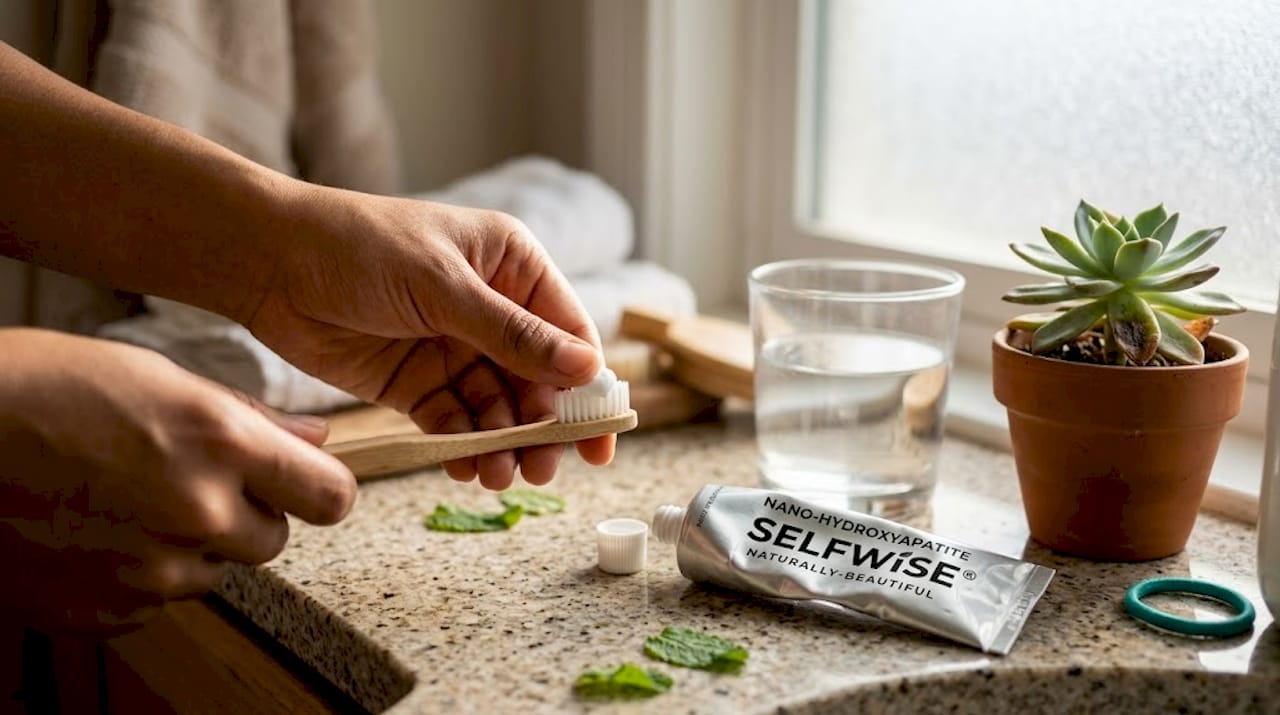
Xylitol is the other heavy hitter. Xylitol stimulates saliva flow and enhances enamel repair while inhibiting cariogenic bacteria. It’s not just a sweetener. It actively disrupts the bacteria that cause acid attacks in the first place.
Here’s how these compare to fluoride:
| Ingredient | Remineralization | Safety profile | Biocompatibility |
|---|---|---|---|
| Fluoride | Proven, widely studied | Toxic in excess, not safe to ingest | Moderate |
| Nano-hydroxyapatite | Equal or superior in early lesions | Safe to ingest, non-toxic | Excellent |
| Xylitol | Supports via saliva and bacteria reduction | Safe, natural sugar alcohol | Excellent |
For daily use, you’ll want to build a toolkit that includes:
- An nHA or xylitol-based toothpaste (or both)
- A fluoride-free options mouthwash with nHA or xylitol
- Xylitol gum for post-meal use
- Calcium and phosphate-rich foods: cheese, yogurt, leafy greens, nuts
- Adequate water intake throughout the day
Pro Tip: Look for products that combine nHA and xylitol. The antibacterial action of xylitol reduces acid attacks, while nHA fills in the gaps left behind. Together, they work on two fronts simultaneously.
When evaluating ingredients, simplicity matters. The fewer unnecessary additives in your natural oral care products, the less interference with your mouth’s natural chemistry.
How to remineralize: Step-by-step natural approach
Knowing the ingredients is one thing. Knowing how to use them consistently is what actually moves the needle. Here’s a practical daily routine built around the evidence.
- Morning: Brush for two minutes with an nHA or xylitol-based toothpaste. Don’t rinse immediately. Let the paste sit on your teeth for 30 to 60 seconds to maximize mineral contact.
- After breakfast: Chew xylitol gum for 5 to 10 minutes. This stimulates saliva flow and helps neutralize any residual acids from your meal.
- Midday: Drink water consistently. Saliva production drops when you’re dehydrated, which slows remineralization.
- After acidic meals or snacks: Wait 30 minutes before brushing. Brushing too soon after acid exposure can scrub away softened enamel. Rinse with water instead.
- Evening: Use a nano-hydroxyapatite mouthwash after brushing. Swish for 60 seconds and don’t eat or drink afterward. Overnight is when your mouth does its deepest repair work.
- Daily diet: Prioritize calcium and phosphate-rich foods. Cheese is particularly effective because it raises oral pH quickly. Leafy greens, eggs, and nuts are also excellent choices.
nHA paste remineralizes white spots and improves DIAGNOdent scores in as little as 6 weeks in clinical trials. That’s a meaningful timeframe. You’re not waiting years to see results.
Pro Tip: Consistency beats intensity. Using your nHA toothpaste twice a day for six weeks outperforms using it sporadically for six months. Set a reminder if you need to.
Daily use of remineralizing agents optimizes prevention, and the research backs a 10% nHA paste combined with xylitol gum as a particularly effective pairing. Explore the full fresh breath oral health collection for products that fit this routine.
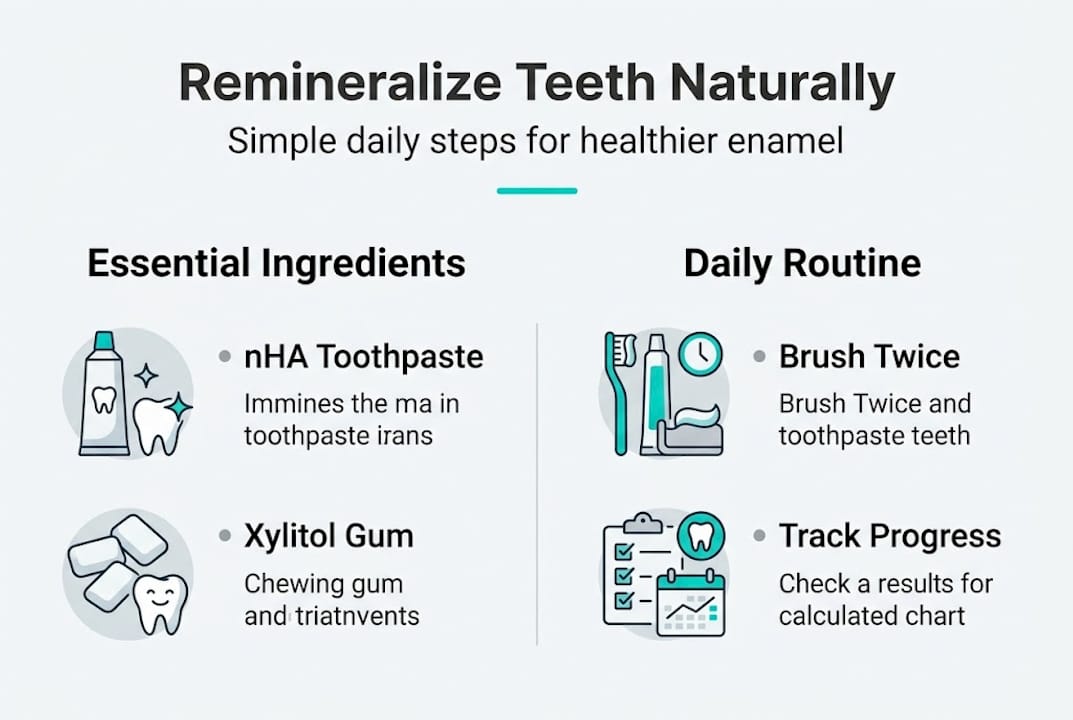
6-week remineralization target: Commit to the full routine every day for six weeks. Track your starting point with a photo or a note about sensitivity levels, then reassess at the end.
Troubleshooting and maximizing results
Even a well-designed routine hits snags. Knowing what to watch for keeps you on track and helps you recognize when it’s time to call your dentist.
Common mistakes that slow remineralization:
- Skipping evening use (overnight is your best repair window)
- Drinking acidic beverages like coffee or sparkling water throughout the day without rinsing
- Using a whitening toothpaste with abrasives that scratch enamel
- Not drinking enough water, which reduces saliva production
- Expecting results in days rather than weeks
Natural methods are most effective for early lesions; advanced caries require a dentist. This is a firm boundary. If you’re seeing dark spots, experiencing sharp pain, or noticing a visible hole or crack, stop trying to DIY it and get a professional assessment.
Know your limits: Home remineralization is a preventive and early-stage strategy. It is not a substitute for restorative dental care when decay has progressed.
How to track your progress at home:
| Indicator | Early sign of improvement | When to see a dentist |
|---|---|---|
| White spots | Fading, less chalky appearance | Spots darken or expand |
| Sensitivity | Reduced reaction to cold or sweets | Pain increases or becomes constant |
| Surface texture | Smoother feel with your tongue | Rough edges or visible pitting |
| Color | Enamel looks more uniform | Brown or black discoloration |
Methodologies for measuring remineralization in clinical settings include Vickers microhardness testing and DIAGNOdent laser fluorescence. At home, you’re working with visual changes and sensitivity as your primary indicators, which are genuinely useful proxies.
For more guidance on choosing the right products for your routine, the organic toothpaste options guide breaks down what to look for and what to avoid.
Our take: Why natural remineralization deserves a fresh look
Mainstream dentistry has leaned on fluoride for decades, and that trust wasn’t built on nothing. Fluoride has a long track record and broad regulatory acceptance. But the conversation is shifting, and we think that’s a healthy development, not a fringe movement.
Contrasting views: Fluoride vs. nHA show that while fluoride is proven and accepted, nHA shows equal or better promise but lacks long-term regulatory approval in some markets. That’s a nuanced reality worth sitting with. It doesn’t mean nHA is unsafe. It means the research is still catching up to what early clinical evidence already suggests.
What we find most compelling about nHA and xylitol isn’t just their efficacy. It’s their biocompatibility. You can swallow them without concern. You can use them on children. They work with your body’s natural chemistry rather than introducing a foreign compound. For health-conscious people who read ingredient labels and think carefully about what goes into their bodies, that matters.
The honest caution here is that long-term population-level studies on nHA are still limited. We’re not dismissing that. But the emerging clinical experience, combined with a strong safety profile, makes natural oral care a genuinely compelling option rather than a compromise. The future of dental health likely isn’t fluoride or nHA. It’s understanding when each tool fits.
Discover natural oral care solutions
If you’ve read this far, you already know more about remineralization than most people do. Now it’s about putting that knowledge into a routine that sticks.
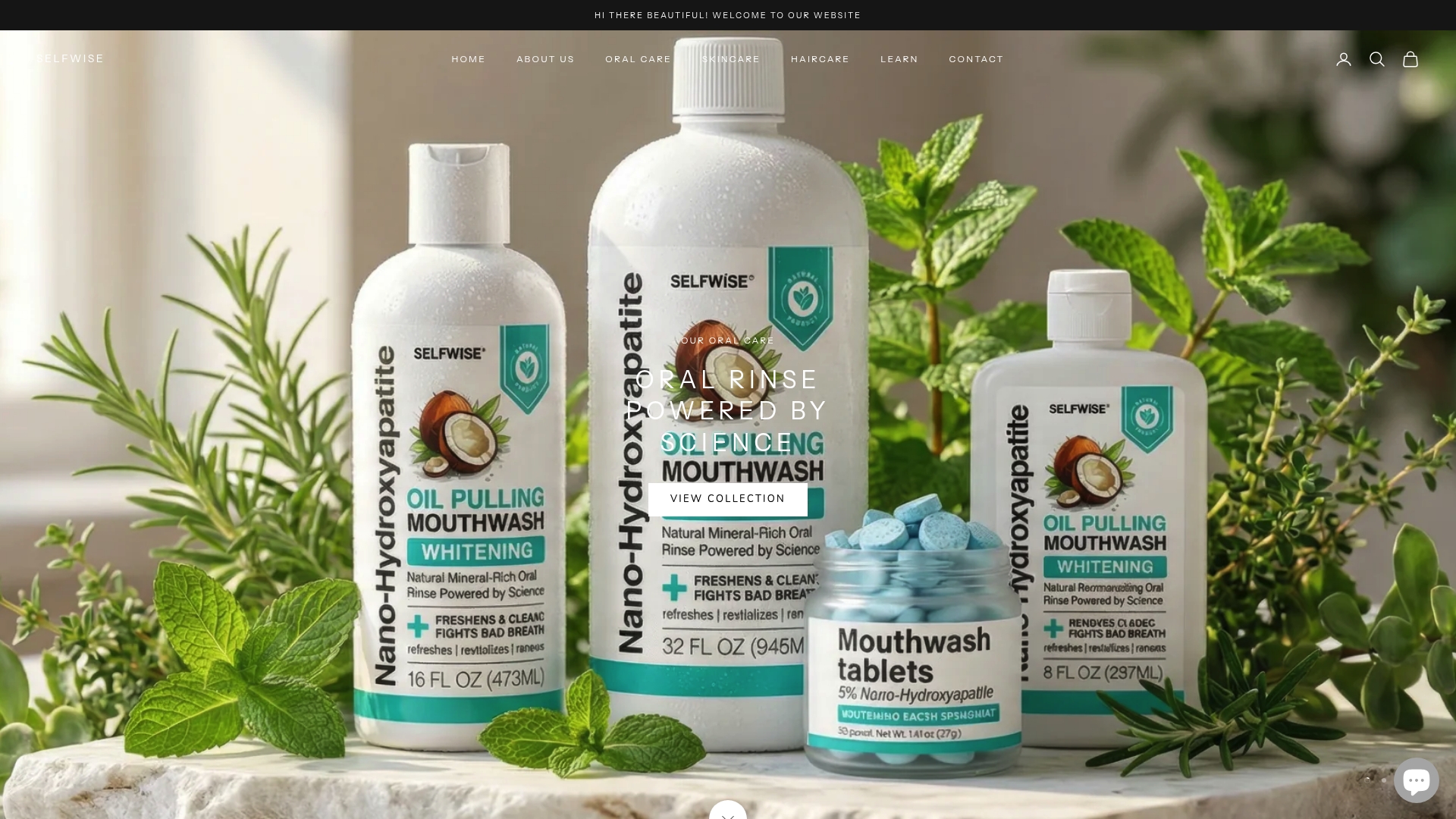
Selfwise offers nHA mouthwash tablets formulated specifically to support enamel repair without fluoride, harsh chemicals, or unnecessary additives. They’re designed for people who want their oral care to be as clean and intentional as the rest of their wellness routine. Browse the full fresh breath oral health collection to find products that fit your daily practice. And if you want to go deeper on building a complete natural routine, the more oral care tips page has everything you need to keep going.
Frequently asked questions
How long does it take to see results from tooth remineralization?
nHA paste remineralizes white spots and shows improved color and DIAGNOdent scores in 6 weeks. Consistent daily use is the key variable.
Is nano-hydroxyapatite safe for daily use?
Yes. nHA vs. fluoride: Safety profile research confirms nHA is biocompatible, non-toxic, and safe to ingest, making it appropriate for everyday routines including use in children.
Can remineralization reverse all cavities?
No. Limitations of remineralization are clear: only early-stage white spot lesions respond to home treatment. Once decay has penetrated through enamel, professional care is required.
How does xylitol support tooth remineralization?
Xylitol stimulates saliva flow and enhances enamel repair by inhibiting harmful bacteria and facilitating deeper mineral ion diffusion into enamel. It’s most effective when used consistently throughout the day.
What are the signs that remineralization is working?
nHA paste remineralizes white spots and improves microhardness and visual enamel appearance. At home, look for smoother surfaces, reduced cold sensitivity, and fading of white spots over 4 to 6 weeks.
Recommended
- Natural Oral Care Guide
- Natural Skincare, Haircare & Oral Care - Simple, Effective Products |
- Top 4 Organic Toothpaste Options 2026
- Natural Oral Care Tips & Guides | Selfwise
Related Selfwise remineralizing oral care
For readers interested in nano hydroxyapatite and remineralizing oral care:
- Nano Hydroxyapatite Mouthwash Tablets
- Nano Hydroxyapatite Oil Pulling Mouthwash
- Fluoride-free oral care collection
- Remineralizing mouthwash guide
Note: Selfwise products are designed for personal care routines and should not be described as diagnosing, treating, curing, or preventing medical conditions.