
Coconut Oil for Receding Gums: Benefits and Limits
If you’ve ever stared at a bottle of chemical mouthwash and wondered whether there’s a gentler option, you’re not alone. Receding gums are a real concern for millions of people, and the frustration of trying product after product with little result pushes many toward natural alternatives. Coconut oil has become one of the most talked-about remedies in natural oral care circles, but the conversation around it is often more wishful than accurate. This guide breaks down exactly what coconut oil can do for your gum health, what the science actually shows, how to use it safely, and where it falls short.
Table of Contents
- Understanding receding gums and gum health basics
- Coconut oil and oil pulling: Mechanisms and scientific evidence
- How to use coconut oil for gum care: Step-by-step guide
- Results, safety, and when to see a dentist
- Why coconut oil pulling is not a miracle cure for receding gums
- Discover smarter, safer oral care alternatives
- Frequently asked questions
Key Takeaways
| Point | Details |
|---|---|
| Not a cure | Coconut oil cannot regrow receding gums but may lower plaque and mild gum inflammation. |
| Supplemental role | Oil pulling is best used alongside brushing, flossing, and regular dental care. |
| Follow evidence | Clinical studies show coconut oil pulling reduces plaque, but less so than standard mouthwash. |
| Safety first | Don’t swallow oil and consult a dentist for persistent gum concerns. |
Understanding receding gums and gum health basics
Receding gums happen when the gum tissue surrounding your teeth pulls back or wears away, exposing more of the tooth or even its root. You might notice longer-looking teeth, increased sensitivity to hot or cold, or a notch you can feel near the gumline. It’s not just cosmetic. Exposed roots are vulnerable to decay, and deep pockets between the tooth and gum can harbor bacteria that make things worse over time.
Several factors contribute to gum recession. Here are the most common culprits:
- Aggressive brushing: Scrubbing too hard wears away both enamel and gum tissue
- Gum disease (periodontitis): Bacterial buildup triggers inflammation that destroys gum and bone
- Plaque and tartar accumulation: When plaque hardens into tartar, only a professional cleaning removes it
- Genetics: Some people are simply more susceptible, regardless of how well they brush
- Grinding or clenching: Constant pressure stresses the gum line
- Tobacco use: Significantly increases plaque buildup and reduces gum healing
The critical thing to understand is that gum recession is a sign, not a standalone condition. It tells you something is off in your oral care routine or overall health, and it needs a real response, not just a natural remedy swap.
Good oral care basics always start with the fundamentals: brushing twice daily with a soft-bristle brush, flossing, and seeing a dentist regularly. No single ingredient replaces that foundation.
The ADA and major dental organizations position oil pulling as a supplementary option at best. As Cleveland Clinic notes, oil pulling lacks definitive evidence and should not replace brushing, flossing, or fluoride toothpaste. Understanding this upfront keeps expectations realistic and protects your gum health long-term. Explore natural gum care as a complement to these essentials, never as a replacement.
Coconut oil and oil pulling: Mechanisms and scientific evidence
Oil pulling is an ancient Ayurvedic practice that involves swishing oil around your mouth for several minutes to reduce bacteria and improve oral hygiene. It predates modern dentistry by centuries, and while that alone doesn’t validate it, the practice has attracted enough scientific curiosity to produce some genuinely interesting data.
Coconut oil is the most popular choice today, largely because of its lauric acid content. Lauric acid has demonstrated antibacterial and anti-inflammatory properties in lab settings. When you swish oil, it physically coats the teeth and gums, and the emulsification process helps trap and dislodge bacteria before you spit it out.
Here’s what clinical studies have actually measured:
| Measurement | Before oil pulling | After 30 days | Change |
|---|---|---|---|
| Plaque index | 1.19 | 0.385 | 67.6% reduction |
| Gingival index | 0.91 | 0.401 | 55.9% reduction |
These numbers come from a small clinical study on participants with plaque-induced gingivitis, and they’re genuinely meaningful. A near 68% drop in plaque index and 56% reduction in gingival index over 30 days is not nothing. But context matters: these were participants with mild gingivitis, not advanced gum disease or recession.
When compared head-to-head with chlorhexidine mouthwash, the leading prescription-strength rinse, coconut oil shows comparable but slightly lower reductions in plaque, gingivitis, and bacterial load. That’s actually a win for coconut oil in some ways. Chlorhexidine stains teeth with long-term use and disrupts the oral microbiome. Coconut oil does neither.
You can find more on oil pulling including modern formulations that combine it with ingredients like nano hydroxyapatite. The bottom line: coconut oil pulling is a legitimate adjunct for mild gum inflammation and plaque control. It is not a treatment for receding gums.
How to use coconut oil for gum care: Step-by-step guide
If you want to try coconut oil pulling, doing it correctly matters. The right technique maximizes the benefit and keeps it safe.
What you need:
- 1 tablespoon of high-quality virgin coconut oil (unrefined, cold-pressed)
- A spoon or measuring tool
- Access to a trash can (never spit into a sink, it can clog drains)
Step-by-step routine:
- Do this first thing in the morning, before eating or drinking anything
- Measure about 1 tablespoon of coconut oil
- If it’s solid, let it melt in your mouth for a few seconds before swishing
- Swish gently for 10 to 20 minutes, pushing and pulling the oil through your teeth
- Spit into a trash can or disposable cup, never down the drain
- Rinse your mouth thoroughly with warm water
- Then brush and floss as normal
Comparing your coconut oil options:
| Type | Best for | Drawback |
|---|---|---|
| Virgin (unrefined) coconut oil | Most natural, retains lauric acid | Solidifies below 76°F |
| Fractionated coconut oil | Stays liquid, easy to measure | Lower lauric acid content |
| Formulated oil pulling blends | Added ingredients like xylitol, hydroxyapatite | Cost, less DIY feel |
| Standard chemical mouthwash | Quick, widely available | Alcohol, artificial ingredients |
For those looking for a ready-to-use option, an oil pulling alternative that combines oil pulling with science-backed ingredients is worth exploring. You can also browse natural oral care products designed specifically to complement a holistic routine.
Pro Tip: If 20 minutes feels too long at first, start with 5 minutes and work your way up. The benefit still exists at shorter durations, and building the habit matters more than perfecting it on day one.
One safety note: do not swallow the oil at the end. It contains the bacteria and debris you just pulled from your mouth. Oil pulling is not recommended for children or anyone with swallowing difficulties. The good news: unlike chlorhexidine, coconut oil won’t stain your teeth.

Results, safety, and when to see a dentist
Once you start oil pulling regularly, you might wonder how to tell if it’s actually working. Here are the signs worth paying attention to:
- Less bleeding when flossing: One of the earliest indicators of reduced gum inflammation
- Fresher breath that lasts longer: Reduced bacterial load contributes to this
- Less visible plaque on floss or tongue scraper: Fewer sticky white deposits signal improvement
- Reduced gum tenderness or puffiness: Especially around problem areas
- Cleaner feeling in the morning: Even before brushing
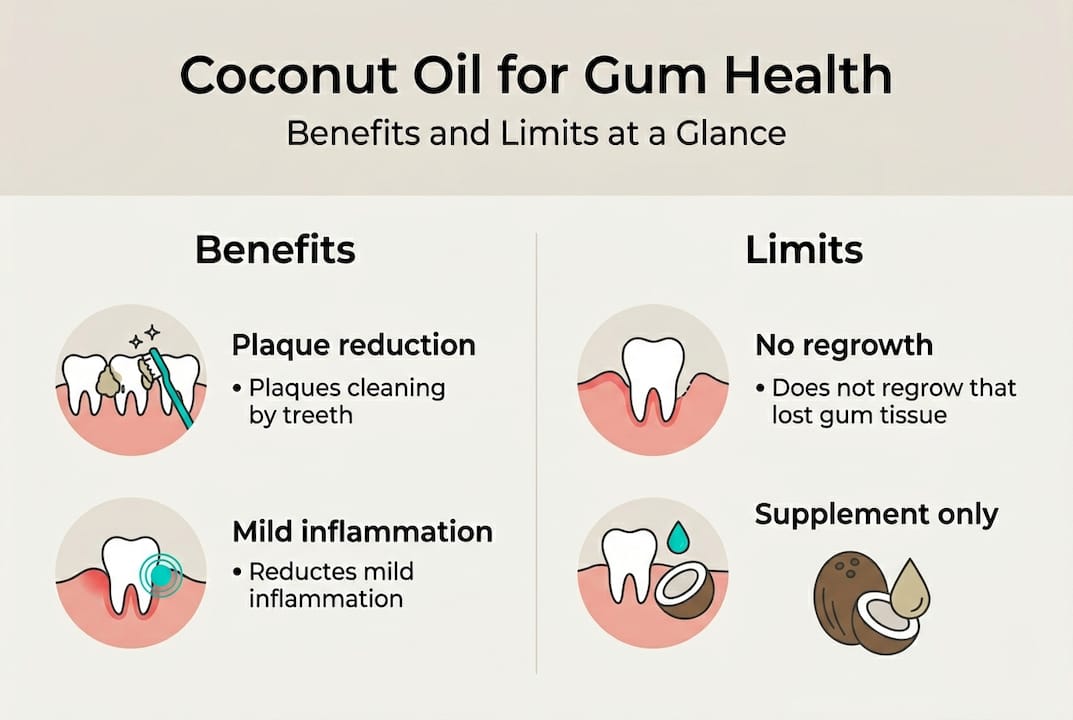
These are real, noticeable improvements you can track. But here’s the part that doesn’t get said enough: coconut oil pulling can reduce mild gum inflammation and slow plaque buildup. It cannot reverse receding gums or regenerate lost gum tissue. Once gum tissue recedes significantly, it does not grow back on its own without professional intervention.
Coconut oil pulling is a safe, natural adjunct for mild gingivitis prevention. It is not a substitute for professional dental care, especially when gum recession is already present.
Knowing when to stop self-managing and see a dentist is just as important as knowing how to oil pull correctly. Book an appointment if you notice:
- Gums continuing to recede despite improved hygiene
- Tooth sensitivity that gets worse over time
- Swelling, redness, or bleeding that doesn’t improve after 2 weeks
- Loose teeth or visible changes in bite
The ADA is clear: oil pulling should not replace your core hygiene routine. Explore more natural gum solutions that work alongside professional care, not instead of it.
Pro Tip: Keep a simple gum journal for the first 30 days. Note bleeding, tenderness, and breath quality each week. Progress feels invisible day to day but becomes clear when you compare week one to week four.
Why coconut oil pulling is not a miracle cure for receding gums
There’s a lot of excitement online about coconut oil reversing gum recession, and we understand why. The idea that something simple and natural sitting in your pantry could fix a stubborn dental problem is deeply appealing. We get it. But the enthusiasm often outpaces what the evidence actually supports.
Coconut oil cannot regrow gum tissue. Full stop. No amount of swishing changes that biological reality. What it can do is reduce bacterial load, ease mild inflammation, and serve as a pleasant, chemical-free addition to your morning routine. That’s genuinely valuable, just not miraculous.
The smarter approach is to blend the best of both worlds. Use coconut oil or a quality holistic oral care rinse as an adjunct. Pair it with proper brushing technique, consistent flossing, and regular dental visits. If recession is already happening, get professional guidance rather than hoping a trending ingredient will reverse years of tissue loss.
Chasing single-ingredient miracles is how people delay getting the care they actually need. We’d rather help you build a routine that works on every level.
Discover smarter, safer oral care alternatives
Coconut oil pulling is a solid starting point, but it’s only one piece of a truly effective natural oral care routine. If you want to go further without loading your mouth with harsh chemicals, Selfwise has you covered.

Our products are built around ingredients that are both gentle and effective, things like nano hydroxyapatite for enamel support, xylitol for cavity protection, and natural oils that actually work with your oral microbiome. Try our gentle enamel-supporting mouthwash if you want the oil pulling experience with added science-backed benefits. Or explore our full range of fluoride-free mouthwashes to find what fits your routine. Check every ingredient label and choose what aligns with your values. Simple ingredients. Real results.
Frequently asked questions
Can coconut oil really regrow receding gums?
No, coconut oil cannot regrow gum tissue. It may help reduce mild inflammation and support gum health as a supplement, but it does not reverse gum recession.
Is coconut oil pulling as effective as regular mouthwash?
Clinical research shows coconut oil pulling reduces plaque and gingivitis meaningfully, but slightly less effective than chlorhexidine mouthwash overall. The trade-off is no staining and no harsh chemicals.
Are there any risks or side effects to oil pulling?
Oil pulling is safe for most adults, but risk of aspiration exists if you accidentally swallow the oil. Avoid giving it to children or anyone with swallowing difficulties.
Should I stop brushing and flossing if I use coconut oil?
Absolutely not. Oil pulling is an optional supplement to your routine. The ADA confirms that it should not replace brushing, flossing, or fluoride toothpaste under any circumstances.
Recommended
- Natural Oral Care Tips & Guides | Selfwise
- Nano Hydroxyapatite Oil Pulling Mouthwash | Fluoride-Free Enamel Support | Selfwise
- Fresh Breath & Oral Health
- Natural Oral Care Guide
- Gum Disease Treatment | Periodontal Specialist | Bespoke Dental Fulham
- Causes and treatment of gingivitis - Dentista Salerno - Luongo Antonio