10% Nano Hydroxyapatite: Evidence, Safety, and Enamel Repair
Yes, nano hydroxyapatite remineralization works, at least under the conditions researchers have tested so far. Lab studies and several short clinical trials show nHA can rebuild mineral on weakened enamel, often performing on par with fluoride when conditions favor remineralization. The strongest evidence comes from in vitro work and short-term human trials, not decades of independent research, so treat this as a solid, evidence-backed option rather than a settled verdict. Products tested near 10% nHA concentration, with well-characterized particle shapes, represent the safest and best-studied way to use it.
TL;DR:
- Most research supports the efficacy of 10% nano hydroxyapatite toothpaste for improving early enamel lesions, but long-term studies are still needed.
- Shape and particle size significantly influence nHA performance, with rod-shaped particles offering better adhesion and mineralization templates than irregular forms.
- Higher concentrations, such as gels with 20-30%, can deposit densely on enamel surfaces, potentially limiting deeper mineral diffusion during application.
- Safety assessments point to good biocompatibility for well-characterized, rod-shaped particles, but long-term, independent research remains limited.
- Consistent use over weeks to months, combined with saliva-friendly habits, optimizes remineralization, while professional treatment is still necessary for active or severe decay.
Table of Contents
- How Nano Hydroxyapatite Remineralization Works at the Enamel Surface
- What Does the Research Say About nHA’s Remineralizing Power?
- What Concentrations and Product Forms Actually Get Tested?
- Is Nano Hydroxyapatite Safe to Use Regularly?
- How Should You Actually Use nHA for Remineralization?
- How Does Selfwise Approach the Evidence on nHA?
- Should You Choose nHA for Remineralization?
- What the Evidence Actually Tells Us
- Ready to Try Fluoride-Free Remineralization?
- Sources
- FAQ
How Nano Hydroxyapatite Remineralization Works at the Enamel Surface
Enamel is mostly hydroxyapatite crystal, arranged in tight rods with microscopic gaps where acid attack strips out calcium and phosphate. Nano hydroxyapatite particles are small enough, often under 100 nanometers, to slip into those gaps rather than just sitting on top of the tooth like a coating.
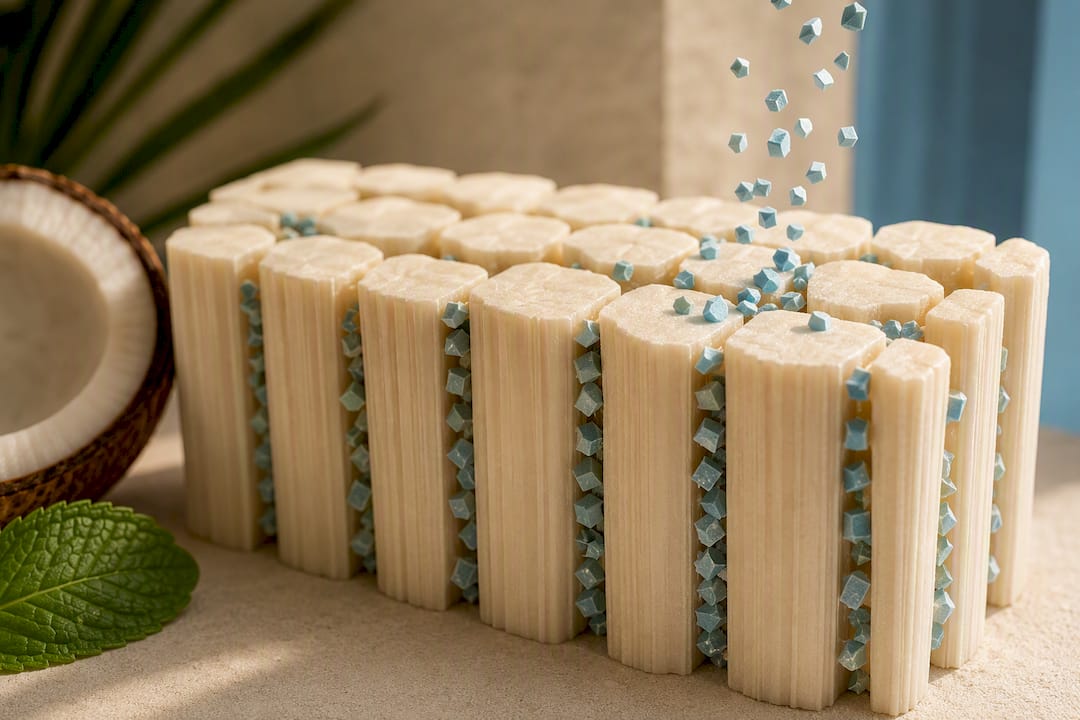
Once inside a porosity, the particle does two things at once. It acts as a physical scaffold, giving loose mineral ions something to latch onto, and it acts as a chemical reservoir, releasing calcium and phosphate right where the enamel needs them most. That local ion release raises the saturation level in the immediate microenvironment, which pushes the chemistry toward reprecipitation instead of continued dissolution. A comprehensive review of nanohydroxyapatite in dentistry describes this templating effect as central to why nHA behaves differently from bulk hydroxyapatite powders used decades ago.
Shape matters more than most people assume. Not every nano particle performs the same way once it reaches the tooth surface.
- Rod-shaped particles with a controlled aspect ratio adhere to enamel more efficiently and template new crystal growth more predictably than irregular or plate-shaped particles.
- High surface energy, a property tied to particle size, increases how readily calcium and phosphate ions detach and become available for reprecipitation.
- Acidic conditions, the same conditions that cause decay in the first place, speed up ion release from nHA particles, which can accelerate short-term mineral deposition right when enamel needs it.
- Nanoscale hydroxyapatite is measurably more soluble and reactive than micro-scale hydroxyapatite, which is why particle size, not just the ingredient name, determines performance.
This is why the same ingredient name, “hydroxyapatite,” on two different labels can mean two very different products. A detailed guide to how nano hydroxyapatite works walks through why particle characterization matters before you judge a product by its ingredient list alone.
What Does the Research Say About nHA’s Remineralizing Power?
The evidence base for nano hydroxyapatite remineralization is genuinely encouraging, but it comes with real caveats worth knowing before you form an opinion on it.
A scoping review of nHAp dentifrices found that toothpaste formulations containing nano hydroxyapatite consistently increased remineralization of early enamel lesions across the studies it examined. The review’s authors were careful to note that most trials were short, used relatively small sample sizes, and lacked the standardized methodology that would let researchers pool results with full confidence. Their conclusion: promising, but long-term independent trials are still needed before anyone calls the case closed.
A closer look at the numbers: trials in this space converge overwhelmingly on one figure. Roughly 10% nHA concentration in dentifrice shows up again and again as the tested and reported effective dose, which is a big part of why that number anchors so much of the regulatory and product discussion around this ingredient.
Laboratory comparisons back up the clinical picture. One controlled study comparing nano hydroxyapatite and sodium fluoride mouthrinses for treating incipient carious lesions found that a 10% nHA suspension produced strong remineralization, with microhardness recovery comparable to what the fluoride rinse achieved. That parity result gets cited often, and for good reason: it is one of the cleaner head-to-head comparisons in the literature.
The picture gets more nuanced once you look past remineralizing conditions specifically. A systematic review and meta-analysis examining nHA efficacy across multiple trial designs found that while nHA and fluoride perform similarly when the goal is rebuilding mineral in a stable environment, results diverge under net-demineralizing conditions, meaning ongoing acid challenge from diet or bacteria. In those tougher scenarios, fluoride’s cariostatic mechanism has a longer track record.
A few patterns show up consistently across the studies worth flagging:
- Outcome measures cluster around three things: surface microhardness, lesion depth reduction, and direct mineral gain measured by polarized light microscopy or similar imaging.
- Ten percent nHA dentifrice or gel is the dominant tested concentration across both clinical and in vitro work.
- Follow-up periods in most trials run weeks, not years, which limits what anyone can claim about long-term durability.
- Some studies are manufacturer-funded, a bias worth weighing when reading strong efficacy claims.
None of this undermines the mechanism. It does mean the honest answer to “does hydroxyapatite rebuild enamel” is yes, with evidence that is real but still maturing.
What Concentrations and Product Forms Actually Get Tested?
Concentration is where a lot of marketing claims get sloppy, so it helps to know exactly what researchers have used.
Toothpaste formulations dominate the clinical literature, and the number that keeps appearing is 10% nHA. That concentration shows up in the scoping review of nHAp dentifrices and in multiple in vitro comparisons, making it the closest thing this field has to a standard reference dose. Topical gels, applied in-office or through take-home trays, have been tested at higher concentrations in lab settings, sometimes in the 20 to 30 percent range, though these formulations trade broader everyday use for a more concentrated, occasional application.
Mouthrinses sit in a different category. The SCCS scientific opinion on hydroxyapatite (nano), issued by the European Union’s Scientific Committee on Consumer Safety, evaluated the ingredient across product types and set different safe-use ceilings depending on the format, reflecting how contact time and swallowing risk differ between a rinse you spit out and a paste you use for two minutes.
- Toothpaste delivers repeated, low-dose exposure twice a day, which suits nHA’s mechanism of gradual ion release and reprecipitation over time.
- Gels and rinses deliver a higher concentration in a single application, useful for targeted repair but with less research on long-term daily use.
- At higher concentrations, nHA can deposit densely on the outer enamel surface and partially block the very porosities it is meant to fill, which some short-term lab tests have flagged as a limiting factor on deeper mineral diffusion.
- Contact time varies by form: a two-minute brushing session and a longer gel application deliver very different exposure profiles even at the same nominal concentration.
Product form is not a minor detail here. It changes how much nHA reaches the enamel, how long it stays there, and how the mineral rebuilding actually plays out.
Is Nano Hydroxyapatite Safe to Use Regularly?
Nano hydroxyapatite safety has been formally reviewed, and the conclusion so far is cautiously positive rather than a blanket green light. The SCCS opinion concluded that nHA can be used safely in oral cosmetic products at defined concentration limits and with specific particle-shape criteria, but the committee also flagged real data gaps, particularly around genotoxicity, that still need independent follow-up research.
That nuance matters more than a simple “safe” or “unsafe” label would suggest.
- Some in vitro reports have raised cytotoxicity concerns, but these tend to involve poorly characterized nano-forms rather than the well-studied rod-shaped particles used in tested dentifrices.
- Ingested nHA is expected to dissolve in gastric fluid, which limits systemic absorption even if small amounts are swallowed during brushing.
- Particle shape and aspect ratio affect safety outcomes directly. Regulatory review has pointed to rod-shaped particles with controlled aspect ratios as showing a better safety profile than irregular or needle-like alternatives.
- Long-term, independently funded human trials remain limited, which is a gap in the evidence base rather than a sign of demonstrated harm.
Pro Tip: *Check the product label or brand website for particle shape and concentration disclosure before buying.
It is worth understanding why some dentists still hedge on recommending nHA outright. Research into nano-hydroxyapatite’s applications in preventive dentistry points out that the hesitation mostly traces back to a shortage of long-term, non-industry-funded randomized trials, not to any documented pattern of harm. Biocompatibility and mineralizing activity are well established in laboratory settings. What is missing is the multi-year, independently funded human data that would let a dentist say “proven” instead of “promising.”
How Should You Actually Use nHA for Remineralization?
Getting a result from nano hydroxyapatite remineralization depends heavily on consistency, since the mechanism relies on repeated exposure rather than a single dramatic application.
- Match your regimen to the product form. Toothpaste studies generally used brushing sessions of two to three minutes, once or twice daily, sustained for at least ten days to several weeks before measuring mineral gain. Gels and rinses in trials followed defined contact times, often applied for a set number of minutes and repeated over a treatment period rather than used once.
- Give it time before judging results. Some trials detected measurable microhardness improvement within one to two weeks, while others tracking lesion depth and deeper mineral gain needed several weeks to a few months of consistent use before showing meaningful change.
- Respect the stabilization window after topical application. Certain experimental protocols found that delaying eating or rinsing for a few hours after applying a topical nHA product improved retention of the newly deposited mineral layer, though this practice varies across studies and is not universal guidance.
- Support the process with saliva-friendly habits. Saliva carries the calcium and phosphate that make remineralization possible in the first place, so staying hydrated, limiting frequent sugar and acid exposure between meals, and avoiding constant snacking all give nHA a better chemical environment to work in.
Pro Tip: If you’re switching from a fluoride toothpaste to an nHA-based one, give it the same runway you would give any preventive habit; enamel repair happens over weeks, not overnight, regardless of which remineralizing ingredient you use.
A practical walkthrough of how to use nano hydroxyapatite for stronger teeth breaks these regimens down by product type if you want a more detailed day-to-day routine.
How Does Selfwise Approach the Evidence on nHA?
Selfwisebrand builds its oral care line around ingredients with a documented mechanism, not just trend appeal. That is why nano hydroxyapatite and xylitol anchor the natural oral care lineup instead of harsher synthetic additives.
The Selfwise nano hydroxyapatite mouthwash tablets and nano hydroxyapatite oil pulling mouthwash reflect the two product formats the research base actually supports: consistent daily exposure through a rinse, paired with the traditional oil-pulling method for additional oral care support, all without fluoride, alcohol, or harsh chemical additives.
- Some brands formulate around ingredients with published mechanisms of action rather than unverified trend claims.
- Product formats often align with delivery methods (rinse, oil pulling) that studies have tested, rather than novel formats without research history.
- It is recommended to check any product’s concentration and particle information, and consult a dentist for guidance specific to your dental history.
Should You Choose nHA for Remineralization?
Nano hydroxyapatite remineralization is a reasonable, evidence-backed choice for most people looking to rebuild early enamel mineral loss, particularly if you want a fluoride-free option or you are managing enamel sensitivity after orthodontic treatment. The research supports it as a legitimate mechanism, not just a marketing claim.
That said, nHA is not a substitute for professional care when the situation calls for it. Active cavities, deep lesions, or advanced decay still need a dentist’s evaluation, and fluoride-based treatments remain the clinical standard for those more serious cases.
Before buying any nHA product, check the label for concentration and particle shape, follow a regimen close to what the research actually tested, and talk to a dental professional if you have specific concerns about your enamel history.
What the Evidence Actually Tells Us
The most overlooked point in this entire conversation is that nano hydroxyapatite isn’t competing with fluoride so much as it is filling a gap fluoride never addressed well: people who want measurable remineralization without a fluoride-based product. Conventional wisdom treats this as a binary choice, natural versus clinical, when the research treats it as a question of matching mechanism to context.
Where the standard advice falls short is in treating “hydroxyapatite” as one interchangeable ingredient. Particle shape, concentration, and product form change outcomes enough that two products with the identical label on the front can perform completely differently in practice. That is the detail most consumer guides skip entirely.
If you are prioritizing anything here, prioritize verification overhype. Look for disclosed concentration near the researched 10% mark, confirm particle characterization when a brand provides it, and give any remineralizing routine the same weeks-to-months timeline the actual trials used. Enamel chemistry does not move faster because a label says “innovative.”
— Viktor
Ready to Try Fluoride-Free Remineralization?
Some natural oral care lines focus on ingredients supported by research, rather than trending ingredients. For those seeking a fluoride-free path that targets enamel remineralization, nHA formulated at researched concentrations offers an option without guessing at unlisted particle specs.
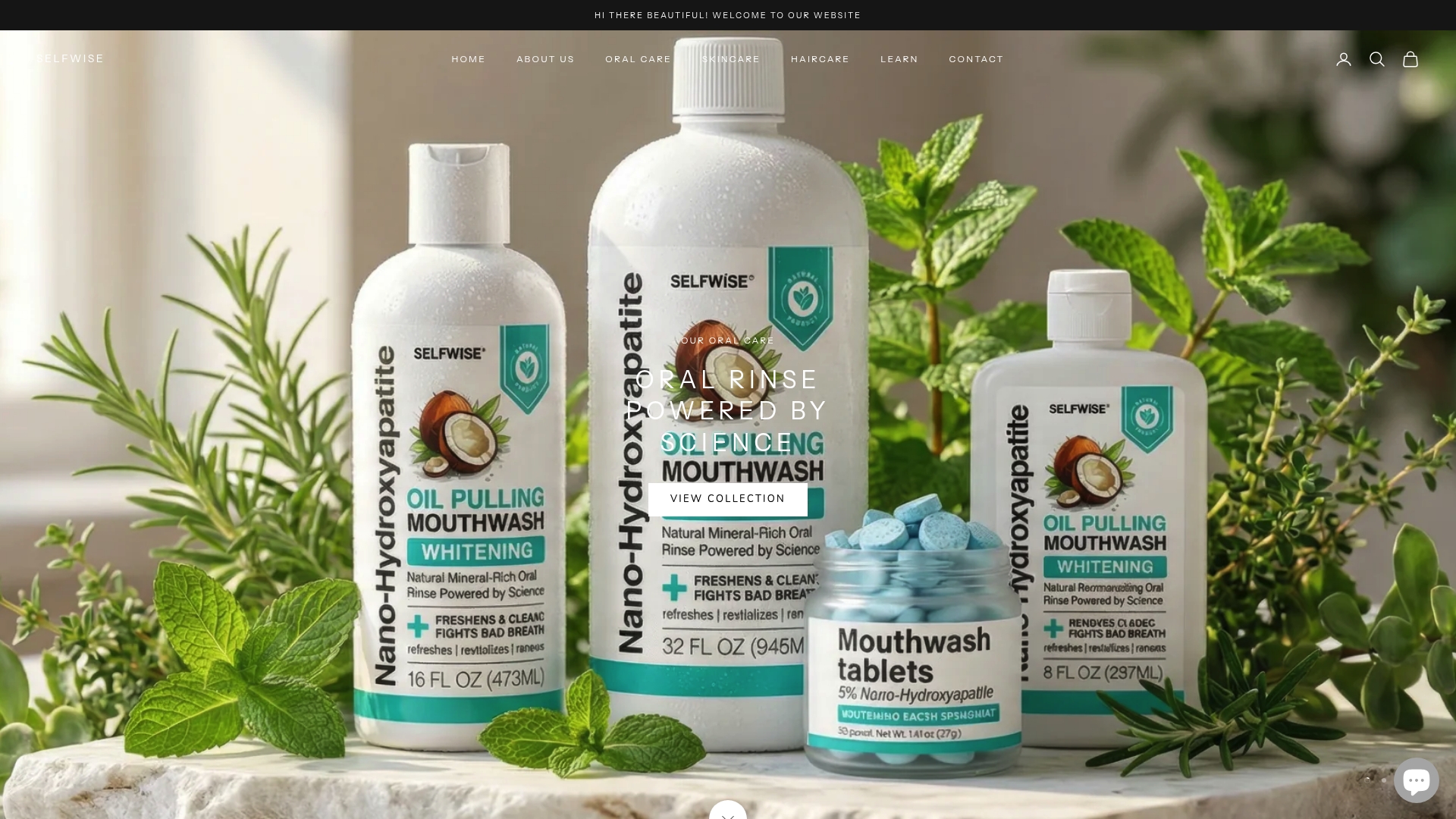
The Selfwise oral care collection includes nano hydroxyapatite mouthwash tablets and oil-pulling mouthwash, both built around the same mechanism covered throughout this article: consistent, low-dose mineral exposure that gives your enamel the calcium and phosphate it needs to rebuild. If you are ready to swap out a fluoride-based routine, start with the nano hydroxyapatite mouthwash tablets and follow the daily regimen on the label for at least a few weeks to give the process the time the research says it needs.
Sources
- Nanohydroxyapatite in dentistry: A comprehensive review
- SCCS scientific opinion on hydroxyapatite (nano)
FAQ
Can Hydroxyapatite Actually Remineralize Teeth?
Yes.
Why Do Some Dentists Hesitate to Recommend Hydroxyapatite?
The hesitation mostly comes from a shortage of long-term, independently funded randomized trials, not from evidence of harm; biocompatibility and mineralizing activity are already well documented in laboratory research.
How Long Does It Take for Nano Hydroxyapatite to Remineralize Teeth?
Some studies detected measurable microhardness improvement within one to two weeks of consistent use, while deeper lesion repair took several weeks to a few months in the trials that tracked it that long.
What Are the Downsides of Nano Hydroxyapatite Toothpaste?
The main downsides are limited long-term independent safety data on genotoxicity, potential surface mineral buildup at high concentrations that can limit deeper diffusion, and inconsistent performance under ongoing acid exposure compared with fluoride.