5–8g Daily Xylitol Lowers Cavities: Why Gum and Routine Matter
Habitual xylitol use reduces cavity risk, but only as an adjunct and only at real doses: the trials showing benefit used roughly 4 to 10 grams a day, split across multiple exposures, usually in gum or lozenges rather than candy or rinses. It will not undo existing decay or replace brushing, flossing, and fluoride. Think of it as one more lever, not a fix.
TL;DR:
- Chewing gum or lozenges with xylitol for 10 to 20 minutes after meals, totaling 4 to 10 grams daily, is necessary to see cavity prevention effects.
- The strongest evidence for cavity reduction is from habitual xylitol gum use in children and high-risk populations, not from candies or rinses.
- Delivery method matters; sustained contact through gum or lozenges outperforms quick dissolving options like candies or mouthwashes.
- Regular use shifts oral bacteria toward less harmful strains and increases saliva flow, but it cannot repair existing cavities.
- Xylitol is safe at recommended doses but must be introduced gradually, kept away from dogs, and children under four should avoid gum and lozenges.
Table of Contents
- How Xylitol Disrupts Cavity-Causing Bacteria
- What the Clinical Evidence Actually Shows
- How Much Xylitol You Actually Need and in What Form
- Who Gets the Most Benefit From Xylitol
- Safety, Side Effects, and the One Warning You Cannot Skip
- Building Xylitol Into a Routine You’ll Actually Stick To
- Why Format and Consistency Matter More Than the Ingredient Itself
- Where Xylitol Fits in a Selfwisebrand Routine
- Sources
- FAQ
How Xylitol Disrupts Cavity-Causing Bacteria
Xylitol works because Streptococcus mutans can absorb it but cannot metabolize it. The bacteria transport xylitol into their cells expecting fuel, get nothing usable back out, and burn energy trying anyway. Researchers call this a “futile energy cycle,” and it slows bacterial growth and weakens the ability of S. mutans to produce acid and stick to enamel. Over weeks of repeated exposure, the plaque population itself shifts toward less aggressive strains.
That ecological shift matters more than any single exposure. A mouth that regularly sees xylitol tends to end up with lower total counts of mutans streptococci and a less acidic, less sticky plaque layer overall, according to research on xylitol’s effect on dental caries and oral flora. Saliva flow also increases with chewing, which helps buffer acid and clear food debris faster than a passive rinse ever could.
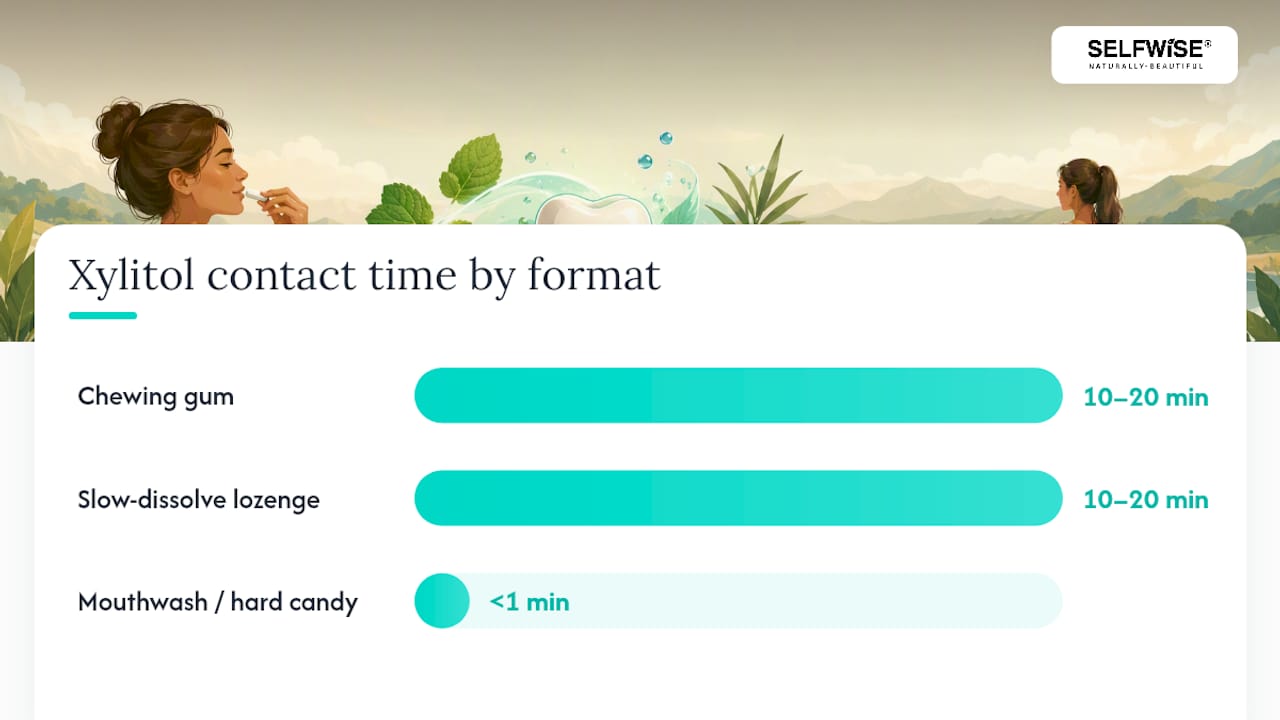
Here’s the part most articles skip: exposure time is everything. Xylitol needs contact time in the mouth to disrupt bacterial metabolism, which is why the delivery method changes the outcome entirely.
- Chewing gum keeps saliva flowing and xylitol in contact with plaque for 10 to 20 minutes at a stretch.
- Slow-dissolve lozenges create a similar sustained exposure without the jaw work.
- A quick swish-and-spit mouthwash or a hard candy dissolves fast, so bacteria get a brief hit rather than the sustained pressure that shifts plaque ecology.
Xylitol works differently depending on format. Gum and lozenges built for repeated daily use are the formats behind almost every positive trial; anything that clears the mouth in under a minute struggles to reproduce those results.
What the Clinical Evidence Actually Shows
The strongest evidence for xylitol cavity prevention comes from chewing gum trials, not from candy, syrup, or rinse studies. A systematic review and meta-analysis on xylitol in preventing dental caries found clinically meaningful reductions in caries incidence among children and adolescents who habitually chewed xylitol gum, particularly those who started with moderate to high baseline decay risk. Xylitol sweets, by contrast, largely failed to show the same protective effect.
That gap between gum and candy is not a minor footnote. It is the single most important distinction in the entire body of research, and it explains why some people try a xylitol mint and conclude the ingredient does nothing. Wrong format, wrong exposure time, wrong conclusion.
Several threads run through the better studies:
- Preventive fractions vary widely across trials, largely because dosing, gum brand, and study population differ so much from one trial to the next.
- Children and adolescents with higher baseline decay rates see the clearest benefit, likely because there is more room for a bacterial shift to matter.
- Maternal use shows a genuinely underappreciated effect: mothers who used xylitol regularly after delivery reduced transmission of mutans streptococci to their children and delayed the age at which those children first became colonized, according to the same research on xylitol and oral flora. Since early colonization is one of the better predictors of childhood cavities, delaying it has real downstream value.
- Habitual, consistent use is the pattern behind almost every positive result. One review of habitual xylitol consumption found that trials using daily doses of roughly 4 to 10 grams, divided into multiple exposures across the day, produced the outcomes usually cited in xylitol consumption and clinical outcomes research.
Xylitol is most useful as a routine habit. Intermittent or once-a-day use is unlikely to replicate what the trials actually measured, because the mechanism depends on repeated bacterial exposure, not a single dose.
Reviewers are also candid about the limits here. Study quality varies, gum formulations differ between trials, and risk-of-bias concerns show up often enough that most reviews describe the evidence as “clinically significant but heterogeneous” rather than settled. That is not a reason to dismiss xylitol. It is a reason to treat it as a supporting habit rather than a standalone cure, especially for adults with generally low decay risk who may see a smaller return on the effort.
How Much Xylitol You Actually Need and in What Form
Trial doses cluster in a fairly narrow band. Most studies showing benefit used 4 to 10 grams of xylitol per day, with many landing closer to 5 to 8 grams, split into three to seven separate exposures rather than one large dose, based on findings from habitual xylitol consumption research. A single piece of gum after breakfast will not get you there. The dose needs to be spread through the day, ideally after meals and snacks when bacteria are actively feeding on leftover sugars.
Here’s how to translate that into something you can actually do:
- Check the label for xylitol content per piece or serving, not just “contains xylitol.” Many gums list grams per piece; some only advertise the ingredient without disclosing the amount, which makes it impossible to hit a real dose.
- Chew or dissolve a piece for 10 to 20 minutes after each meal or snack, aiming for three to five exposures across the day.
- Add up your total daily grams and adjust the number of pieces until you land in the 5 to 8 gram range that shows up across most positive trials.
- Choose slow-release formats over fast-dissolving ones. Gum and lozenges maintain contact time; hard candies and quick rinses generally do not, per the same delivery-vehicle research.
- For toddlers and anyone who cannot chew safely, a measured xylitol syrup delivers a comparable dose without the choking risk that gum and lozenges carry for young children.
Pro Tip: Keep a small tin of xylitol mints or gum at your desk and in your bag. The habit only works if the exposures are spread across the day, and having it within reach removes the biggest reason people skip doses: simply forgetting.
If gum is off the table for you, whether from a TMJ issue, dentures, or personal preference, a slow-melt lozenge or a well-formulated xylitol mouthwash gets closer to sustained contact time than a quick rinse-and-spit product.
Who Gets the Most Benefit From Xylitol
Not everyone needs to build their routine around this ingredient, and knowing where you fall changes how much effort is worth putting in.
- Children and adolescents with moderate to high cavity risk show the clearest, most consistent benefit in the research. If your child has had multiple cavities or a dentist has flagged elevated risk, xylitol gum or a pediatric-appropriate delivery method is worth discussing at the next visit.
- Pregnant and postpartum mothers get an underused benefit here, as described in the role of Vitamin D in breastfeeding for mums and babies, which highlights the importance of maternal nutrition in early child health. Regular xylitol use after delivery reduces bacterial transmission to infants and delays colonization, which matters for a child’s long-term cavity risk far more than most parents realize.
- Adults with a generally low cavity history see a smaller return. That does not make xylitol useless for you, but it does mean fluoride toothpaste, consistent flossing, and diet remain the higher-leverage moves before you build a strict multi-dose xylitol habit around them.
- Anyone managing dry mouth, whether from medication, age, or a medical condition, benefits from the saliva-stimulating side effect of chewing gum formats independent of the cavity-prevention mechanism.
A dentist can tell you where you actually sit on that risk spectrum, and that conversation is worth having before you invest in a daily xylitol routine rather than after.
Safety, Side Effects, and the One Warning You Cannot Skip
Xylitol is well tolerated at the doses used for cavity prevention, but it is a sugar alcohol, and sugar alcohols pull water into the gut. The fix is simple: introduce xylitol gradually and spread your daily total across several smaller doses rather than one large one.
A few safety points deserve direct attention, not a footnote:
- Start low and build up. If your gut has never handled xylitol before, a sudden jump to 8 grams a day is more likely to cause bloating than a gradual ramp over one to two weeks.
- Children under about four should not be given gum or hard lozenges because of choking risk, regardless of the cavity-prevention benefit. Syrups and other age-appropriate formats exist specifically to solve this.
- Xylitol is genuinely dangerous to dogs. Even small amounts can trigger a rapid, severe drop in blood sugar and, at higher amounts, liver failure. Keep gum, mints, and any xylitol product stored the way you would store medication, out of reach, and call a veterinarian immediately if a dog gets into any of it.
That dog warning is not a throwaway line. It is one of the most common accidental poisoning calls veterinarians receive, and most owners have no idea their “healthy” sugar-free gum is the culprit.
Building Xylitol Into a Routine You’ll Actually Stick To
The habit only works if it survives a normal day. A realistic pattern looks like this: one piece after breakfast, one after lunch, one after an afternoon snack, and one after dinner, aiming for four exposures that together add up to your 5 to 8 gram target.
- Read labels for grams per piece, not marketing language. “Made with xylitol” can mean a trace amount blended with other sweeteners, which won’t get you anywhere close to a therapeutic dose.
- Pair xylitol with fluoride toothpaste, not instead of it. The two work through different mechanisms and the evidence supports using both, not choosing one.
- Reassess with your dentist every six to twelve months, especially for a child or anyone with a history of frequent cavities, since caries risk changes over time.
Pro Tip: A quick way to spot a diluted product: if xylitol is the fourth or fifth ingredient on the list behind other sweeteners, you’re not getting a therapeutic dose no matter how many pieces you chew. For a broader daily framework, a natural oral care routine built around consistent habits makes xylitol easier to stick with long term.
Why Format and Consistency Matter More Than the Ingredient Itself
Most of the skepticism around xylitol comes from people judging it by the wrong product. Someone tries a xylitol mint once, feels nothing different, and writes off the whole ingredient. But the research was never about mints. It was about sustained, repeated exposure through gum, lozenges, or well-formulated rinses used consistently over weeks and months.
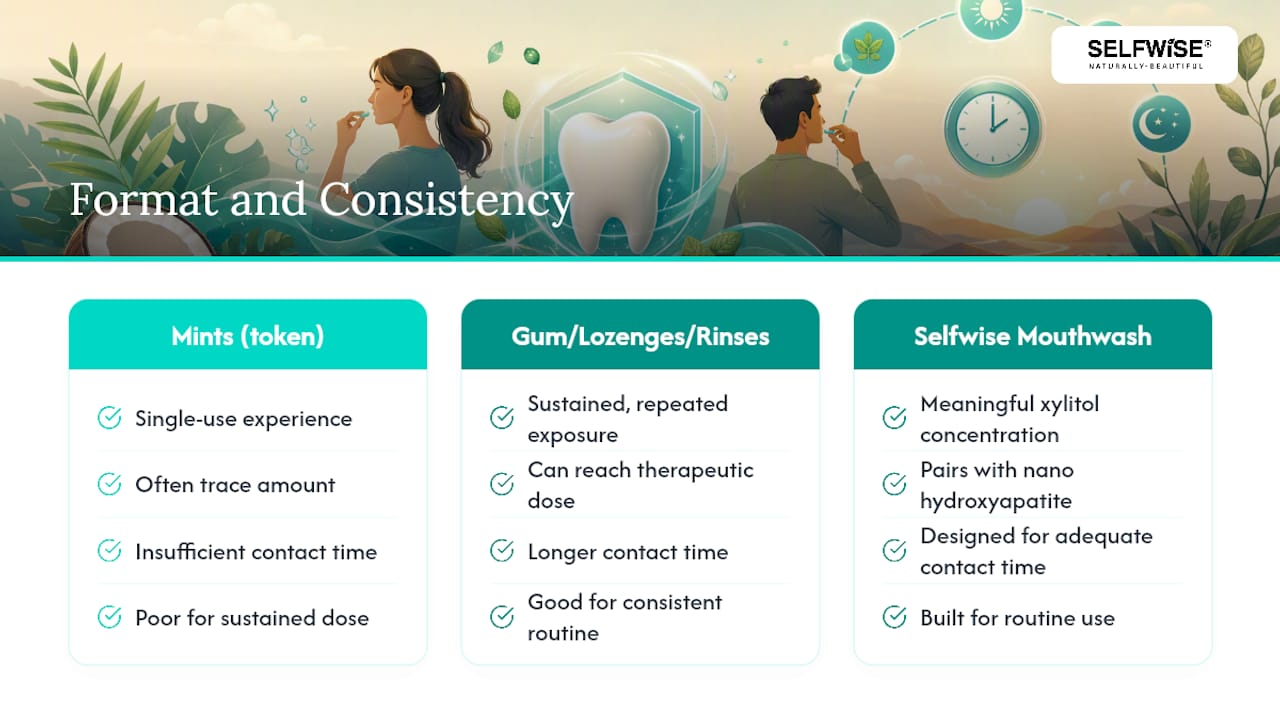
That distinction gets lost constantly in marketing copy, where “contains xylitol” gets slapped on products with a trace amount that could never hit a therapeutic range. The honest read of the evidence is narrower and more useful than most headlines suggest: xylitol earns its place in a cavity-prevention routine when the dose is real and the habit is consistent, not because the word appears on a label.
Selfwisebrand’s own approach starts from that same evidence, not marketing convenience. Our xylitol mouthwash with nano hydroxyapatite pairs a meaningful xylitol concentration with a remineralizing agent, aiming for a delivery format that gives xylitol enough contact time to matter rather than a token amount for the label. That is the standard worth holding any xylitol product to, ours included.
— Viktor
Where Xylitol Fits in a Selfwisebrand Routine
Selfwisebrand builds every xylitol product around the same principle covered above: dose and contact time decide whether xylitol does anything at all. Our nano hydroxyapatite mouthwash tablets combine a real xylitol dose with remineralizing nano hydroxyapatite in a slow-dissolve format designed to keep both ingredients in contact with your teeth longer than a quick rinse ever could.
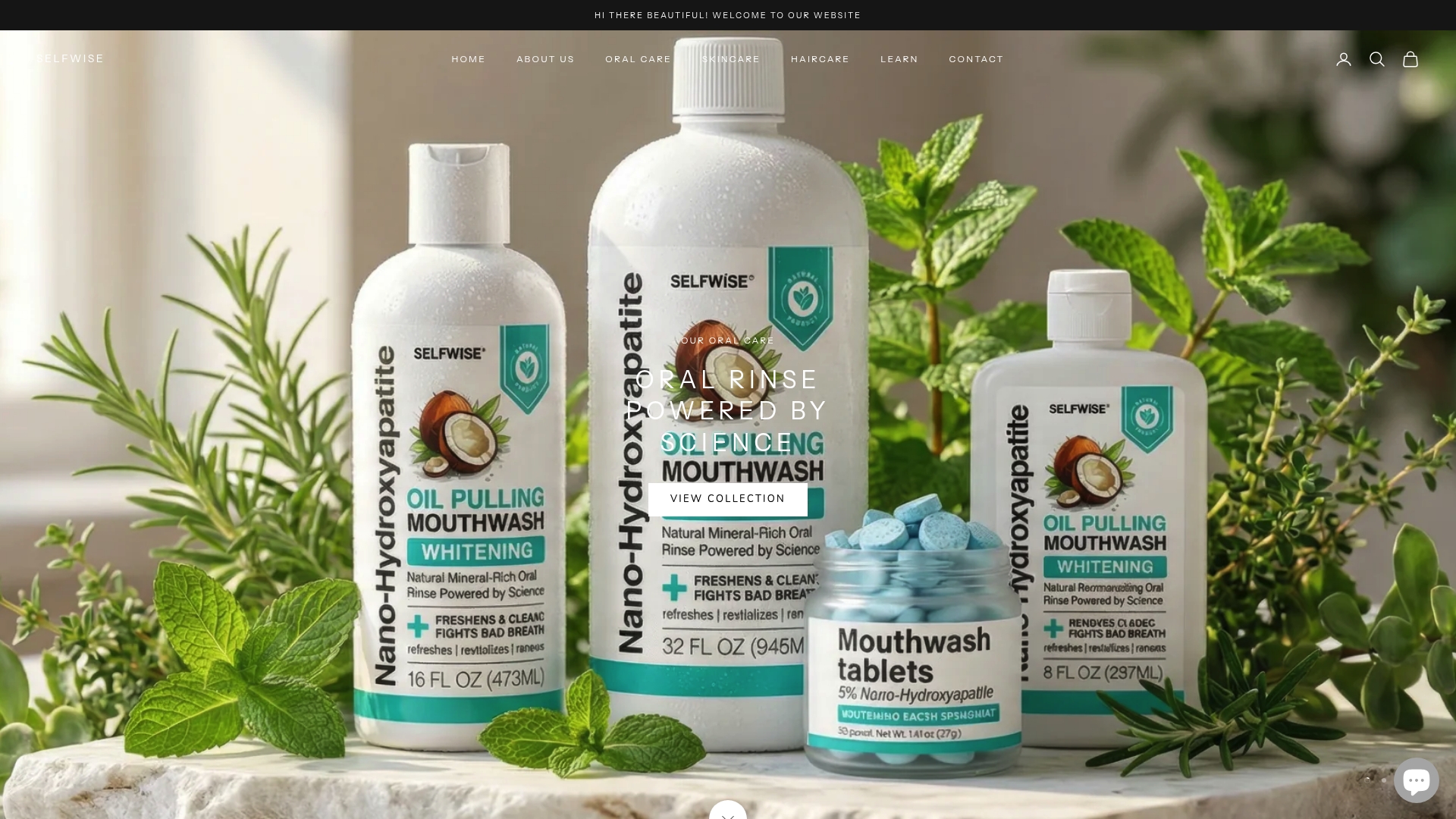
If you’d rather pull oil while still getting xylitol’s benefit, our oil-pulling mouthwash gives you a different delivery format built on the same dosing logic. Neither product replaces brushing or fluoride, and neither pretends to. They’re built to be the adjunct the research actually supports, without fluoride, alcohol, or the harsh additives found in most drugstore options. Browse the full oral care collection or start with the Natural Oral Care Guide to see how xylitol fits alongside the rest of your routine, then pick the format that matches how you’d actually use it every day.
FAQ
Can Xylitol Repair Cavities?
No. Xylitol reduces the bacterial activity that causes new decay and supports remineralization conditions, but it cannot reverse a cavity that has already formed a hole through the enamel; that requires a dentist.
How Long Does Xylitol Take to Work on Teeth?
Most trials measured effects over months of consistent use, not days, since the benefit comes from a gradual shift in plaque bacteria that builds with repeated daily exposure rather than a one-time application.
What Do Dentists Think of Xylitol?
Professional guidance generally supports xylitol as a reasonable adjunct for patients at moderate or high cavity risk, with dosing suggestions in the AAPD-style guideline of roughly 3 to 8 grams a day depending on the product used.
What’s the Downside of Xylitol?
The main downsides are gastrointestinal discomfort at high single doses, a choking risk from gum or lozenges in young children, and severe toxicity to dogs even at small amounts, which makes secure storage essential.
Does Xylitol Work Better Than Fluoride?
They aren’t interchangeable. Fluoride strengthens enamel directly, while xylitol works by disrupting cavity-causing bacteria, and the evidence supports using both together rather than substituting one for the other.