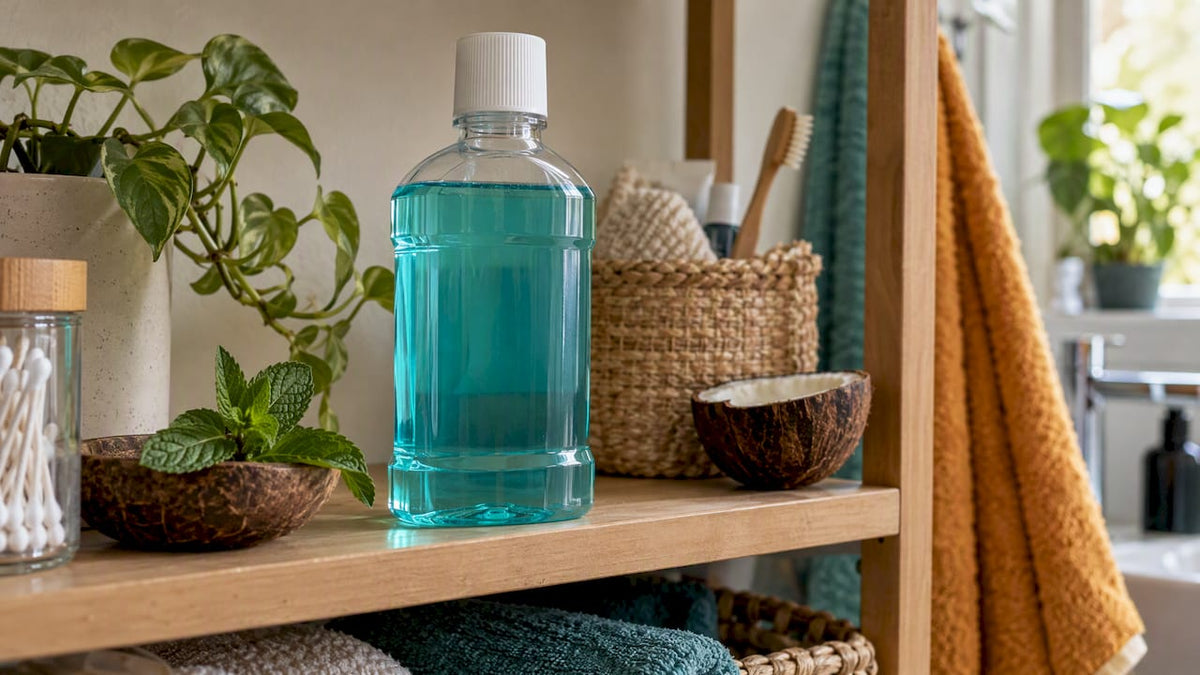
Article: Are Mouthwash Tablets Safe? What to Know Before You Use Them
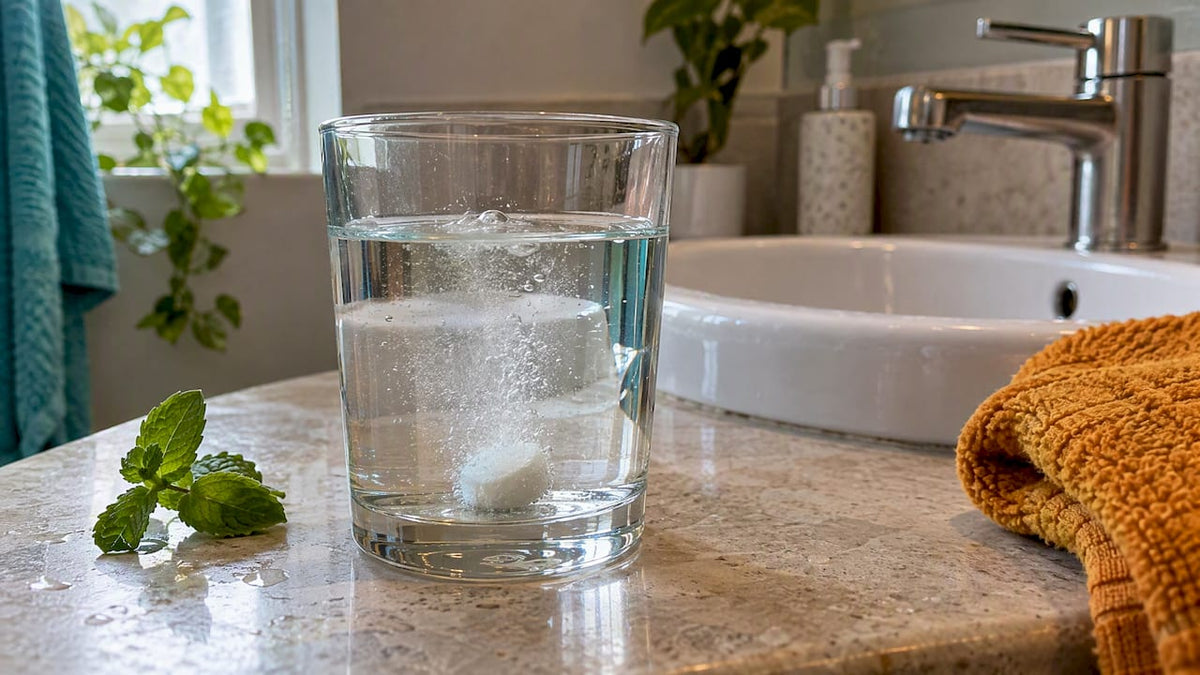
Are Mouthwash Tablets Safe? What to Know Before You Use Them
For most healthy adults, mouthwash tablets are safe when you use them the way they are made to be used: dissolve one in water, swish, and spit. The risks come from swallowing them, leaving them where children can reach them, and picking a formula with ingredients that don’t suit you. This guide covers each of those, plus how tablets compare with salt water and liquid rinses.
TL;DR
- Mouthwash tablets and liquid rinses are meant to be swished and spat out, not swallowed. A small accidental sip is unlikely to cause serious harm. A large amount can.
- Store tablets out of children’s reach. They can look like candy.
- Read the ingredient list. Alcohol, fluoride, and sweeteners such as xylitol each matter for different people.
- There is no established causal link between mouthwash and dementia, according to ADA reporting from 2025.
- A rinse supports brushing and flossing. It does not replace a dentist if you have bleeding gums, pain, or an infection.
Table of Contents
- What a mouthwash tablet actually is
- The main safety question: swallowing
- Ingredients that decide whether a tablet suits you
- Quick label checklist
- How to use mouthwash tablets safely
- Who should be more careful
- Do mouthwash tablets cause dementia or other long-term harm?
- Tablets, salt water, or liquid mouthwash?
- Our perspective
- Choosing a natural rinse
- FAQ
- Sources
What a mouthwash tablet actually is
A mouthwash tablet is a dry, compressed version of a rinse. You drop it into a small amount of water, wait for it to dissolve, and use the liquid like any mouthwash. The appeal is practical: no plastic bottle, no water weight, and easy portions for travel.
Safety depends on what is in the tablet, not on its shape. The Poison Control overview of mouthwash notes that ingredients vary and can include antiseptic agents, fluoride, alcohol, sweeteners, and flavoring. A tablet built around a gentle formula behaves very differently from one built around a strong antiseptic, so the label tells you more than the format does.
The American Dental Association separates rinses into two main types: cosmetic and therapeutic. Cosmetic rinses mainly freshen breath. Therapeutic rinses are designed to help reduce things like plaque, gingivitis, or cavities. Many tablets sit in the cosmetic or supportive category, which is fine for daily freshness, as long as you don’t expect them to treat gum disease.

The main safety question: swallowing
This is what most people really mean when they ask whether tablets are safe.
Poison Control explains that swallowing a small mouthful of mouthwash is unlikely to cause toxicity. Larger amounts of products containing alcohol, fluoride, or certain disinfectants can cause significant reactions. The same logic applies to tablets: the dose decides the risk.
If an adult swallows a tablet or a sip
A single dissolved tablet’s worth of liquid, swallowed by mistake, is generally not an emergency for a healthy adult. Rinse your mouth with water and watch for stomach upset. If you swallowed a lot, or you feel unwell, call Poison Control at 1-800-222-1222 (the national US number, listed on the Poison Control site) or seek medical care.
If a child gets into the tablets
Children are the real concern. They may chew tablets, swallow the rinse, or eat several from an open container. Call Poison Control right away rather than waiting for symptoms. Keep the container with you so you can read out the ingredient list and the number of tablets missing.
Practical habits that help:
- Keep tablets in a closed container on a high shelf or in a cabinet, not on the bathroom counter.
- Don’t let young children use any rinse unsupervised. Many dental offices advise waiting until a child can reliably spit.
- Never describe tablets as “candy” or “mints” to a child.
Some ingredients carry their own warnings. Poison Control also covers a chlorine dioxide and sodium chlorite rinse, which are low-concentration ingredients in some products. A sip is unlikely to cause anything beyond mild effects, but this is a good example of why you should know what is in your rinse.
Ingredients that decide whether a tablet suits you
Alcohol
Several of the top-ranking dental pages for this question point to alcohol as the main irritant in rinses: it can burn, dry the mouth, and bother canker sores. Many people look for tablets that don’t contain it. If you get dry mouth or sore spots from liquid rinses, an alcohol-free formula is the first change to make.
Fluoride
Fluoride helps prevent cavities, which is why dentists often recommend it. It is also an ingredient that matters if swallowed in larger quantities, as Poison Control notes. If you have small children in the house, a fluoride-containing rinse needs extra care. If you prefer to avoid fluoride, read our guide to fluoride mouthwash risks and safer options and talk to your dentist about your cavity risk first.
Xylitol
Xylitol is a sweetener that doesn’t feed cavity-causing bacteria. A 2026-dated research overview describes it as non-cariogenic and able to help reduce Streptococcus mutans. The same research links higher amounts to dose-related digestive effects such as diarrhea and gas.
In a rinse you spit out, the amount you take in is small. It becomes a question if you swallow the liquid regularly or eat tablets. Our pieces on xylitol mouthwash side effects and xylitol dosage for teeth go into the numbers. One more point that matters: xylitol is dangerous to dogs, so keep any xylitol product away from pets too.
Nano hydroxyapatite
Hydroxyapatite is the mineral that makes up most of tooth enamel, and it is used in oral care to support remineralization. The research is promising, but results depend on the formulation, so the ingredient name on the front of a box is not proof of a good product. Look for a maker who explains the formula and how to use it.
Antiseptics such as chlorhexidine
Chlorhexidine is a strong antimicrobial used in therapeutic rinses. A 2024 perspective review raised questions about how strong antiseptic rinses affect the oral microbiome. Such rinses are usually used for a defined period under a dentist’s guidance, not as an everyday habit.
Quick label checklist
| Check | Why it matters | What to look for |
|---|---|---|
| Alcohol | Can dry and irritate | “Alcohol-free” on the label |
| Fluoride | Protects against cavities, but needs care around children | A clear statement either way |
| Sweeteners | Xylitol is fine in small rinse amounts, but can upset the stomach in larger doses | Named ingredient and directions |
| Active antiseptics | Meant for short-term or supervised use | Directions that say how long |
| Directions | Tablets need the right amount of water | A clear “dissolve, swish, spit” instruction |
| ADA Seal | Shows independent review of safety and efficacy | The ADA Seal of Acceptance on the pack |
The ADA Seal is a useful benchmark, but plenty of reasonable products don’t carry it, because the program is voluntary. No seal doesn’t mean a product is unsafe. It means you need to read the formula and directions more carefully.
How to use mouthwash tablets safely
- Read the directions first. Water amount and dissolve time differ between brands.
- Dissolve the tablet fully. Don’t chew it and don’t put it in your mouth dry unless the label says to.
- Swish for the time on the label, usually around 30 seconds to a minute, reaching all sides of the mouth.
- Spit, don’t swallow. Don’t rinse with water right after if the formula is meant to stay in contact with your teeth.
- Wait on food and drink as the label advises.
- Close the container and store it out of reach of children and pets.
For a longer walkthrough, see how to use mouthwash tablets with nano hydroxyapatite and xylitol.
Who should be more careful
- Parents of toddlers and young children. Storage matters most here, as does supervision. Ask your pediatric dentist when your child can start using a rinse.
- People with gum bleeding, swelling, or persistent bad breath. These can be signs of gum disease. A rinse can mask symptoms. See a dentist or periodontist. In a dental journal piece on oil pulling, the author notes that it will not cure periodontal disease, and the same caution applies to any rinse you use as a stand-in for treatment.
- People with dry mouth or canker sores. Choose an alcohol-free formula and stop if it stings.
- Pregnant people and anyone on medications for a serious condition. Ask your dentist or doctor before adding a new product, as with any new product you use regularly.
- Anyone who reacts. Stop using it if you develop a rash, swelling, or burning, and see a clinician. For swelling of the lips or face, or trouble breathing, get emergency care.
Do mouthwash tablets cause dementia or other long-term harm?
This question comes up often. The ADA’s 2025 reporting states that no direct causal link has been established between mouthwash use and dementia or Alzheimer’s disease. Researchers are studying the oral microbiome and whole-body health, and a review of the evidence calls for longer-term studies rather than drawing conclusions. In short: no proven link, an active area of research, and no reason to panic over a gentle daily rinse.
Tablets, salt water, or liquid mouthwash?
A plain saltwater rinse is cheap and low-risk. The ADA’s patient material describes a diluted salt solution of about half a teaspoon of salt in half a glass of water as a way to remove food particles and soothe minor discomfort. It is not a substitute for a therapeutic rinse with active antimicrobial agents when you are managing plaque or gingivitis.
So the practical comparison looks like this:
| Option | Best for | Limits |
|---|---|---|
| Salt water | Soothing minor irritation, rinsing after meals | No active agents for plaque or cavities |
| Mouthwash tablets | Travel, less plastic, portion control, gentle daily freshness | Quality depends on formula; storage matters around kids |
| Liquid rinse | Easy to dose, many therapeutic options | Some contain alcohol or strong antiseptics |
We go deeper in our guides on salt water versus mouthwash and a saltwater rinse routine for gum health.
Any rinse works alongside the basics, not instead of them. Brushing twice a day and cleaning between your teeth do the heavy lifting. If you are weighing tools for that part of your routine, this comparison of Waterpik versus flossing explains how each one works.
Our perspective
We hear the same worry again and again: “I want to leave harsh chemicals behind, but I don’t want to give up something that works.” Our view is that both goals can be met if you are honest about what a rinse can do.

We formulate our oral care without fluoride, alcohol, or harsh chemicals, and we build around ingredients like nano hydroxyapatite and xylitol. We think of tablets as one part of a routine, not a cure. Good brushing, cleaning between teeth, and regular dental visits come first.
We also think the safety conversation should be blunt. A tablet is a rinse, so it gets spat out. Keep it away from children. Know what is in it, and if a maker can’t tell you, choose another one. And if your gums bleed or something hurts, a rinse is not the answer. A dentist is.
— Viktor
Choosing a natural rinse
If you want an alcohol-free, fluoride-free option, we make natural oral care built around nano hydroxyapatite, xylitol, and oil pulling. Browse our mouthwash collection to compare formats, or start with the natural oral care guide if you want help building a routine first.
FAQ
Is it safe to swallow a mouthwash tablet?
A small accidental amount is unlikely to cause serious harm, but tablets are not made to be swallowed. Poison Control advises that larger amounts of some ingredients can cause real reactions. If a child swallowed one or more, or an adult swallowed a lot, call Poison Control at 1-800-222-1222.
Can I use mouthwash tablets every day?
Many people use gentle, alcohol-free rinses daily, following the label. Strong antiseptic formulas are different and are usually meant for limited periods under a dentist’s guidance. If you notice dryness, burning, or staining, stop and ask your dentist.
Are mouthwash tablets better than salt water?
They do different jobs. Salt water is a simple way to clear food and soothe minor irritation, according to the ADA’s patient material, while a formulated rinse can add ingredients such as xylitol or hydroxyapatite. Neither replaces brushing, flossing, or treatment for gum disease.
Is there a link between mouthwash and dementia?
The ADA reported in 2025 that no direct causal link has been established. Researchers continue to study the oral microbiome and systemic health, and they say longer studies are needed. Current guidance doesn’t tell people to stop using commercial mouthwash for that reason.
Sources
- Mouthwash: Swish and spit, Poison Control
- Chlorine dioxide and sodium chlorite oral rinse, Poison Control
- Mouthrinse (Mouthwash), American Dental Association
- Debunking dental trends, American Dental Association
- Overview on adjunct ingredients used in hydroxyapatite-based oral care products, PMC
- Mouthwash-induced oral microbiome disruption and Alzheimer’s disease risk, PMC
- Is oil pulling useful in treating periodontal disease? Journal of the Michigan Dental Association
- Toothbrushing, ADA patient brochure