What Castor Oil Actually Does for Hair Growth
Castor oil will not make dormant follicles wake up and start pumping out new hair. What it does well, according to the strongest human evidence available, is protect the strands you already have: less breakage, better shine, more retained length. The one place actual clinical data shows follicle-level growth improvement is when castor oil is blended with rosemary, not used alone. Read on for what the studies measured, how to apply it without matting your hair, and where the real risks sit.
TL;DR:
- Castor oil alone has limited human evidence for promoting hair growth, with most benefits related to reducing breakage and enhancing shine.
- The strongest clinical results occur when castor oil is combined with rosemary, showing increased growth rate, thickness, and length over 90 days.
- Castor oil mainly functions as a moisture-sealing emollient that reduces mechanical damage but does not provenly inhibit hair thinning factors like PGD2.
- Proper application involves dilution, applying to damp hair, massaging into the scalp, and tracking results over 8 to 12 weeks, with minimal risk of hair felting if used correctly.
- Combining rosemary with castor oil addresses both scalp circulation and shaft protection, making it a more effective treatment support than castor oil alone.
Table of Contents
- Does Castor Oil Grow Hair? What the Human Studies Show
- How Does Castor Oil Work on Hair and Scalp?
- How to Use Castor Oil for Hair Growth Safely
- What Are the Risks of Using Castor Oil on Hair?
- Why Rosemary and Castor Oil Blends Beat Castor Alone
- Where to Learn More About Castor Oil and Hair Care
- Is Castor Oil Worth the Hype for Hair Growth?
- Try a Rosemary-Castor Blend the Way the Clinical Trials Tested It
- Sources
- FAQ
Does Castor Oil Grow Hair? What the Human Studies Show
The honest answer is that castor oil alone has thin human data behind it. Most of what people cite as “proof” comes from animal work, small case series, or marketing copy dressed up as science.
A 2022 systematic review looking at coconut, castor, and argan oil found only weak evidence that castor oil improves hair growth in humans, while coconut oil had stronger support for reducing breakage and improving luster. That gap matters: castor oil has a reputation it has not fully earned on its own.
Preclinical work tells a different, more limited story. Rabbit-model studies using lotions with 35 to 40 percent castor oil reported increases in hair length, softness, and thickness, but nobody has replicated those results in a large human trial; for an example of a commercial botanically active hair oil, see Voraly™ Bio-Active Veganic Serum. Animal skin and human scalp do not always respond the same way to topical actives, so treat this as a mechanistic clue, not a guarantee.
The picture changes once castor oil is blended with rosemary. A 2025 randomized clinical trial found:
- A significant increase in mean hair growth rate over 90 days
- A notable improvement in hair thickness
- A marked increase in hair length compared to a coconut oil control
Statistic to remember: the growth rate in that trial increased notably with a rosemary and castor oil combination applied consistently over three months.
Case reports of acute hair felting, discussed in more detail below, round out the evidence picture: castor oil is not inert, and misuse carries documented downsides.
How Does Castor Oil Work on Hair and Scalp?

Castor oil is roughly 90% ricinoleic acid, and that compound is the basis for most of the growth claims you see online. The theory holds that ricinoleic acid blocks a prostaglandin called PGD2, which is linked to hair thinning in androgenetic alopecia. It is a legitimate biochemical hypothesis, but current research has not shown that topical castor oil actually reaches the scalp in concentrations high enough to inhibit PGD2 in living humans. That is a meaningful gap between “plausible mechanism” and “proven effect.”
What castor oil demonstrably does is act as an occlusive, moisture-sealing emollient. A review of traditional hair oils describes this shaft-level benefit clearly: castor oil coats the cuticle, cuts down friction between strands, and reduces the mechanical breakage that makes hair look thin even when follicle output is normal.
- Ricinoleic acid: theoretical anti-inflammatory and PGD2-related effects, not yet proven at scalp concentrations
- Occlusion: seals moisture in, which reduces snapping and split ends
- Antimicrobial claims: reported in some lab studies, but not strongly validated on human scalps
- Viscosity: castor oil is thick, so how far it spreads and penetrates depends heavily on dilution
Pro Tip: Think of castor oil less like a growth serum and more like a leave-in conditioner for your scalp and shaft. Its real job is damage control, and that job alone is worth doing well.
How to Use Castor Oil for Hair Growth Safely
Application technique determines whether you get shinier, stronger hair or a tangled mess that takes an hour to wash out. Follow a routine, not a random splash.
- Start on damp, clean hair. Applying oil to already-dirty hair traps debris against the scalp; damp hair helps the oil distribute and lock in moisture instead of just sitting on top.
- Dilute it. Straight castor oil is thick and hard to rinse. Mix it at roughly 1:1 to 1:4 with a lighter carrier oil like jojoba or a rosemary-infused oil to improve spread and cut down residue.
- Massage it into the scalp for 2 to 3 minutes. This distributes the oil evenly and may support circulation, though massage itself is a separate variable from the oil’s own effect.
- Choose your leave-on time. A short 30 to 60 minute treatment is easier to manage than an overnight soak; if you go overnight, braid or loosely wrap your hair to prevent matting while you sleep.
- Wash thoroughly. Shampoo twice if needed, and keep a clarifying shampoo on hand every couple of weeks to prevent buildup along the hairline and nape.
- Run an 8 to 12 week trial. Take baseline photos under the same lighting, track shedding at the brush and drain, and reassess at week 12 rather than week two.
Pro Tip: Applying a small amount to damp strands with a lighter carrier oil mixed in solves the single biggest complaint people have about castor oil: heavy, greasy buildup that weighs hair down and invites tangles.
The Selfwise guide to using hair oil for growth and thickness walks through this same protocol in more depth if you want a printable version.
What Are the Risks of Using Castor Oil on Hair?
The most dramatic documented risk is acute hair felting, a rare but real condition where hair fibers mat into a single dense, tangled mass. A published case report traced this directly to heavy castor oil application combined with poor cleansing and prolonged overnight matting. It is preventable with the dilution and washing habits described above, but it is not a myth.
Contact dermatitis is the more common concern. Before your first full application:
- Patch-test a small amount on your inner arm and wait 48 to 72 hours
- Watch for redness, itching, or bumps at the test site
- Stop immediately if you notice burning or a rash spreading beyond the application area
Buildup is the quieter problem. Repeated heavy applications without adequate washing can clog follicles and leave the scalp feeling greasy or flaky, so cut back frequency if you notice this rather than pushing through.
See a dermatologist if you experience rapid patchy hair loss, scalp pain, pustules, or flaking that does not resolve. Those symptoms point to something beyond what an oil routine can fix.
Why Rosemary and Castor Oil Blends Beat Castor Alone
The clinical case for combination formulas is stronger than the case for castor oil by itself, and the reasoning behind it is straightforward. Rosemary is associated with improved scalp circulation and mild anti-DHT signaling, while castor oil contributes its occlusive, breakage-reducing effect. Put them together and you are addressing two different parts of the hair growth problem at once instead of one.
Statistic to remember: a separate 2025 study comparing rosemary-lavender, rosemary-castor, and coconut oil found the rosemary blends produced statistically significant improvements in growth rate, thickness, density, and hair fall reduction over 90 days, reinforcing the earlier trial’s findings.
When choosing a blended product, consider whether it clearly lists active botanicals and carrier oil ratios, labels allergens transparently, and makes claims consistent with clinical evidence rather than exaggerated promises.
No single oil, castor included, is a proven standalone treatment for androgenetic alopecia. Treat blended botanical oils as a support layer for scalp condition and shaft strength, not a replacement for dermatologist-directed treatment when hair loss is diagnosed as hormonal or genetic.
Where to Learn More About Castor Oil and Hair Care
If you want to go deeper before starting a routine, a few resources are worth bookmarking. Selfwise’s breakdown of what castor oil is covers basics for lashes, brows, and skin alongside hair. The hair growth ingredients overview explains how castor stacks up against other actives, and the scalp care collection is organized around the same buildup-avoidance principles covered above.
A quick practical checklist worth keeping on hand:
- Dilute before applying; never use castor oil straight on the scalp for a first try
- Patch-test every new blend, even ones you have used before in a different formulation
- Track results with photos over 8 to 12 weeks, not days
- Choose blends with disclosed botanical percentages over vague “with rosemary” labeling
Is Castor Oil Worth the Hype for Hair Growth?
I think castor oil gets credit for the wrong reason. People reach for it expecting follicle stimulation, and when that does not happen fast, they assume it failed. It didn’t fail. It just was never the tool for that job on its own. Where it earns its place is in reducing the breakage that makes hair look thin, which is a real, measurable win for a lot of people.
If you have diagnosed hair loss, a dermatologist should be part of the plan, not just an oil bottle. For everyone else, a small documented trial with a rosemary-based blend, tracked honestly over a few months, tells you more than any product claim will.
— Viktor
Try a Rosemary-Castor Blend the Way the Clinical Trials Tested It
If the 90 day trial data above convinced you that castor oil works best paired with rosemary rather than alone, Selfwise built its Rosemary & Multi-Oil Hair Growth Oil around exactly that combination, so you are not guessing at dilution ratios or mixing your own blend from scratch.
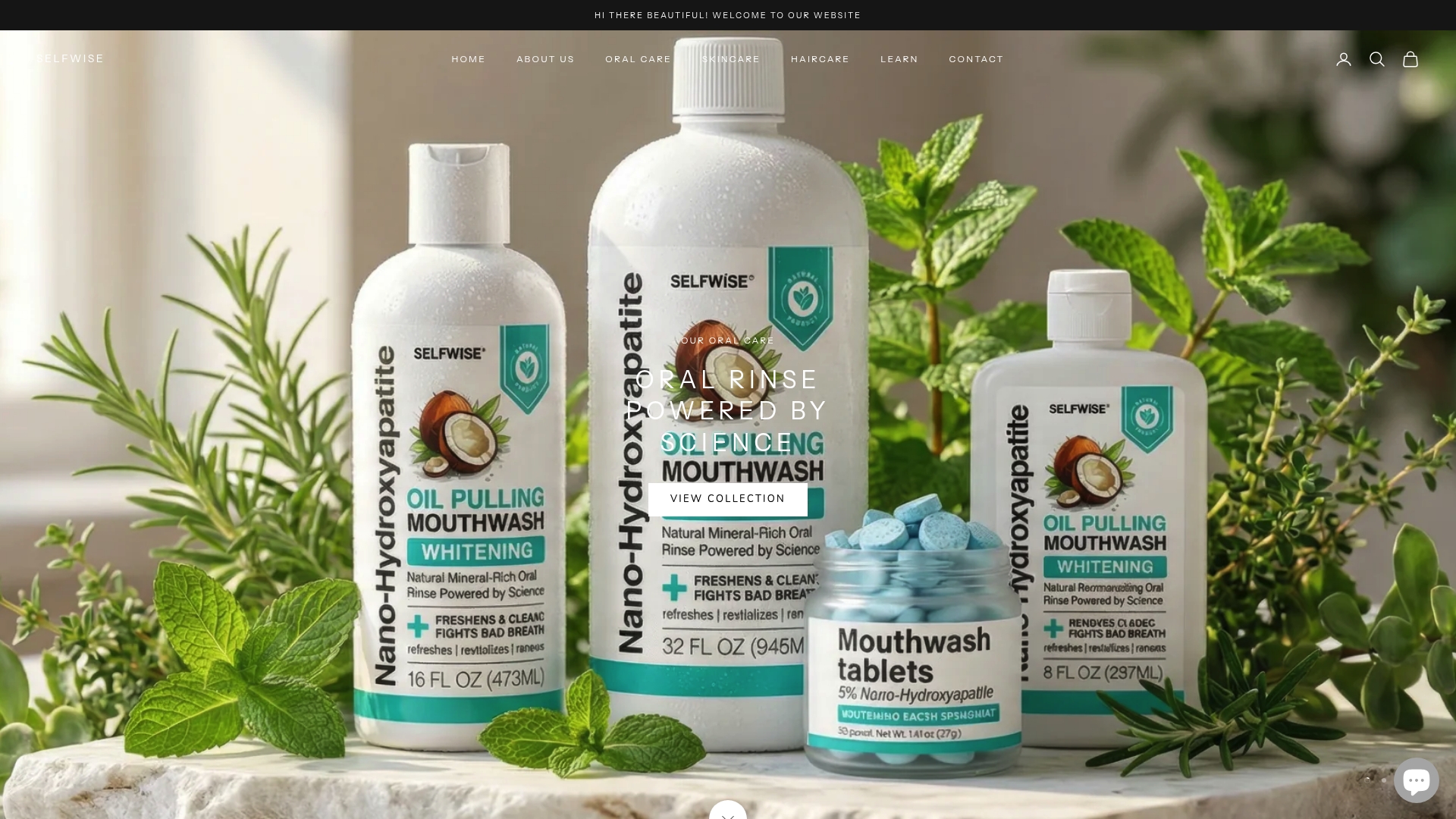
The formula pairs rosemary with castor oil and lighter carrier oils in a ratio designed to spread evenly and rinse out clean, avoiding the buildup and matting problems raw castor oil causes when applied undiluted. For readers who want a broader routine, the hair growth collection includes complementary options like the Rice Water Rosemary Hair Spray for between-wash strengthening. And if you are already rethinking what goes on your body based on ingredient evidence rather than marketing, that same mindset applies to what goes in your mouth. Selfwise’s nano hydroxyapatite oil pulling mouthwash applies the same oil-based, fluoride-free philosophy to oral care.
Start with the rosemary and castor blend twice a week for eight weeks, take your baseline photos on day one, and check the product page for full application instructions before your first use.

This article is general information, not a substitute for advice from a qualified doctor. Consult a qualified healthcare professional about your own circumstances before acting on anything here.
Sources
- Coconut, castor, and argan oil for hair in skin of color patients: a systematic review
- Clinical study comparing rosemary-lavender, rosemary-castor, and coconut oil (2025)
FAQ
Does applying castor oil help hair growth?
It mainly helps by reducing breakage and preserving length rather than stimulating new follicle growth; the strongest human evidence for actual growth improvement comes from castor blended with rosemary, not castor alone.
How do I use castor oil for hair growth?
Dilute it with a lighter carrier oil, apply to damp scalp and strands, leave on for 30 to 60 minutes or overnight with hair protected from tangling, then wash thoroughly and repeat once or twice weekly for 8 to 12 weeks before judging results.
What oil is best for hair growth?
Based on current clinical data, rosemary combined with castor oil shows the most measurable human results, with one trial reporting a 47.59% increase in growth rate over 90 days compared to coconut oil alone.
Is coconut oil or castor oil better for hair?
Coconut oil has stronger evidence for improving hair quality and reducing breakage in brittle hair, while castor oil’s clearest benefit is shaft protection through its occlusive, moisture-sealing texture; neither has strong standalone evidence for growth, which is why blended formulas outperform both.