Mouthwash for Diabetes and Dry Mouth: How to Choose
If diabetes leaves your mouth feeling dry, the best mouthwash is an alcohol-free rinse that you use as a supplement to brushing and flossing, not as a substitute for them. Alcohol can add to dryness, and a dry mouth is already more prone to cavities and gum trouble. That is why our alcohol-free oil pulling and nano hydroxyapatite rinses are formulated without alcohol, fluoride or harsh chemicals. Below you will find why diabetes dries the mouth, what to look for on a label, how to build a gentle routine, and when to talk to a dentist.
TL;DR
- Dry mouth is common when blood sugar runs high, and it can be one of the first signs of diabetes, according to Cleveland Clinic.
- The American Dental Association notes that alcohol can be drying, so an alcohol-free rinse may be the prudent choice.
- Mouthwash does not replace brushing and flossing. Think of it as a supplement.
- Sip water, chew sugar-free gum and tell your care team about persistent dryness. Managing blood sugar addresses the root cause.
Table of Contents
- Why diabetes dries out your mouth
- What a mouthwash can and cannot do
- How to read a mouthwash label when your mouth is dry
- What about the headlines linking mouthwash and diabetes?
- A gentle daily routine for a dry mouth
- Choosing between a liquid rinse and a tablet
- Selfwise rinses for a drier mouth
- Our perspective
- When to talk to a dentist or doctor
- FAQ
- Sources
Why diabetes dries out your mouth
Saliva is your mouth’s built-in cleaner. It washes away food particles, neutralizes acids and carries minerals that help protect enamel. When saliva drops, bacteria and acids linger longer on teeth and gums.
Cleveland Clinic explains that dry mouth (xerostomia) is a common symptom of high blood sugar and can be the first symptom people notice. Other contributors it lists include nerve damage to the salivary glands, dehydration, mouth breathing, smoking and medications for conditions such as high blood pressure, depression and bladder problems. Many people with diabetes take one or more of those drugs, so dryness often has more than one cause.
The consequences are practical. A Journal of the American Dental Association patient article from the ADA Science and Research Institute lists dry mouth among diabetes-related problems that raise the risk of cavities and bad breath, and can make chewing, speaking or swallowing harder. Cleveland Clinic adds gingivitis, periodontitis, plaque, thrush and tooth decay to the list of risks tied to low saliva.
So the goal of any rinse is simple: add no extra dryness, and support the basics of daily care.
What a mouthwash can and cannot do
The ADA is clear that a mouthrinse is not a replacement for daily brushing and flossing, though it may be a helpful addition. It also separates two kinds of product:
- Cosmetic rinses give temporary breath control and nothing more.
- Therapeutic rinses contain active ingredients aimed at bad breath, gingivitis, plaque or decay.
Rinses made specifically for dry mouth are a third category. According to the ADA, their makers must have data showing the product safely relieves dry mouth symptoms when used as directed.
A rinse also does something a toothbrush cannot: it reaches the whole mouth in one pass, including the soft tissues, the back of the tongue and the gumline. For someone whose mouth feels sticky or dry, a gentle swish can also feel soothing in the moment. Nobody should expect it to fix the underlying cause, which is usually blood sugar, hydration or a medication.
What the research says about rinses in people with diabetes
A 2026 randomized trial in BDJ Open followed 154 adults with type 1 or type 2 diabetes. Participants who used essential-oil mouthrinses alongside twice-daily brushing for 12 weeks had significantly lower plaque and gingival scores than the control group, and the rinses were well tolerated. Its authors describe rinses as a valuable adjunct to mechanical cleaning for people with diabetes.
A separate December 2025 JADA trial in healthy adults found that essential-oil rinses did not reduce salivary flow after a single use, and no dry-mouth side effects appeared over 14 days of twice-daily use. The takeaway: the formula matters more than the category, and a thoughtfully made rinse need not worsen dryness.
A 2021 trial of 105 people with type 2 diabetes in Iran also tested herbal rinses for dryness. Ginger and aloe vera mouthwashes used for 14 days reduced dry mouth symptoms more than saline did. It is a small sign that plant-based, gentle formulas have a place in the conversation.
How to read a mouthwash label when your mouth is dry
Start with what is not in the bottle. Then look at what the formula is trying to do.
| What to check | Why it matters with diabetes and dry mouth |
|---|---|
| Alcohol | The ADA says alcohol can be drying. Guidance from the Arizona Department of Health Services tells people with dry mouth to choose a rinse without alcohol. |
| Added sugar | Sugar feeds the bacteria behind cavities, and a dry mouth has less saliva to clear it. Check the ingredient list for sweeteners that are sugar-free. |
| Strong flavors and harsh detergents | A sore, dry mouth is easily irritated. Mild, simple formulas are easier to tolerate. |
| Xylitol | A sugar-free sweetener often used in oral care. Sugar-free products are also what the ADA’s patient guidance suggests when it recommends stimulating saliva with sugarless gum or candy. |
| Mineral support | Ingredients such as nano hydroxyapatite are used in remineralizing oral care to support enamel, which matters when saliva is low. |
| Claims | Look for clear directions and a rinse that is described honestly as a supplement to brushing. |
The Arizona guidance also points out that a fluoride rinse is a good choice for dry mouth, and that your dental provider can make the best recommendation for you. If you prefer to avoid fluoride, ask your dentist how to cover cavity prevention in another way.
Our own guide to alcohol-free versus regular mouthwash walks through how these ingredients compare, and another explains why some mouthwashes cause dry mouth in the first place.
What about the headlines linking mouthwash and diabetes?
If you searched this topic, you probably saw alarming headlines. Here is the research behind them, kept in proportion.
A 2017 study of 945 overweight or obese adults aged 40 to 65 in Puerto Rico found that using mouthwash at least twice daily was associated with a higher risk of pre-diabetes or diabetes over three years than less frequent use. Use less than twice a day showed no such association. The authors do not claim causation, and the study did not look at what specific formula people used. The researchers proposed that strongly antibacterial rinses might disturb helpful oral bacteria.
That is useful context for how you choose. It argues for a simple, gentle formula, used at sensible frequency, rather than for skipping oral care, which people with diabetes need more of, not less. If you have questions about your own risk, your doctor or dentist is the right person to ask.
Our article on why the antiseptic matters more than the alcohol covers this angle for everyday shoppers.

A gentle daily routine for a dry mouth
This routine is built around what the ADA, Cleveland Clinic and the JADA patient article recommend, with a rinse slotted in where it helps most.
- Brush twice a day and floss once. This is the foundation. Nothing in a bottle takes its place.
- Rinse after a meal or at a dry point in the day. Use an alcohol-free formula and follow the label directions. If you use a rinse with a pulling or swishing step, take your time and spit it out rather than swallowing.
- Do not follow a rinse with a large sip of something sugary. Keep drinks sugar-free.
- Keep your mouth moving. Sip water or sugarless, non-caffeinated drinks during the day. The ADA-published article suggests sucking on ice chips rather than chewing them, and chewing sugar-free gum or candy to stimulate saliva.
- Limit what dries you. The same article advises cutting back on salty and spicy foods, alcoholic and caffeinated drinks, and tobacco.
- Add humidity at night. Cleveland Clinic suggests a humidifier and lip balm. If you breathe through your mouth in your sleep, this can make mornings more comfortable.
- Track the cause. Managing blood sugar is the most direct way to ease diabetes-related dryness. If a medication seems to be drying you out, raise it with your prescriber instead of stopping it yourself.
If your blood sugar swings, dryness may too. Noting when it is worst gives your care team something concrete to work with.
Other ways to ease dryness through the day
Rinsing is only one tool. Ideas from voice care, such as ways to relieve dry mouth during long stretches of talking, can help when you need relief outside your brushing routine: steady sips of water, humidity and pacing your speech are all easy to apply.
Choosing between a liquid rinse and a tablet
Some people find a liquid rinse is the simplest habit. Others like a format that is easy to carry or pack. Our range includes both a nano hydroxyapatite oil pulling mouthwash and nano hydroxyapatite mouthwash tablets. Both are formulated without fluoride, alcohol or harsh chemicals. Pick the form you will use consistently: the best rinse is the one that fits into your day.
If you want a broader plan around your rinse, our natural oral care routine lays out simple daily steps for cleaner teeth and healthier gums.
Selfwise rinses for a drier mouth
Selfwise makes natural oral care built on simple ingredients, including nano hydroxyapatite and xylitol, and our mouthwashes are formulated without alcohol, fluoride and harsh chemicals. Our products are positioned for a wide range of users, including people with dental work, and are designed around compatibility and holistic oral health.
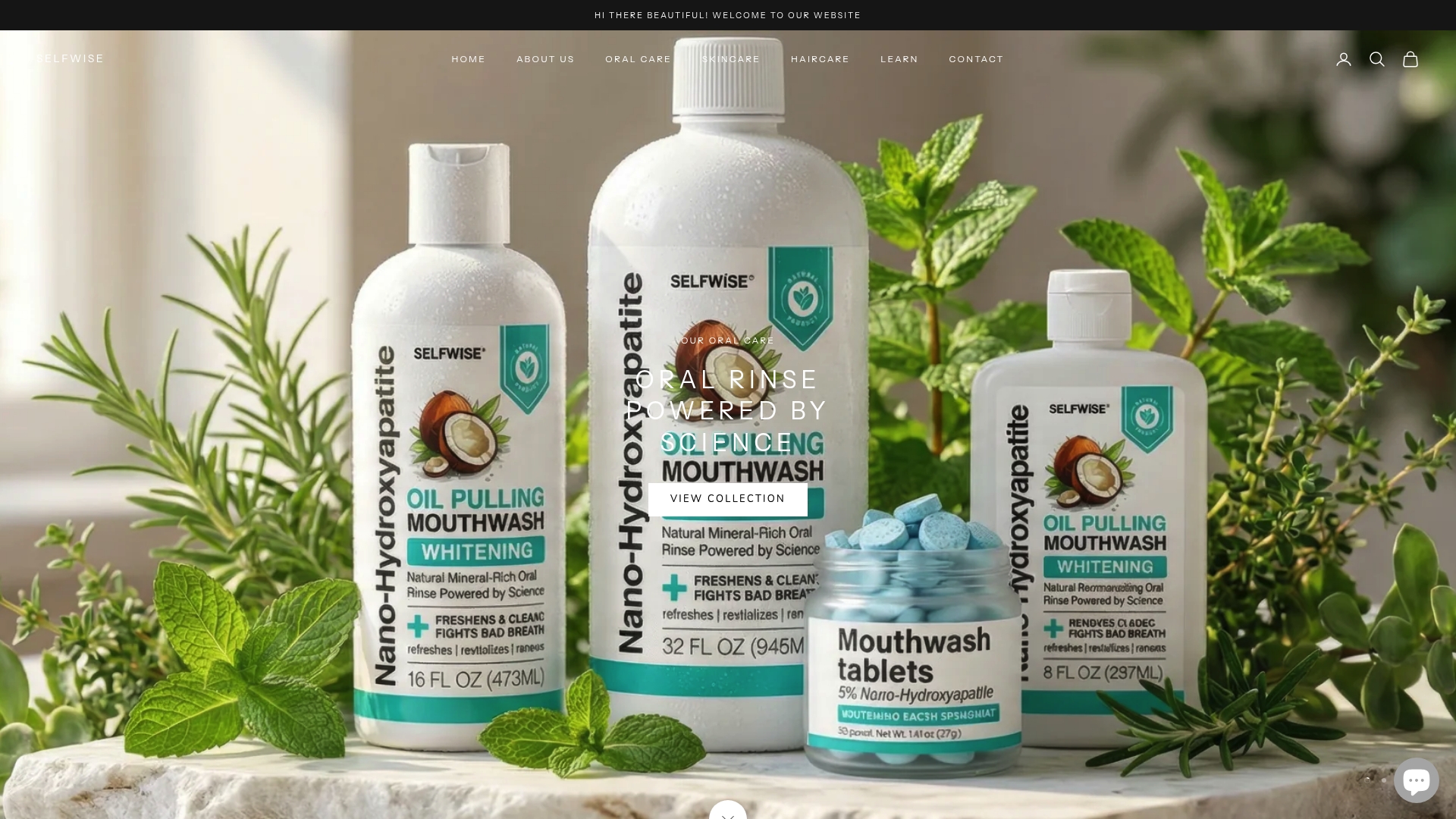
If you are ready to swap a drying rinse for an alcohol-free one, start with the Selfwise mouthwash collection and choose the format that suits your routine.
Our perspective
When someone with diabetes tells us their mouth always feels dry, the first thing we want to take off their plate is one more irritant. Many standard rinses lean on alcohol and strong antiseptics. We formulate in the other direction: simple ingredients, no alcohol, no fluoride, no harsh chemicals.
We also think people deserve to know what a rinse is for. Oil pulling is a traditional practice, and nano hydroxyapatite is a modern mineral that is used in remineralizing care. Xylitol is a sugar-free sweetener. Together they make a gentle, sensible supplement to brushing and flossing, and that is exactly how we describe them.
Dry mouth deserves a plan, not just a product. Drink water, manage your blood sugar with your care team, see your dentist regularly and pick a rinse that does not add to the problem. That is the routine we would hand a friend.
Viktor
When to talk to a dentist or doctor
Mention dry mouth at your next healthcare appointment, even if it seems minor, since it can point to blood sugar that needs attention. Cleveland Clinic advises booking sooner if you also notice bleeding from the teeth or mouth, loose teeth, mouth pain or sores, or trouble chewing, swallowing or talking.
A joint consensus report from periodontal and diabetes specialists says people with diabetes should be told that dry mouth and burning mouth may occur, and should seek advice from their dental practitioner. It also recommends a periodontal examination for newly diagnosed diabetes, with a review every year. The 2026 BDJ Open trial found that 37.9% of participants had received no oral health guidance from their healthcare providers, so asking your care team directly is worthwhile.
FAQ
Can mouthwash make dry mouth worse?
It can, depending on the formula. The ADA notes that alcohol can be drying, and a 2023 practice review cites Australian guidance that people with dry mouth should avoid alcohol-containing mouthwashes because they can dry the oral lining. Choosing an alcohol-free rinse is the simplest way to avoid that.
What should I look for in a mouthwash if I have diabetes?
Look for an alcohol-free formula with no added sugar, mild flavoring and clear directions. Treat it as a supplement to brushing and flossing. Your dentist can recommend a specific product, including a rinse designed for dry mouth.
How can I prevent dry mouth with diabetes?
Keeping blood sugar in your target range is the most direct step. Sip water through the day, chew sugar-free gum or candy to stimulate saliva, use a humidifier at night and cut back on tobacco, alcohol, caffeine and very salty or spicy foods. If a medication seems to be the cause, talk with your prescriber.
Does mouthwash cause diabetes?
No study has shown that. A 2017 study found an association between using mouthwash twice a day or more and later pre-diabetes or diabetes in overweight adults, but the authors state that it does not establish causation. If you are concerned, discuss your habits with your doctor or dentist.
Sources
- Cleveland Clinic: Diabetes and Dry Mouth (Xerostomia)
- American Dental Association: Mouthrinse (Mouthwash)
- JADA: Diabetes and your oral health
- BDJ Open: Efficacy and safety of essential-oil-containing mouthrinses in adults with diabetes
- JADA: Comparison of safety, salivary flow rate, and pH with mouthrinses
- Medicina Oral: Comparison of the effect of ginger and aloe vera mouthwashes on xerostomia
- Arizona Department of Health Services: Senior Oral Health
- International Dental Journal: Mouthwashes: Implications for Practice
- Over-the-counter mouthwash use and risk of pre-diabetes/diabetes
- Periodontal disease and diabetes consensus report