Why Magnesium Body Lotion Helps Sleep but Not Blood Magnesium
Magnesium body lotion is unlikely to meaningfully raise magnesium levels in your bloodstream, but that doesn’t mean it does nothing. The moisturizing, massage, and bedtime ritual built into applying it can genuinely ease tension and support sleep for some people. Those with mild muscle tightness or a taste for a calming wind-down routine may notice real benefit; anyone managing a diagnosed deficiency, restless legs, or fibromyalgia symptoms should still talk to a clinician and consider oral magnesium. Try it if you like the ritual, watch for skin irritation, and don’t expect it to replace medical care.
TL;DR:
- Magnesium lotion is unlikely to significantly increase blood magnesium levels but can provide calming effects through massage and moisturizing routines.
- The research on systemic absorption and sleep benefits is limited, with minor evidence suggesting muscle relief rather than direct hormonal or sleep architecture improvements.
- Applying lotion to hairier areas like calves or shoulders may offer slightly better absorption due to follicle permeability, but overall effectiveness remains uncertain.
- Skin irritation is the main safety concern; patch testing is recommended, especially for sensitive skin, while systemic overdose from topical application is highly unlikely.
- For actual deficiencies, oral magnesium supplements are advisable, as topical products cannot replace prescribed treatments or medical advice.
Table of Contents
- What Does the Research Say About Magnesium Body Lotion Benefits?
- How Might Magnesium Lotion Work on Skin?
- Do Sleep, Muscle, and Skin Claims Hold Up?
- Is Magnesium Body Lotion Safe to Use?
- How Should You Use Magnesium Body Lotion?
- Why We Frame Magnesium Lotion as a Skin-First Product
- Can Magnesium Beef Tallow Lotion Fit Your Routine?
- Sources
- FAQ
What Does the Research Say About Magnesium Body Lotion Benefits?
The clinical picture is thinner than marketing suggests. A 2017 literature review examined the existing science on transdermal magnesium and concluded the claims outrun the evidence, calling for larger, better designed trials before anyone treats topical magnesium as a reliable way to correct a deficiency.
Human trials since then haven’t closed the gap. A pilot study published in PLOS One had 25 participants apply 56 mg of magnesium cream daily for two weeks. Serum magnesium rose modestly, but the increase reached statistical significance only in a non-athlete subgroup, not the full sample. A separate fibromyalgia trial followed 24 patients using topical magnesium chloride for four weeks and found improved quality-of-life scores, a promising but small and bias-prone result.
Where does that leave the expert consensus?
- Sleep specialists and dermatologists quoted in NPR’s coverage generally doubt that lotions deliver meaningful systemic absorption.
- Mayo Clinic points people with a genuine deficiency toward oral forms like magnesium glycinate or citrate instead.
- Perceived benefits, according to several sources, often trace back to massage, moisturized skin, or a placebo effect rather than the mineral itself.
The largest human trials on transdermal magnesium used a small number of participants and lasted only a few weeks, leaving the question unsettled.
How Might Magnesium Lotion Work on Skin?
Skin is built to keep things out, not let them in. The outermost layer, the stratum corneum, is a dense barrier of dead cells and lipids that blocks most charged ions, including magnesium, from passing through to the bloodstream in any meaningful quantity. That’s the central obstacle every transdermal magnesium product runs into.
There’s a partial exception. Research on hair follicle permeation found that follicles offer a more porous route for magnesium ions than intact skin does. That suggests any absorption is slow, dependent on concentration and contact time, and concentrated in hairier areas rather than uniform across the body.
What’s easier to explain, and easier to trust, is the local effect:
- Rubbing lotion into sore calves or shoulders increases blood flow and loosens tight muscle through massage alone.
- A thicker cream base traps moisture and softens rough skin regardless of what’s dissolved in it.
- A consistent nightly application becomes a cue that signals your body it’s time to wind down.
Pro Tip: If you want to test whether it’s the magnesium or the massage doing the work, spend the same two minutes rubbing in a plain, fragrance-free moisturizer on alternating nights and compare how you feel.
Do Sleep, Muscle, and Skin Claims Hold Up?
Not all three claims deserve equal skepticism. Here’s how each one stacks up against what’s actually been tested:
- Sleep. The absorption evidence is weak, and no trial has shown magnesium lotion improves sleep architecture directly. Better sleep some people report likely comes from the wind-down ritual itself, or from local relief of leg cramps and restless sensations that were disrupting sleep in the first place.
- Muscle relaxation and cramps. This is where the evidence, thin as it is, looks most promising. The fibromyalgia pilot found improved scores after four weeks of topical magnesium chloride, and anecdotal reports of eased cramping are common. Short-term symptomatic relief seems plausible, but no large trial confirms it, and results could reflect massage as much as the mineral.
- Skin health and moisturization. This claim rests on the safest ground. Any well-formulated lotion base improves hydration and skin feel, an effect that has nothing to do with whether magnesium crosses into your bloodstream. Dermatologists interviewed by the American Dental Association’s news outlet note that people often credit the “active” ingredient for what the emollient base is actually doing.
Is Magnesium Body Lotion Safe to Use?
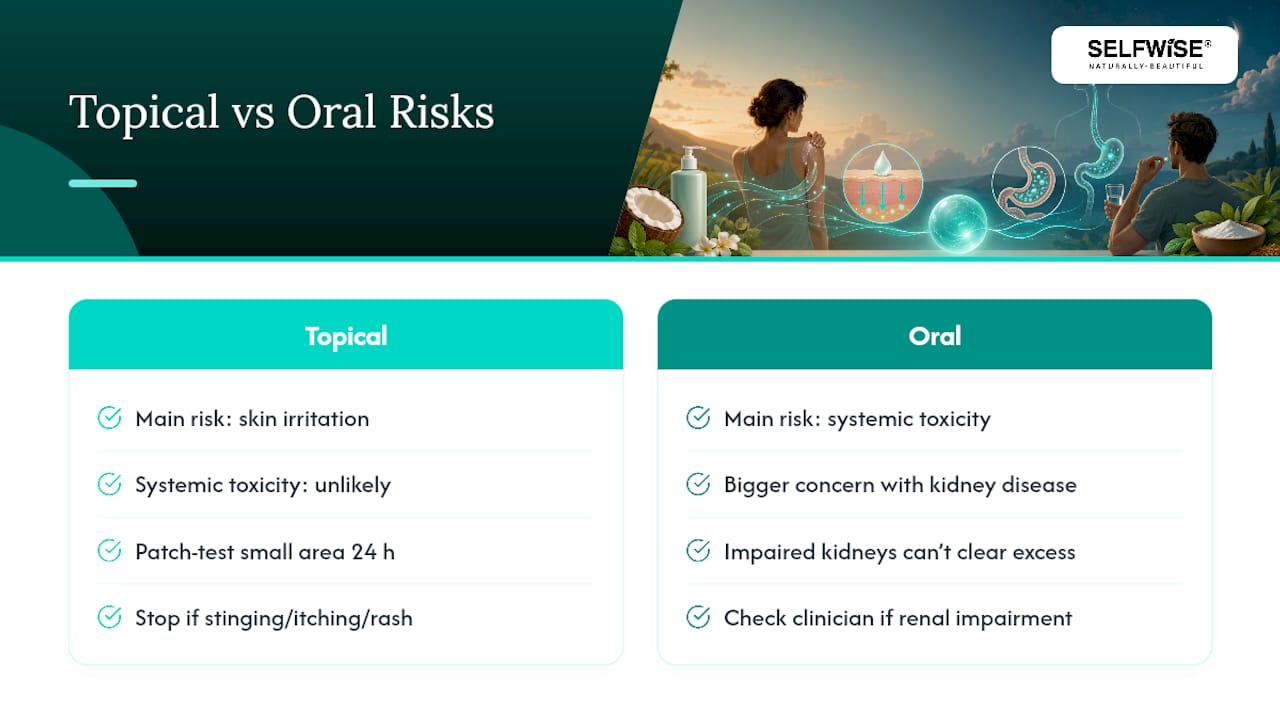
For most healthy adults, the biggest risk is skin irritation, not systemic toxicity. Contact dermatitis or redness can show up with magnesium chloride formulations, especially on sensitive skin. Patch-test a small area for 24 hours before applying it more broadly, and stop if you notice stinging, itching, or a rash.
Getting too much magnesium through a lotion is unlikely; skin simply doesn’t let enough through. The bigger concern is oral magnesium supplementation for people with kidney disease, since impaired kidneys struggle to clear excess magnesium from the blood. Anyone with renal impairment or taking medications that interact with magnesium should check with a clinician before adding oral supplements alongside a topical routine.
No topical magnesium product is FDA-approved to treat sleep disorders or chronic pain, according to reporting from NPR. If cramps, restless legs, or fatigue persist beyond a few weeks, that’s a signal to get evaluated rather than keep applying more lotion.
How Should You Use Magnesium Body Lotion?
A simple trial period tells you more than any product label. Here’s a routine worth following for two to four weeks before deciding if it’s working for you:
- Warm a small amount of lotion between your palms and massage it into calves, feet, or whatever muscle group feels tightest, 15 to 30 minutes before bed or right after a workout.
- Apply nightly or post exercise, consistently, for at least two weeks before judging the results.
- Track sleep latency (how long it takes to fall asleep), how often you wake overnight, and how often cramps hit.
- Pair it with something you know works, like stretching or a fixed bedtime, so you can separate the lotion’s contribution from the rest of your routine.
Pro Tip: Keep a one-line nightly note on your phone. “Fell asleep fast, no cramps” beats trying to remember three weeks later whether anything changed.
Stop if skin irritation shows up or if four weeks pass with no noticeable difference.
Why We Frame Magnesium Lotion as a Skin-First Product
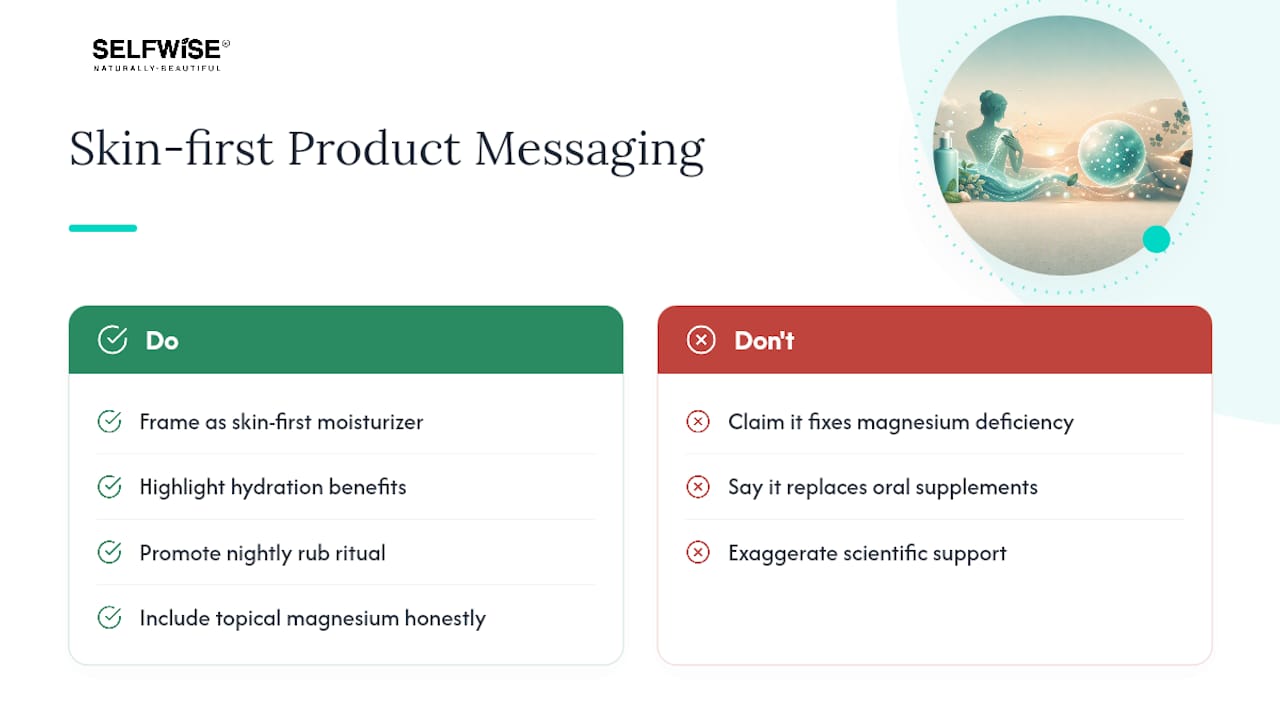
Our brand builds every product around ingredients chosen for their effectiveness, without exaggeration. That philosophy extends past oral care into a beef tallow body lotion with magnesium: a rich moisturizer with topical magnesium included, positioned as a skin and ritual product first.
The evidence on transdermal magnesium simply doesn’t support claiming it corrects a deficiency or replaces oral supplementation. We’d rather say that plainly than lean on a claim the research doesn’t back. A lotion earns its place in a routine through hydration and the calm of a nightly rub, not through implied systemic repair.
Can Magnesium Beef Tallow Lotion Fit Your Routine?
If you’re weighing whether a magnesium lotion belongs in your evening routine, think of it as a moisturizer with a bonus, not a supplement replacement. Selfwisebrand’s beef tallow body lotion with magnesium is built on a rich, skin-nourishing base that hydrates dry, tired skin while giving you a reason to slow down and rub it into sore calves or shoulders before bed.
This is an honest positioning, not a medical one: it’s a lotion for skin comfort and a calming ritual, and we don’t claim it repletes magnesium levels or treats a diagnosed condition. If that’s the kind of low-risk self-care addition you’re after, browse the full collection of natural body lotions and see which formulation fits your skin type before adding one to your nightstand.
Sources
- Myth or Reality—Transdermal Magnesium?
- Pilot study: transdermal magnesium chloride in fibromyalgia
- Magnesium lotion is popular for sleep. Does it work? (NPR)
FAQ
Can I Use Magnesium Lotion Every Day?
Yes, daily use is generally fine for most people since skin absorption is limited and systemic overdose from a lotion is unlikely. Stop immediately if you notice redness, itching, or irritation.
What Are the Signs Your Body Needs More Magnesium?
Common signs include muscle cramps, fatigue, and restless legs, though these overlap with many other conditions. A blood test and conversation with a clinician, not a lotion trial, is the reliable way to confirm an actual deficiency.
Where Should You Apply Magnesium Lotion?
Calves, feet, and shoulders are common choices since they’re easy to massage and often hold tension, and hairier areas may offer a slightly more permeable route based on follicle research. There’s no single “correct” spot; apply it wherever you feel tightness or want the ritual of a bedtime rub.
What Side Effects Can Magnesium Cream Cause?
The most common issue is skin irritation or contact dermatitis, particularly with magnesium chloride formulations on sensitive skin. Patch-test before full application, and people with kidney disease should check with a clinician before combining topical use with oral magnesium supplements.