What Is Non-Toxic Skincare: Your 2026 Consumer Guide
If you’ve been puzzling over what non-toxic skincare actually means, you’re not alone. The term gets thrown around constantly, yet most products labeled “clean” or “natural” sit in a regulatory gray zone with no standard definition to back them up. What makes this worth understanding isn’t just peace of mind. Research shows that switching to safer products measurably reduces harmful chemicals in your body within days. That’s not a marketing claim. That’s science.
Table of Contents
- Key Takeaways
- What non-toxic skincare really means
- The science behind safer skincare
- How to identify trustworthy non-toxic products
- Building your non-toxic skincare routine
- My honest take on what non-toxic skincare actually takes
- Clean ingredients start with every part of your routine
- FAQ
Key Takeaways
| Point | Details |
|---|---|
| “Non-toxic” isn’t regulated | No legal definition exists, so you must rely on certifications and ingredient databases to verify claims. |
| Natural doesn’t mean safe | Plant-based ingredients can still irritate or sensitize skin if poorly formulated or used in wrong concentrations. |
| Transparency is the real signal | Brands that disclose every ingredient and avoid vague “fragrance” labels are your most trustworthy options. |
| Switching works fast | Studies show harmful chemical biomarkers drop significantly after just 5 days of using safer products. |
| Patch testing still matters | Even genuinely non-toxic products can react with your skin, so testing before full application protects you. |
What non-toxic skincare really means
Non-toxic skincare refers to products formulated without ingredients known to harm human health. That includes endocrine disruptors, carcinogens, and allergens that build up in the body over time. But here’s where most people get tripped up: “non-toxic” is not a regulated legal term. No government agency enforces it, which means any brand can use it freely regardless of what’s actually in their formula.
The distinction between “natural,” “organic,” and “non-toxic” trips up even careful shoppers. “Natural” means the ingredients are derived from nature. “Organic” means those ingredients were grown without synthetic pesticides. Neither of those guarantees safety. As research confirms, natural does not guarantee non-toxic because plant-based compounds can still cause sensitization or contain contaminants when poorly formulated.
Ingredients to actively avoid
The most commonly flagged chemicals in conventional skincare products include:
- Parabens (methylparaben, propylparaben): Preservatives linked to hormone disruption
- Phthalates: Often hidden inside “fragrance” listings, associated with reproductive harm
- Formaldehyde-releasing preservatives: DMDM hydantoin and quaternium-15 are common offenders
- Synthetic fragrances: The word “fragrance” or “parfum” on a label can legally hide hundreds of chemicals, including known phthalates
- Oxybenzone: A chemical UV filter with concerns around hormone activity
- PEGs: Penetration enhancers that can carry other chemicals deeper into skin
Third-party certifications exist to fill the regulatory gap. Look for COSMOS Organic, USDA Organic, or Leaping Bunny for cruelty-free verification. These certifications involve independent auditing, which adds real accountability to the label. You can also cross-reference products using databases like EWG’s Skin Deep, which scores ingredients based on safety research.
Pro Tip: When scanning an ingredient list, search for “fragrance” or “parfum” first. If you see either without an explanation of what’s in it, that product is not fully transparent regardless of what the front label claims.
The science behind safer skincare
The evidence for going non-toxic is more concrete than most people realize. A study involving 103 female students found that chemical biomarkers dropped significantly after just five days of switching to products free from parabens, phthalates, and triclosan. Five days. That tells you how directly your daily skincare routine affects what circulates in your body.
On the ingredients front, not every lab-developed ingredient is a health risk. This is a nuance the wellness world often ignores. High-performance ingredients like niacinamide and peptides, though synthesized in a lab, are completely compatible with non-toxic formulas when used at safe concentrations. The goal is biocompatibility, not strictly botanical origin.
“The definition of ‘clean’ or ‘non-toxic’ is expanding to include ethical sourcing, transparency, and recyclable packaging. Total product lifecycle impacts are now part of how industry experts define non-toxic beauty in 2026.” What happens when clean has to mean something
Sun protection is a perfect example of where science and non-toxic principles align well. FDA-recognized safe UV filters currently include only zinc oxide and titanium dioxide. Less than 30% of sunscreens tested in 2025 met both safety and effectiveness criteria. Choosing mineral sunscreens isn’t just a preference. It’s the evidence-backed option.
Plant-based ingredients carry their own risks when misused. Essential oils, for example, are entirely natural yet are among the most common causes of contact dermatitis. Proper formulation at correct concentrations is what separates a safe product from one that harms your skin barrier despite having a clean-sounding ingredient list.
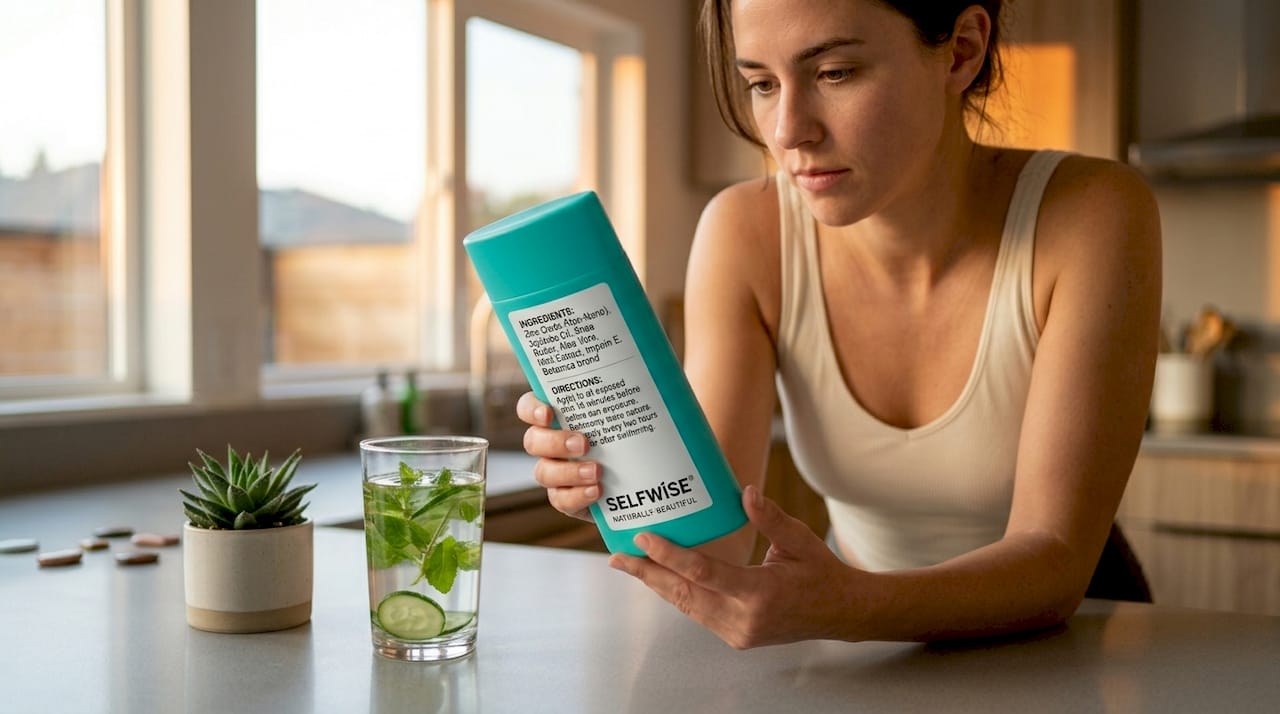
Pro Tip: Don’t assume a shorter ingredient list is always safer. What matters is whether those ingredients are at safe concentrations, properly preserved, and tested for stability.
How to identify trustworthy non-toxic products
This is where most guides let you down. They tell you to “look for clean brands” without explaining what that actually looks like in practice. Here’s a more useful framework.
What good looks like vs. what to avoid
| Feature | Trustworthy brand | Red flag |
|---|---|---|
| Ingredient transparency | Full INCI list with no vague terms | “Fragrance” or “parfum” with no further detail |
| Certifications | COSMOS, USDA Organic, Leaping Bunny | Self-declared “clean” with no third-party backing |
| Preservative system | Phenoxyethanol, rosemary extract, vitamin E | DMDM hydantoin, formaldehyde-releasing agents |
| UV filters (if in SPF) | Zinc oxide or titanium dioxide | Oxybenzone, octinoxate |
| Marketing language | Ingredient-led, specific claims | “All-natural,” “toxin-free,” “pure” without explanation |
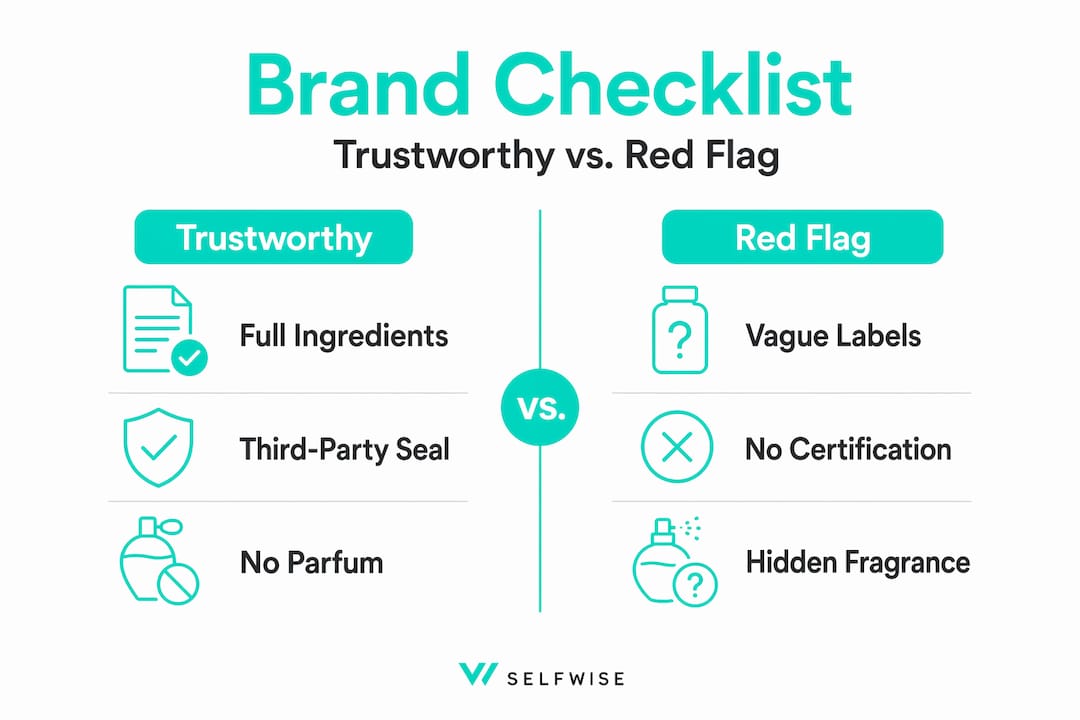
Radical transparency in ingredient lists is the single clearest indicator of a brand worth trusting. Any company serious about non-toxic formulation will tell you exactly what’s in the product and why. If they won’t, that’s your answer.
Beyond ingredients, look at how brands communicate. Do they explain why they chose specific preservatives? Do they acknowledge that some botanical ingredients require careful handling? Brands that engage with formulation complexity rather than hiding behind marketing copy are the ones doing the real work.
When evaluating non-toxic skincare products, these are the specific red flags worth checking every time:
- Claims of being “chemical-free” (everything is a chemical, including water)
- No expiration date or batch code
- Unusual texture or smell changes soon after opening (suggests preservation issues)
- No mention of where ingredients are sourced
You can apply the same ingredient transparency principles beyond skincare. Selfwisebrand covers evaluating product safety across personal care categories, which gives you a useful framework for comparing any product you bring into your routine.
Building your non-toxic skincare routine
Switching doesn’t require overhauling everything at once. In fact, doing it gradually gives you the clearest read on how your skin responds and reduces the risk of accidentally layering multiple new products that confuse the picture.
Here’s a practical approach:
- Start with your highest-use products. Moisturizer and cleanser touch your skin most. Replace these first for maximum impact on daily chemical exposure.
- Move to SPF next. This is where choosing fragrance-free products makes a measurable difference, particularly for hormone-disrupting compounds.
- Swap serums and treatments last. These are typically applied in smaller amounts, so their immediate impact is lower. That said, active ingredients in serums deserve the same scrutiny.
- Patch test every new product. Apply a small amount to your inner arm or behind your ear for 24 to 48 hours before full use. Patch testing new products protects you even with well-formulated, non-toxic ingredients.
- Give products time to work. A genuinely non-toxic routine won’t transform your skin overnight. Expect a realistic adjustment period of 4 to 6 weeks before making judgments about effectiveness.
Most people worry that switching means sacrificing performance. That’s understandable given how many watery, ineffective “natural” products exist. The reality is that well-formulated non-toxic skincare, anchored in biocompatible and gentle ingredients, delivers real results without the chemical load.
Pro Tip: Keep a simple log when you switch products. Note the date, the product, and any skin changes. This makes it much easier to identify what’s working and what’s causing a reaction.
My honest take on what non-toxic skincare actually takes
I’ll be direct about something that frustrates me in this space. The word “non-toxic” has become a marketing badge more than a meaningful standard, and it drives me up the wall. I’ve watched countless people spend real money on products that say all the right things on the front label while hiding synthetic fragrance, parabens, or poorly preserved botanicals in the fine print.
What I’ve learned after years of digging into ingredient labels is this: the brands worth your loyalty are usually the ones who make their formulation choices slightly harder to market. They explain that they use phenoxyethanol as a preservative because the alternatives are less stable. They tell you their essential oil concentration is kept below the IFRA threshold to minimize sensitization risk. That level of specificity is uncomfortable for marketers and gold for consumers.
The definition of non-toxic is also getting bigger in ways I think are genuinely positive. Sourcing, packaging, and supply chain ethics are becoming part of the conversation. That’s the right direction. Your skin health and the broader environment aren’t separate concerns.
My advice is to stop chasing a label and start reading lists. Learn five or six ingredients you want to avoid. Learn two or three certifications you can trust. That’s enough to make better choices consistently without spending hours researching every product.
— Viktor
Clean ingredients start with every part of your routine
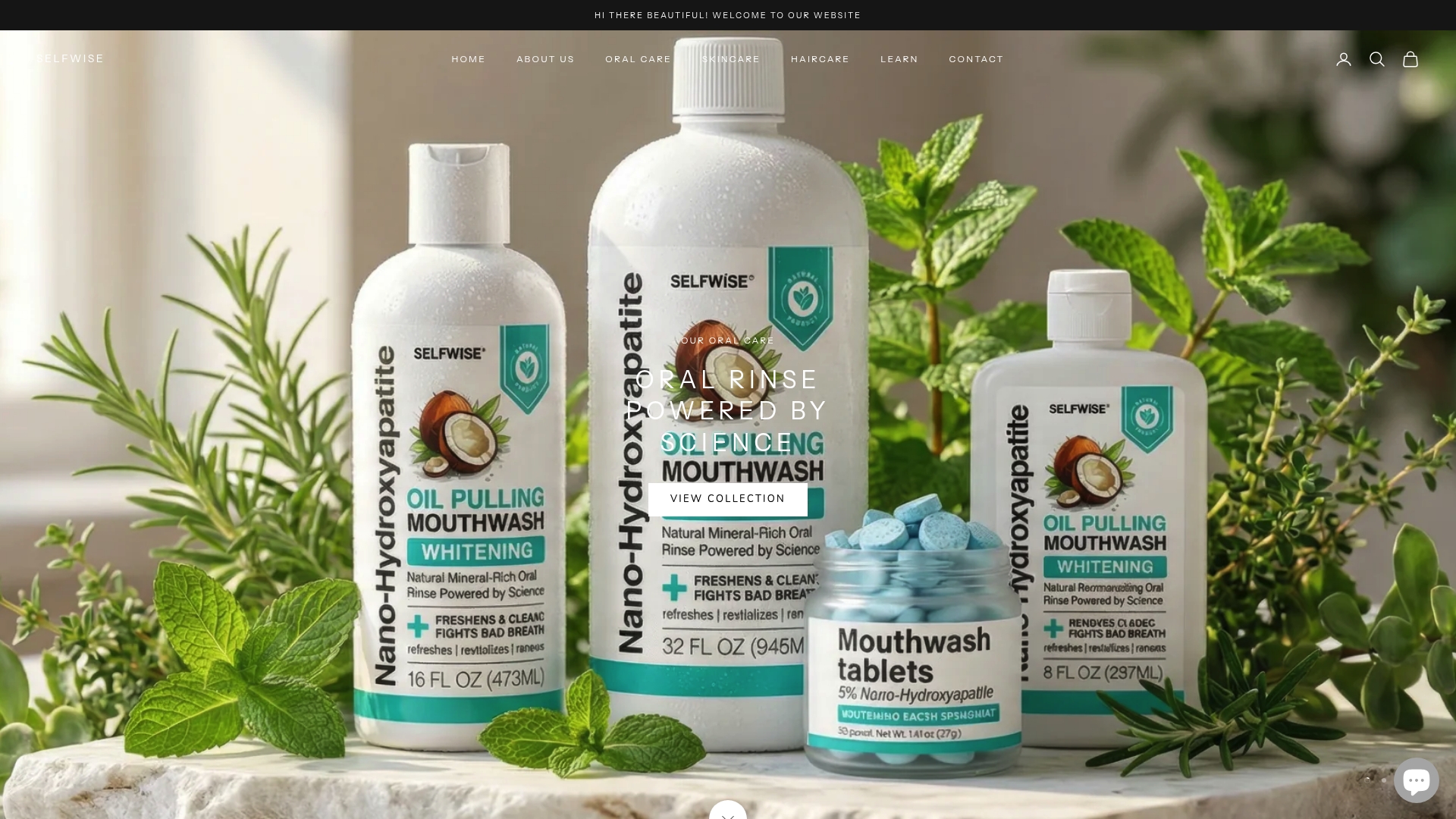
If this article has given you one clear direction, let it be this: the same principles of ingredient transparency and chemical-free formulation apply everywhere in your personal care routine, not just your face. At Selfwisebrand, that commitment runs through everything we make. Our natural mouthwash products are built on nano hydroxyapatite and xylitol rather than synthetic additives, giving your oral microbiome the same respect you’d want for your skin. Our fluoride-free oral care line makes it easy to apply non-toxic principles to a part of your routine most clean beauty guides completely ignore. Simple, transparent ingredients. No greenwashing. Real results you can actually feel.
FAQ
What does non-toxic skincare actually mean?
Non-toxic skincare refers to products formulated without ingredients known to harm health, including endocrine disruptors, carcinogens, and synthetic allergens. It is not a regulated term, so verification requires third-party certifications and ingredient database checks.
Is natural skincare the same as non-toxic skincare?
No. Natural means ingredients come from nature, but natural compounds can still cause sensitization or contain contaminants. Non-toxic refers specifically to safety, not origin, and includes well-formulated lab-developed ingredients like niacinamide.
How quickly can switching products lower chemical exposure?
Research shows that harmful chemical biomarkers including parabens and phthalates drop significantly within five days of switching to safer personal care products.
What certifications confirm a product is genuinely non-toxic?
Look for COSMOS Organic, USDA Organic, or Leaping Bunny certifications. These involve independent third-party auditing and are far more reliable than self-declared claims like “clean” or “all-natural.”
Does non-toxic skincare work as well as conventional products?
Yes, when properly formulated. Ingredients like niacinamide, peptides, and mineral UV filters are both effective and safe. The key is formulation quality, not whether the product avoids synthetic ingredients entirely.