Article: Castor Oil vs. Minoxidil: Oils vs. Actives in Oral Care
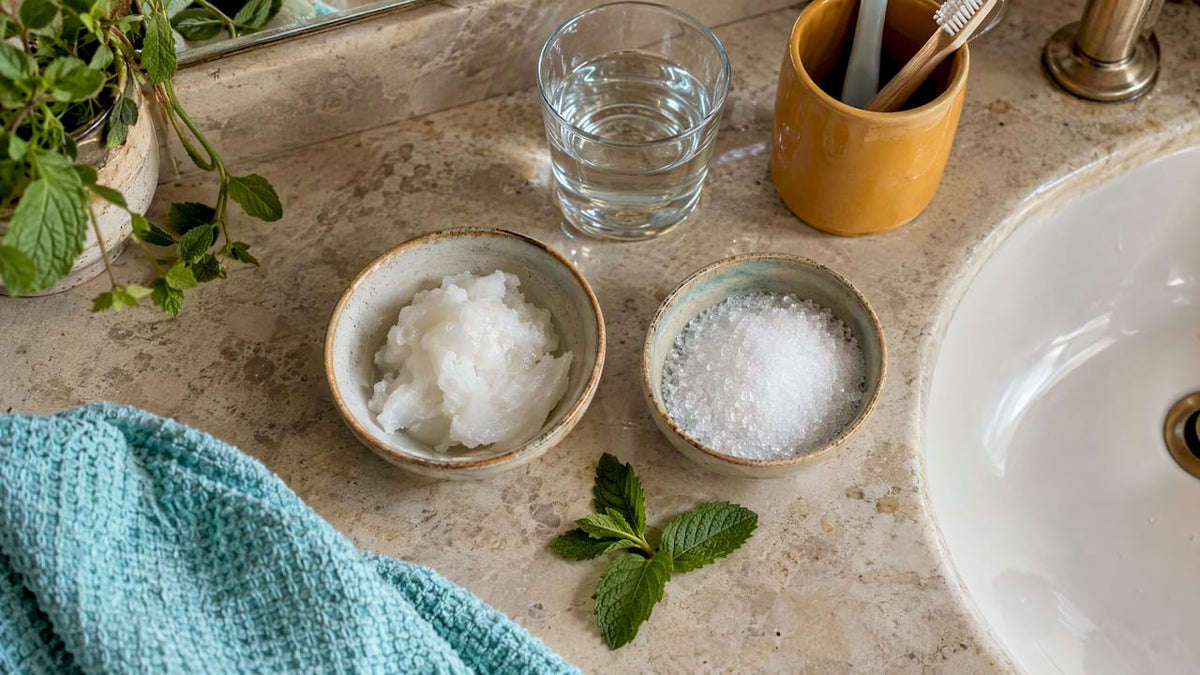
Castor Oil vs. Minoxidil: Oils vs. Actives in Oral Care
Castor oil and minoxidil are hair products, and we focus only on natural oral care, so we will not tell you which one to put on your scalp. For that decision, see a dermatologist. What the comparison does teach is useful in your bathroom: a traditional oil and a clinically tested active ingredient are different tools, with different evidence and different jobs. The same split runs through oral care, between oil pulling on one side and ingredients like nano hydroxyapatite and xylitol on the other. This guide uses the castor oil and minoxidil debate as a lens to show how to judge any natural product, then applies it to your mouth.
TL;DR
- Castor oil has no strong clinical evidence for hair growth, while minoxidil is a first-line treatment for patterned hair loss. Traditional use and tested effect are not the same thing.
- Oil pulling sits where castor oil does: a long tradition, some small trials, and modest, mixed evidence.
- Nano hydroxyapatite and xylitol are closer to the “active ingredient” side, with a clearer mechanism for enamel and bacteria.
- The strongest natural routine pairs both: an oil for habit and freshness, an active for remineralizing and plaque control.
- Bleeding gums, persistent pain or loose teeth need a dentist, not a new rinse.
Table of Contents
- What the castor oil vs. minoxidil debate actually shows
- Oil pulling is the castor oil of oral care
- The “minoxidil” side of oral care: ingredients with a job
- Side by side: oil vs. active in your mouth
- Can you combine them?
- Who should skip the DIY and see a professional
- Perspective: why we pair the old and the new
- Build a natural routine that holds up
- Choosing a natural mouthwash: a short checklist
- Where Selfwise fits
- FAQ
- Sources
What the castor oil vs. minoxidil debate actually shows
Readers searching this comparison usually want to know whether a natural oil can replace a drug. The evidence answers it fairly bluntly.
A 2022 academic review of coconut, castor and argan oil found no strong evidence that castor oil promotes hair growth, and weaker evidence even for improving luster. A 2025 narrative review of castor oil in dermatology adds that ricinoleic acid shows interesting preclinical activity, but clinical translation in androgenetic alopecia remains uncertain. The same review describes castor oil as traditionally used for dryness and itch, with those uses not studied for clinical efficacy.
Minoxidil sits in a different category. The American Academy of Family Physicians describes topical minoxidil as effective and first-line for patterned hair loss in adults. Even so, it is not magic. NYU Langone notes that shedding can increase for a month or two at the start and that noticeable thickening can take four months to a year. Stop, and most new hair is lost within a few months.
Three lessons carry over to any natural product category:
- Tradition is not trial data. A product can be loved for generations and still lack controlled studies.
- An active ingredient has a defined job. It has a mechanism, a dose and a timeline, and it has side effects too.
- Direct comparisons are rare. As one therapy update notes for hair loss, the lack of robust head-to-head studies makes it hard to pick the best option for an individual. Oral care has the same gap.
If you are here for hair, our guide on what castor oil actually does for hair growth covers it. The rest of this article stays in the mouth.
Oil pulling is the castor oil of oral care
Oil pulling means swishing an edible oil, often sesame, coconut or sunflower, in your mouth for several minutes and spitting it out. It comes from Ayurvedic tradition, and like castor oil on the scalp it has loyal fans.

The research is real but modest. A systematic review of randomized controlled trials looked at trials of at least seven days comparing oil pulling with chlorhexidine, other mouthwashes or routine hygiene, measuring plaque, gingival scores and bacterial counts. It reported statistically significant plaque reductions in some comparisons against routine hygiene alone. That is encouraging, and it is also a long way from a replacement for brushing.
What that means in practice:
- Oil pulling is a reasonable add-on to brushing and flossing, not a substitute.
- Results depend on consistency. A few days will not tell you much.
- It has a pleasant, low-risk profile for most people, which is why many choose it as a first step away from harsh rinses.
- Do not swallow the oil, and spit into the trash rather than the sink, since oil can build up in pipes.
People with a nut or seed allergy should check what oil they use, just as anyone trying castor oil on skin should heed the patch test advice in our hair side effects guide. Ricinoleic acid is the identified sensitizer in castor oil contact allergy, per the dermatology review above. The principle is the same everywhere: natural does not mean nonreactive.
The “minoxidil” side of oral care: ingredients with a job
In hair care, minoxidil is the tested active. In oral care, the closest natural-friendly equivalents are ingredients with a clear function.
Nano hydroxyapatite
Hydroxyapatite is the mineral your enamel is largely made of. Nano hydroxyapatite (nHA) is a synthetic version in tiny particles that can deposit onto the tooth surface, fill microscopic defects and help rebuild early demineralized areas. The case for it is strongest for early enamel remineralization and for easing sensitivity. Evidence that it prevents cavities as well as fluoride does over the long term is more limited, because fluoride has decades of trial history behind it. We say that plainly because an honest comparison serves you better than hype. If you have cavities, or a high decay risk, talk to your dentist about which approach fits.
For people who want a fluoride-free routine, nHA is the ingredient we put most weight on. It is also what makes our rinse different from a simple oil: it gives your enamel something to work with.
Xylitol
Xylitol is a sugar alcohol that cavity-causing bacteria cannot use well. It also stimulates saliva, which helps buffer acids. It works as a supporting ingredient: it does not scrub or mineralize, but it shifts the mouth toward a less hospitable environment for decay-causing bacteria. It is particularly useful for people with dry mouth or frequent snacking. Keep xylitol products away from dogs, for whom xylitol is dangerous.
Alcohol-free matters
Many conventional mouthwashes rely on alcohol. People with dry mouth or irritated gums often find them harsh. An alcohol-free formula lets you rinse more comfortably and more often, and comfort is what makes a habit last.
Side by side: oil vs. active in your mouth
| Oil pulling | Nano hydroxyapatite | Xylitol | |
|---|---|---|---|
| Type | Traditional oil practice | Mineral active | Sugar alcohol |
| Main job | Swish away plaque and bacteria | Remineralize and smooth enamel, ease sensitivity | Starve decay bacteria, stimulate saliva |
| Evidence level | Small trials, modest and mixed | Moderate for early lesions and sensitivity | Supportive, best as an adjunct |
| Time to notice | Weeks of daily use | Weeks to months | Ongoing use |
| Best for | Gentle daily habit, fresher mouth | Enamel support, fluoride-free routines | Dry mouth, snackers |
| Replaces brushing? | No | No | No |
No row in that table replaces brushing, flossing or dental visits. It is the same logic as hair: a topical product supports a healthy base, and cannot fix a problem that has a medical cause.
Can you combine them?
In hair care, people ask whether castor oil and minoxidil can be used together. The labeling answer for minoxidil is cautious: the FDA label says using more or applying more often will not improve results. More is not better.
The oral care version is friendlier, because oil, minerals and xylitol do different jobs and are not competing for the same receptor. A sensible order:
- Brush and floss as usual.
- Rinse with a mineral or xylitol mouthwash so the active ingredients stay on your teeth.
- Do oil pulling at a different time of day, such as first thing in the morning before you drink or eat.
Separating them keeps each step simple and lets you notice what actually helps. Change one thing at a time, for several weeks, and you will learn more than from starting everything at once.
Who should skip the DIY and see a professional
The hair debate has a clear warning: the FDA label advises against minoxidil when hair loss is sudden, patchy or unexplained, or when the scalp is red, inflamed or irritated. Sudden change is a sign to look for a cause, not a product.
The mouth works the same way. See a dentist or periodontist if you have:
- gums that bleed regularly, swell or pull back
- a tooth that hurts when you bite or lingers painfully after hot or cold
- persistent bad breath that does not improve with good hygiene
- a sore, white or red patch that does not heal in about two weeks
- loose teeth
Natural products are for maintenance and prevention. They are not a way to wait out an infection.
Perspective: why we pair the old and the new
We built our approach on a simple observation: people drift to natural oral care because they are tired of burning, drying rinses with long ingredient lists, and then get misled by the opposite extreme, where “natural” is treated as proof. The castor oil versus minoxidil argument is a good reminder. An oil can be gentle, pleasant and worth keeping in a routine without being the thing that does the heavy lifting.
So we formulate with both in mind. Oil pulling is the tradition we respect and the habit many people stick with. Nano hydroxyapatite and xylitol are the ingredients we choose when we want a clear function: supporting enamel, easing sensitivity, and making the mouth less friendly to decay bacteria. We leave out fluoride, alcohol and harsh chemicals, and we say openly that if you are at high risk of cavities, your dentist’s advice comes first. Our products are designed to be compatible with a wide range of users, including people with dental work, and we would rather you use one well-chosen product consistently than five at once.
— Viktor
Build a natural routine that holds up
If you are starting from zero, this is a realistic four-week plan.
Week 1: baseline. Keep your current brushing. Note how your gums look, whether they bleed when you floss, and how your breath feels by afternoon.
Week 2: add one rinse. Use an alcohol-free mouthwash after brushing, ideally one with nano hydroxyapatite or xylitol. Do not eat or drink for a short while afterward so the ingredients stay in contact with your teeth.
Week 3: add oil pulling. Five to ten minutes in the morning is typical, though start with a shorter swish if your jaw tires. Spit it out, then brush.
Week 4: review. Compare notes with week 1. Less bleeding, less sensitivity, fresher breath? Keep it. No change, or new irritation? Stop the newest addition and talk to your dentist.
A similar patience applies in hair care, where minoxidil needs months before you can judge it. Natural oral care is also slow. Judge it over weeks, not days.

Choosing a natural mouthwash: a short checklist
Whether you are comparing products from us or from anyone else, read the label for these points:
- A named active. If the label says only “natural blend”, you cannot tell what job it does.
- No alcohol if you have dry mouth, sensitivity or irritated gums.
- Clear fluoride status. If you skip fluoride, make sure you have another plan for cavity prevention and talk to your dentist.
- Simple ingredient list. Fewer ingredients make it easier to identify what causes a reaction.
- Realistic claims. Be wary of any product that promises to reverse cavities or replace dental care.
Where Selfwise fits
Our oral care range includes an oil pulling mouthwash, a nano hydroxyapatite oral rinse, a xylitol mouthwash and mouthwash tablets, all made without fluoride, alcohol or harsh chemicals. You can browse the full oral care collection, compare options in the mouthwash collection, or read our natural oral care guide before you decide what to try first.
FAQ
Is castor oil or minoxidil better?
For hair loss, minoxidil has far stronger evidence, and the AAFP lists it as a first-line treatment for patterned hair loss, while reviews find no strong evidence for castor oil. Which is right for you depends on the cause of your hair loss, so see a dermatologist. We focus on oral care and do not treat hair loss.
Is oil pulling as good as mouthwash?
Some trials report plaque reductions with oil pulling, but results vary and the studies are small. Treat it as a gentle add-on to brushing and flossing, not a replacement for a mouthwash with a defined active ingredient.
Can nano hydroxyapatite replace fluoride?
Nano hydroxyapatite has reasonable evidence for remineralizing early enamel lesions and easing sensitivity. Long-term cavity prevention evidence is thinner than for fluoride, so ask your dentist, especially if you are prone to decay.
How long before I notice a difference?
Expect weeks, not days. Fresher breath may show up quickly, while gum and sensitivity changes take several weeks of consistent use. If your gums keep bleeding or you feel pain, book a dental visit.
Sources
- Coconut, Castor, and Argan Oil for Hair in Skin of Color (PubMed, 2022)
- Use of Castor Oil in Dermatology: A Narrative Review (PMC, 2025)
- Hair Loss: Diagnosis and Treatment (American Family Physician, 2024)
- Medication for Hair Loss (NYU Langone Health)
- Minoxidil Topical (Veterans Affairs, 2025)
- Androgenetic Alopecia: Therapy Update (PMC, 2023)
- Women’s Rogaine topical aerosol label (FDA, 2020)
- Oral Health Effects of Oil Pulling: A Systematic Review of Randomized Controlled Trials