What Is Bioactive Skincare? Science Behind the Buzz
If you’ve scanned a product label lately and seen the word “bioactive,” you’re not alone in wondering what it actually means. What is bioactive skincare, really? The term gets applied to everything from serums to sunscreens, often with zero explanation of what makes an ingredient biologically active in the first place. The truth is that bioactive ingredients interact with skin cells to cause measurable biological changes, things like triggering collagen synthesis or repairing the skin barrier. That’s a meaningful distinction. And once you understand it, shopping smarter becomes a lot easier.
Table of Contents
- Key takeaways
- What is bioactive skincare, exactly?
- Key bioactive ingredients and what they actually do
- How bioactive skincare works at the formulation level
- Realistic advantages of bioactive skincare products
- Bioactive principles in natural oral care
- My take on bioactive skincare and what it taught me about oral health
- Try bioactive oral care from Selfwisebrand
- FAQ
Key takeaways
| Point | Details |
|---|---|
| Bioactive means biologically active | These ingredients cause measurable changes in skin function, not just surface-level effects. |
| Concentration and delivery matter | An ingredient labeled bioactive is only effective at the right concentration with proper formulation. |
| Top bioactives are well-studied | Niacinamide, peptides, vitamin C, and retinoids have clinical evidence backing their skin benefits. |
| “Bioactive” is not a regulated term | No legal standard governs its use, so consumers must evaluate evidence and ingredient transparency. |
| Oral care bioactives follow the same rules | Ingredients like nano hydroxyapatite work by biologically interacting with tissue, just like in skincare. |
What is bioactive skincare, exactly?
Most skincare ingredients fall into one of two broad categories: those that sit on the skin’s surface and those that actively interact with skin biology. Bioactive ingredients differ from inert cosmetics by influencing skin function or structure at a cellular level. A moisturizer that simply prevents water loss is doing a useful job. But a bioactive ingredient does something more: it communicates with cells, triggers biological processes, and produces measurable outcomes.
Think of the difference this way. A basic emollient softens the skin surface by forming a physical layer. A bioactive peptide, by contrast, sends a chemical signal that tells fibroblasts to produce more collagen. One is passive protection. The other is active intervention.
Common biological effects that qualify an ingredient as bioactive include:
- Collagen synthesis stimulation through cell signaling pathways
- Barrier repair by increasing ceramide and lipid production
- Anti-inflammatory activity that reduces redness and irritation at the cellular level
- Antioxidant defense by neutralizing free radicals before they damage DNA or proteins
- Cell turnover acceleration, as retinoids do by binding nuclear receptors
Pro Tip: When a brand calls something “bioactive,” ask yourself: what specific biological mechanism does this trigger? If they cannot answer that, the term is marketing, not science.
The distinction also matters legally. The FDA defines “active ingredients” as drugs intended to treat or prevent conditions. Most bioactive skincare products are regulated as cosmetics, with no pre-market efficacy review required. That gap is exactly where marketing hype grows. Understanding this doesn’t make bioactive ingredients less valuable. It makes you a more capable evaluator of what you’re buying.
Key bioactive ingredients and what they actually do
Now that you have the definition, the next question is which ingredients actually qualify. The list is shorter and more specific than many brands want you to think.
| Ingredient | Primary bioactive mechanism | Key benefit |
|---|---|---|
| Niacinamide | Increases ceramide synthesis | Barrier repair, hydration |
| Peptides | Cell signaling for collagen production | Wrinkle reduction |
| Vitamin C | Antioxidant, collagen cofactor | Photoprotection, brightening |
| Retinoids | Nuclear receptor binding | Cell turnover, anti-aging |
| Hyaluronic acid | Moisture binding, cell signaling | Deep hydration |
| Plant polyphenols | Antioxidant, microbiome support | Inflammation reduction |
Niacinamide is one of the most studied bioactive ingredients in skincare. At 2 to 5% concentration, it can increase ceramide synthesis by up to 67% and reduce transepidermal water loss by 24%. That level of measurable change in skin barrier function is exactly what separates a true bioactive from a filler ingredient.

Peptides are short chains of amino acids that function as messengers. When applied topically, certain peptides bind to skin cell receptors and signal fibroblasts to produce more collagen, which directly addresses one mechanism of skin aging. This is not a passive or surface-level effect.
Botanical extracts occupy more complicated territory. Plant-derived phytoglycogen, for instance, has shown a 42% reduction in crow’s feet after six weeks of use in clinical testing. That’s legitimate bioactivity. The caveat is that botanical extracts vary widely in quality, extraction method, and concentration. Not all plant ingredients are bioactive just because they come from nature.
Retinoids and vitamin C are the most clinically validated entries on this list. Dermatologists consistently prioritize niacinamide, peptides, vitamin C, and retinoids for their proven safety and efficacy records. If you are building a bioactive skincare routine, these four ingredients offer the strongest evidence base.
Pro Tip: You do not need ten bioactive ingredients in one routine. Two or three well-chosen actives at effective concentrations will outperform a product overloaded with underdosed bioactives.
How bioactive skincare works at the formulation level
Understanding how bioactive skincare works requires looking past the ingredient list. Having a bioactive compound in a formula is necessary but not sufficient. How it gets to where it needs to go inside your skin matters just as much.
The skin’s outer barrier, the stratum corneum, is designed to keep things out. Many bioactive molecules are too large or too unstable to penetrate on their own. That’s where delivery systems come in. Advanced delivery technologies like liposomes and nanocarriers improve bioavailability by protecting active ingredients from degradation and enhancing their penetration into viable skin layers.
Here is where many bioactive products fall short in practice:
- Too low a concentration to trigger any cellular response
- Instability that causes the ingredient to degrade before reaching skin cells (vitamin C is notorious for this)
- Wrong pH that deactivates the active (AHAs require a specific pH range to work)
- Poor bioavailability without an encapsulation or penetration-enhancing system
- Incompatible ingredient combinations that neutralize each other before they act
Bioactive designation lacks regulatory standardization, which means brands can label a product bioactive even when the concentrations used would never produce a measurable biological effect. A 0.01% concentration of niacinamide in a cream is technically present but functionally useless.
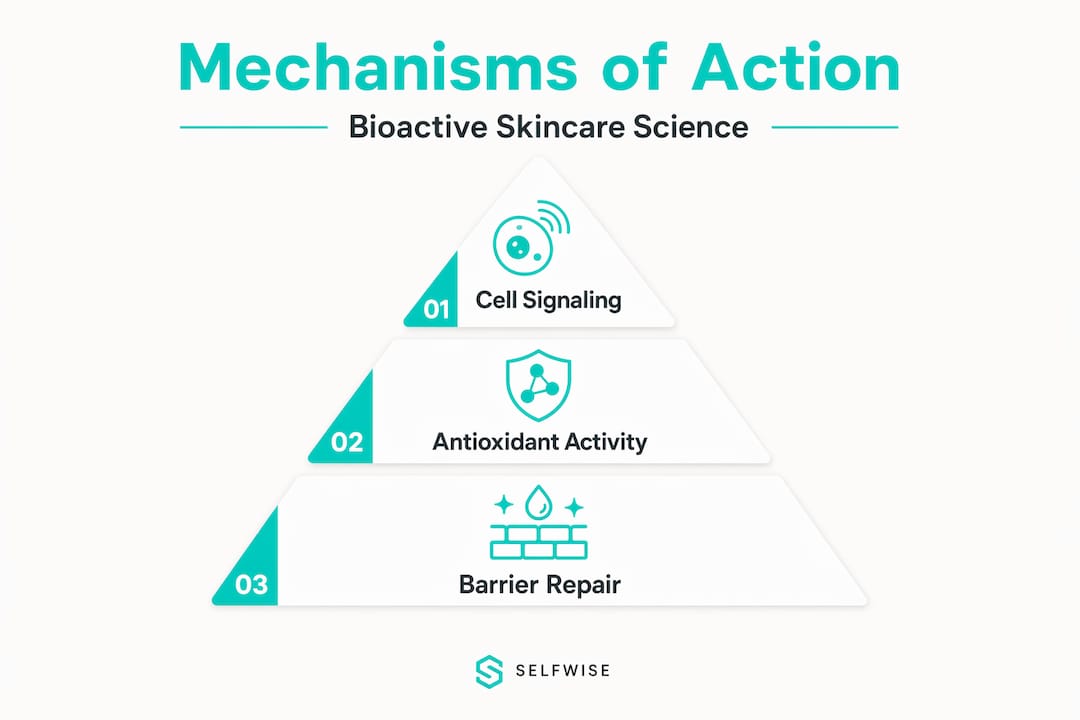
The biological mechanisms themselves are well understood for top actives. Cell signaling cascades, antioxidant enzyme activation, receptor-mediated transcription changes. These are not vague or speculative. They are measurable in lab settings. The challenge is replicating those mechanisms in a stable, consumer-grade formula that delivers the ingredient where it needs to go.
Pro Tip: Check whether a product lists the percentage of its key bioactive ingredient. Brands confident in their formulation usually publish this. Brands that don’t often have a reason not to.
Realistic advantages of bioactive skincare products
So is bioactive skincare effective? With the right ingredients, at the right concentrations, in a well-designed formula, yes. The advantages of bioactive skincare are real and supported by clinical data. But “realistic” is the important word here.
Here is what consumers can legitimately expect from a well-formulated bioactive product used consistently:
- Improved skin barrier function, reflected in reduced dryness and sensitivity, particularly with niacinamide and ceramide-based products
- Reduced visible signs of aging, including fine lines and uneven tone, with retinoids and vitamin C over weeks to months of use
- Calmer, less reactive skin, through anti-inflammatory bioactives like green tea polyphenols and certain peptides
- Better hydration retention, not just surface moisture but actual changes in the stratum corneum’s water content
- Photoprotection support, through antioxidants that neutralize UV-induced free radicals before cellular damage occurs
What you should not expect: overnight transformation, reversal of deep structural changes, or results equivalent to prescription treatments from an over-the-counter product. Cosmeceuticals occupy the space between cosmetics and pharmaceuticals, with real biological activity but without the regulatory proof required of drugs.
When evaluating any bioactive skincare claim, look for three things: a named ingredient at a disclosed concentration, a cited clinical study (not just “dermatologist tested”), and a formulation that addresses stability and delivery. Anything less is marketing filling the gap left by absent evidence.
Pro Tip: Phrases like “infused with bioactives” or “powered by nature’s actives” are red flags. Specific claims like “2% niacinamide” with a cited study are what transparency looks like.
Bioactive principles in natural oral care
The logic behind bioactive skincare translates directly to oral care, and that connection is worth understanding. Both your skin and your oral tissues (gums, enamel, oral mucosa) benefit when you apply ingredients that interact biologically with the tissue rather than just coating the surface.
The parallel is closer than most people realize. Consider these bioactive mechanisms at work in oral care:
- Nano hydroxyapatite integrates into enamel crystals at a structural level, physically remineralizing and strengthening tooth surfaces
- Xylitol disrupts the metabolic processes of cavity-causing bacteria, reducing acid production and supporting a healthier oral microbiome
- Oil pulling with biologically active plant oils works at the tissue level to support gum health and reduce harmful bacterial load
Nano hydroxyapatite and xylitol promote teeth remineralization and gum health through mechanisms that are directly analogous to how bioactive skincare ingredients interact with skin cells. The principle is identical: select compounds that do something specific and measurable at the tissue level rather than just masking symptoms.
| Bioactive type | Skincare application | Oral care application |
|---|---|---|
| Structural repair | Ceramides rebuild skin barrier | Nano hydroxyapatite rebuilds enamel |
| Antimicrobial | Probiotics balance skin microbiome | Xylitol disrupts harmful oral bacteria |
| Anti-inflammatory | Polyphenols calm skin irritation | Oil pulling reduces gum inflammation |
This framing matters because the same critical thinking that helps you evaluate a bioactive serum applies to your mouthwash, your toothpaste alternative, and your oil pulling practice. Evidence, mechanism, concentration, delivery. Same criteria, different tissue.
My take on bioactive skincare and what it taught me about oral health
I have spent years watching the word “bioactive” become one of the most overused labels in personal care. My honest view is that the term has been stretched so far that it barely means anything on a product label anymore.
What I have found actually useful is this: instead of asking “is this bioactive?”, ask “what is the specific mechanism and what clinical evidence supports it?” That question cuts through most of the noise instantly. Nine out of ten products that use the word “bioactive” prominently either cannot answer that question or point to a study done at concentrations ten times higher than what is in their formula.
The more interesting thing I have observed is that this same clarity standard almost always surfaces better options in oral care than in skincare. Nano hydroxyapatite, for example, has a well-documented mechanism: it deposits into enamel defects and structurally integrates with hydroxyapatite crystals already present in the tooth. That is specific, measurable, and backed by solid research. It is bioactive in the most precise sense of the word. That kind of evidence is genuinely rare, and when you find it, the product almost always delivers.
My advice: use the bioactive framework as a filter. Demand specificity. The brands that survive that standard, in skincare and in oral care, are worth your time and money.
— Viktor
Try bioactive oral care from Selfwisebrand
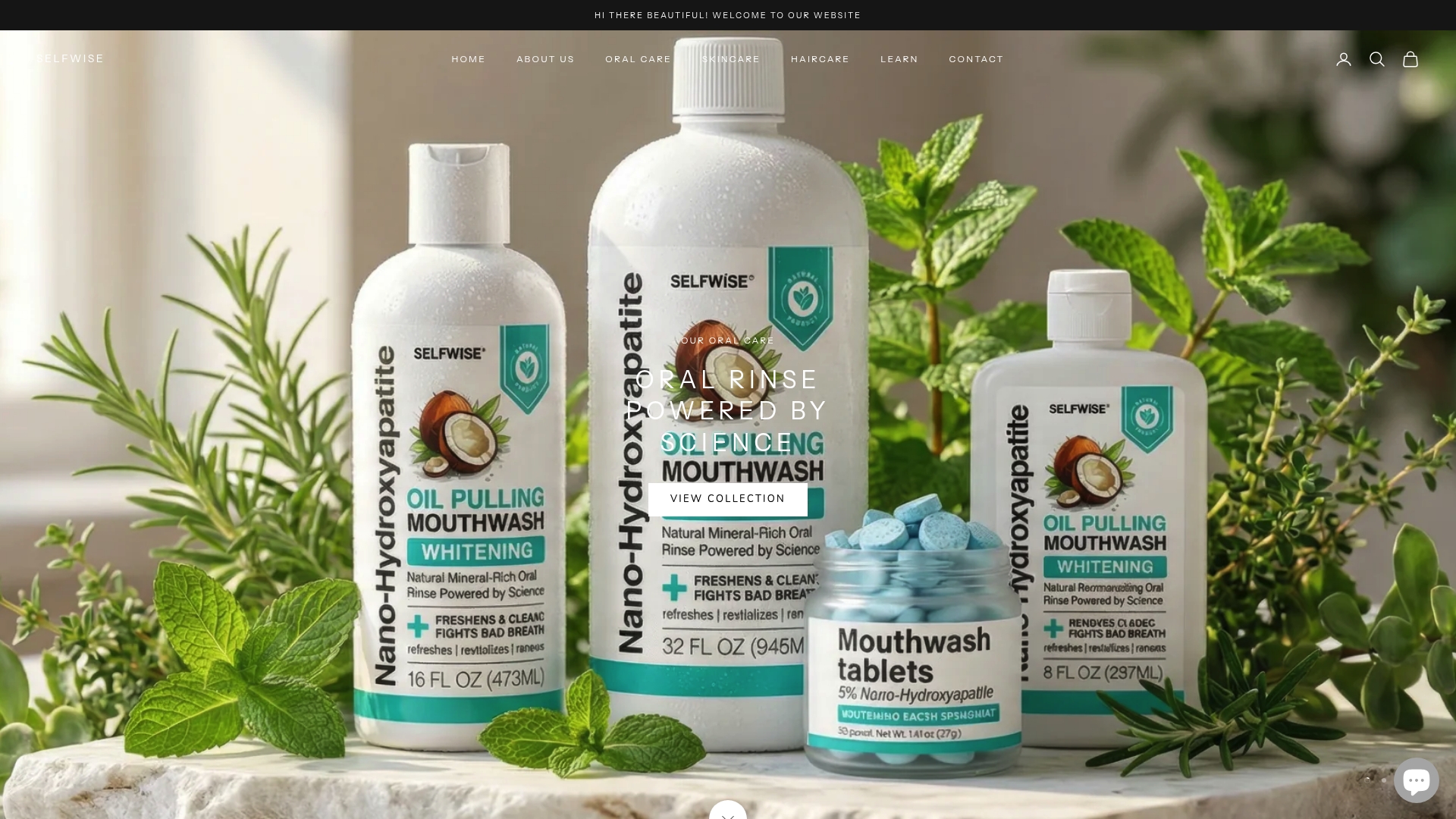
If the science behind bioactive ingredients made you rethink your skincare shelf, it is worth applying the same standard to your oral care routine. At Selfwisebrand, every formula is built around ingredients that do something specific and measurable. The Nano Hydroxyapatite Mouthwash Tablets deliver enamel-rebuilding nano hydroxyapatite in a fluoride-free, dissolvable format designed for people who want real remineralization without synthetic additives. The Oil Pulling Mouthwash with Nano Hydroxyapatite combines traditional oil pulling with modern bioactive science for gum health and enamel support in one step. Browse the full fresh breath and oral health collection to find products built on the same principles you just read about: clear mechanisms, transparent ingredients, and results you can actually measure. Simple ingredients. Real results.
FAQ
What does bioactive mean in skincare?
Bioactive skincare refers to products containing ingredients that interact with skin cells to cause measurable biological effects like collagen synthesis or barrier repair, rather than just sitting on the skin surface.
How is bioactive skincare different from regular skincare?
Regular skincare may hydrate or protect the surface, while bioactive skincare uses ingredients that trigger cellular processes such as anti-inflammatory signaling, cell turnover, or ceramide production.
Is bioactive skincare effective?
Yes, when key ingredients like niacinamide, retinoids, or peptides are present at clinically validated concentrations with proper delivery systems. Effectiveness depends heavily on formulation quality, not just ingredient labels.
Are all “natural” skincare ingredients bioactive?
No. A natural origin does not make an ingredient bioactive. Bioactivity requires a demonstrated mechanism of action at the cellular level, which many botanical ingredients lack when studied rigorously.
What are bioactive compounds used in skincare?
The most clinically supported bioactive compounds include niacinamide, vitamin C, retinoids, peptides, hyaluronic acid, and select plant polyphenols, each with documented mechanisms and clinical evidence behind their effects.