Does Tallow Help Eczema? What the Evidence Actually Shows
Tallow can soften dry, flaky skin because it works as an occlusive moisturizer, but it has not been shown in controlled human trials to treat eczema itself, and dermatologists warn it can backfire on acne-prone or sensitive skin. The 2024 scoping review on tallow and skin found some moisturizing signals but too few human studies to draw firm conclusions. Children’s Hospital of Philadelphia goes further, noting tallow may worsen eczema in some cases.
If you want to try it anyway, here’s the short version of how to do it responsibly:
- Patch test on your inner forearm for 48 to 72 hours before using it anywhere else.
- Skip the face, broken skin, and any area that’s actively flaring.
- Talk to a dermatologist first if your eczema is moderate to severe, or if you’re treating a child.
Key Takeaways
Tallow can moisturize dry skin through occlusion, but no controlled human trial has shown it outperforms ceramide creams or petrolatum for treating eczema, and dermatologists warn it can worsen acne-prone or sensitive skin.
| Point | Details |
|---|---|
| Verdict on tallow | It moisturizes through occlusion but lacks clinical proof as an eczema treatment. |
| Evidence quality | The 2024 scoping review found only a small number of studies met inclusion criteria. |
| Who should avoid it | Anyone prone to acne, rosacea, or known fat/protein allergies. |
| Safe testing protocol | Patch test 48 to 72 hours on the forearm before applying elsewhere. |
| Selfwisebrand’s approach | Formulates cosmetic-grade tallow lotion for dry skin without positioning it as an eczema cure. |
This article is general information, not a substitute for advice from a qualified doctor. Consult a qualified healthcare professional about your own circumstances before acting on anything here.
Table of Contents
- Is Tallow Good for Eczema? How the Fat Actually Works on Skin
- What Does the Research Say About Tallow and Eczema?
- Can Tallow Make Eczema Worse? Risks to Know First
- How Do You Safely Test Tallow on Eczema-Prone Skin?
- How Selfwisebrand Thinks About Natural Ingredients Like Tallow
- The Gap Between Tallow’s Popularity and What It Can Actually Prove
- A Natural Alternative Worth Trying Alongside Your Skincare Routine
- Sources
- FAQ
Is Tallow Good for Eczema? How the Fat Actually Works on Skin
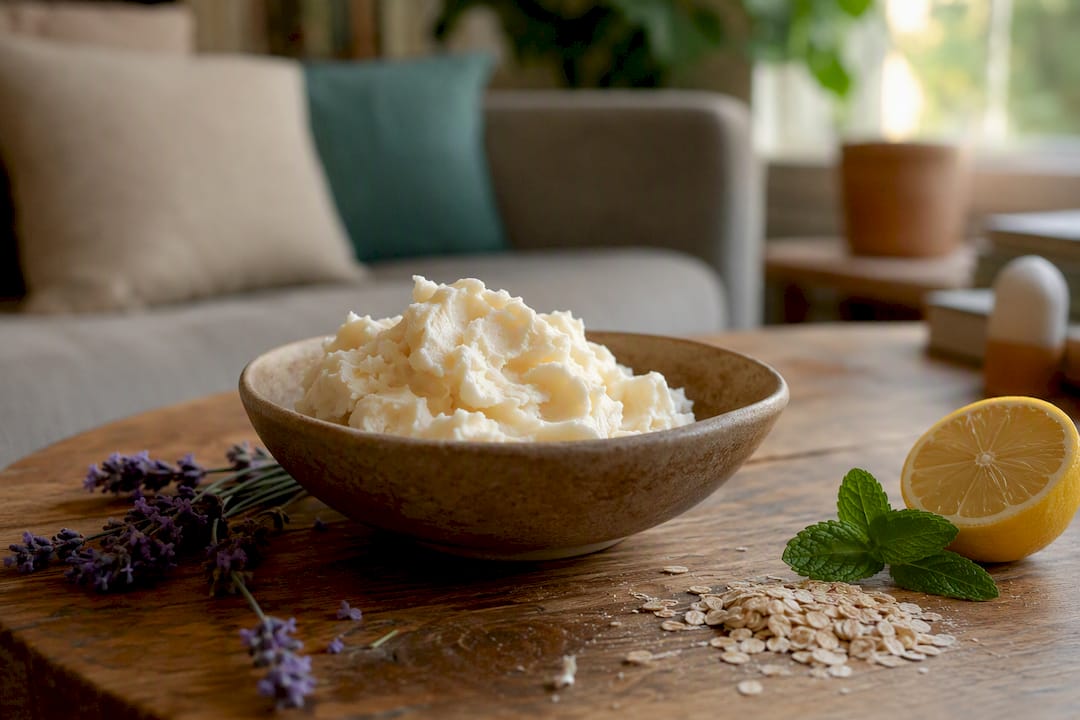
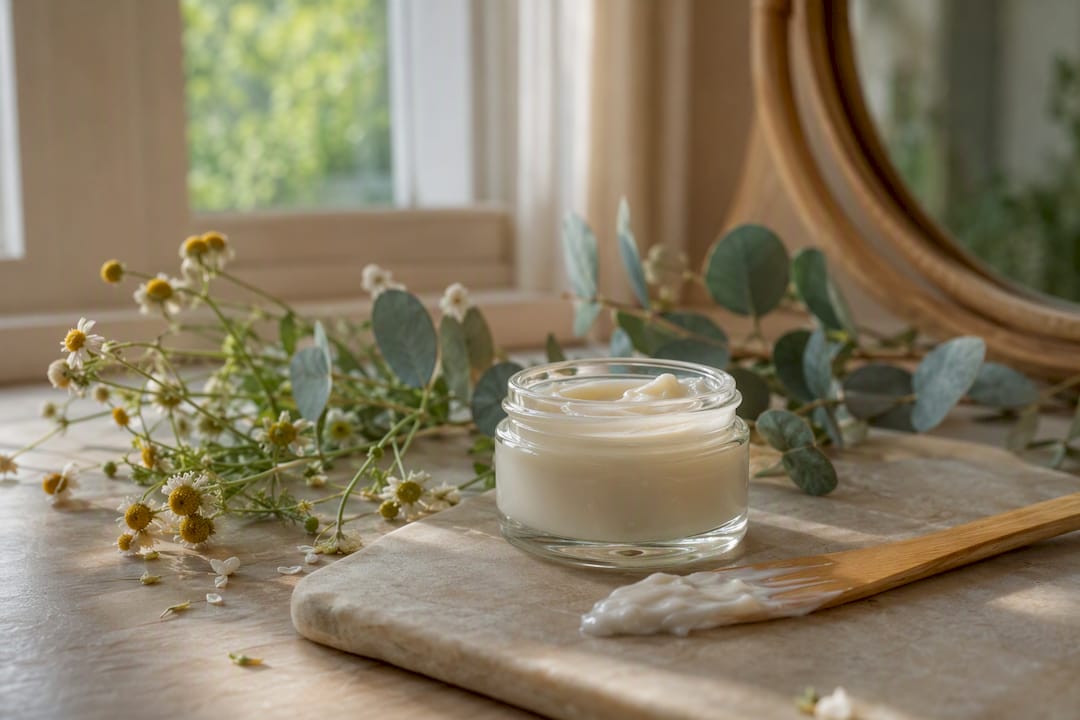
Tallow is rendered beef fat made mostly of oleic acid, palmitic acid, and stearic acid, plus small amounts of fat-soluble vitamins A, D, E, and K. That fatty acid profile is close enough to human sebum that it spreads easily and forms a physical seal over the skin.
That seal is the entire mechanism. Occlusive ingredients like tallow don’t repair anything inside the skin. They slow water loss from the surface, which can make rough or flaky patches feel smoother within minutes.
- Occlusion: blocks moisture from evaporating off the skin’s surface.
- Emollience: fills in gaps between dry skin cells, temporarily improving texture.
- What it doesn’t do: rebuild the lipid matrix that a damaged eczema barrier is actually missing.
Statistic Callout: In the scoping review’s pool of relevant literature, reviewers screened 147 studies and only 19 met inclusion criteria for evaluating tallow’s biocompatibility with skin, a sign of how thin the human evidence base still is.
Compare that to ceramides and petrolatum, the two ingredients dermatology guidelines actually build eczema treatment around. Ceramides target the specific lipid deficiency seen in eczema-prone skin. Petrolatum, meanwhile, is inert, hypoallergenic, and has decades of controlled trial data behind it. Tallow does neither job with the same precision. It just sits on top.
What Does the Research Say About Tallow and Eczema?

The most rigorous look at this topic to date is the 2024 scoping review published in Cureus, which pulled together comparative studies, basic science research, and animal-model data on tallow’s biocompatibility with skin. The reviewers found genuine moisturizing signals and some early therapeutic promise, but they also flagged inconsistent reporting on side effects across the studies they included. That inconsistency matters more than it sounds. When different studies use different tallow formulations, purity levels, and skin models, you can’t cleanly compare results or predict what will happen on your own skin.
CHOP’s clinical explainer adds a mechanistic wrinkle worth knowing: oleic acid, tallow’s dominant fatty acid, can behave differently depending on concentration. At lower levels it acts as a straightforward emollient. At higher concentrations, some models suggest it can disrupt the skin’s lamellar lipid structure rather than support it, which may actually increase transepidermal water loss over time instead of reducing it.
“There is no strong evidence that beef tallow treats eczema better than established options, and in some cases, it may actually worsen eczema,” according to guidance from Children’s Hospital of Philadelphia’s pediatric health team.
Here’s how the evidence stacks up against what dermatologists already know works:
| Evidence type | What it shows | Key limitation |
|---|---|---|
| 2024 scoping review | Moisturizing signals, some therapeutic potential | Only 19 of 147 screened studies met criteria; few human RCTs |
| Animal and basic science models | Barrier support at low oleic acid concentrations | Not directly translatable to human eczema-prone skin |
| Established moisturizers (ceramides, petrolatum) | Decades of controlled trial support for eczema care | Not the topic under review, but the benchmark tallow is compared against |
Anecdotal reports of relief circulate widely online, and they shouldn’t be dismissed outright. But self-reported improvement on a forum carries selection bias baked in. People who had a bad reaction are less likely to post a glowing testimonial. Until formulation standards and larger human trials catch up with the enthusiasm, tallow stays in the “plausible but unproven” category for eczema specifically.
Can Tallow Make Eczema Worse? Risks to Know First
Yes, for some skin types it can. The same occlusive quality that traps moisture also traps everything else sitting on your skin, including oil, sweat, and dead skin cells. Dermatologists at Scripps Health point out that this makes tallow a poor match for anyone prone to acne, rosacea, or seborrheic dermatitis, since a heavy occlusive layer can trap bacteria against the skin and trigger breakouts.
Three risks worth taking seriously before you reach for it:
- Pore-clogging and flare-ups. Oily, acne-prone, or rosacea-prone skin can react to tallow with new breakouts or redness within days.
- Allergic contact dermatitis. Any animal-derived fat can trigger an allergic reaction in people sensitive to specific proteins or processing residues, even without a known food allergy.
- Contamination and spoilage. Tallow isn’t regulated the way over-the-counter eczema creams are, so cosmetic-grade purity, rancidity, and storage conditions vary widely between sellers.
Pro Tip: If a jar of tallow smells even faintly sour or “off,” don’t use it, even if it looks fine. Rancid fat can irritate compromised skin faster than it can soothe it.
Stop using it and check in with a clinician if you notice a spreading rash, escalating itch that disrupts sleep, oozing or crusting that suggests infection, or any swelling around the eyes or face. Those signs point to something beyond simple dryness, and an eczema flare that’s infected needs medical treatment, not more moisturizer.
How Do You Safely Test Tallow on Eczema-Prone Skin?
If you still want to experiment, treat it like a controlled trial of one, not a full routine swap.
- Clean and dry a small patch of skin on your inner forearm.
- Apply a pea-sized amount of tallow and leave it uncovered.
- Wait 48 to 72 hours, checking daily for redness, itching, or swelling.
- If the patch stays calm, apply it only to very dry, non-facial areas, avoiding any broken or actively inflamed skin.
- Start with nighttime use only, so you can watch for reactions before deciding whether to use it during the day.
A few ground rules make the trial more useful and less risky:
- Buy cosmetic-grade rendered tallow specifically, not a food-grade tub from the pantry.
- Discard anything that smells rancid or has changed color or texture since purchase.
- Never stop a prescribed eczema medication or steroid cream without your clinician’s approval, even if tallow seems to be helping.
- Reassess after two weeks. If you see no change or things get worse, stop and pivot to an established option like a ceramide-based cream.
Fabric choices around the treated area matter too. Rough or synthetic materials can aggravate a compromised barrier no matter what you’ve applied underneath, which is part of why dermatology guidance on eczema management often circles back to sensitive-skin-friendly fabrics as a companion strategy, not a replacement for skincare choices.
How Selfwisebrand Thinks About Natural Ingredients Like Tallow
We built Selfwisebrand on the idea that natural doesn’t mean unvetted. Before any topical ingredient goes into a Selfwisebrand formula, we look at sourcing, purity grade, and how it behaves across different skin types, not just whether it sounds appealing on a label.
For an ingredient like tallow, that means cosmetic-grade rendering, transparent sourcing, and formulating it alongside ingredients that support the skin barrier rather than relying on tallow alone to do the job.
- We don’t market any single ingredient, including tallow, as an eczema cure.
- Our formulations lean on established, dermatologist-recognized approaches for barrier support.
- We disclose sourcing and grade information so you know what’s actually in the jar.
That same standard, testing before trend-chasing, guides everything from our oral care line to our dry and sensitive skin products.
The Gap Between Tallow’s Popularity and What It Can Actually Prove
The tallow trend moved faster than the science, and that’s the honest headline here. Social media turned a centuries-old rendering fat into a skincare cure-all almost overnight, and the scoping review backing most of the enthusiasm is a preliminary map of existing research, not proof of efficacy against eczema.
What gets lost in the excitement is that occlusion isn’t the same as barrier repair. Tallow can make dry skin feel better within an hour. That’s real, and it’s also exactly what petrolatum does, with a far longer safety record and none of the acne or contamination risk. The conventional wisdom treats “it moisturizes” and “it treats eczema” as the same claim. They aren’t.
If you have genuine eczema, not just seasonal dryness, the priority order should be: confirm the diagnosis with a clinician, use what the evidence actually supports first, and treat tallow as a curiosity to test cautiously on calm, non-facial skin, never as a replacement for a prescribed regimen. Natural doesn’t automatically mean gentler. It means you have to do the homework yourself.
— Viktor
A Natural Alternative Worth Trying Alongside Your Skincare Routine
If your interest in tallow comes from wanting fewer harsh, synthetic ingredients in your routine, that instinct is worth keeping, even where tallow itself falls short for eczema specifically. Selfwisebrand built its entire line, oral care included, around that same principle: simple, well-sourced ingredients instead of chemical shortcuts.
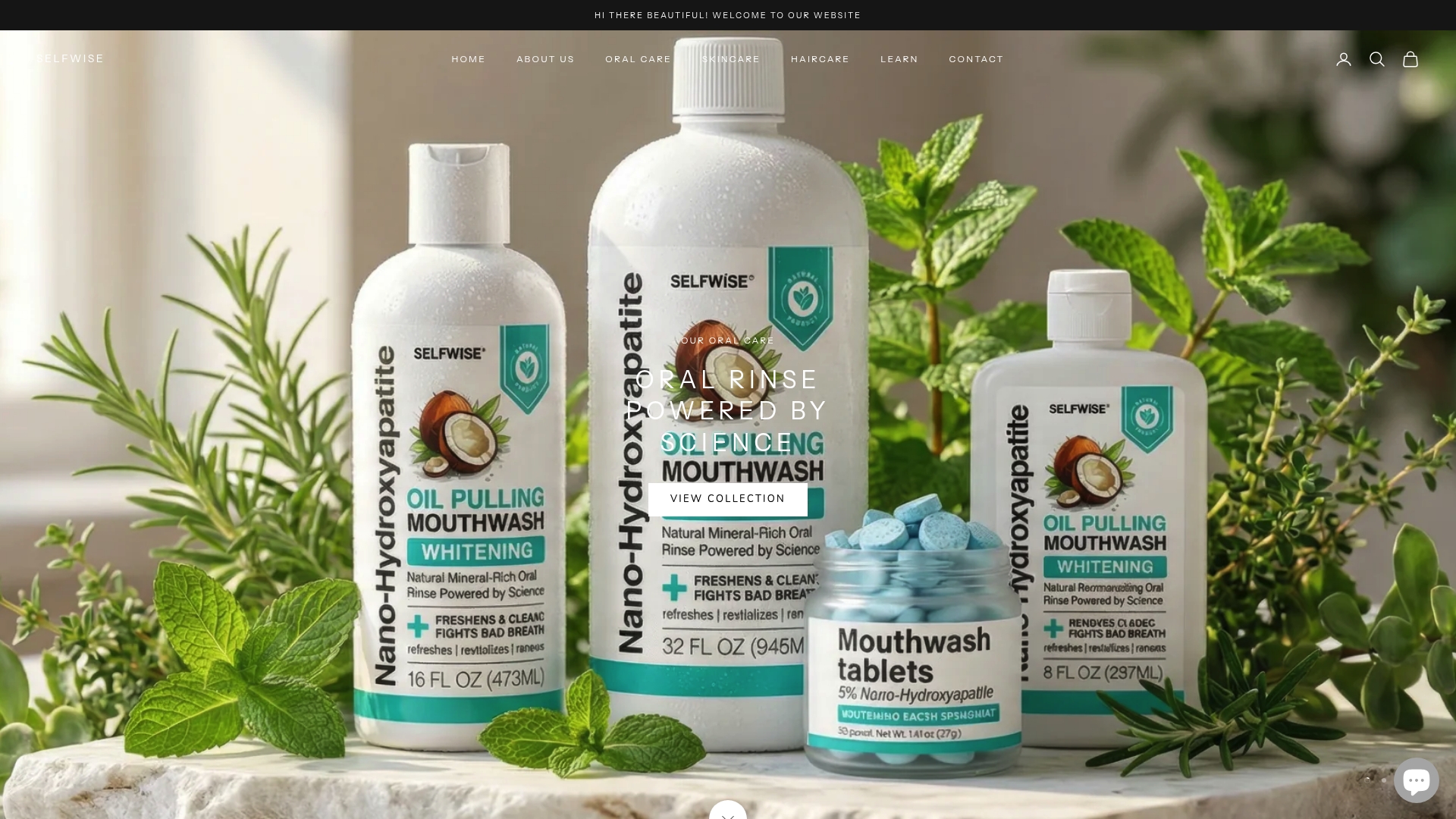
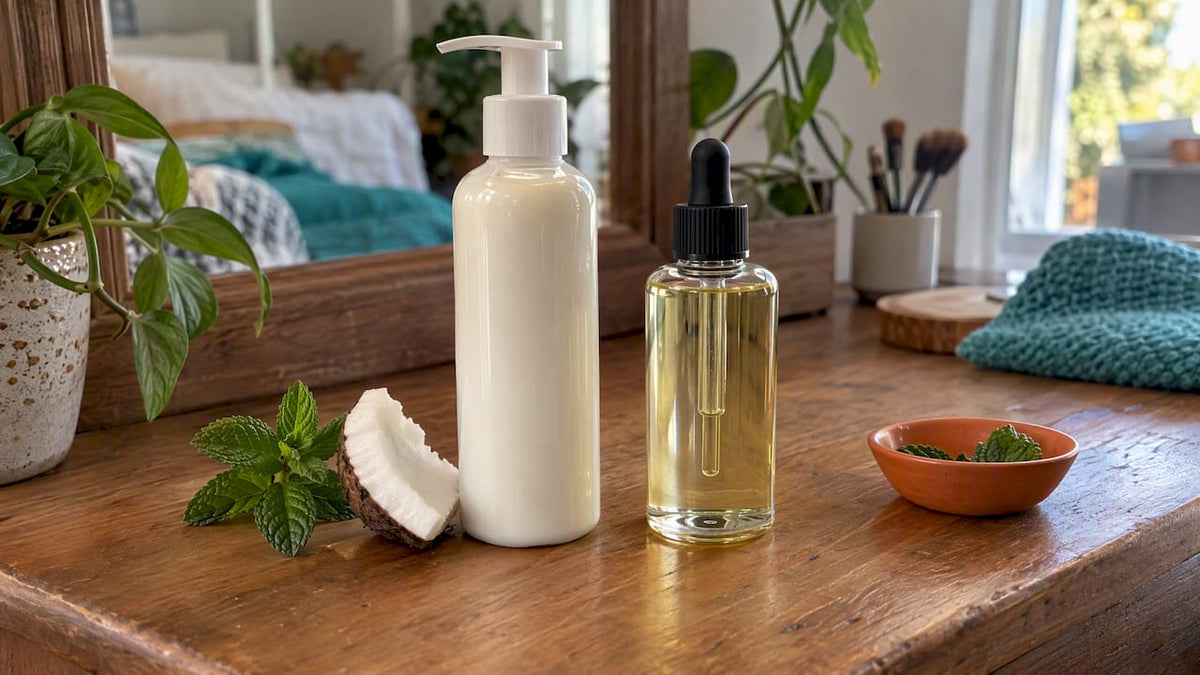
Our beef tallow body lotion with magnesium uses cosmetic-grade tallow formulated alongside other ingredients rather than relying on tallow in isolation. It’s built for very dry, non-facial skin, not as an eczema treatment claim, in line with the caution dermatologists raise throughout this article. And while you’re rethinking what goes on your skin, it’s worth applying the same ingredient scrutiny to your mouth. Our nano hydroxyapatite oil pulling mouthwash skips fluoride, alcohol, and harsh chemicals the same way our topical products skip filler ingredients. If simpler formulations are the goal, browse the mouthwash collection and see which fits your routine.
Sources
- Tallow, Rendered Animal Fat, and Its Biocompatibility With Skin: A Scoping Review
- Beef tallow for skin care: what dermatologists want you to know — Scripps Health
- Is beef tallow a good treatment for eczema? — Children’s Hospital of Philadelphia
FAQ
Why don’t dermatologists like beef tallow for skin care?
Dermatologists aren’t universally against it, but many caution that it’s occlusive and can clog pores, making it risky for anyone with acne, rosacea, or oily skin, and they note product quality varies widely since it’s unregulated.
What do people use for severe eczema when natural remedies aren’t enough?
For moderate to severe eczema, established options like ceramide-containing creams, prescribed topical steroids, or other clinician-directed treatments have far more controlled trial support than any single natural fat, according to pediatric patient guidance.
What is the best oil or fat for extremely dry, eczema-prone skin?
There’s no single “best” option backed by strong human trial data. Ceramide-based moisturizers and petrolatum have the most consistent clinical support, while tallow remains a plausible but unproven alternative worth patch testing first.
What should you never put on eczema?
Avoid anything with fragrance, harsh alcohols, or unknown purity, and avoid applying any occlusive ingredient, tallow included, to broken, oozing, or actively infected skin, since trapping moisture over an infection can make it worse.
Is tallow lotion safe for eczema-prone children?
Caution is warranted. CHOP’s clinical guidance recommends checking with a pediatrician before using tallow on a child with eczema, since evidence in pediatric populations is even thinner than in adults.