Castor Oil for Postpartum Hair Loss: What to Know
Postpartum shedding is hormonal and temporary, and castor oil is best treated as a scalp-conditioning step you use carefully, not a switch that stops the shedding. Used with a patch test, in small amounts and washed out well, it can sit comfortably in a gentle routine while your hair cycle resets. We are an oral care brand, so we also cover the part of postpartum recovery most new moms overlook: your gums and mouth, which change after pregnancy too.
TL;DR
- Postpartum shedding is caused by falling estrogen after birth. It usually starts around three months postpartum, often peaks near four months, and most people regain normal fullness by their baby’s first birthday.
- Castor oil will not change that timeline. It can hydrate and coat strands and scalp, so use it as a conditioning treatment, not a cure.
- Patch test first, apply sparingly once or twice a week, and shampoo it out thoroughly. Thick, sticky oil that is left in is where problems start.
- See a clinician if shedding lasts beyond 9 to 12 months, bald patches appear, or you have fatigue, feel cold, or notice unexplained weight changes.
- Hormonal shifts affect gums as well as hair. A gentle, alcohol-free mouth routine is a simple thing to keep up while you recover.
Table of Contents
- Why hair falls out after pregnancy
- What castor oil can and cannot do
- How to use castor oil on a postpartum scalp with less risk
- What else helps while hair regrows
- When shedding needs a medical check
- Your mouth changes after pregnancy too
- Perspective
- Add a gentle mouth routine to your recovery
- FAQ
- Sources
Why hair falls out after pregnancy
The shedding has a name: telogen effluvium. It is a temporary increase in resting hairs that fall out together. Understanding the mechanism makes every other choice easier, including whether to spend money on oils.
According to the Cleveland Clinic, rising estrogen in the last trimester keeps hairs in the growth phase, called anagen. After childbirth, estrogen drops and many hairs move into the resting phase, called telogen, then shed a few months later. That is why your hair can look fuller than ever in late pregnancy and then come out in handfuls in the shower around month three or four. A typical scalp loses up to 100 hairs a day, and postpartum loss goes beyond that.

Northwell Health dermatologist Ankuri Desai, MD, PhD, explains that the delay makes shedding feel sudden, even though the trigger happened months earlier. She also notes that washing your hair does not cause extra loss. Those hairs were already on their way out.
The usual timeline
| Stage | What to expect | Source |
|---|---|---|
| About 3 months after birth | Shedding begins | Cleveland Clinic, Northwell Health |
| Around month 4 | Shedding often peaks | University of Utah Health |
| Within about 6 months | Shedding typically settles | Cleveland Clinic |
| By the first birthday | Most people regain usual fullness | American Academy of Dermatology |
Individual timelines vary. If your hair has not regained normal fullness after a year, the AAD suggests seeing a dermatologist.
What castor oil can and cannot do
Castor oil is a thick plant oil pressed from castor beans. Its main fatty acid is ricinoleic acid. It is popular in postpartum hair advice because it is easy to find and feels like a real action to take when your brush fills up.
Here is the honest picture. Dermatologists agree it can hydrate hair strands and the scalp. Northwell Health dermatologist Pooja R. Shah, MD, says that there is little evidence for applying it to grow hair, while it can still hydrate. A 2022 systematic review of 22 studies found weaker evidence that castor oil improves hair quality by adding luster. In Allure, board-certified dermatologist Adam Friedman, MD, says its antimicrobial and anti-inflammatory properties may support scalp health.
For postpartum shedding specifically, that framing matters. The hairs that fall out were set to shed by your hormones. No topical oil changes that schedule. What a conditioning routine can do is make the hair that remains feel smoother and look glossier while your cycle catches up. If you want to read more about how we think about castor oil and growth, see our guide on what castor oil actually does for hair growth.
If you are breastfeeding, MDhair’s Yoram Harth, MD, says castor oil is safe to apply topically during that time. Topical use on the scalp is the only use covered here. Do not swallow castor oil as a remedy.

How to use castor oil on a postpartum scalp with less risk
A postpartum scalp can be more sensitive and, for many people, a little oilier or drier than before. These steps keep the routine gentle.
1. Patch test first
Health.com advises testing a small amount on the inside of your wrist before scalp use, because allergic contact dermatitis, with itching and redness, is possible, especially on sensitive skin. PureWow’s dermatologist guidance suggests leaving a tiny amount on the inner arm for 24 hours. Our own guide recommends going a full 48 hours, and it walks through how to patch test before castor oil and what a reaction looks like. Waiting the longer period costs you nothing, and you are already running on little sleep, so build it into the week rather than rushing.
2. Pick a clean, simple oil
Health.com recommends buying 100% castor oil from a reputable brand to avoid contaminants. PureWow’s dermatologist guidance prefers cold-pressed, organic oil. Skip blends with fragrance if your skin feels reactive after pregnancy.
3. Use a small amount, once or twice a week
The dermatologist guidance cited by PureWow is to apply it as a pre-shampoo treatment once or twice a week and leave it in for 20 to 30 minutes. Thinner hair gets weighed down quickly, and many postpartum heads are thinner right now, so use sparingly and focus on the lengths and the scalp edges rather than soaking the roots.
4. Shampoo it out thoroughly
Thick oil that stays in the hair builds up. Allure’s Dr. Garshick warns that build-up can irritate, clog pores and cause breakouts, and that castor oil may worsen seborrheic dermatitis, a flaky, itchy scalp condition. If you wash twice to get it out, do that. Rinse until the hair no longer feels coated.
5. Know the rare risk: felting
Castor oil has rarely been linked to hair felting, a sudden matting at the base of the hair that can’t be combed out and sometimes has to be cut. The Medscape report on a JAAD review describes it as a mat similar to tangled wool. Avoid piling your hair on top of your head while it is saturated with oil, and don’t scrub or twist it in. If your hair starts to knot, stop using the oil and talk to a dermatologist before you cut anything.
For a fuller look at reactions and what to do next, read our guide to castor oil side effects and what to do if you react.
What else helps while hair regrows
The basics do more for how your hair looks day to day than any single oil. University of Utah Health recommends:
- A volumizing shampoo.
- Conditioner on the ends only, since scalp application can weigh hair down.
- Avoiding “conditioning” shampoos and “intensive” conditioners.
- A healthy diet.
- Continuing a prenatal vitamin for up to a year after delivery, especially if you are breastfeeding.
The Utah advice to keep conditioner off your scalp is worth holding next to the castor oil routine. If you oil your scalp before washing, keep the rest of your routine light so the total load on your hair stays low. Cleveland Clinic also advises extending the time between washes where you can, to avoid stripping the scalp, though Dr. Desai’s point stands that washing itself does not cause extra loss.
Your skin is going through the same hormonal transition. If your hands, body or the skin around your scalp feel tight and dry, a postpartum dry skin barrier routine covers breastfeeding-friendly steps for the rest of you.
When shedding needs a medical check
Most postpartum shedding resolves on its own. Sometimes something else is happening, and the signs are clear enough to act on.
- Duration: Cleveland Clinic advises talking to a provider if loss continues more than six months, since iron deficiency or thyroid disease may be involved. Dr. Desai says to see a dermatologist if heavy shedding continues past nine months, and the AAD says to consider one if hair has not regained fullness after a year.
- Pattern: Bald patches, a wider part, visible scalp or crown thinning deserve an evaluation. Dr. Desai notes that a persistent wider part after shedding stops may point to a second diagnosis, such as female-pattern thinning.
- Other symptoms: Dr. Harth lists fatigue, unexplained weight changes or feeling cold as possible signs of postpartum thyroid changes. Curekey’s postpartum guide says postpartum thyroiditis affects roughly 5 to 10% of women in the year after delivery.
- Hair from other areas: University of Utah Health’s midwife Trece Swanson, DNP, CNM, advises seeing a provider for loss beyond the first year, significant bald patches, or hair loss from other parts of the body.
A dermatologist or your OB-GYN can order the usual blood work. Northwell Health’s guidance on hair loss workups lists thyroid function, iron and ferritin, and vitamin D as the most common tests. Low iron stores are a frequent cause of diffuse thinning in menstruating women. These are conversations for your doctor, not something to settle with oils.
Your mouth changes after pregnancy too
Hair is the visible part of the hormonal reset. Gums are the quiet part. Hormonal changes during and after pregnancy increase the risk of gingivitis, an early form of gum disease. Between night feeds, skipped sleep and a baby who needs both hands, brushing and flossing are easy to rush, and gums that bleed or feel puffy are often ignored.
A short, gentle routine is realistic even in the newborn months:
- Brush twice a day with a soft brush.
- Floss or use an interdental tool once a day.
- Finish with an alcohol-free rinse so your mouth is not left feeling dry or stinging.
- Book a dental visit if gums keep bleeding, swell, or hurt. If you skipped checkups during pregnancy, the same Delta Dental guide says to see your dentist as soon as you can.
The pattern is the same as with hair. You are supporting your body while hormones settle, using gentle, simple steps you can keep up.
Perspective
When people ask us about castor oil and postpartum hair, the useful answer starts with the hormone timeline, not the bottle. Shedding at three to four months is your body’s reset, and it ends. A rich oil can make strands feel better in the meantime, and it asks for a patch test and a thorough rinse in return.
We build our products around the same idea. Keep ingredients simple, skip harsh chemicals, and make a routine that is easy enough to follow when you are tired. In oral care, that means formulas without fluoride or alcohol, including oil pulling and nano hydroxyapatite rinses. Nano hydroxyapatite is a mineral form of the same compound found in tooth enamel.
Postpartum recovery is a lot of small, gentle habits repeated for months. Your scalp routine and your mouth routine can both be part of it, as long as each step is one you will actually keep doing.
Viktor
Add a gentle mouth routine to your recovery
If you are already building a simple, chemical-light routine for your hair and skin, our natural oral care range follows the same approach. It includes oil pulling mouthwash, nano hydroxyapatite oral rinse, xylitol mouthwash and mouthwash tablets, all formulated without harsh chemicals, fluoride or alcohol.
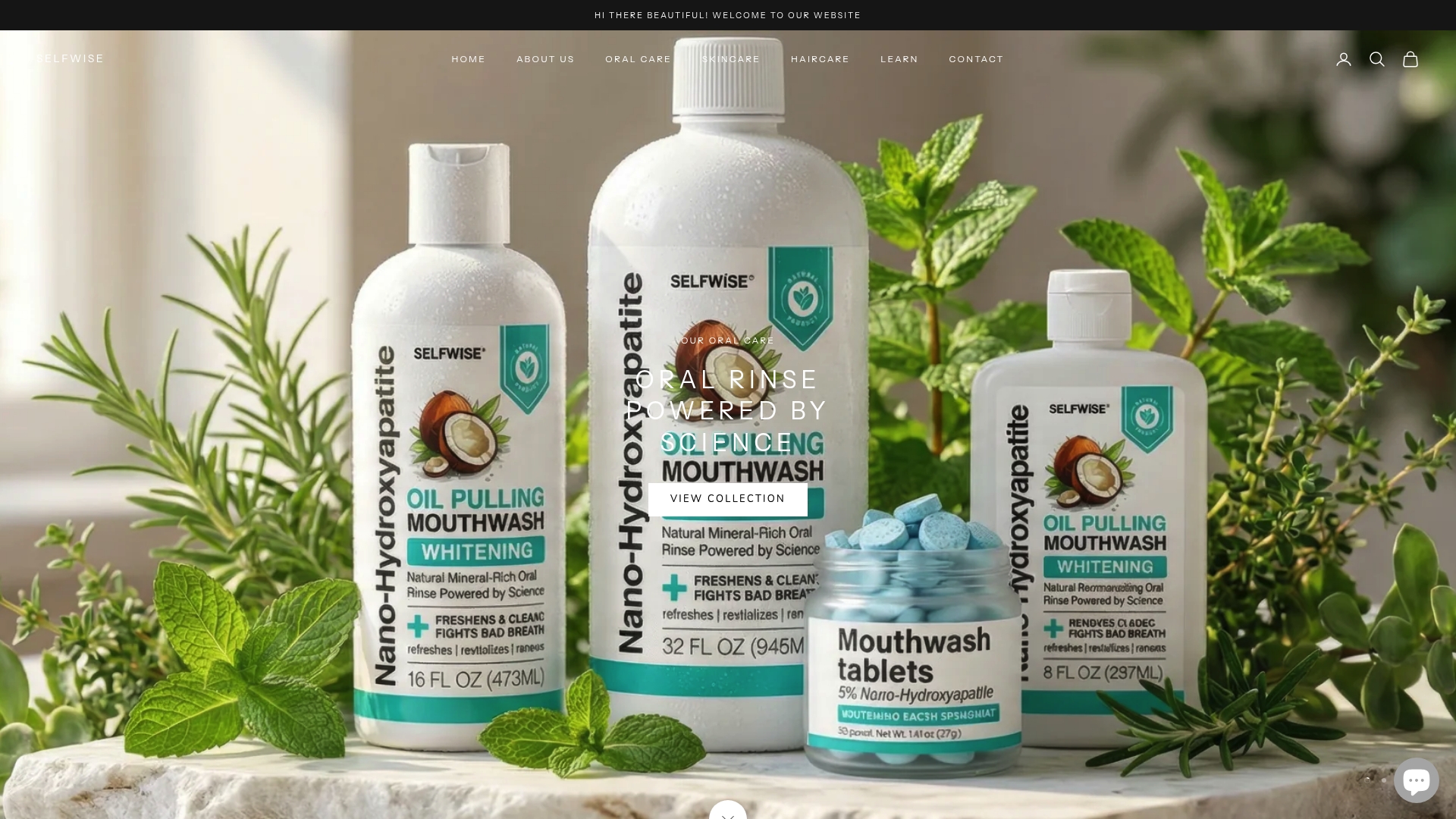
You can browse the full natural oral care collection or start with the nano hydroxyapatite oil pulling mouthwash. If you prefer something you can drop in a diaper bag, the nano hydroxyapatite mouthwash tablets are a solid, fluoride-free option.
FAQ
Does castor oil stop postpartum hair loss?
No. Postpartum shedding is driven by falling estrogen, and it settles on its own, usually by the baby’s first birthday. Castor oil can hydrate the hair and scalp, but dermatologists say there is little evidence it speeds regrowth. Treat it as a conditioning step.
Is castor oil safe on the scalp while breastfeeding?
MDhair’s Yoram Harth, MD, says topical castor oil is safe during breastfeeding. Patch test first, use it only on your scalp and hair, and rinse it out well. Do not take castor oil by mouth.
How often should I use castor oil on my hair?
Dermatologist guidance cited by PureWow suggests once or twice a week as a pre-shampoo treatment, left on for 20 to 30 minutes. Use less if your hair is thin or gets weighed down easily, and shampoo thoroughly afterward.
What are the downsides of using castor oil on my hair?
The main ones are allergic contact dermatitis, thick build-up that is hard to wash out, possible breakouts or worsened seborrheic dermatitis, and, rarely, hair felting. A patch test, a small amount and a thorough rinse cover most of these. Stop using it if you notice itching, redness or matting.
When should I see a doctor about postpartum hair loss?
See a dermatologist or your provider if heavy shedding continues past nine months, if you see bald patches, a wider part or visible scalp, or if hair has not regained fullness by one year. Also go if you have fatigue, feel cold or notice unexplained weight changes, since thyroid changes can cause shedding.
Sources
- Hair loss in new moms: Dermatologist tips (American Academy of Dermatology)
- Postpartum Hair Loss: Causes, Treatment & What to Expect (Cleveland Clinic)
- Postpartum Hair Loss: When It Starts, When It Stops, and What Helps (University of Utah Health)
- Postpartum Hair Loss: When It Starts & How Long It Lasts (Northwell Health)
- Is Castor Oil an Eyelash Growth Serum? (Northwell Health)
- Can a Dermatologist Help With Hair Loss? (Northwell Health)
- Coconut, Castor, and Argan Oil for Hair in Skin of Color (PubMed)
- Castor Oil for Hair Growth: The Truth, According to Experts (Allure)
- Review Cautions Against Influencer-Promoted Hair Growth Trends (Medscape)
- 3 Ways Castor Oil Can Help Make Your Hair Healthier (Health.com)
- Can I Use Castor Oil for Hair Growth? (PureWow)
- Natural Remedies for Postpartum Hair Loss That Work (MDhair)
- Postpartum Hair Loss: Timeline and What Helps (Curekey)
- Oral health postpartum: a guide for new parents (Delta Dental)