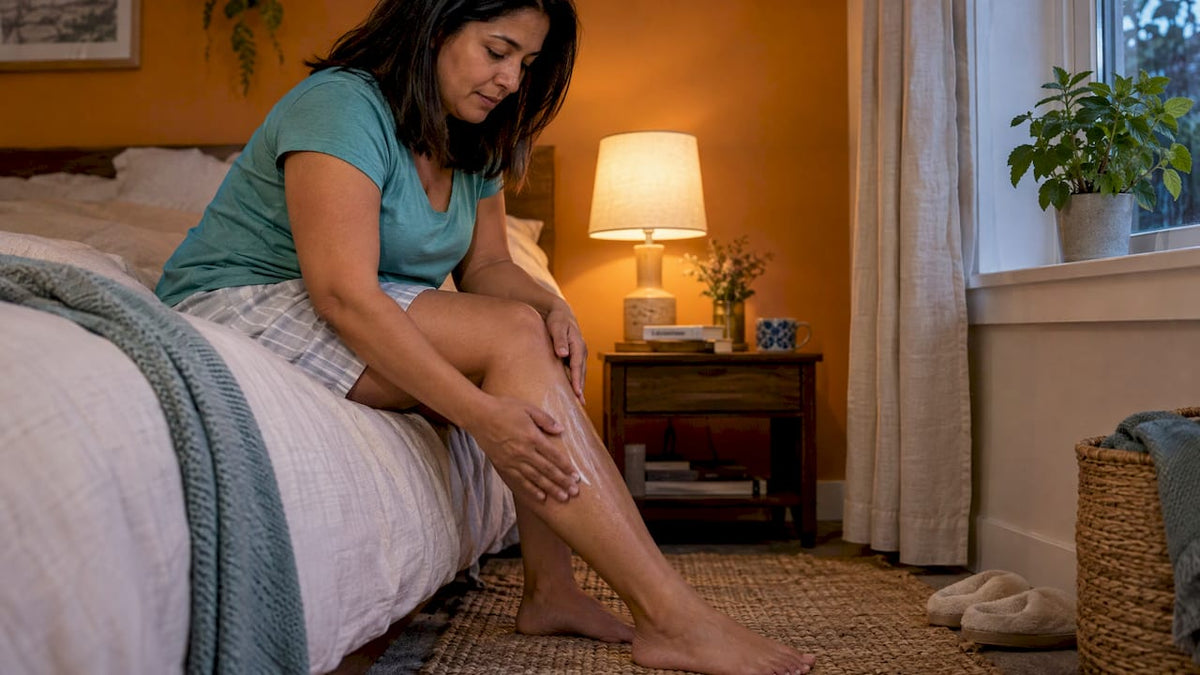
Magnesium Lotion for Restless Legs: How to Use It Well
Magnesium lotion is best treated as a calming evening leg-care ritual: a moisturizing base, a few minutes of massage and a consistent bedtime cue. It is not a treatment for restless legs syndrome (RLS). RLS is a recognized neurological condition, and persistent symptoms deserve a conversation with a doctor. Below you will find how to tell RLS from ordinary leg cramps, how to apply a lotion step by step, how to keep your skin comfortable, and how to build a short wind-down routine around it, including the oral care part of your night.
TL;DR
- RLS is an urge to move your legs that shows up at rest, mostly in the evening. Leg cramps are a different problem: a sudden, painful, knotted muscle.
- Massaging a magnesium lotion into your calves and feet fits the leg-care habits the National Institute of Neurological Disorders and Stroke lists for RLS: leg massage, warm baths and a regular sleep schedule.
- No topical magnesium dose has been established, so start with a thin layer, apply it once in the evening and stop if your skin itches, dries out or burns.
- Frequent symptoms, leg swelling, or symptoms that wreck your sleep call for a doctor. Iron levels are one of the first things worth checking.
- Finish the routine with the other half of your bedtime: a natural, alcohol-free rinse for your mouth.
Table of Contents
- Restless legs, leg cramps and tingling: which one do you have?
- Where magnesium lotion fits in a restless legs routine
- How to apply magnesium lotion at night
- Keeping your skin comfortable
- Better-known habits that help restless legs
- When to see a doctor
- Build the full wind-down: legs first, then mouth
- Our approach to a natural evening routine
- Perspective: why we like a routine over a quick fix
- FAQ
- Sources
Restless legs, leg cramps and tingling: which one do you have?
People search for “magnesium lotion for restless legs” and “magnesium lotion for leg cramps” as if they were the same thing. They are not, and the difference changes what you do next.
Restless legs syndrome is defined by an urge to move the legs, often with an uncomfortable crawling, pulling or tingling feeling. A 2017 clinical review summarizes the diagnostic features with the acronym URGES:
- an Urge to move the legs
- symptoms that begin or worsen at Rest
- relief with movement, such as Gyrating, walking or stretching
- symptoms that peak in the Evening or night
- symptoms that are Sot explained solely by another condition, such as a muscle strain or a circulation problem
The same review notes that RLS is frequently misdiagnosed, because many different problems cause strange sensations in the lower legs.
Nocturnal leg cramps feel different. WebMD describes them as a tight, knotted muscle that lasts seconds to minutes, while RLS brings discomfort and an urge to move rather than a painful clench.
A quick self-check before you shop:
| What you feel | More like | What helps first |
|---|---|---|
| Crawling, itching or pulling deep in the legs, relieved by moving, worst in the evening | Restless legs | A doctor’s assessment, plus leg-care habits |
| A sudden hard knot in the calf or foot, painful, lasting a few minutes | Leg cramp | Stretching, walking, massage |
| Numbness, burning or pins and needles that does not ease with movement | Possibly nerve-related | A doctor’s assessment |
This article is written for the first row, with notes on the second.
Where magnesium lotion fits in a restless legs routine
Magnesium is a mineral your muscles and nerves use every day, which is why it keeps coming up in conversations about legs and sleep. A lotion is a different route from a pill. It is something you apply to the skin, and what it offers is the experience of the application itself.
Here is what a lotion gives you in practice:
- A massage window. The NINDS lists leg massage, warm baths, heating pads and RLS foot wraps among the lifestyle measures people use to manage symptoms. Working a lotion into your calves is a built-in reason to do the massage.
- A moisturizing base. Legs that feel soft and comfortable at bedtime are easier to ignore. A good body lotion also protects dry shins and heels.
- A cue. Doing the same thing in the same order every night tells your body the day is ending. The NINDS also lists a regular sleep schedule among the habits that help.
- A pill-free option. Health.com notes that topical magnesium may appeal to people with digestive discomfort or trouble swallowing pills, and the same article recommends getting magnesium from foods such as nuts, seeds, dairy and leafy vegetables first. A lotion can sit alongside a magnesium-rich diet.
Our own guides go deeper on the skin side of this: what magnesium lotion can and can’t do for cramps and how magnesium lotion is used for sleep. If you want to understand why a body lotion is judged by how your skin and evening feel rather than by a blood test, this guide on magnesium body lotion benefits explains it.
How to apply magnesium lotion at night
There is no official dosing schedule for topical magnesium. Health.com reports that maximum dosages of topical magnesium have not been established and that no trials have set an optimal topical dose or routine. That is why a gentle, consistent method beats “more is better.”
Step 1: Warm up the legs first
A warm bath or shower 30 to 60 minutes before bed relaxes the muscles and softens the skin. The NINDS lists warm baths among the habits people use for RLS. Pat dry, but leave the skin slightly damp so the lotion spreads easily.
Step 2: Check your skin
Skip any area with cuts, scrapes, a rash or recently shaved irritated skin. Verywell Health’s guidance on magnesium sprays says to avoid open wounds and rinse with water if the skin becomes irritated, and the same common sense applies to lotions. Do a small patch test on your inner forearm the first time and wait a day.

Step 3: Use a thin, even layer
A palm-sized amount per leg is plenty for a start. Start at the ankle and work up toward the knee in long strokes. Using more does not make the routine better, and it can leave the skin sticky or irritated.
Step 4: Spend two to three minutes on massage
Press along the calf muscle with your thumbs, knead the tops of the feet and roll your fingers around the ankles. Use firm but comfortable pressure. If a spot hurts sharply, ease off. A swollen, warm, red or painful calf on one side is not a spot to massage: that needs prompt medical attention (more on this below).
Step 5: Let it absorb, then stay off the screen
Give it a few minutes before pulling on bedding or socks. Use this time for something quiet, such as stretching your calves against a wall or reading.
Step 6: Keep a log for two weeks
Note the time you applied the lotion, how your evening felt and how you slept. A simple note on a phone is enough. This gives you a realistic picture of what the routine does for you and gives your doctor useful detail if your symptoms persist.
Keeping your skin comfortable
Topical products are usually gentle, but skin varies. Health.com’s guidance is simple: stop using topical magnesium if itching, dryness or burning develops. Some practical points:
- Apply once a day to start, in the evening, and build from there only if your skin feels fine.
- Magnesium products can tingle on freshly shaved or very dry skin. A moisturizer without added fragrance can help.
- Wash your hands after applying, so you do not rub your eyes.
- Do not apply to broken skin.
- Keep the lotion away from your mouth and out of children’s reach.
If you take medication, have kidney disease or are pregnant, ask your doctor or pharmacist before adding any magnesium product to your routine. Kidneys clear magnesium from the body, so anyone with a kidney condition should have a doctor’s input first.
Better-known habits that help restless legs
Because a lotion works as part of a routine, it helps to know what the NINDS highlights for managing RLS symptoms:
- Treat what can make RLS worse. The agency points to conditions such as diabetes, neuropathy, sleep apnea and iron deficiency.
- Adjust daily habits. Cutting back on alcohol, nicotine and caffeine, keeping a regular sleep schedule and getting moderate exercise are all on the list.
- Use comfort measures. Leg massage, warm baths and heating pads are all named, along with specialized foot wraps designed for RLS.
A magnesium lotion routine slots neatly into the third group. It does not replace the first two.
When to see a doctor
Restless legs that come back most nights, keep you awake or get worse over time are worth an appointment. Sleep researcher Troxel, quoted by Fox News, says leg cramps or tingling can signal restless leg syndrome, a clinical sleep disorder commonly associated with iron deficiency that warrants a doctor’s evaluation.
Chronic, persistent RLS has established medical treatments. The management algorithm published by the Restless Legs Syndrome Foundation lays out the options clinicians use, which include iron therapy when ferritin is low and certain prescription medicines. That is a conversation for your physician or a sleep specialist, not something a lotion should postpone.
See a doctor promptly if you notice:
- swelling, redness or warmth in one calf, which can signal a blood clot and needs urgent care
- muscle weakness or visible muscle wasting
- cramps or restless sensations most nights despite stretching
- symptoms that began after starting a new medicine
Bring your two-week log. It makes the visit more productive.
Build the full wind-down: legs first, then mouth
A good bedtime routine does not stop at the knees. The last thing most people do before bed is brush and rinse, and that step can be calm and consistent too. Many people who prefer a simple, chemical-free routine for their legs prefer the same for their mouth.
Here is a sample order that takes about 15 minutes:
- Warm bath or shower.
- Magnesium lotion on calves and feet, with a two-minute massage.
- Gentle calf and hamstring stretches.
- Natural oral care: brush, then rinse with an alcohol-free mouthwash.
- Lights down, phone away.
Alcohol-free matters here for a practical reason: you are about to lie down for the night, and a mild rinse without alcohol, fluoride or harsh chemicals suits a routine built around calm. Our oral care range is formulated with simple ingredients such as nano hydroxyapatite and xylitol, and you can read more in the Natural Oral Care Guide.
Our approach to a natural evening routine
Selfwise is a natural oral care brand, and oral care is our focus: oil pulling, remineralizing alternatives and natural mouthwash made without harsh chemicals, fluoride or alcohol. Our nano hydroxyapatite oral rinse, xylitol mouthwash, oil pulling mouthwash and mouthwash tablets are the heart of the range. If you are building a bedtime routine that cuts out what you do not need, the mouth is a natural place to begin.

If you want a simple rinse to finish your evening, start with our mouthwash collection, or take a look at the nano hydroxyapatite mouthwash tablets, a solid, fluoride-free format that is easy to keep by the sink. You can browse the full oral care range or see everything we make on selfwisebrand.com.
Perspective: why we like a routine over a quick fix
When people ask us about magnesium lotion for restless legs, we answer the way we answer questions about oil pulling or remineralizing rinses: start with what is simple, gentle and repeatable.
Our whole approach to natural care is built on that idea. We choose straightforward ingredients, such as xylitol and nano hydroxyapatite in our oral products, and we like routines that people can actually keep. A lotion massage on tired legs and a mild, alcohol-free rinse before bed are the same kind of habit: small, calm and done every night.
Restless legs themselves are a medical question, and we would never ask a lotion to stand in for a doctor’s assessment. What we can offer is the part of the evening that is yours. Take the warm shower, give your legs two minutes of attention, then look after your teeth and gums with a formula that leaves out fluoride, alcohol and harsh chemicals. That is the evening we would want for ourselves.
Viktor
FAQ
Can you get too much magnesium from magnesium lotion?
Health.com notes that maximum doses of topical magnesium have not been established, while oral supplements are limited to 350 mg a day for most adults. For that reason, stick to a thin layer once a day and stop if your skin itches, dries or burns. If you have kidney disease or take regular medication, check with your doctor first.
Can magnesium trigger restless legs?
The sources we reviewed do not describe magnesium lotion as a trigger. RLS is more commonly linked to things like low iron, certain medicines, alcohol, caffeine and nicotine, according to the NINDS. If your symptoms started after you began a new product or medicine, tell your doctor.
What happens when you rub magnesium on your feet at night?
Most people notice the lotion itself: a cool or slightly tingly feel, softer skin and a few minutes of foot massage. Some find it a pleasant cue that the day is ending. Keep the layer thin, avoid broken skin and rinse the area if it becomes irritated.
What should I look for in a magnesium cream for restless legs?
Choose a simple moisturizing formula you can tolerate on your skin, ideally without heavy fragrance. Because no standard topical dose exists, a clear ingredient list matters more than a high number on the label. If symptoms persist, bring the product and your log to your doctor.
Sources
- Restless Legs Syndrome, National Institute of Neurological Disorders and Stroke
- Restless legs syndrome and nocturnal leg cramps: review (2017)
- Nocturnal Leg Cramps: Causes, Prevention, and Treatments, WebMD
- Can Magnesium Spray Soothe Aches and Pains, and Is It Safe? Verywell Health
- Can Magnesium Oil Spray Improve Sleep and Muscle Pain? Health.com
- Experts question viral TikTok trend of magnesium lotion for sleep, Fox News
- The Management of Restless Legs Syndrome: An Updated Algorithm (2021)