Hydroxyapatite mineral: Your natural oral care guide
Your tooth enamel is not calcium. It is not keratin. It is not some mysterious biological composite. It is largely hydroxyapatite, a calcium phosphate mineral that forms roughly 97% of the hardest tissue in your body. That single fact rewrites the entire conversation about natural oral care, because it means remineralizing your teeth is not about adding a foreign substance. It is about returning your enamel to its own native building material. If you have been searching for a fluoride-free path to stronger, healthier teeth, hydroxyapatite is the answer science has already validated.
Table of Contents
- What is hydroxyapatite mineral and its role in teeth?
- How hydroxyapatite supports enamel remineralization and dental health
- Natural vs synthetic hydroxyapatite: What health-conscious consumers should know
- Incorporating hydroxyapatite mineral in your daily oral care routine
- Comparing hydroxyapatite and fluoride: What science says
- Why embracing hydroxyapatite mineral changes the natural oral care game
- Explore natural hydroxyapatite oral care products from Selfwise
- Frequently asked questions
Key Takeaways
| Point | Details |
|---|---|
| Hydroxyapatite role | Hydroxyapatite is the main mineral in natural tooth enamel, essential for strength and repair. |
| Remineralization timeline | Nanohydroxyapatite can begin repairing early enamel damage within 1 to 2 weeks of use. |
| Natural vs synthetic | Natural hydroxyapatite includes beneficial trace minerals, while synthetic is more uniform but equally effective. |
| Fluoride alternative | Hydroxyapatite offers a safe, fluoride-free option with similar remineralization benefits. |
| Daily use benefits | Incorporating hydroxyapatite toothpaste and mouthwash daily supports enamel health and sensitivity reduction. |
What is hydroxyapatite mineral and its role in teeth?
Hydroxyapatite is a calcium phosphate mineral that forms the dominant mineral phase in both teeth and bone. Its chemical formula is Ca10(PO4)6(OH)2, but in nature it rarely appears in that pure textbook form. In your teeth, it occurs mixed with trace elements and often alongside fluorapatite, a related compound where fluoride replaces some of the hydroxyl groups. This mixture is what gives natural enamel its specific density and resilience.
Here is what makes hydroxyapatite genuinely remarkable from a biological standpoint:
- Enamel composition: Tooth enamel is approximately 95 to 97% hydroxyapatite by weight, making it the most mineral-dense tissue the human body produces.
- Dentin structure: Dentin, the layer beneath enamel, is about 70% hydroxyapatite, providing the secondary layer of strength your tooth relies on.
- Bone parallel: The same mineral makes up roughly 70% of bone mass, which is why hydroxyapatite research spans both dental and orthopedic science.
- Crystal lattice: Enamel hydroxyapatite forms elongated nanoscale crystals arranged in tightly packed rods, a structure that takes years to build naturally and is extremely difficult to replicate synthetically.
Understanding the hydroxyapatite benefits starts here. When enamel erodes from acid exposure, sugar metabolism, or mechanical wear, what you lose is these organized mineral crystals. Rebuilding them means supplying the raw material your enamel already knows how to use.
How hydroxyapatite supports enamel remineralization and dental health
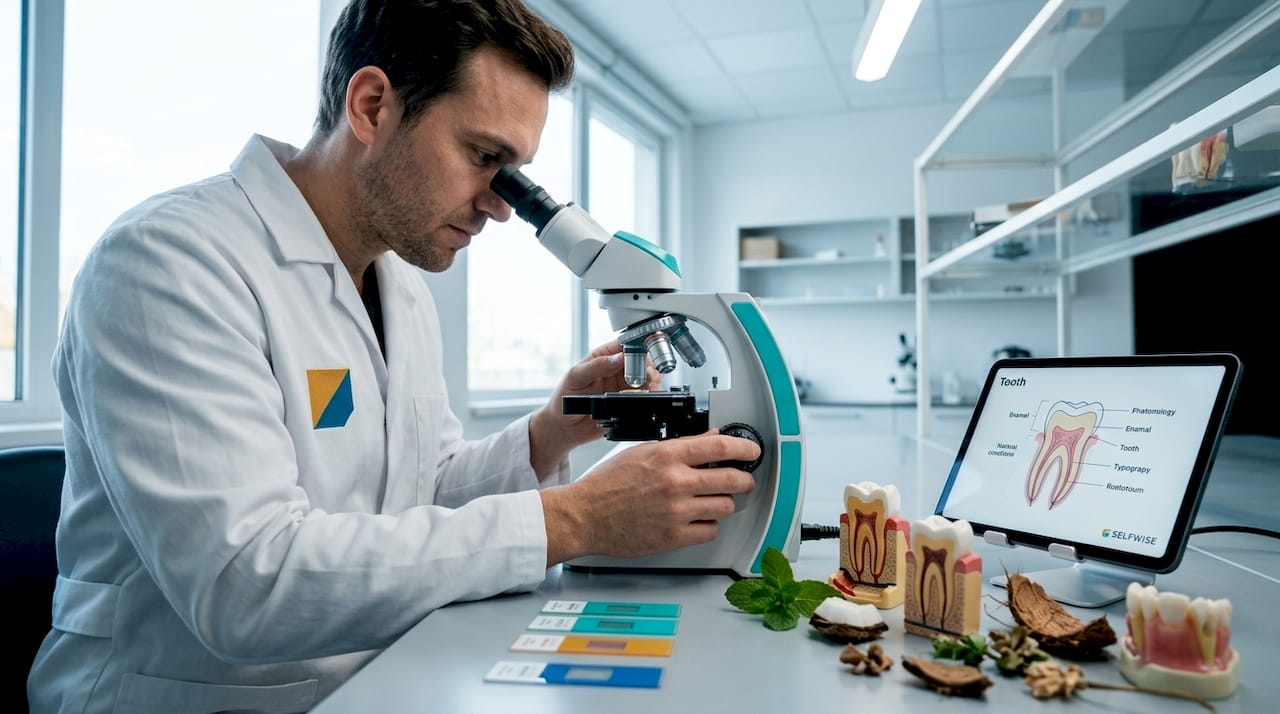
Enamel does not contain living cells. Once mature enamel is lost, your body cannot regenerate it from within the way it repairs bone. But remineralization from the outside, using saliva and topically applied minerals, is real and measurable. That is where nanohydroxyapatite, a lab-processed form with particles small enough to penetrate enamel pores, becomes genuinely useful.
A 2026 randomized controlled study found that nanohydroxyapatite paste significantly improved remineralization of early white spot lesions, with measurable results at 1, 2, and 6 weeks, especially when pretreatment protocols were applied. White spot lesions are the chalky patches that appear on enamel before a cavity fully forms. Getting rid of them is one of the clearest signs that a remineralization product is actually doing something structural.
Here is how the process works, step by step:
- Particle penetration: Nano-sized hydroxyapatite particles, typically 20 to 80 nanometers in diameter, are small enough to enter the micropores in demineralized enamel.
- Crystal integration: Once inside, these particles adsorb onto existing enamel crystals and begin filling in the damaged lattice.
- Surface sealing: A protective mineral layer forms across the enamel surface, reducing permeability and shielding dentin tubules.
- Sensitivity relief: A 2025 randomized controlled trial confirmed that biomimetic hydroxyapatite toothpaste and mouthwash produce immediate effects on reducing dentin hypersensitivity, because blocked tubules mean less fluid movement and less pain response.
The pretreatment detail from the 2026 study is worth pausing on. Cleaning the enamel surface before applying hydroxyapatite, whether through oil pulling or a gentle polish, increases the mineral uptake significantly. It is the same logic as priming a wall before painting.
Pro Tip: Use your hydroxyapatite toothpaste or mouthwash after oil pulling, not before. Oil pulling loosens biofilm and surface debris, leaving a cleaner enamel surface that can absorb more mineral on the next step.
Natural vs synthetic hydroxyapatite: What health-conscious consumers should know
Not all hydroxyapatite in oral care products is created the same way, and the difference matters if you are trying to build a truly natural routine. A 2026 pH cycling study comparing natural and synthetic hydroxyapatite found that natural hydroxyapatite is derived from biological sources and contains beneficial trace elements like magnesium, zinc, and carbonate, while synthetic hydroxyapatite is more chemically uniform but lacks these biosignificant ions.
| Feature | Natural hydroxyapatite | Synthetic hydroxyapatite |
|---|---|---|
| Source | Biological (animal bone or coral) | Lab-synthesized from chemical precursors |
| Trace elements | Yes (Mg, Zn, carbonate, silicate) | Minimal to none |
| Crystal structure | Closer to native enamel | Highly uniform, controlled purity |
| Bioactivity | Potentially higher due to trace ions | Consistent but narrower |
| Sustainability concerns | Depends on sourcing | Lower environmental variability |
| Cost | Typically higher | More scalable and affordable |
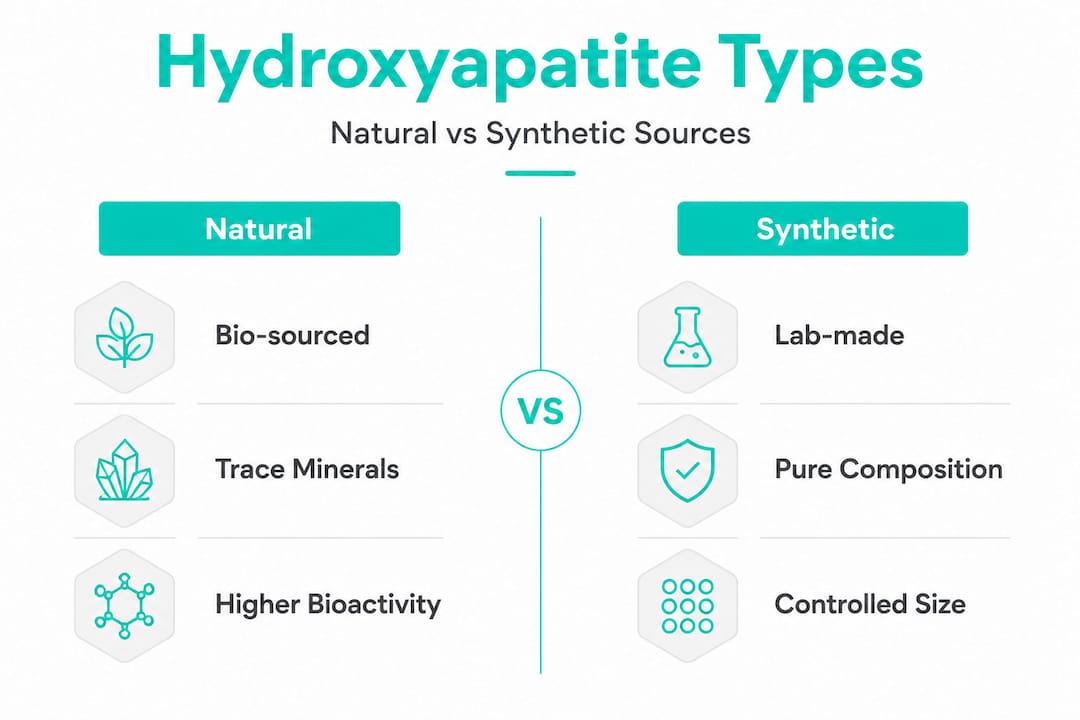
What the trace elements actually do is not fully resolved by science yet, but the working theory is that ions like magnesium and zinc mimic the natural mineral environment of enamel more closely, potentially supporting better crystal integration. If you are choosing between products, looking for biomimetic hydroxyapatite on the label usually signals a formulation designed to replicate that native mineral complexity, whether sourced naturally or engineered to match it.
Key things to evaluate when selecting a product:
- Look for particle size disclosure. Nano-sized particles (under 100nm) perform better for enamel penetration.
- Check whether the formula is fluoride-free oral care or whether hydroxyapatite is added alongside fluoride, which is a different product philosophy entirely.
- Sourcing transparency matters. Brands that disclose their hydroxyapatite origin tend to be more reliable overall.
Pro Tip: Biomimetic is not a regulated marketing term, but when a brand pairs it with published research or particle size data, it carries real meaning. Ask for it or look for it in the ingredient transparency section.
Incorporating hydroxyapatite mineral in your daily oral care routine
Knowing what hydroxyapatite does is one thing. Using it consistently and correctly is what produces results. The good news is that incorporating it into an existing routine is straightforward.
Choosing the right products:
- Toothpaste with at least 10% nano hydroxyapatite concentration has the strongest research support for enamel remineralization.
- Mouthwash with hydroxyapatite extends your mineral contact time beyond brushing, which is valuable because longer exposure generally means better uptake.
- Look for products that also contain xylitol. Xylitol reduces cavity-causing bacteria by blocking their ability to ferment sugars, which means it addresses the acid production that demineralizes enamel in the first place. Pairing xylitol’s protective effect with hydroxyapatite’s rebuilding effect creates a more complete natural defense system.
- Fluoride-free oral care products that use hydroxyapatite as the primary active ingredient are now clinically validated for daily use.
How to build your routine:
- Morning brush: Use a hydroxyapatite toothpaste for at least two minutes. Do not rinse immediately. Let the mineral sit on your enamel for 30 to 60 seconds before spitting.
- Midday or post-meal rinse: A hydroxyapatite mouthwash after lunch helps neutralize acid and deliver mineral contact without a full brush session.
- Evening oil pull: Two to three times per week, oil pulling before your nighttime brush clears biofilm and prepares enamel for better mineral absorption.
- Nighttime brush: Your most important application. Saliva flow drops during sleep, so the hydroxyapatite you apply at night stays on your teeth longer and works harder.
Research published in 2025 supports daily use of hydroxyapatite toothpaste and mouthwash as part of a standard oral care routine, confirming both safety and effectiveness for ongoing dental health maintenance.
Comparing hydroxyapatite and fluoride: What science says
Fluoride has dominated preventive dentistry since the 1940s. It works by converting hydroxyapatite into fluorapatite, a harder, more acid-resistant mineral. The problem is that fluorapatite is not the same as the mineral your enamel is naturally made of. It is more brittle in some contexts and, for many health-conscious consumers, comes with concerns about systemic fluoride accumulation, especially in children.
Here is how the two approaches compare:
| Factor | Hydroxyapatite | Fluoride |
|---|---|---|
| Remineralization mechanism | Directly deposits enamel-matching mineral | Converts existing mineral to fluorapatite |
| Enamel compatibility | Identical to native enamel mineral | Creates a different, harder variant |
| Early caries efficacy | Comparable to fluoride in remineralizing initial lesions | Clinically established over decades |
| Sensitivity relief | Immediate tubule occlusion | Indirect, slower mechanism |
| Safety profile | Biocompatible, non-toxic if swallowed | Toxicity at high doses; concerns for young children |
| Fluoride-free status | Yes | No |
The protective layer that hydroxyapatite forms across enamel closely mirrors the natural surface of a healthy tooth, which fluoride does not replicate. For adults who have been looking for a fluoride-free path that does not sacrifice clinical effectiveness, the 2026 comparative data is the strongest validation yet that this is a legitimate switch.
Key consumer considerations:
- Age: Hydroxyapatite is considered safe for all ages and does not carry the ingestion risks fluoride does for young children.
- Existing decay: If you have active cavities, consult a dentist. Both fluoride and hydroxyapatite work best on early lesions, not fully progressed decay.
- Preference for biomimicry: If you want an ingredient that works with your biology rather than modifying it, hydroxyapatite is the more philosophically aligned choice.
Why embracing hydroxyapatite mineral changes the natural oral care game
Here is what most hydroxyapatite explainers get wrong: they treat remineralization like a simple fill-the-gap exercise. You lose mineral, you add mineral back, problem solved. The actual biology is far more intricate. Research on enamel nanostructure shows that remineralization involves complex mineral dynamics at the nanoscale, including crystal orientation, lattice spacing, and organic matrix interactions that basic calcium supplements or fluoride treatments cannot replicate.
Biomimetic hydroxyapatite, formulated to match the size, shape, and chemical signature of native enamel crystals, comes closer to the real thing than anything else currently available without a prescription. That is not marketing language. That is what the structural biology says. And it matters because poorly oriented or mismatched mineral deposits can actually increase brittleness rather than reduce it.
What health-conscious consumers often miss is that the phase of the calcium phosphate mineral matters enormously. Not all calcium phosphate is hydroxyapatite. Brushite, octacalcium phosphate, and amorphous calcium phosphate are all calcium phosphate compounds, but they have different stabilities and different roles in the remineralization cascade. Hydroxyapatite is the final, stable end-product that enamel crystals are built from. You want the final form, not the intermediate ones.
The future of this field is personalized mineral formulations, products calibrated to your specific enamel condition, pH environment, and dietary patterns. We are not there yet at the consumer level, but what you can do right now is choose products built on biomimetic oral care principles rather than generic mineral supplementation. That distinction is what separates a product that coats your teeth from one that actually rebuilds them.
Explore natural hydroxyapatite oral care products from Selfwise
If you have spent time reading the research and you are ready to put it into practice, Selfwise makes that step simple. Our fluoride-free oral care collection is built around nano hydroxyapatite and xylitol, two of the most clinically supported natural ingredients in oral care today. Every product skips the harsh chemicals and delivers what your enamel actually needs.
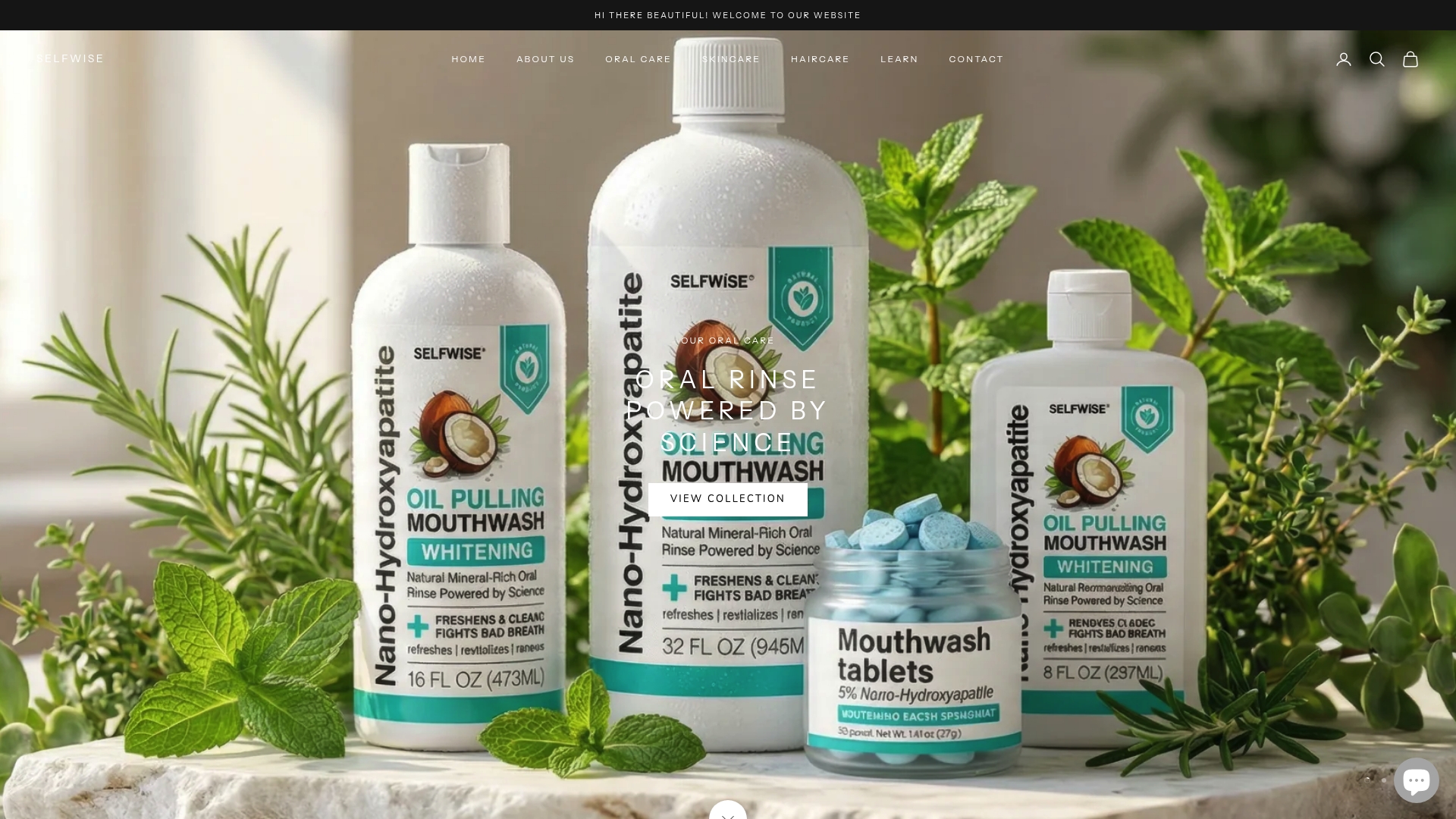
Our nano hydroxyapatite mouthwash tablets are a practical, travel-friendly way to extend your mineral contact time between brushing sessions. If you want the added benefits of oil pulling combined with hydroxyapatite remineralization, our nano hydroxyapatite oil pulling mouthwash does both in one step. Simple ingredients. No compromise on science. Real results you can feel, and over time, see.
Frequently asked questions
What is hydroxyapatite mineral and why is it important for teeth?
Hydroxyapatite is a calcium phosphate mineral that forms the primary component of tooth enamel and dentin, making it essential for tooth strength, hardness, and the body’s natural remineralization process.
How soon can hydroxyapatite products improve early tooth enamel damage?
Clinical studies show measurable remineralization of early white spot lesions at 1, 2, and 6 weeks with consistent nanohydroxyapatite application, especially when enamel surfaces are prepped before treatment.
Is hydroxyapatite a safe alternative to fluoride for natural oral care?
Yes. Hydroxyapatite is biocompatible and comparable in efficacy to fluoride toothpaste for remineralizing early lesions, and it does not carry the ingestion risks that fluoride does, making it suitable for all ages.
What’s the difference between natural and synthetic hydroxyapatite in oral care products?
Natural hydroxyapatite contains trace elements like magnesium and zinc that may increase its bioactivity, while synthetic hydroxyapatite offers precise particle control. Both remineralize effectively, but natural sources more closely mirror the mineral complexity of real enamel.
How should I incorporate hydroxyapatite products into my oral care routine?
Use hydroxyapatite toothpaste and mouthwash daily as part of your routine, adding xylitol-containing products for extra cavity protection. For best results, let the toothpaste sit briefly after brushing before rinsing.